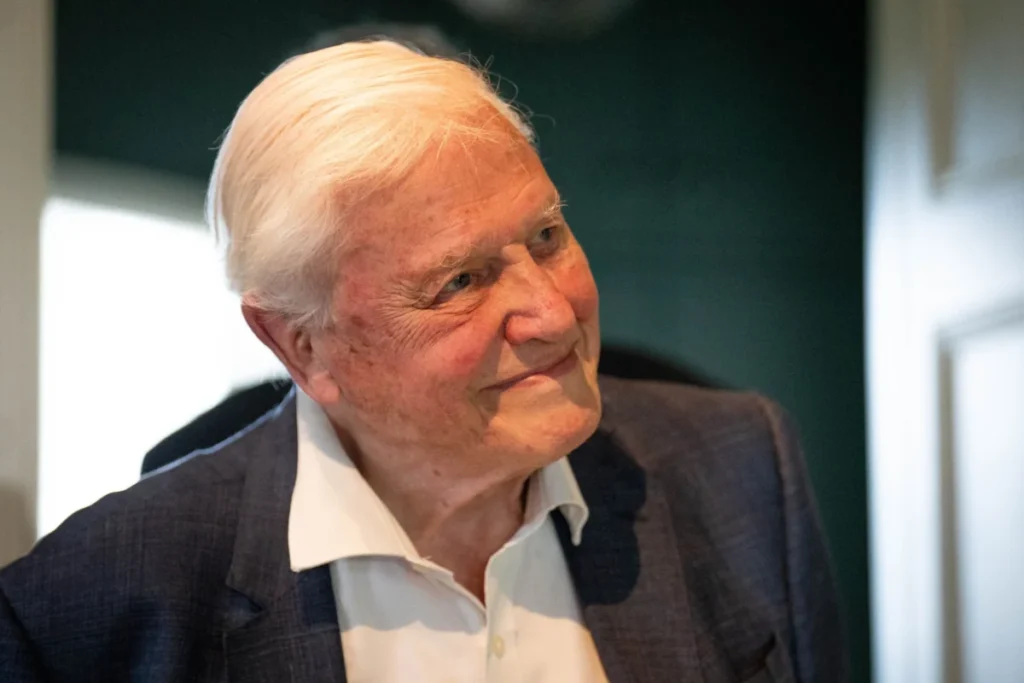

Sir David Attenborough’s accessible and compelling programmes have not only illuminated the astonishing diversity of life on Earth but have also meticulously documented the evolution of technologies employed to bring that life directly into the homes of television audiences worldwide. His career, spanning more than seven decades, stands as an unparalleled testament to dedicated natural history broadcasting, scientific communication, and increasingly, fervent environmental advocacy. Through his pioneering work, Attenborough has transformed public perception of the natural world, fostering a profound global appreciation for biodiversity and the urgent need for its conservation. His influence extends beyond entertainment, shaping scientific understanding, inspiring generations of naturalists, and driving significant shifts in environmental policy and public consciousness.
A Chronology of Memorable Moments and Breakthroughs
1979: Life On Earth – A Global Phenomenon and the Mountain Gorillas
The release of Life On Earth in 1979 marked a pivotal moment in television history, establishing a new benchmark for natural history documentaries. This 13-part series, a colossal undertaking that involved filming in over 30 countries across all continents, was revolutionary in its scope and ambition. It presented a comprehensive narrative of evolution, tracing the lineage of life from its simplest forms to the most complex. The series, which took three years to produce and cost £4 million (an astronomical sum for television at the time), reached an estimated global audience of over 500 million people – approximately 11.4% of the world’s population then. Its unprecedented reach underscored Attenborough’s ability to translate complex scientific concepts into universally engaging stories.
Among its most iconic sequences was Sir David’s intimate encounter with a family of mountain gorillas in a volcanic forest on the border of Rwanda and Zaire (now the Democratic Republic of Congo). In a moment that has been consistently voted one of the top TV moments of all time, a young gorilla playfully lay across his body, while in a delightful, almost out-of-frame detail, baby gorillas busied themselves removing his shoes. This unscripted interaction captivated millions, humanising these magnificent, endangered creatures and sparking a worldwide fascination with primate behaviour. The scene was groundbreaking not just for its intimacy but for the sheer difficulty of accessing and filming these elusive animals in their natural habitat, relying on early, cumbersome film cameras and the patience of pioneering conservationists like Dian Fossey, whose work made such encounters possible. The emotional resonance of this footage played a crucial role in raising awareness about the plight of mountain gorillas and galvanising conservation efforts that have seen their numbers slowly recover in subsequent decades.
1984: The Living Planet – Venturing Underwater and Into Zero Gravity
Following the monumental success of Life On Earth, Attenborough embarked on The Living Planet, a 12-part series that explored how organisms adapt to and thrive in various environments across the globe. This series further showcased Attenborough’s commitment to pushing the boundaries of natural history filmmaking and his personal willingness to engage directly with the environments he sought to explain.

In a pioneering move, Sir David became one of the first presenters to deliver commentary live underwater, observing grey reef sharks in their natural habitat. This was made possible by significant developments in full-face diving masks, which allowed for not only clear delivery of his narration but also high-quality audio recording. This technological leap enabled viewers to experience the marine world with unprecedented immersion, moving beyond silent underwater footage to a direct, guided exploration by Attenborough himself.
The Living Planet also saw Attenborough defy gravity, presenting from the NASA experimental plane, affectionately nicknamed the "vomit comet." A modified KC-135 Stratotanker, this aircraft performs parabolic flights to create brief periods of weightlessness. Bouncing and floating around the plane’s cabin, Sir David vividly described how humans often take gravity for granted, culminating in a memorable shot of him delivering his commentary completely upside down. These segments exemplified his unique ability to blend scientific explanation with engaging, often humorous, physical demonstration, making abstract concepts relatable and memorable for a mass audience.
1990: Trials Of Life – Communicating with Dolphins
The 1990 series Trials Of Life delved deep into the complexities of animal behaviour, focusing on the strategies animals employ to survive, reproduce, and raise their young. A standout sequence featured Sir David swimming with dolphins, strapping on his scuba diving suit to get closer to these intelligent marine mammals. His objective was to provide viewers with an insight into the intricate body language and sophisticated sounds dolphins use to communicate. This required advanced hydrophone technology to capture their clicks, whistles, and pulsed calls, allowing for a glimpse into their underwater conversations. This intimate portrayal not only highlighted the intelligence and social complexity of dolphins but also underscored the challenges and rewards of studying marine communication.
1998: The Life Of Birds – The Mimicry of the Lyrebird
The Life Of Birds in 1998 dedicated 10 episodes to the astonishing diversity and behaviours of avian species. One particularly enchanting moment saw Sir David, binoculars clutched in hand, carefully approaching a lyrebird in the temperate rainforests of south Australia. He marvelled in delight at its extraordinary impersonation skills. The male lyrebird, a master mimic, reproduced an astonishing array of sounds, including camera shutters, car alarms, and even chainsaws, all in its elaborate efforts to outdo rivals and attract a mate. This segment beautifully illustrated the power of sexual selection and the incredible adaptations that evolve in the natural world, captivating viewers with the bird’s unexpected virtuosity.
2000: State Of The Planet – Unveiling the Microscopic World
In the year 2000, State Of The Planet marked a shift in focus towards the broader environmental challenges facing Earth. This series not only celebrated biodiversity but also highlighted the fragility of ecosystems and the impact of human activity. A key segment revealed a world far beyond human perception, using a powerful scanning electron microscope. This advanced instrument magnified the image of a common pin 10,000 times, transforming its surface into an alien landscape and demonstrating the intricate, often unseen, microscopic life that teems around us. This innovative use of technology allowed Attenborough to visually explain concepts of biodiversity at a cellular level, reinforcing the idea that life exists in myriad forms and scales, all interconnected.

2002: The Life Of Mammals – Encounters with Giants and Intelligence
The Life Of Mammals (2002) was a comprehensive exploration of the class Mammalia, showcasing their remarkable adaptability and diversity. This 10-part series delivered several unforgettable moments:
- Blue Whale Encounter: Sir David’s sheer excitement at the moment a huge blue whale surfaced was palpable and heartwarming. Clinging to his relatively tiny boat, which was dwarfed by the 30-meter leviathan – the largest animal known to have ever existed – Attenborough conveyed the awe-inspiring scale and majesty of these ocean giants. Filming such immense creatures in the vastness of the ocean required considerable logistical planning and patience, underscoring the dedication of the film crews.
- Orphaned Chimpanzees: Another poignant sequence involved Sir David visiting a group of orphaned chimpanzees being taught essential survival skills for reintroduction into the wild. As his boat approached the landing point, an enthusiastic young chimp jumped straight into the water to greet him, showcasing the animals’ intelligence and capacity for emotional connection. He later enjoyed a nut-cracking session with a group of dexterous chimpanzees, demonstrating their problem-solving abilities and tool use. These interactions highlighted the importance of rehabilitation and conservation efforts for highly intelligent species.
- Siberian Tiger: The series also featured a spectacular moment where Sir David trudged slowly through knee-deep snow to come face-to-face with a Siberian tiger, albeit one in a controlled environment to ensure both safety and the capture of intimate footage. The encounter underscored the raw power and beauty of one of the world’s most magnificent, yet critically endangered, predators.
2008: Life In Cold Blood – The Miracle of Miniaturisation
Life In Cold Blood (2008) brought reptiles and amphibians into the spotlight, revealing their often-misunderstood lives. A particularly memorable sequence utilized slow-motion photography to showcase the astonishing diversity in size, shape, and ability among frogs and toads. Sir David was filmed lying on the floor of a Madagascan rainforest, with a tiny pygmy frog resting delicately on his fingertip, as he marvelled at the "miracle of miniaturisation." This segment, with its meticulous close-ups and detailed explanation, celebrated the evolutionary success of these often-overlooked creatures and their critical roles within ecosystems.
2011: Frozen Planet – North Pole at 84
Frozen Planet (2011) was a landmark series focusing on the Earth’s polar regions, starkly highlighting the beauty and fragility of these extreme environments. At the age of 84, Sir David Attenborough demonstrated his unparalleled dedication by becoming the oldest person to visit the North Pole. Venturing into high altitude and extreme cold, his presence at such a remote and unforgiving location underscored the urgency of the series’ implicit message about climate change and its devastating effects on polar ecosystems. The series combined breathtaking cinematography with poignant narratives of survival, from polar bears hunting seals to vast penguin colonies navigating icy landscapes, all while subtly advocating for climate action.
2016: A Milestone Year – 90th Birthday and Planet Earth II
2016 was a celebratory year for Sir David Attenborough, marking his 90th birthday. The BBC commemorated this milestone with Attenborough At 90, a documentary featuring journalist Kirsty Young, where Sir David reflected on the defining moments of his extraordinary life and career.

Later that year, Planet Earth II was released, captivating audiences globally and setting new standards for wildlife filmmaking. Narrated by Sir David, the series leveraged cutting-edge advancements in drone technology, remote camera traps, and ultra-high-definition filming techniques to capture unprecedented footage. Among its many highlights were rare snow leopard mating footage, a dramatic sequence of lions attacking a giraffe in a desert, and the now-legendary, intensely high-speed chase scene of a newborn marine iguana escaping a swarm of racer snakes on Fernandina Island in the Galápagos. This particular sequence was hailed by critics and viewers alike as one of the most tense and thrilling moments in wildlife television history, becoming a viral sensation and demonstrating the raw, unscripted drama of the natural world. Planet Earth II not only garnered critical acclaim but also achieved massive viewership, solidifying Attenborough’s continued relevance and ability to inspire new generations.
2017: Blue Planet II – The "Attenborough Effect" on Plastic Pollution
Blue Planet II in 2017 became more than just a critically acclaimed documentary series; it transformed into a global phenomenon with significant real-world impact. Sir David’s return as presenter for this deep dive into the world’s oceans resonated powerfully. The first episode alone became the most-watched UK television show of 2017, with a staggering 14 million viewers tuning in. The series showcased dramatic footage of walruses fighting to find a home amidst melting ice, dazzling scenes of surfing dolphins, and the intriguing biology of sex-changing fish.
However, its most profound legacy lies in its explicit confrontation of plastic pollution. Segments depicting marine animals struggling with plastic waste, such as albatross chicks being fed plastic by their parents and pilot whales poisoned by plastic-laden prey, created an unprecedented public outcry. This collective awakening, dubbed the "Blue Planet II effect," led to a dramatic increase in public, media, and political attention to plastic pollution. Governments worldwide initiated discussions on single-use plastic bans, corporations pledged to reduce plastic usage, and public awareness campaigns proliferated, demonstrating the immense power of informed storytelling to drive tangible environmental action.
2018: Dynasties – A Glimpse into Family Survival and Ethical Dilemmas
Dynasties (2018) focused on specific animal families and their struggle for survival in challenging environments, emphasizing individual characters and their lineage. The debut episode, centered on a chimpanzee family, became the most popular programme of the month when it aired in November. The series also documented the harrowing struggles of baby penguins fighting to avoid an icy death. In a controversial but highly impactful moment, the BBC camera crew intervened to rescue the stricken birds, breaking a long-held stance in wildlife filming not to interfere with natural processes. This intervention sparked widespread debate within the natural history filmmaking community and among the public about the ethics of observation versus intervention, highlighting the emotional toll such harsh realities take on both the animals and the human observers.
2019: Glastonbury Appearance and Environmental Advocacy
In 2019, Sir David made a surprise appearance on Glastonbury’s iconic Pyramid stage, a testament to his growing status as a cultural icon and environmental champion. Ahead of Kylie Minogue’s performance, he presented a four-minute trailer for the BBC’s new natural history series, Seven Worlds, One Planet. More significantly, Sir David delivered a powerful speech to the enormous crowds gathered, celebrating Glastonbury’s decision to ban single-use plastic bottles from the Somerset event that year. His presence at such a major cultural festival amplified his environmental message to a younger, broader audience, further cementing his role as a leading advocate for sustainability.

2020: A Life On Our Planet – A Witness Statement for the Future
A Life On Our Planet (2020) was a profoundly personal and poignant documentary, described by Attenborough himself as his "witness statement." In this revealing and powerful first-hand account, Sir David reflected on both the defining moments of his life as a naturalist and the devastating changes he had witnessed in the natural world over his lifetime. It served as a stark warning about the climate crisis and biodiversity loss, while also offering a hopeful vision for the future if humanity takes decisive action. The film resonated globally, serving as a powerful call to action for conservation and sustainable living, backed by the unparalleled credibility of his decades of observation.
2021: A Life In Colour – Unveiling Nature’s Hidden Palette
A Life In Colour (2021) utilized cutting-edge camera technology to highlight the vivid and vibrant colours of nature, revealing how animals use colour for survival, finding mates, and defending territory. The series featured stunning visuals of creatures such as the iridescent peacock spider performing its elaborate courtship dance and the paradise kingfisher displaying its brilliant plumage. By employing specialized cameras that could capture wavelengths beyond human perception, the series unveiled a hidden visual world, demonstrating the intricate ways in which colour plays a fundamental role in the lives of countless species.
2022: Global Recognition and Honours
2022 saw Sir David Attenborough receive further profound recognition for his unparalleled contributions. He was awarded one of Britain’s highest honours, the Knight Grand Cross of the Order of St Michael and St George, by fellow avid environmentalist the then Prince of Wales (now King Charles III), at Windsor Castle. This prestigious honour recognized his lifetime of service to broadcasting and conservation. That same year, Sir David was also named a Champion of the Earth by the UN’s Environment Programme (UNEP), the UN’s highest environmental honour, acknowledging his tireless advocacy for the natural world. Furthermore, he was appointed a member of the Order of the Companions of Honour in the New Year Honours list, recognizing his major contributions to science, broadcasting, and environmentalism. These accolades underscored his status not just as a national treasure but as a globally revered figure whose work has had a monumental impact on planetary health.
2023: Attenborough And The Giant Sea Monster – Unearthing Ancient Giants
In 2023, Sir David took viewers on a journey into Earth’s prehistoric past with Attenborough And The Giant Sea Monster. This documentary chronicled the painstaking efforts of excavating the colossal skull of a pliosaur, one of the biggest carnivorous creatures the world has ever seen, from the Jurassic coast in Dorset, UK. Sir David described the process with his characteristic enthusiasm, highlighting the scientific detective work involved in reconstructing ancient life from fossilized remains. The discovery and subsequent meticulous removal of the enormous skull provided a thrilling insight into the apex predators that once roamed ancient seas, further broadening the scope of Attenborough’s storytelling to encompass geological time.

2024: Asia and Secret World Of Sound – New Continents and Sensory Worlds
2024 saw Attenborough continue his global explorations with a seven-part series simply named Asia. This ambitious project explored the diverse lives of species across the continent, from the elusive red pandas and adaptable urban elephants to hunting wolves. The series also featured high-altitude elephants in India, the unique "kiss-chasing" rhinos of Nepal, and the bioluminescent glowing squids of the deep ocean, showcasing Asia’s incredible biodiversity and varied landscapes.
Concurrently, Secret World Of Sound presented another innovative exploration, examining how animals use sound to communicate, thrive, and survive in the natural world. This series employed the very latest in audio technology, including specially adapted cameras and laser vibrometers, to capture and visualize sounds beyond human hearing. It revealed intricate sonic landscapes and demonstrated the sophisticated ways in which creatures perceive and interact with their environment through sound, from the infrasound communication of elephants to the ultrasonic echolocation of bats.
2025: Ocean In Concert and Emmy Recognition
Looking ahead to 2025, Ocean In Concert promised an immersive and innovative way to experience natural history, featuring a live orchestra and vocal ensemble performing Steven Price’s original score in synchronisation with the film. This unique format aimed to turn the powerful visuals and urgent story of the ocean into a moving, multisensory experience, bridging the gap between documentary and live performance.
That same year, Sir David Attenborough was projected to break Dick Van Dyke’s record for the oldest winner of a Daytime Emmy, taking home the prize for hosting Netflix’s Secret Lives Of Orangutans. This continued recognition across different platforms and formats, even at an advanced age, underscores his enduring appeal and the timeless quality of his work, which continues to captivate and educate audiences worldwide.
Broader Impact and Enduring Legacy
Sir David Attenborough’s extraordinary career is a testament to the power of passionate, informed storytelling. He has consistently championed technological innovation, from early film cameras and underwater audio equipment to drones and electron microscopes, always in service of bringing the natural world closer to humanity. His unique blend of scientific rigour, accessible narration, and palpable wonder has inspired generations, fostering a global understanding and appreciation for biodiversity that few others have achieved.

Beyond the captivating visuals and enthralling narratives, Attenborough’s most profound legacy lies in his transition from a chronicler of nature’s wonders to an urgent advocate for its survival. The "Blue Planet II effect" on plastic pollution is a prime example of his direct influence on public policy and environmental awareness. His recent works, such as A Life On Our Planet, serve as powerful warnings and calls to action, underscoring the critical need for conservation and sustainable living in the face of climate change and ecological collapse.
Sir David Attenborough has not merely shown us the natural world; he has helped us understand our place within it, our responsibilities towards it, and the urgent imperative to protect it. His impact on science communication, environmental education, and global conservation efforts is immeasurable, ensuring his status as an unparalleled figure in human history whose work will continue to resonate for centuries to come.