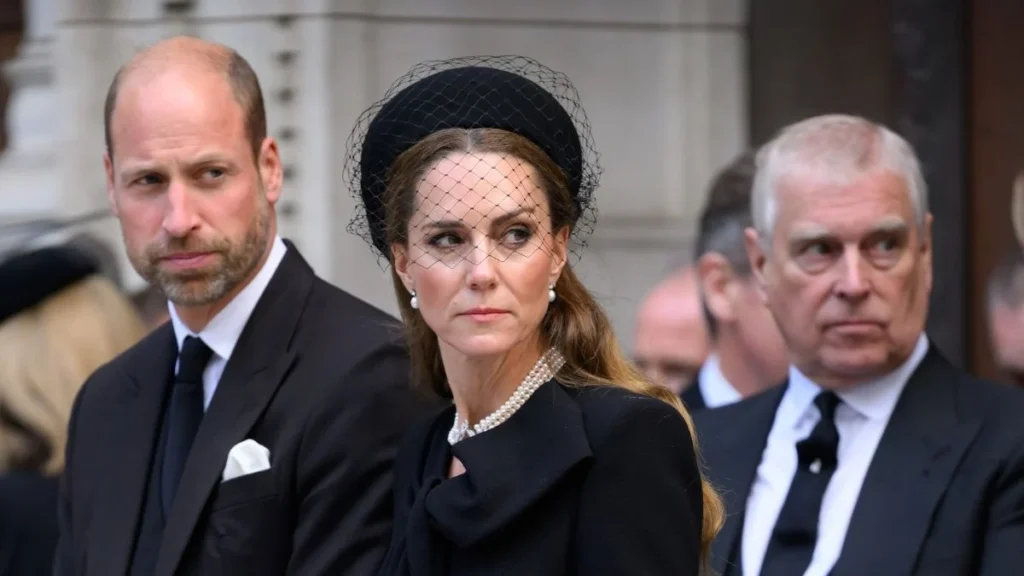

As the Prince and Princess of Wales commemorate their 15th wedding anniversary, a milestone marking a decade and a half of public service and internal family navigation, reports have emerged indicating a definitive shift in the royal family’s internal hierarchy. Prince William and Catherine have reportedly made a formal decision to distance themselves entirely from the Duke of York, Prince Andrew. This move, characterized by insiders as a total "cutoff," reflects a broader strategy by the future King and Queen to safeguard the reputation of the monarchy and maintain a controlled environment for their three children: Prince George, Princess Charlotte, and Prince Louis.
The decision to sever ties comes at a pivotal moment for the British monarchy. Following the death of Queen Elizabeth II and the ascension of King Charles III, the "slimmed-down monarchy" has transitioned from a theoretical concept to a functional reality. Sources close to the Prince and Princess of Wales suggest that the couple is prioritizing the long-term stability of the Crown over familial sentimentality, ensuring that no lingering associations with past scandals compromise the integrity of their future reign.
The Strategic Distancing of the Duke of York
According to reports initially detailed by Us Weekly, the Prince and Princess of Wales have effectively removed Prince Andrew from their personal and professional inner circles. While the Duke of York remains a member of the royal family by blood, his status as a "working royal" was permanently revoked years ago following the fallout from his association with convicted sex offender Jeffrey Epstein and the subsequent civil lawsuit filed by Virginia Giuffre.
The decision by William and Catherine to "cut him off" is viewed by royal analysts as a protective measure. As the next in line to the throne, Prince William is acutely aware of the public’s perception of the monarchy. By creating a clear separation between the future of the Crown and the controversies surrounding his uncle, William is reportedly attempting to provide a "safe future" for his family. This involves maintaining a tight-knit circle of trusted advisors and family members who uphold the values of privacy, fraternity, and trust.
A History of Controversy: The Timeline of Disassociation
The erosion of Prince Andrew’s standing within the royal family has been a multi-year process, driven by both public outcry and internal palace decisions. To understand the current "cutoff" by the Prince and Princess of Wales, it is necessary to examine the timeline of events that led to the Duke’s marginalization.
In November 2019, Prince Andrew participated in a BBC Newsnight interview with Emily Maitlis, intended to clarify his relationship with Jeffrey Epstein. The interview was widely regarded as a public relations disaster, during which the Duke failed to express empathy for Epstein’s victims. Within days, he announced he would step back from public duties for the "foreseeable future."
By January 2022, the situation escalated when a U.S. judge ruled that a civil sexual assault lawsuit brought by Virginia Giuffre could proceed. In response, Queen Elizabeth II stripped Andrew of his military affiliations and royal patronages. He also lost the right to use the style "His Royal Highness" (HRH) in any official capacity. Although the lawsuit was settled out of court in February 2022 with no admission of liability, the damage to his public standing was irreparable.
Throughout 2023 and 2024, Prince Andrew’s appearances have been limited to private family events, such as the annual walk to church at Sandringham. However, the latest reports suggest that even these informal interactions are being curtailed by William and Catherine as they assume greater control over the royal family’s public-facing operations.
The Nuanced Relationship with Princesses Beatrice and Eugenie
Despite the firm stance taken against Prince Andrew, sources indicate that the Prince and Princess of Wales are careful not to alienate his daughters, Princess Beatrice and Princess Eugenie. The source noted that the door is not closed on the York sisters, who remain in "good graces with the palace."
William and Catherine reportedly maintain a protective stance toward their cousins. Beatrice and Eugenie have navigated the difficulties of their father’s public disgrace with what many observers call "quiet dignity," continuing to support the monarchy while leading largely private lives. This distinction suggests that William’s strategy is not one of a blanket family feud, but rather a targeted exclusion of individuals who pose a direct threat to the institution’s credibility.
Beatrice and Eugenie have occasionally stepped in to support royal events, such as garden parties and charity engagements, filling the gaps left by the reduced number of working royals. This "bridge-building" role allows the York sisters to remain integrated into the family fabric without bringing the Duke of York back into the fold.
Data and Public Perception: The Burden of the Crown
The decision to distance the monarchy from Prince Andrew is supported by significant public opinion data. According to consistent polling from YouGov, Prince Andrew remains the least popular member of the royal family, often receiving favorability ratings in the single digits. In contrast, Prince William and the Princess of Wales consistently top the charts as the most popular royals, often rivaling or exceeding the popularity of King Charles III.
For William and Catherine, the data presents a clear mandate: to preserve the monarchy, they must align themselves with the public’s expectations of accountability and moral standing. The "cutoff" is not merely a personal choice but a calculated move to ensure that when William eventually ascends the throne, he does so without the baggage of the previous generation’s scandals.
The Future of the "Slimmed-Down" Monarchy
The reported exclusion of Prince Andrew is a practical application of the "slimmed-down monarchy" philosophy championed by King Charles III. With fewer working royals, the focus is placed on the core members of the family who provide the most value to the Commonwealth.
This streamlined approach has become even more critical in 2024, a year that has seen both King Charles and the Princess of Wales face significant health challenges. With Catherine undergoing preventative chemotherapy and the King managing his own cancer diagnosis, the "inner circle" has naturally tightened. In this environment, there is little room for the distractions or controversies that Prince Andrew’s presence inevitably brings.
The Prince and Princess of Wales have increasingly operated as a "power couple" within the institution, taking on significant responsibilities and shaping the royal narrative. Their 15th anniversary serves as a testament to their resilience and their ability to remain united in the face of both internal family strife and external public pressure.
Broader Implications and Analysis
The implications of this "cutoff" extend beyond the immediate family circle. It signals a shift in the way the British monarchy handles internal crises. Historically, the "Firm" has often sought to protect its own, sometimes at the expense of transparency. Under the influence of Prince William, the approach appears to be shifting toward a more modern, accountability-based model.
Legal and royal experts suggest that William’s firm hand is a preview of his future reign. He is often described as more "decisive" than previous monarchs when it comes to institutional protection. By making these hard choices now, he is effectively "clearing the decks" for his eventual transition to the throne.
Furthermore, this move reinforces the importance of the Princess of Wales. Catherine is no longer just a supporting member of the family; she is a central architect of its future. Her involvement in the decision to distance the family from Prince Andrew highlights her role in protecting the "Wales brand" and ensuring that her children are raised in an environment free from the shadow of scandal.
Official Responses and the "Never Complain, Never Explain" Protocol
In keeping with longstanding royal tradition, Buckingham Palace and Kensington Palace have declined to issue formal statements regarding the reported "cutoff." The royal family continues to adhere to the "never complain, never explain" mantra, preferring to let their actions speak for themselves.
However, the lack of a denial is often seen by royal correspondents as a tacit acknowledgement of the situation’s reality. The Duke of York has also remained silent, continuing to reside at Royal Lodge in Windsor, though reports persist regarding ongoing discussions about his housing arrangements and the potential for him to move to a smaller property, such as Frogmore Cottage.
Conclusion: A New Era of Royal Governance
As Prince William and Kate Middleton look toward the next 15 years of their marriage and their eventual roles as King and Queen, the decision to sever ties with Prince Andrew stands as a defining moment. It is a move characterized by pragmatism, a commitment to the institution, and a fierce desire to protect the next generation of royals.
The couple’s focus on stability, privacy, and trust has become the cornerstone of their public identity. By distancing themselves from the controversies of the past, they are effectively building a wall around the future of the British monarchy, ensuring that the Crown remains a symbol of continuity and integrity in a rapidly changing world. The "cutoff" of Prince Andrew is not just a family matter; it is a strategic maneuver that will likely shape the legacy of the House of Windsor for decades to come.