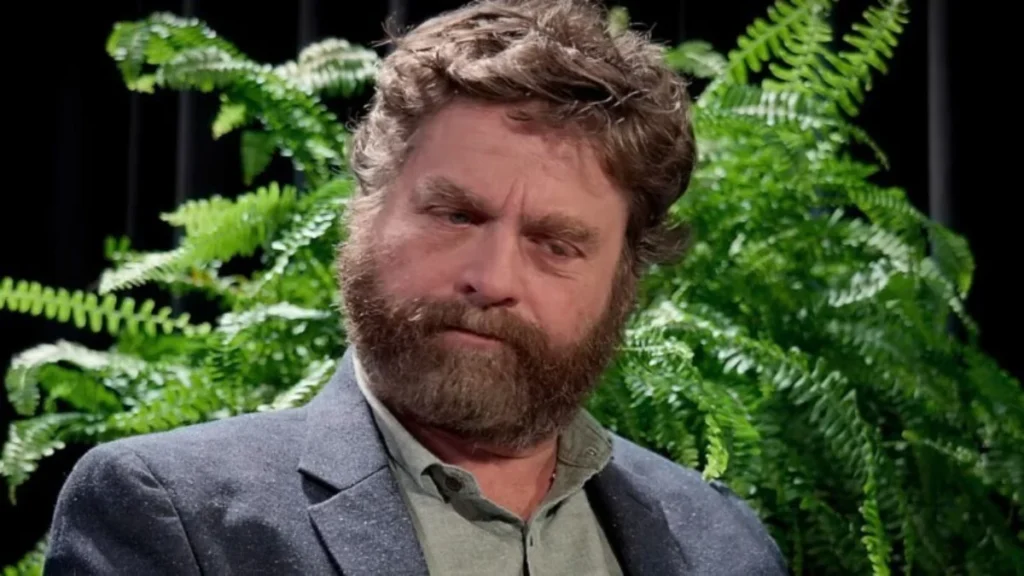

Comedian and actor Zach Galifianakis has indicated that a revival of his critically acclaimed and wildly popular web series, Between Two Ferns, is highly improbable, citing a significant shift in the cultural and comedic landscape. Galifianakis articulated his reservations during recent podcast appearances, suggesting that the show’s distinctive brand of awkward, deadpan humor would no longer resonate in what he describes as "meaner times" and an environment where the audience and even guests are increasingly "in on the gag." This pronouncement signals a potential end to a unique chapter in internet comedy, prompting reflection on the evolution of satire, celebrity interviews, and the challenges facing nuanced humor in the contemporary media ecosystem.
The End of an Era: Galifianakis’s Rationale for Hiatus
Galifianakis’s comments surfaced across two distinct podcast interviews this week, offering a consistent perspective on his reluctance to resurrect Between Two Ferns. Speaking on The Rich Eisen Show, he stated unequivocally that "tonally, [the show] wouldn’t work anymore." This sentiment was echoed days later during his appearance on Vulture’s Good One comedy podcast, where he elaborated, "We’re living in meaner times, and I don’t know if it works (anymore)." These statements suggest a fundamental disconnect between the show’s original comedic premise and the prevailing societal mood, particularly following a period marked by heightened political polarization and a perceived coarsening of public discourse.
The original article context specifically links this shift to the presidency of Donald Trump, suggesting an "irrevocably changed face of comedy." While Galifianakis does not explicitly name political figures in his direct quotes about "meaner times," the broader implication is that the era has fostered an environment where the subtle, often absurd humor of Between Two Ferns might be misunderstood or simply fall flat. The show thrived on a delicate balance of discomfort and genuine human interaction, often playing on the audience’s perception of whether the guests were truly being pranked or were active participants in the comedic charade.
The Collaborative Spirit: Beyond the Prank
A cornerstone of Galifianakis’s philosophy regarding Between Two Ferns has always been his steadfast refusal to genuinely prank his guests. This commitment to collaboration, rather than deception, is central to his decision to keep the show shelved. He clarified to Rich Eisen, "I was never interested in pranking anyone. I wanted it to be a joint effort, but we gave that up with the bloopers." The inclusion of blooper reels often revealed the extent of guest involvement, with some celebrities even contributing to the gags, such as Brad Pitt reportedly providing the gum that Galifianakis famously spit back into his face during their segment.
This distinction is critical for understanding the show’s unique appeal. Unlike hidden camera shows or outright pranks, Between Two Ferns relied on the viewer’s awareness of the performance, creating an ironic layer of humor. Galifianakis further emphasized this point on the Good One podcast, recalling his aversion to genuine prank shows: "I worked on a prank show, and I couldn’t do it. I hated it." His method involved not giving guests the questions in advance, ensuring a spontaneous reaction, but always operating within a framework of mutual understanding and respect. "I worked with them, but again, they are caught in that moment," he explained, highlighting the improvisational yet controlled nature of the interviews. This approach allowed for authentic, unscripted reactions while ensuring the guest’s dignity was maintained.
A Delicate Balance: The Element of Surprise
Another key factor contributing to Galifianakis’s reluctance to revive the series is the diminishing "element of surprise." As Eisen noted, and Galifianakis enthusiastically agreed, "people [the audience] are now in on the gag." This widespread awareness among both viewers and potential guests fundamentally alters the show’s dynamic. The humor of Between Two Ferns was predicated on blurring the lines between reality and performance, between a genuinely awkward interview and a carefully constructed comedic piece. When the audience fully comprehends the collaborative nature of the enterprise, a significant portion of the tension and comedic friction dissipates.
The show’s success hinged on its ability to "toe the line between a guest’s awareness and fostering a general sense of surprise (as shared by both viewers and the guests)." This delicate balance allowed for moments of genuine comedic brilliance, where the guest’s discomfort or quick wit could shine, irrespective of their prior knowledge of the segment’s tone. In an era of pervasive social media and instant information dissemination, maintaining this illusion of raw, unscripted absurdity becomes increasingly challenging. Celebrities, too, are savvier about viral content and potential comedic setups, making it harder to elicit the kind of spontaneous reactions that defined the show’s early charm.
Notable Moments and Milestones: The Legacy of Between Two Ferns
Between Two Ferns debuted on Funny Or Die in 2008, quickly establishing itself as a groundbreaking format in digital comedy. Created by Galifianakis, Scott Aukerman, and B. J. Porter, the series presented a faux-low-budget public access talk show set between two potted ferns, with Galifianakis playing an inept, often insulting host. Over its sporadic but impactful run, the show featured an astonishing array of A-list celebrities, from actors and musicians to politicians, all willingly subjecting themselves to Galifianakis’s uniquely uncomfortable interviewing style.
Key Highlights and Chronology:
- 2008: Between Two Ferns launches on Funny Or Die, quickly gaining traction for its innovative format and high-profile guests. Early guests included Michael Cera and Jimmy Kimmel.
- Early Success: The show’s popularity soared as more celebrities embraced the opportunity to appear. Its viral nature demonstrated the power of short-form, online comedy.
- High-Profile Guests: Over the years, the show hosted a diverse roster including Natalie Portman, Ben Stiller, Steve Carell, Will Ferrell, Justin Bieber, Brad Pitt, Sean Penn, and many others. Each appearance became a cultural event, dissecting the celebrity’s willingness to be "in on the joke."
- The Barack Obama Interview (2014): This segment remains one of the show’s most iconic and impactful. In a move that garnered massive media attention, President Barack Obama appeared on the show to promote the Affordable Care Act (ACA). This was an unprecedented crossover of political messaging and internet comedy, showcasing the platform’s reach. Galifianakis revealed that Obama was the only guest for whom questions were provided in advance, underscoring the political sensitivity and strategic intent behind the segment. The segment was credited with driving significant traffic to HealthCare.gov.
- Hillary Clinton Interview (2016): Continuing its political engagement, the show also featured Hillary Clinton during her presidential campaign, again demonstrating its unique ability to blend humor with serious political discourse, albeit through an absurdist lens.
- Between Two Ferns: The Movie (2019): The show’s enduring popularity led to a feature film adaptation, distributed by Netflix. The movie, which saw Galifianakis embark on a road trip to interview celebrities for a network deal, further cemented the franchise’s place in comedic history. It expanded the show’s universe while retaining its core comedic sensibilities.
Galifianakis’s commitment to not genuinely pranking guests was evident throughout these high-profile interviews. He always offered to cut content that guests found "too offensive" or preferred to keep unaired, a testament to his collaborative ethos. This level of respect for his guests, despite the show’s outwardly aggressive comedic style, fostered trust and allowed for more genuine interactions within the constructed awkwardness.
The Broader Landscape of Comedy: Nuance in a Post-Truth Era
The analysis offered by Cracked.com provides an insightful perspective on why Between Two Ferns might struggle in the current climate. They posited that by demonstrating "this level of decency, and offering final cut approval," the show "might come off as too tame for a modern audience that has grown accustomed to seeing asshole interviewers verbally abuse their guests for the sake of ‘comedic rage’ bait content." This observation speaks to a broader shift in comedic consumption and production, particularly in the digital age.
The rise of platforms like YouTube and TikTok has democratized content creation, leading to a proliferation of interview styles. Many successful online personalities thrive on confrontational tactics, "calling out" celebrities, or manufacturing dramatic moments for viral appeal. This "comedic rage" or "shock value" approach often prioritizes immediate, visceral reactions over nuanced satire. In such an environment, the subtle, often understated humor of Between Two Ferns, which relied on intellectual understanding of irony and performance, might indeed seem less impactful to an audience conditioned for more overt forms of entertainment.
Moreover, the "post-truth era" mentioned in the original article, characterized by a blurring of facts and opinions, and a heightened sensitivity to perceived slights, presents a challenging environment for satire. Where Between Two Ferns once played with the audience’s perception of reality, the current climate often struggles to differentiate satire from genuine malice. The show’s core strength – its ability to make audiences question what was real and what was performance – could now be misconstrued or simply dismissed as "mean-spirited" without the underlying collaborative intent being understood.
This phenomenon isn’t exclusive to Between Two Ferns. Many comedians and satirists have voiced concerns about navigating the current cultural landscape, where intent is often secondary to impact, and jokes are frequently decontextualized. The demand for "authenticity" often paradoxically leads to highly curated, confrontational content, pushing out forms of humor that require more active audience engagement and critical thinking.
Galifianakis’s Current Perspective and Anecdotes
In his recent podcast appearances, Galifianakis further illuminated his experiences and opinions. On The Rich Eisen Show, he delved deeper into the intricacies of President Obama’s appearance, including how the segment earned him a place in the presidential library. This particular anecdote underscores the unprecedented cultural impact of that interview, blurring the lines between entertainment and public service in a way few other comedic ventures have achieved. The fact that the segment was carefully managed with pre-approved questions also highlights the unique position of power and responsibility that Between Two Ferns sometimes held.
Meanwhile, on Vulture’s Good One podcast, Galifianakis shared a particularly amusing story about Sean Penn, labeling him the "meanest-ever" guest in Between Two Ferns history. This anecdote, while humorous, subtly reinforces the show’s dynamic: even with cooperative guests, the awkward tension and Galifianakis’s persona could still elicit strong, memorable reactions, contributing to the show’s legendary status. These stories serve as poignant reminders of the show’s peak and the unique interactions it facilitated.
Legacy and Future Implications
The potential permanent hiatus of Between Two Ferns marks the closing of a significant chapter in internet comedy. The show leaves behind a formidable legacy, having demonstrated the power of the web as a platform for innovative comedic formats and high-profile celebrity engagement. It proved that short-form content could achieve mainstream cultural relevance and even influence political discourse. Its unique brand of anti-comedy and meta-humor influenced countless online creators and redefined what a celebrity interview could be.
For Zach Galifianakis, the decision reflects a comedian’s integrity and self-awareness, prioritizing the quality and intent of his work over merely capitalizing on past success. His commitment to collaborative humor and his discomfort with genuine pranking illustrate a principled approach to comedy that may find new outlets in a different form. While Between Two Ferns might not return, Galifianakis’s comedic voice continues to evolve through his other acting roles and projects.
The broader implication for comedy is a continued struggle for nuanced satire in an increasingly polarized and sensitive world. If "civility and nuance are likely dead," as Cracked.com suggested, then the challenge for future comedians will be to find new ways to provoke thought, entertain, and connect with audiences without resorting to shock value or abrasive confrontation. The legacy of Between Two Ferns will undoubtedly serve as a benchmark for how comedy can be both cutting-edge and deeply collaborative, reminding us that sometimes, the most awkward silences can speak the loudest. While fans may lament its absence, the extensive archive of Between Two Ferns clips on YouTube ensures its unique brand of humor will continue to be enjoyed, studied, and appreciated as a defining moment in the digital age of comedy.