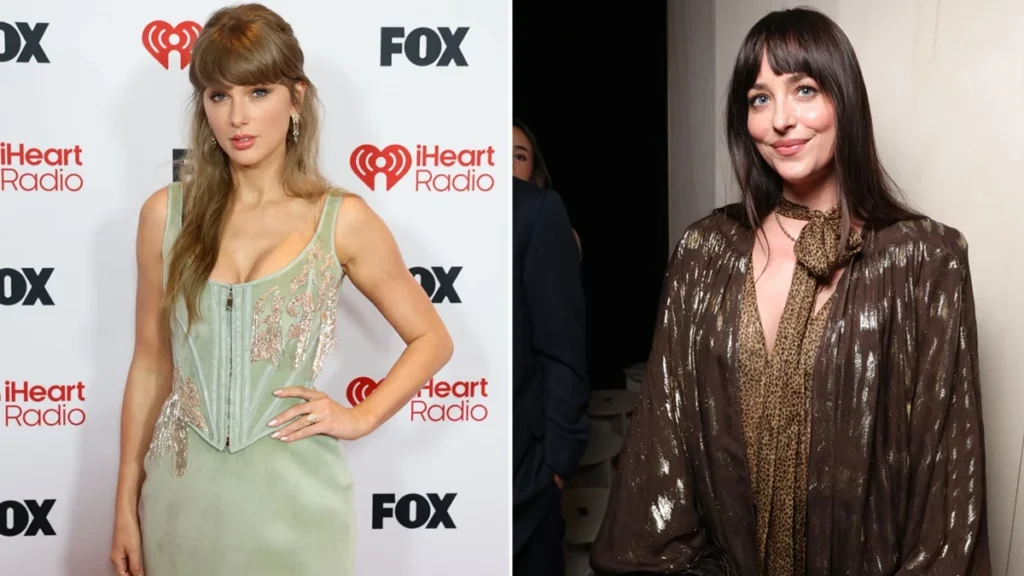

The unveiling of the annual TIME 100 list remains one of the most anticipated moments in the global cultural calendar, serving as a definitive record of the individuals who have shaped the preceding twelve months through their artistry, activism, and innovation. On April 15, 2026, the publication released its latest iteration of the "100 Most Influential People," featuring a diverse array of leaders across various sectors. Among the notable honorees in the "Artists" category was Dakota Johnson, the actor and producer whose career has undergone a significant transformation from franchise star to a formidable force in independent cinema and production. In a move that highlighted the intersection of music and film, global pop icon Taylor Swift was selected to pen the tribute for Johnson, offering an intimate look at the woman behind the public persona. Swift’s commentary, characterized by her signature lyrical prose, emphasized Johnson’s radical honesty and her relentless pursuit of creative autonomy through her production company, TeaTime Pictures.
The Heart of the Tribute: Authenticity in a Curated World
Taylor Swift, herself a multi-time TIME 100 honoree and the 2023 Person of the Year, used her platform to highlight what she perceives as Johnson’s most striking quality: an refusal to conform to the polished, often sterile expectations of the modern media landscape. Swift began her tribute by noting that the more the public learns about Johnson, "the more there is to fall in love with." This sentiment sets the tone for a piece that is less about professional accolades and more about the character of the individual. Swift specifically lauded Johnson’s "refreshing honesty in a world of media-trained answers," a critique of the highly managed public relations strategies that dominate Hollywood.
Swift’s writing leaned into the sensory details of Johnson’s personality, describing her "sing-song vocal delivery" and the way she answers questions with a "frank candor" that borders on the impossible. The singer-songwriter, known for her own narrative depth, posited that Johnson might simply be incapable of lying. This "can’t-lie energy" has become a hallmark of Johnson’s public identity, often manifesting in viral interview moments where she has challenged interviewers or spoken plainly about the realities of the film industry. By framing this as a superpower rather than a liability, Swift reinforced Johnson’s status as a relatable yet aspirational figure in contemporary culture.
A Chronology of Influence: Dakota Johnson’s Career Evolution
To understand why Johnson earned a spot on the 2026 list, one must look at the trajectory of her career over the last decade. While many first became acquainted with her through the "Fifty Shades of Grey" trilogy, Johnson has spent the years since those films deliberately dismantling the "starlet" archetype. Her filmography has been defined by a series of bold, often risky choices that favor artistic merit over box-office safety.
In 2024 and 2025, Johnson’s output reached a new level of critical engagement. Swift’s tribute specifically cited "last year’s Splitsville and Materialists" as examples of Johnson’s ability to explore "the most intricate relationship complexities." These projects, which saw Johnson collaborating with visionary directors and tackling roles that required immense emotional vulnerability, solidified her reputation as an actor’s actor. Furthermore, her foray into the superhero genre with "Madame Web" demonstrated her range, even as she remained vocal and transparent about the challenges of working within large-scale studio systems.
The timeline of Johnson’s influence is also marked by her transition into the role of a producer. The founding of TeaTime Pictures in 2019 was a pivotal moment. By 2026, the company has become a respected hub for storytelling that centers on the human experience, often highlighting voices and narratives that might be overlooked by traditional studios. Swift noted this evolution, stating that Johnson "can’t stop challenging herself, taking newer and bolder risks." This entrepreneurial spirit is a key component of her inclusion in the TIME 100, reflecting a broader trend of female actors taking control of the means of production to ensure the longevity and integrity of their careers.
Supporting Data: The Impact of the TIME 100 Platform
The TIME 100 list is not merely a symbolic honor; it carries significant weight in the industry. Data from previous years suggests that honorees often see a measurable "TIME 100 Effect," characterized by increased social media engagement, higher demand for brand partnerships, and a surge in project greenlighting. For an actor-producer like Johnson, this recognition serves as a powerful endorsement for TeaTime Pictures.
According to industry analysts, production companies led by TIME 100 honorees often experience a 20-30% increase in development deals in the eighteen months following their inclusion. Swift’s endorsement adds another layer of influence. With a digital reach that spans hundreds of millions, Swift’s "heartwarming words of praise" act as a massive promotional engine. Within hours of the list’s release, social media metrics indicated that "Dakota Johnson" and "TeaTime Pictures" were trending globally, with a significant portion of the conversation driven by Swift’s fan base, the "Swifties."
Industry Reactions and the "Women Supporting Women" Narrative
The reaction to Swift’s tribute was immediate and overwhelmingly positive. Social media platforms were flooded with comments from fans and industry peers alike. One viral remark, "Women supporting women, we love to see it," encapsulated the general sentiment. Another fan pointed out the depth of the friendship, noting that "Taylor really wrote a whole novel hyping Dakota’s can’t-lie energy. That’s peak friend support right there."
Beyond the fan reaction, industry insiders have noted the strategic importance of such public displays of solidarity. In an industry historically characterized by competition, the public alignment of a music titan like Swift and a rising mogul like Johnson signals a shift toward collaborative empowerment. This "peer-to-peer" tribute format, which TIME has utilized for years, allows for a more nuanced portrayal of influence than a standard journalistic profile could provide. It offers a glimpse into the professional respect and personal affection that exist within the high-pressure environment of global stardom.
Analysis of Implications: The Future of Storytelling
Swift’s tribute concludes with a powerful assertion: that Johnson’s "unfailing truthfulness helps to shape her ever-evolving storytelling into art that feels as real and timeless as she is." This statement touches on a larger trend in the entertainment industry—the move toward "hyper-authenticity." As audiences become increasingly disillusioned with overly manufactured celebrity personas, figures like Johnson, who prioritize "realness" and "inquisitive" curiosity, are becoming the new standard-bearers for influence.
The success of TeaTime Pictures and Johnson’s recent filmography suggests that there is a robust market for stories that explore "human experience" without the filters of traditional Hollywood tropes. By focusing on "intricate relationship complexities," Johnson is filling a void in the cinematic landscape, providing content that resonates on a deeper psychological level. Swift’s characterization of Johnson as "captivating in front of the screen and inquisitive behind it" perfectly summarizes the dual nature of her current career phase.
Conclusion: A Lasting Legacy of Candor
As the 2026 TIME 100 Gala approaches, where honorees will gather to celebrate their collective impact, the conversation surrounding Dakota Johnson and Taylor Swift’s tribute remains a focal point. The tribute serves as a reminder that influence is not just about the number of followers or the size of a box-office haul; it is about the ability to remain authentic under the glare of the spotlight and to use that authenticity to create meaningful work.
Johnson’s inclusion on the list, bolstered by Swift’s eloquent testimony, marks a significant milestone in her career. It validates her transition into production and her commitment to honest, uncompromising storytelling. For Swift, the act of writing the tribute further cements her own role as a cultural curator and a supportive peer within the industry. Together, they represent a powerful example of how modern influence can be wielded through a combination of professional excellence and personal integrity. The "refreshing honesty" that Swift so admires in Johnson is perhaps the most valuable currency in the current cultural economy, and it is a quality that both women have used to redefine what it means to be a global icon in the 21st century.