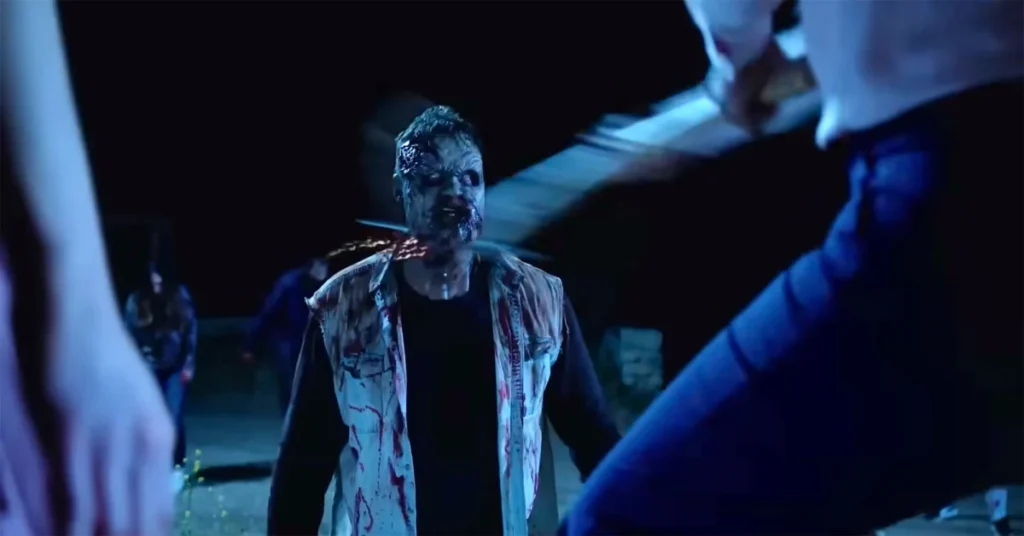

ITN Distribution has unveiled the official trailer for a contemporary remake of George A. Romero’s seminal 1968 horror masterpiece, Night of the Living Dead. The new iteration, slated for a summer VOD release, attempts to reimagine the foundational zombie narrative for a 2026 audience. However, early indications from the trailer suggest a production that may struggle to capture the groundbreaking impact of its predecessor, with initial reactions pointing towards a direct-to-video aesthetic that could disappoint genre aficionados.
Reimagining a Landmark: The 2026 Night of the Living Dead
The forthcoming remake, directed by Christopher Ray, known for his prolific contributions to the B-movie horror genre, aims to revive the chilling tale of a disparate group of survivors trapped in a rural Pennsylvania farmhouse as the dead rise and relentlessly pursue the living. The film’s synopsis highlights a global cataclysm where the undead roam the earth, leading to the collapse of civilization and a desperate struggle for survival.
A significant creative departure in this remake is the gender-swapping of the central character, Ben, originally portrayed by Duane Jones. In the 2026 version, the role is assumed by Vivica A. Fox. This casting choice marks a notable revision to the character dynamics and narrative focus of the original film, potentially offering a new perspective on leadership and survival within the confined and terrifying scenario. The ensemble cast also includes Brittany Underwood, Robert Carradine, Miko Hughes, Zack Ward, Rob Van Dam, and Adam Huss, bringing a diverse range of acting and performing backgrounds to the project.
The screenplay for this remake has been penned by Jared Cohn, and the film is produced by Tiki Terrors. While the original Night of the Living Dead was a pioneering work that fundamentally shaped the zombie genre, this new adaptation faces the formidable challenge of living up to its legendary status. The original film’s stark black-and-white cinematography, claustrophobic tension, and groundbreaking social commentary established a benchmark for horror filmmaking that has resonated for decades.
The Enduring Legacy of George A. Romero’s Original
George A. Romero’s Night of the Living Dead, released in 1968, was a cultural phenomenon that transcended the horror genre. Filmed on a shoestring budget in black and white, the independent film defied conventions of its time, offering a raw and unflinching portrayal of societal breakdown and human fear. Its impact was profound, not only popularizing the concept of flesh-eating, reanimated corpses but also embedding them within a framework of social allegory.

The film’s narrative, set in rural Pennsylvania, depicted a group of strangers seeking refuge from a mysterious epidemic that reanimated the dead. The tension within the farmhouse, fueled by internal conflict and external terror, mirrored the social anxieties of the late 1960s, including racial tensions, the Vietnam War, and widespread societal unrest. Duane Jones’s portrayal of Ben, a Black man who takes charge of the survivors, was particularly groundbreaking for its era, offering a nuanced and powerful performance that challenged racial stereotypes.
The original Night of the Living Dead is widely credited with establishing the modern zombie archetype: slow-moving, insatiable creatures driven by an instinct to feed on the living. Prior to Romero’s film, zombies in popular culture were often depicted as enslaved beings controlled by sorcerers, a concept largely derived from Haitian folklore. Romero’s vision transformed them into a relentless, existential threat, a force of nature that humanity could not reason with or defeat through conventional means. This shift fundamentally altered the landscape of horror cinema and paved the way for countless zombie-themed works across film, literature, and video games.
The Evolution of Zombie Cinema
Since the release of Romero’s seminal work, the zombie genre has undergone continuous evolution. The 1970s and 1980s saw further explorations of the zombie apocalypse, notably with Romero’s own sequels, Dawn of the Dead (1978) and Day of the Dead (1985), which escalated the scale of the threat and introduced more complex themes of consumerism and militarism. The late 1990s and early 2000s witnessed a resurgence of zombie popularity with films like 28 Days Later (2002), which introduced the concept of fast-moving, infected "rage zombies," and Shaun of the Dead (2004), a highly successful horror-comedy that paid homage to the genre’s roots.
More recently, the zombie narrative has been explored through television series like AMC’s The Walking Dead, which premiered in 2010 and became a global phenomenon, delving deeply into the long-term psychological and social ramifications of a prolonged zombie apocalypse. These modern interpretations have often experimented with the nature of the undead, the speed of infection, and the human capacity for both savagery and resilience in the face of societal collapse.
The 2026 remake of Night of the Living Dead enters this rich and varied landscape. The success of such a project often hinges on its ability to offer a fresh perspective or a compelling reinterpretation of established tropes. Given the original film’s profound cultural and cinematic significance, any remake faces the immense pressure of meeting audience expectations and carving out its own distinct identity.
Production Details and Distribution
Christopher Ray, the director of the upcoming Night of the Living Dead, has a diverse filmography that includes a substantial number of genre films, often characterized by their accessible, direct-to-video release models. His previous works include titles such as Megaconda, 2-Headed Shark Attack, Asteroid vs Earth, and Circus Kane. While this background suggests a familiarity with producing genre content, it also raises questions about the potential scale and artistic ambition of this particular project.

The decision to release the film directly to Video on Demand (VOD) this summer indicates a strategy aimed at reaching audiences without the traditional theatrical release window. This distribution model has become increasingly common for genre films, allowing for broader accessibility and a more direct connection with a targeted audience. ITN Distribution’s involvement suggests a focus on delivering the film efficiently to consumers seeking immediate access to new horror content.
The screenplay’s writer, Jared Cohn, also has a notable presence in the independent film circuit, contributing to a range of genre productions. The original film’s story was conceived and brought to life by George A. Romero, who co-wrote and directed it, with significant production contributions from Karl Hardman and Russell W. Streiner, who also acted in the film. The new adaptation acknowledges this foundational work, positioning itself as a direct descendant of Romero’s original vision.
The Significance of the Gender-Swapped Lead
The most prominent creative decision highlighted in the announcement is the gender swap of the character Ben, now portrayed by Vivica A. Fox. This change offers a critical point of discussion regarding representation and narrative reinvention within the horror genre. In the original film, Ben’s leadership and resilience were pivotal to the survival of the group, and his position as a Black protagonist in a position of authority was a significant aspect of the film’s social commentary.
By casting Vivica A. Fox, a prominent actress with a strong presence in genre films and television, the remake signals an intention to explore the character through a different lens. This alteration could lead to new dynamics within the survivor group, potentially re-examining themes of leadership, vulnerability, and societal expectations through the experiences of a female protagonist. The impact of this change will largely depend on the script’s ability to effectively integrate this reimagining and explore its implications within the narrative.
Audience Reactions and Critical Reception Anticipation
While the official trailer has just been released, initial reactions on platforms like YouTube and social media often provide an early gauge of audience sentiment. The critical reception of horror remakes can be notoriously divided, particularly when dealing with beloved classics. Fans often approach such projects with a mixture of anticipation and skepticism, eager to see a fresh take but wary of potential misinterpretations or dilutions of the original’s impact.
The comments section accompanying the trailer on YouTube often becomes a forum for immediate feedback, with viewers dissecting the visual style, acting performances, and narrative deviations. Early discussions surrounding this remake have, as noted in the original article, expressed concerns about its perceived quality, with some labeling it as "direct-to-video trash." Such initial impressions, while not definitive, can influence broader perceptions and set expectations for the film’s eventual release.

The challenge for this new Night of the Living Dead will be to convince both long-time fans of the original and new audiences that it offers a compelling and worthwhile experience. The success of any remake hinges on its ability to respect the source material while also bringing something novel to the table. Whether this 2026 adaptation can achieve that balance remains to be seen, but the conversation surrounding its release has already begun.
Broader Implications for the Horror Genre
The continuous production of zombie-themed content, including remakes of foundational works, speaks to the enduring appeal and adaptability of the genre. Night of the Living Dead remains a cornerstone of horror cinema, and its continued reinterpretation signifies its lasting cultural relevance. Each new iteration offers an opportunity to examine contemporary societal anxieties through the lens of the undead, reflecting the fears and concerns of the era in which it is produced.
The decision to gender-swap a central character like Ben also aligns with broader trends in Hollywood towards increased diversity and representation in storytelling. While the execution of such changes can vary in effectiveness, their presence indicates a growing awareness of the need for more inclusive narratives.
Ultimately, the success or failure of this 2026 remake will contribute to the ongoing dialogue surrounding the nature of adaptation, the evolution of genre conventions, and the legacy of cinematic classics. As ITN Distribution prepares to launch the film this summer, the horror community will undoubtedly be watching to see if this new Night of the Living Dead can rise to the challenge and make its own mark on the genre, or if it will become another cautionary tale in the long history of horror remakes. The anticipation, however skeptical, is palpable for a film that dares to revisit one of horror’s most iconic nightmares.