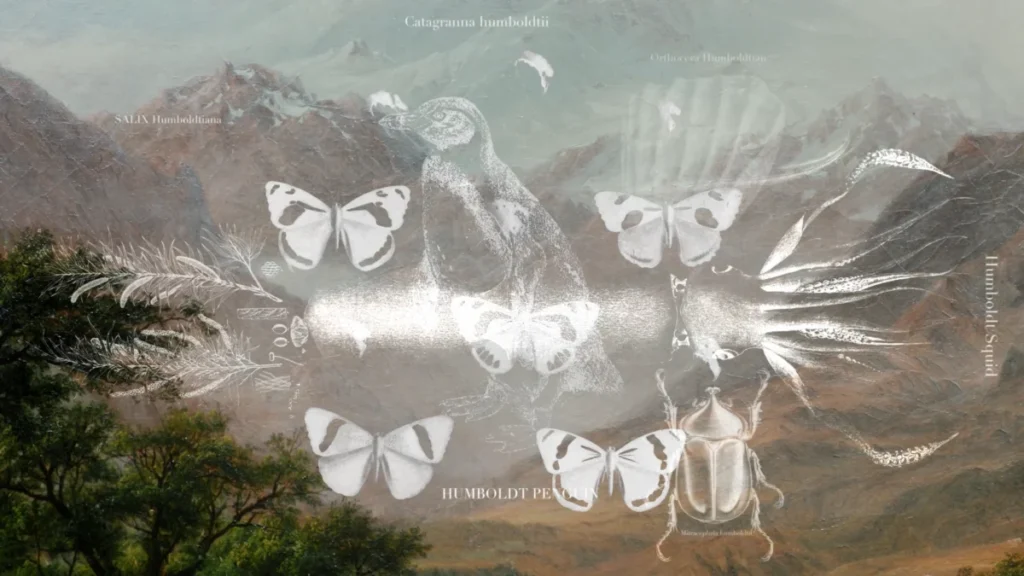

The enduring legacy of Alexander von Humboldt, the prodigious German naturalist and polymath, permeates the geographical and scientific landscape of the United States, far beyond common recognition. Indeed, Humboldt holds the unique distinction of having more species—ranging from Antarctic penguins and South American monkeys to a myriad of plant life, including a distinctive orchid—and countless places, from mountain ranges and rivers to cities and universities, named in his honor than any other individual in human history. Yet, his profound contributions to understanding the natural world, particularly his radical early 19th-century proposition of viewing nature as a "network of interconnected lives," have often been overshadowed by the sheer volume of his influence. This foundational idea, predating modern ecological thought by centuries, resonates with particular urgency today amidst the global climate crisis, underscoring the foresight of a mind centuries ahead of its time.
Alexander von Humboldt: A Legacy of Interconnectedness
Born in Berlin in 1769, Friedrich Wilhelm Heinrich Alexander von Humboldt embarked on a series of expeditions that would fundamentally reshape scientific inquiry. His most celebrated journey, a five-year scientific exploration of Spanish America from 1799 to 1804, was a monumental undertaking. Traversing vast swathes of the continent, from the Orinoco River to the peaks of the Andes, he meticulously documented flora, fauna, geological formations, and celestial phenomena. Unlike many contemporaries who approached nature through compartmentalized disciplines, Humboldt embraced a holistic perspective, observing how climate, altitude, and geography influenced life forms in intricate ways. His monumental work, Kosmos: A Sketch of a Physical Description of the Universe, published in five volumes between 1845 and 1862, sought to unify various branches of scientific knowledge into a coherent vision of the universe as a single, interacting entity.
Humboldt’s concept of Naturgemälde (nature painting), a visual representation of the distribution of plants based on altitude and temperature, was revolutionary, laying the groundwork for biogeography. He meticulously measured atmospheric pressure, magnetic variations, and oceanic currents, demonstrating the interconnectedness of Earth’s systems. His observations in South America led him to warn of the potential consequences of human activities on the environment, particularly deforestation and irrigation practices, anticipating the modern discourse on anthropogenic climate change by over 200 years. This early warning about human impact on natural systems makes his "interconnectedness" philosophy not just an academic curiosity but a vital framework for contemporary environmentalism. His influence on later naturalists and thinkers, including Charles Darwin, Henry David Thoreau, and John Muir, is well-documented, solidifying his role as a foundational figure in environmental thought and conservation. The 2015 bestselling biography, The Invention of Nature by Andrea Wulf, played a significant role in reintroducing Humboldt’s remarkable life and prescient ideas to a new generation, sparking renewed interest in his "queer naturalist" persona and his proto-environmentalist leanings.
"Humboldt USA": A Contemporary Journey Through Nature’s Namesake
It is against this rich historical and intellectual backdrop that G. Anthony Svatek’s feature film debut, Humboldt USA, embarks on its own ambitious journey. The documentary traces Humboldt’s metaphorical footsteps across the American landscape, from the ancient redwood forests of California to a quiet parkway in New York state and the vibrant, artificial glow of Nevada, to interrogate humanity’s ever-evolving, often fraught, relationship with the natural world. The film is a kaleidoscopic weave of disparate elements: the personal narratives of individuals living in these Humboldt-named locations, excerpts from Humboldt’s own insightful writings, and the introspective reflections of the filmmaker himself. The result is described as a "playful, but also fraught, love letter" to the German naturalist, acknowledging both his visionary genius and the complex realities of his legacy in the 21st century.

Svatek, a Brooklyn-based filmmaker raised in the Austrian Alps, has consistently explored the fractured relationship between humans and nature in his previous works. His 2023 short, Some Thoughts on the Common Toad, a "cine-collage manifesto in defense of beauty amidst political cynicism and environmental alienation" based on an essay by George Orwell and narrated by Tilda Swinton, showcases his penchant for blending intellectual inquiry with evocative imagery. This background informs Humboldt USA‘s unique stylistic approach, which eschews traditional biographical narrative for a more immersive, reflective, and often critical engagement with Humboldt’s ideas.
Production and Creative Vision
The genesis of Humboldt USA was deeply personal for Svatek, sparked by his reading of Andrea Wulf’s biography. He discovered striking biographical parallels between himself and Humboldt: both identify as queer, share the same birthday, and possess a bicultural identity (Humboldt as "half-American, half-German," Svatek as "half-Austrian, half-American"). These connections served as an initial hook, transforming Humboldt from a historical name into a relatable figure and an "anchor" through which to explore the profound shifts in environmentalism and our relationship with nature over two centuries. The film’s production itself was a multi-year endeavor, spanning nearly seven years, with initial research commencing at the end of 2019. The global COVID-19 pandemic significantly impacted the filming schedule, leading to a period of dormancy, a common challenge for independent documentary productions requiring extensive travel and on-location shoots.
One of the most challenging, yet crucial, elements of Humboldt USA is Svatek’s use of a personal voiceover as a narrative device. This intimate, conversational tone evolves throughout the film, mirroring the complexities of a burgeoning relationship. Initially characterized by an almost romantic admiration for Humboldt, it gradually incorporates moments of "disappointment" and nuanced reflection. Svatek explains this evolution as akin to falling in love: "the more time you spend with them, the more nuanced they become, the more complex they become. That’s what makes a person, right?" This direct address to Humboldt allows the filmmaker to bridge the historical gap, presenting contemporary realities—including the rapid technological advancements and their environmental consequences—as a direct continuation, and sometimes a troubling deviation, of Humboldt’s original vision of interconnectedness. This narrative choice underlines the rapid changes that have occurred over 200 years, framing the film as a dynamic dialogue between past and present.
Navigating the Spectrum of Nature: From Redwoods to AI
Svatek’s selection of locations and characters for Humboldt USA was an intuitive process, guided by the desire to represent the vast social and ecological diversity of the United States. He deliberately sought out places bearing Humboldt’s name that would offer a spectrum of environments: urban settings where activists strive to green neglected neighborhoods, rural landscapes where conservationists work to reintroduce bighorn sheep to protected lands, and technologically advanced Californian enclaves where "ecological archivists" engage with nature through cutting-edge digital means. This eclectic mix challenges conventional notions of what "nature" constitutes in the modern era.
The film delves into what Svatek identifies as the two prevailing, often abstract, Western paradigms for understanding nature: the "romanticized approach" that fences it off in national parks, and the "scientific one" that reduces it to data points. While both offer valuable perspectives, Svatek contends they can also create a distance, abstracting nature from lived human experience. Humboldt’s original emphasis on a holistic, interconnected web of life stands in stark contrast to these often fragmented views. However, Humboldt USA also critically examines the very concept of "interconnectedness" itself. While popular in contemporary ecological discourse, Svatek, identifying as a "techno-skeptic," explores how modern technological advancements, while promising greater connectivity, can paradoxically lead to a more mediated and abstract experience of the natural world. The film prompts viewers to question the unintended consequences of our digital attempts to understand and manage nature.

The Unexpected Rise of AI in Nature’s Narrative
Perhaps one of the most prescient storylines within Humboldt USA is its exploration of Artificial Intelligence (AI) and its burgeoning role in our relationship with nature. Svatek began filming this segment in California between 2021 and 2022, a period notably preceding the mainstream explosion of AI tools like ChatGPT. He admits to sometimes struggling to fully grasp the concepts being discussed by the "ecological archivists" he filmed—a group dedicated to scanning redwood forests and utilizing advanced gear to create "organic algorithms." The rapid acceleration of AI development in subsequent years, however, dramatically underscored the relevance and urgency of this storyline, making the film’s early engagement with the topic remarkably timely.
These ecological archivists represent a fascinating intersection of science, technology, and environmentalism, attempting to leverage sophisticated digital tools to understand and potentially replicate the complex systems of the natural world. Their pursuit of "organic algorithms" raises profound questions about the future of conservation, the limits of technological intervention, and the philosophical implications of seeking to translate biological intricacy into digital code. The film implicitly asks: does this technological quest for interconnectedness truly foster a deeper appreciation for nature, or does it further abstract and commodify it? As AI continues to evolve at an unprecedented pace, Humboldt USA‘s insights into these early attempts to merge advanced technology with ecological understanding offer a crucial lens through which to examine our future interactions with the planet.
Global and Domestic Premieres: A Festival Journey
Humboldt USA is poised to make a significant impact on the international documentary circuit, commencing with its world premiere in the international feature film competition of the 57th edition of the Swiss documentary festival Visions du Réel. Held in Nyon, near Geneva, on Wednesday, April 22, Visions du Réel is renowned globally as a premier platform for innovative and challenging documentary cinema, often showcasing works that push the boundaries of the form and engage with pressing global issues. A premiere at such a prestigious festival confers significant recognition and sets the stage for international distribution and critical reception.
Following its European debut, the film will have its U.S. and North American premiere on May 2 at the Museum of the Moving Image’s First Look festival in New York City. First Look is celebrated for its commitment to "adventurous new cinema," providing a vital platform for emerging filmmakers and unconventional narratives. The dual premieres at these respected festivals highlight the film’s artistic merit and its timely relevance, ensuring it reaches diverse audiences and sparks important conversations on both sides of the Atlantic.
Broader Implications: Climate Action and the Future of Advocacy

Looking ahead, G. Anthony Svatek’s next project signals a continued engagement with urgent environmental themes, albeit through a different lens. He is exploring a narrative or hybrid project centered on the strategy of direct action employed by environmental activists in art museums. This topic has gained considerable international attention in recent years, with groups like Just Stop Oil staging high-profile protests where they target famous artworks—often protected by glass or barriers—to draw attention to the climate crisis. These actions, such as throwing soup on Van Gogh’s Sunflowers or gluing oneself to a frame, are intentionally provocative.
Svatek notes that in our contemporary media landscape, "scandal and outrage are modes through which we get attention." This tactical understanding informs his interest in these protests. While acknowledging the polarizing nature of such actions and not necessarily endorsing them, he finds the underlying strategy—intentional provocation aimed at forcing a conversation about an often-ignored crisis—to be profoundly interesting. He aims to delve into the complexities of this approach, exploring the ethical dilemmas, public reactions, and the efficacy of such radical tactics in a world struggling to address climate change. This upcoming project underscores Svatek’s consistent commitment to examining how humans interact with, react to, and advocate for the natural world in an increasingly complex and mediated society, echoing the very spirit of critical inquiry that underpins Humboldt USA.
Reclaiming a Visionary’s Legacy for a Fractured World
Humboldt USA stands as a poignant and intellectually rigorous exploration of Alexander von Humboldt’s enduring, yet often forgotten, influence. By traversing the American landscape and weaving together diverse narratives, G. Anthony Svatek’s film not only pays homage to a visionary who foresaw the interconnectedness of nature but also critically examines how those ideas have evolved, been challenged, and, at times, fractured in the modern era. From the philosophical implications of AI interacting with ancient forests to the practicalities of urban greening and wildlife conservation, the documentary prompts a vital reassessment of humanity’s evolving relationship with the planet. In an age grappling with unprecedented environmental challenges, Humboldt USA serves as a powerful reminder of a legacy that offers both historical insight and a compelling framework for understanding our present and shaping a more sustainable future.