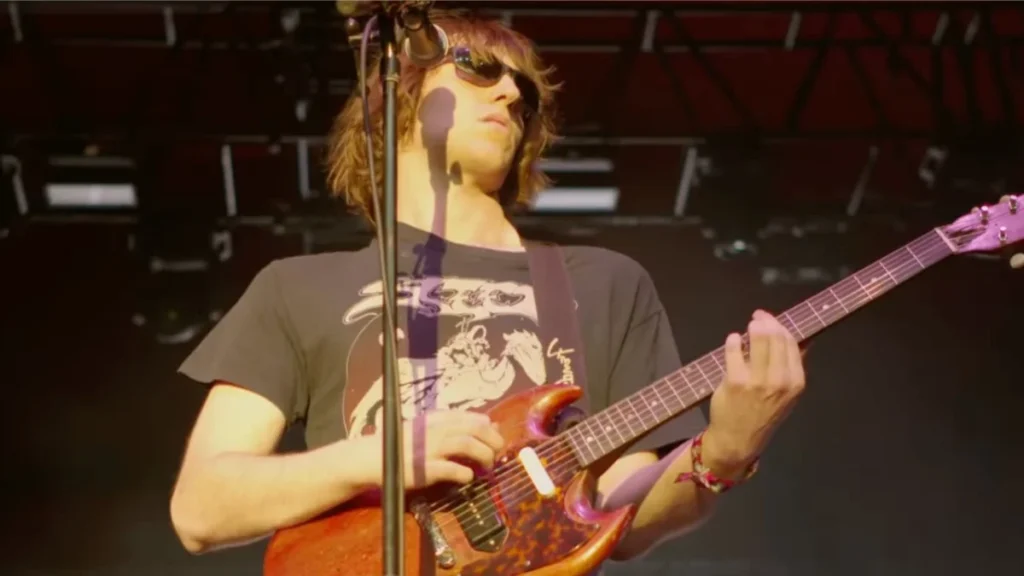

The vast, sun-drenched expanse of Coachella Valley witnessed an unexpected sonic revelation on Saturday afternoon, as the burgeoning Brooklyn-based rock band Geese delivered a garage rock rendition of Justin Bieber’s ubiquitous 2010 pop anthem, “Baby.” This electrifying performance, a first for the band in a live setting, captivated early festival-goers and quickly became a major talking point, arguably overshadowing the highly anticipated, albeit uncertain, appearance of Bieber himself later that evening. The audacious cover, interwoven with Geese’s own track “2122,” showcased a masterful blend of frontman Cameron Winter’s nuanced vocals against a backdrop of raw, pulverizing guitars, marking a significant moment of genre subversion at one of the world’s most influential music festivals.
The Unlikely Rendition: Geese’s Coachella Triumph
As the early afternoon sun beat down on the Coachella Stage, Geese, known for their distinctive blend of post-punk and indie rock, took to the stage. Their set, already highly anticipated by a growing cult following, took an unforeseen turn when they launched into their now-legendary cover of "Baby." While a recorded version of Geese’s take on the pop bop had circulated online for several years, Saturday’s performance marked its grand debut in a live concert environment. The choice to incorporate "Baby" into a mashup with "2122," a track from their critically acclaimed discography, was a stroke of creative genius. The juxtaposition was striking: the familiar, saccharine melody of "Baby" was stripped down and reassembled through Geese’s gritty, high-energy lens. Cameron Winter’s vocals navigated the melody with a delicate, almost melancholic croon, providing a stark contrast to the band’s signature wall of "pulverizing guitars" and driving rhythm section. This dynamic interplay transformed the bubblegum pop hit into an anthemic, almost cathartic rock experience, resonating deeply with the audience. The immediate reaction, as evidenced by a flurry of social media posts, including one widely shared tweet from user @spinelessways exclaiming, "geese playing baby cover at coachella was NOT in my 2026 bingo card," underscored the unexpected delight and surprise of the moment. This unexpected fusion not only energized the crowd but also solidified Geese’s reputation for unpredictable, compelling live performances.
A Deeper Dive into Geese: From Brooklyn to Indio
Geese emerged from Brooklyn, New York, quickly establishing themselves as a formidable force in the contemporary indie rock scene. Comprising Cameron Winter (vocals), Gus Green (guitar), Foster Hudson (guitar), Dom DiGesu (bass), and Max Bassin (drums), the band garnered significant attention with their debut album, Projector, in 2021. Their sound is often described as a sophisticated amalgam of post-punk urgency, garage rock grit, and art-rock experimentalism, drawing comparisons to acts like Television, Parquet Courts, and Interpol. Their subsequent releases, including the acclaimed 3D Country and Getting Killed, further cemented their critical standing, showcasing their evolution and increasing prowess in songwriting and musicianship. Tracks such as "I See Myself," "100 Horses," "Au Pays Du Cocaine," and "Taxes," which were also featured in their Coachella set, are emblematic of their intricate arrangements, propulsive rhythms, and Winter’s distinctive vocal delivery. The band’s trajectory, from indie darlings to a prominent act on the global festival circuit, is a testament to their unique sound and compelling stage presence. Their appearance at Coachella, a festival often seen as a barometer for rising talent, signifies a pivotal moment in their career, allowing them to showcase their artistry to an expansive and diverse international audience.
The Enduring Legacy of "Baby" and the Bieber Phenomenon
Released in 2010, Justin Bieber’s "Baby," featuring rapper Ludacris, was an undeniable cultural phenomenon that propelled the then-teenage Canadian singer to global superstardom. The song, an infectious R&B-pop track, quickly became one of the best-selling singles of all time and its accompanying music video, at one point, held the record for the most-viewed video on YouTube. "Baby" not only defined an era of pop music but also solidified Bieber’s image as a teen idol, establishing a fan base that would grow exponentially over the subsequent decade. His career has since evolved, navigating personal challenges and artistic transformations, but "Baby" remains an iconic touchstone of his early work.
The anticipation surrounding Justin Bieber’s potential performance at Coachella on Saturday night was palpable, with speculation rife about whether he would grace the stage with "Baby." Bieber has a history of making surprise appearances at Coachella, often joining other artists for impromptu collaborations. The mere possibility of him performing his signature hit created a buzz that underscored the song’s lasting impact. The stark genre contrast between Bieber’s original, polished pop rendition and Geese’s raw, rock-infused interpretation served to highlight the versatility of the composition itself, demonstrating how a song can transcend its original form and context when reimagined through a different artistic lens. Geese’s decision to cover such a universally recognized pop song, particularly one so deeply embedded in a different musical universe, was a bold statement, implicitly challenging the traditional boundaries of musical taste and performance at a festival renowned for its eclectic lineup.
Coachella: A Crucible for Iconic Moments
The Coachella Valley Music and Arts Festival, held annually in Indio, California, has long been revered as a cultural touchstone and a bellwether for musical trends. Since its inception in 1999, it has grown from a niche indie gathering into a global spectacle, celebrated for its diverse lineup spanning rock, pop, hip-hop, electronic, and experimental genres. Beyond its headlining acts, Coachella is renowned for fostering a unique atmosphere where unexpected collaborations and surprise appearances often become the most memorable moments. The festival’s sprawling grounds and multiple stages provide a platform for both established legends and emerging artists to make their mark.
The element of surprise is a core component of the Coachella experience, with countless legendary guest spots and impromptu performances etched into its history. From Prince’s iconic cover of Radiohead’s "Creep" to Daft Punk’s transformative pyramid stage, Coachella thrives on these unpredictable, often viral, moments. Geese’s "Baby" cover fits perfectly into this tradition, becoming an instant legend in a festival environment that rewards creativity, audacity, and genuine connection with the audience. Such performances underscore Coachella’s role not just as a music festival, but as a dynamic cultural event where artistic boundaries are pushed, and new narratives are forged. The collective experience of witnessing an unexpected, yet perfectly executed, cover like Geese’s "Baby" contributes significantly to the festival’s unique identity and enduring appeal.
The Chronology of a Viral Moment
The unfolding of Geese’s memorable Coachella performance is best understood within a brief chronology of key events:
- 2010: Justin Bieber releases "Baby," cementing his status as a global pop phenomenon. The song quickly becomes a cultural touchstone.
- Prior to 2026 Coachella: Geese, as an emerging indie rock band, records a studio cover of "Baby." This rendition circulates online among fans, gaining a reputation for its unique interpretation.
- Saturday Afternoon, April 12, 2026: Geese takes the stage at Coachella. During their set, they make the momentous decision to perform their "Baby" cover live for the very first time, integrating it seamlessly into a mashup with their original song "2122." The performance immediately garners significant attention and social media buzz.
- Saturday Night, April 12, 2026: Justin Bieber is anticipated to make an appearance at Coachella, with speculation mounting that he might perform "Baby" as part of a guest set. The possibility creates a direct, albeit coincidental, contrast with Geese’s earlier performance.
- Spring/Summer 2026: Following their acclaimed Coachella appearance, Geese is confirmed for a busy festival circuit schedule, including performances at Governors Ball in New York, Bonnaroo in Tennessee, and Lollapalooza in Chicago. These upcoming dates are likely to see increased interest and attendance, partly fueled by the viral success of their Coachella cover.
This timeline illustrates how a seemingly simple artistic choice can intertwine with broader cultural events, creating a ripple effect that amplifies an artist’s reach and defines a specific moment in festival history.
Sonic Alchemy: The Art of the Mashup
Geese’s decision to integrate "Baby" with their own track "2122" was not merely a novelty; it was an act of sonic alchemy. The success of the mashup lay in its ability to deconstruct a familiar pop structure and rebuild it with a new, raw aesthetic, without losing the essence of the original melody. The "delicate croons" of Cameron Winter served as the initial point of contact, easing the audience into the recognizable chorus of "Baby." This vocal fragility, however, was quickly met with the "pulverizing guitars" and driving rhythm section characteristic of Geese’s sound. The guitars, rather than simply mimicking the pop arrangement, provided a distorted, angular counterpoint, injecting an urgent, almost frenetic energy into the track.
The rhythmic backbone, often a blend of post-punk precision and garage rock looseness, gave "Baby" an entirely new pulse, transforming its danceable pop beat into a head-nodding rock groove. This interplay between Winter’s nuanced vocal delivery and the band’s instrumental aggression created a compelling tension that was both surprising and deeply satisfying. It showcased Geese’s musical dexterity and their willingness to experiment, demonstrating that a well-known melody can be a canvas for profound reinterpretation. The mashup wasn’t just a cover; it was a conversation between genres, a recontextualization that highlighted the melodic strength of "Baby" while imbuing it with the raw, emotional power of rock music. This artistic choice speaks volumes about the band’s confidence and their ability to forge a unique identity even while referencing mainstream culture.
Implications and Future Trajectory
The viral success of Geese’s "Baby" cover at Coachella carries significant implications for the band’s future trajectory and the broader music landscape. For Geese, this performance is poised to be a pivotal moment, exponentially increasing their visibility beyond their existing indie fan base. A daring, well-executed cover at a high-profile event like Coachella serves as a powerful introduction to new audiences, potentially converting casual festival-goers into dedicated fans of their original material. The sheer unexpectedness and quality of the rendition ensure that Geese will be a recurring name in post-Coachella discussions, likely leading to increased streaming numbers, ticket sales for their upcoming festival appearances, and broader media coverage.
Furthermore, this performance reinforces the idea that genre boundaries are increasingly fluid in contemporary music. The seamless integration of a pop anthem into a rock set challenges purist notions and exemplifies the creative freedom artists now exercise. It underscores the power of festivals like Coachella to serve as crucibles for such genre-bending experiments, where the audience is often receptive to innovation. The moment also symbolizes a shift in how artists engage with pop culture, moving beyond simple homage to a more transformative reinterpretation. For Geese, this could mean greater artistic freedom in their future projects, an expanded fan base eagerly anticipating their next move, and a cemented reputation as one of the most exciting and unpredictable bands in modern rock. Their upcoming appearances at Governors Ball, Bonnaroo, and Lollapalooza will undoubtedly draw larger crowds, many of whom will be eager to witness the band that audaciously reimagined a pop classic.
Audience and Industry Reactions
The immediate aftermath of Geese’s "Baby" cover at Coachella was characterized by an outpouring of enthusiastic reactions from attendees and a rapid spread of the performance across social media platforms. Beyond the initial tweet, festival-goers shared videos, photos, and personal accounts, all expressing a mixture of surprise, delight, and admiration for the band’s audacity and musical skill. The sentiment was overwhelmingly positive, with many praising Geese for injecting a refreshing and unexpected moment into the festival’s sprawling lineup. Music critics and industry observers, while not yet having published formal reviews at the time of the performance, quickly took note of the buzz. The general consensus was that Geese had not only delivered a standout set but had also created a memorable, viral moment that would resonate far beyond the festival grounds. This kind of organic, word-of-mouth endorsement is invaluable for emerging artists, offering a level of exposure that traditional marketing campaigns struggle to achieve. The performance became a talking point, fueling discussions about genre bending, the role of covers in live sets, and the evolving dynamics of music festivals. It served as a testament to the power of a single, well-executed artistic decision to capture the collective imagination and elevate an artist’s profile in a highly competitive industry.
In conclusion, Geese’s audacious and expertly executed garage rock rendition of Justin Bieber’s "Baby" at Coachella was far more than just a cover song; it was a definitive moment that solidified their status as a compelling force in contemporary music. By skillfully blending unexpected pop nostalgia with their signature raw energy, Geese not only delivered a standout performance but also ignited a widespread conversation about genre, artistry, and the ever-evolving landscape of music festivals. Regardless of Justin Bieber’s own potential performance later that evening, Geese had already claimed the narrative, proving that sometimes, the most memorable moments are those you never see coming. Their Coachella triumph is set to reverberate throughout their busy festival season and beyond, cementing their place as a band unafraid to challenge expectations and redefine what rock music can be in the 21st century.