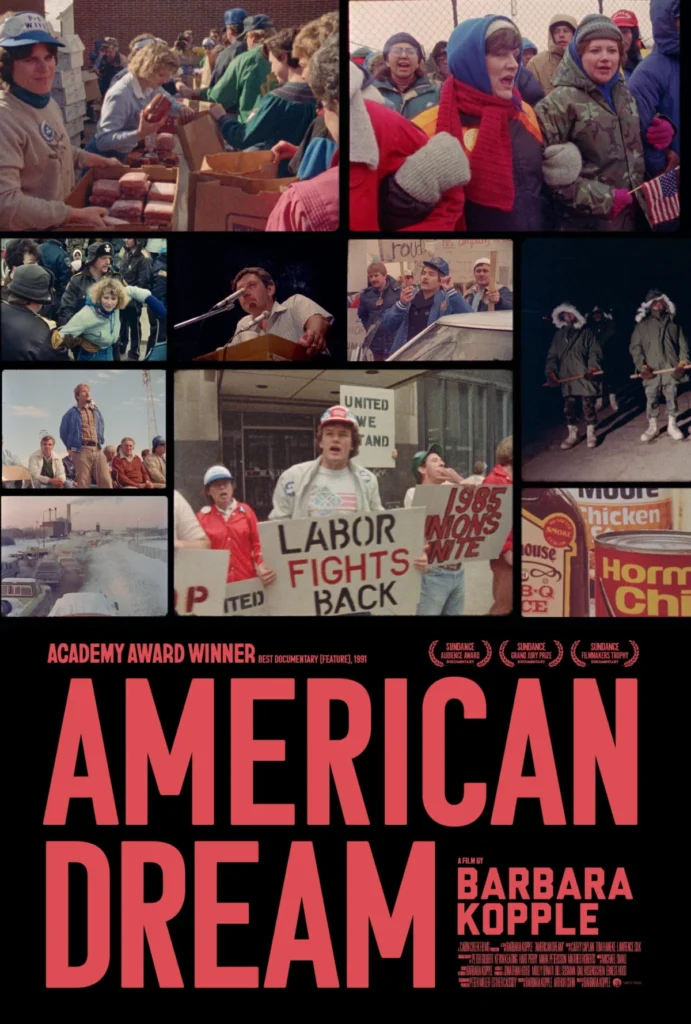

Janus Films has unveiled a brand new trailer for a meticulously crafted 4K digital restoration of Barbara Kopple’s seminal 1990 documentary, American Dream. This Oscar-winning film, which garnered the Academy Award for Best Documentary Feature in 1991, offers an unflinching and deeply human account of a pivotal labor dispute that shook the foundations of a small American town and reverberated through the broader landscape of American industrial relations. The restoration, supervised and approved by director Barbara Kopple herself, promises to bring the raw power and critical insights of this enduring work to contemporary audiences with unprecedented visual and auditory fidelity.
The Hormel Strike: A Town Under Siege
The narrative of American Dream is inextricably linked to the 1985-1986 strike against the Hormel Foods Corporation in Austin, Minnesota. This wasn’t merely a disagreement over wages; it was a profound societal schism that pitted neighbor against neighbor, union members against scabs, and workers against a corporate entity perceived as having reneged on its historical commitments. The Hormel plant, a cornerstone of the Austin economy for decades, had been a symbol of stability and opportunity for its employees. However, in the economic climate of the mid-1980s, characterized by deregulation and a shifting balance of power between labor and capital, the company sought to drastically cut wages and benefits for its unionized workforce, particularly Local P-9 of the United Food and Commercial Workers International Union (UFCW).
The workers, many of whom had dedicated their lives to the company and whose families had worked there for generations, viewed these proposed cuts as a betrayal. They had endured difficult and often dangerous working conditions, and the wage reductions threatened their livelihoods and the economic well-being of their families and the entire community. The initial union leadership, under the guidance of Local P-9 president Jim Guyette, was defiant, refusing to accept the company’s demands and seeking to leverage their collective power to resist.
Kopple’s Lens: Capturing the Human Cost
Barbara Kopple, already a celebrated filmmaker for her groundbreaking 1976 documentary Harlan County, USA, which also explored the brutal realities of labor struggles, turned her attention to Austin. Her approach in American Dream is characterized by an immersive, fly-on-the-wall style, granting audiences intimate access to the emotional turmoil, fierce debates, and desperate struggles that defined the strike. The film meticulously documents union meetings, where impassioned speeches and anxieties about job security and family survival are laid bare. It also captures the pronouncements and strategies of Hormel management, union leadership, and external labor activists like Ray Rogers, whose campaign aimed to disrupt Hormel’s public image and financial operations.
The documentary doesn’t shy away from the internal divisions that emerged within the union itself. As the strike wore on, the economic pressures mounted. Some workers, facing mounting bills and the threat of permanent replacement, began to question the efficacy of the prolonged strike and considered crossing the picket line. This internal conflict, exacerbated by external pressures and the gradual erosion of solidarity, forms a central dramatic arc of the film, highlighting the profound personal sacrifices demanded by such labor actions.

The film features compelling interviews with individuals from all sides of the conflict. Beyond the rank-and-file workers, Kopple captures the perspectives of union organizers, corporate executives, and prominent figures like Jesse Jackson, who visited Austin to offer his support to the striking workers, underscoring the national significance of the dispute.
A Timeline of the Strike and its Aftermath
The events depicted in American Dream unfolded over a critical period:
- 1985: Hormel Foods announces significant wage and benefit reductions for its Austin plant workers, sparking immediate opposition from Local P-9. Negotiations falter, leading to a breakdown in labor relations.
- August 1985: The strike officially begins. Local P-9, against the advice of the international UFCW leadership, launches a militant campaign, including extensive picketing and public relations efforts aimed at damaging Hormel’s reputation.
- Late 1985 – Early 1986: The strike intensifies. The community becomes increasingly polarized. Hormel begins hiring replacement workers, leading to tense confrontations at the picket lines. Law enforcement and, at times, the National Guard are deployed to maintain order, highlighting the volatile atmosphere. Internal dissent within Local P-9 grows as economic hardship takes its toll.
- June 1986: The strike officially ends. Local P-9 is decertified by the National Labor Relations Board (NLRB) after a contentious vote. Many striking workers are unable to return to their jobs, replaced by new hires. The union’s defeat marks a significant blow to organized labor in the meatpacking industry.
- 1990: Barbara Kopple’s documentary American Dream premieres at the New York Film Festival, bringing the raw and often painful story of the Hormel strike to a national audience.
- 1991: American Dream wins the Academy Award for Best Documentary Feature, solidifying its status as a landmark film in the genre.
- 2026: Janus Films and The Criterion Collection release a newly restored 4K digital version of American Dream, accompanied by a theatrical re-release and an art-house tour, ensuring the film’s continued relevance and accessibility.
Technical Restoration: A New Lease on Life
The 4K digital restoration undertaken by Janus Films and The Criterion Collection represents a significant technical undertaking. The process involved scanning the original 16mm internegative, a delicate and intricate procedure to capture the film’s original visual texture and detail. The original monaural soundtrack has also been meticulously remastered from the 35mm DME magnetic track, aiming to enhance clarity and impact. This commitment to preserving and enhancing the film’s technical elements ensures that Kopple’s powerful storytelling is presented with the highest possible quality, allowing modern viewers to experience the documentary as if it were made today, yet retaining its authentic historical character.
Supporting Data and Context: The Reagan Era and Labor’s Decline
The Hormel strike and American Dream are deeply embedded within the broader socio-economic and political context of the United States in the 1980s. This era, often referred to as the Reaganomics era, was characterized by a significant shift in economic policy, emphasizing deregulation, tax cuts for corporations and the wealthy, and a weakening of organized labor.
- Decline in Union Membership: The decade saw a marked decline in union membership across many sectors of the American economy. The percentage of the U.S. workforce belonging to unions fell from approximately 20.9% in 1980 to 16.1% in 1990. This decline was partly due to structural changes in the economy, with manufacturing jobs decreasing and service sector jobs increasing, and partly due to a more aggressive stance by employers and government policies that were perceived as less supportive of labor unions.
- Employer Aggression: Many corporations adopted more assertive strategies to counter union power, including the use of strikebreakers, "union busting" consultants, and legal challenges to union organizing efforts. The Hormel Foods Corporation’s actions in Austin were part of this broader trend.
- The PATCO Strike of 1981: The federal government’s decisive response to the Professional Air Traffic Controllers Organization (PATCO) strike in 1981, where President Reagan fired over 11,000 striking air traffic controllers, sent a powerful signal to both employers and unions. It demonstrated a willingness by the federal government to take a hard line against organized labor, emboldening management in subsequent labor disputes.
- Globalization and Competition: The increasing forces of globalization and international competition also played a role, as companies sought to reduce labor costs to remain competitive in the global market.
In this environment, the Hormel strike became a symbol of organized labor’s struggle for survival and relevance. The film’s depiction of the workers’ determination, their internal conflicts, and their ultimate defeat offered a sobering reflection on the challenges facing the American working class during this transformative period.
Official Responses and Industry Reactions
While the original release of American Dream garnered significant critical acclaim and an Academy Award, its re-release in 4K offers an opportunity for renewed engagement. Janus Films, a renowned distributor of art-house and independent cinema, has consistently championed the preservation and re-release of important cinematic works. Their partnership with The Criterion Collection, known for its high-quality home video releases and restorations, signals a commitment to ensuring American Dream is presented with the highest possible standards.

Reactions from film critics and historians are expected to highlight the documentary’s enduring power and its continued relevance in discussions about labor rights, corporate responsibility, and economic inequality. For contemporary audiences, the restoration provides a chance to engage with a piece of American history that shaped contemporary labor relations and continues to resonate with ongoing debates about fairness in the workplace.
Broader Impact and Implications
American Dream is more than just a historical document; it is a profound exploration of power dynamics, community resilience, and the human cost of economic upheaval. The film’s unflinching portrayal of the strike’s devastating impact on the lives of the workers and their families serves as a potent reminder of the sacrifices made in the pursuit of fair labor practices.
The documentary’s critical success and Oscar win brought national attention to the Hormel strike, shining a spotlight on the broader issues of corporate power and the declining influence of organized labor in the United States. Kopple’s work has been instrumental in shaping public understanding of labor struggles and continues to serve as an essential text for students of documentary film, labor history, and American social movements.
The 4K restoration ensures that this vital piece of cinematic and historical record is accessible to new generations of viewers, offering valuable insights into a critical period of American labor history. As the film tours select theaters and becomes available for wider viewing, it invites reflection on the enduring relevance of its themes in today’s complex economic landscape. The meticulous restoration by Janus Films and The Criterion Collection is a testament to the film’s lasting significance and its power to provoke thought and dialogue about the rights and struggles of working people in America.