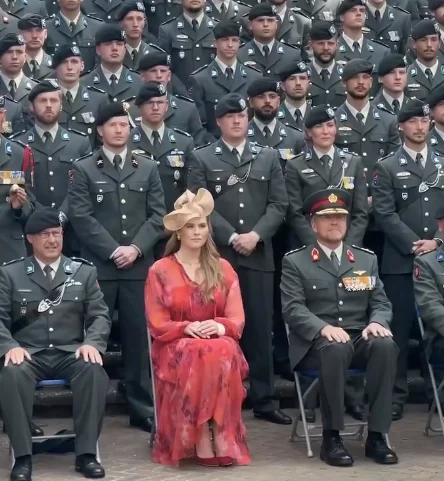

The Princess of Orange, Catharina-Amalia, heir to the Dutch throne, has commenced a significant phase in her military career, embarking on a work-study program with the Royal Netherlands Air Force. This specialized posting, facilitated by Defensity College, marks the next crucial step in her comprehensive military training, underscoring her commitment to serving the nation and preparing for her future constitutional role. The announcement, made by the Dutch Royal House, was accompanied by images of Princess Catharina-Amalia meeting with Air Force officials, a visual representation of her integration into this new capacity.
A Strategic Step in Royal Military Preparedness
Princess Catharina-Amalia’s assignment to the Royal Netherlands Air Force is more than just a symbolic gesture; it is a carefully orchestrated component of her broader military education. Defensity College, the institution coordinating this program, is designed to offer university students a structured pathway to gain military experience while pursuing their academic studies. The program’s emphasis on a "versatile program focused on the pillars of work, personal development, and study" aligns with the Royal House’s stated intention for the Princess to remain a student and a reservist, maintaining her status as a private citizen throughout her training.
This specialized posting follows Princess Catharina-Amalia’s completion of her initial military training in January, where she attained the rank of Corporal. Prior to this new assignment, she was attached to the Defence Staff, a period that likely allowed for a foundational understanding of the broader defense landscape. Her continued role as a reservist highlights the Dutch monarchy’s unique approach to military engagement, where members of the Royal Family hold specific ranks and positions within the armed forces, contributing to national security without assuming the ultimate command, which rests with the government.
Background and Chronology of Royal Military Service
Princess Catharina-Amalia’s journey into military service is a notable departure from some historical precedents within the Dutch monarchy, yet it builds upon a tradition of royal engagement with the armed forces. While Princess Beatrix attended university during her time as heir, she did not undertake formal military training. In contrast, her brother, King Willem-Alexander, received extensive training with the Royal Netherlands Navy and subsequently served as a reservist across all branches of the Dutch military, demonstrating a hands-on approach to understanding the nation’s defense capabilities.
The decision for Princess Catharina-Amalia to undergo military training is particularly significant as she is the first Dutch royal woman to do so. This sets a new precedent for female heirs within the Dutch Royal House. Her mother, Queen Máxima, has also recently embarked on a path of military contribution, training as a reservist in the Royal Netherlands Army. This initiative, announced in February, saw Queen Máxima attain the rank of Private, with a stated motivation that "our safety is no longer a given and she, like many others, wishes to contribute to that safety." Her year-long training is set to culminate in the rank of Lieutenant Colonel, preparing her to serve where needed.
The timeline of Princess Catharina-Amalia’s military development can be broadly outlined:
- Early 2025 (approximate): Princess Catharina-Amalia commences her initial military training.
- January 2026 (approximate): Princess Catharina-Amalia completes her foundational military training and attains the rank of Corporal. She remains attached to the Defence Staff.
- July 2026 (as per article date): The Dutch Royal House announces Princess Catharina-Amalia’s posting to a student training job with the Royal Netherlands Air Force through Defensity College. This marks the beginning of her specialized training.
- February 2026 (prior announcement): Queen Máxima’s participation in reservist training with the Royal Netherlands Army is announced.
This structured progression indicates a deliberate and phased approach to building the Princess’s expertise and understanding of national defense.
Defensity College: A Bridge Between Academia and Defense
Defensity College plays a pivotal role in enabling individuals like Princess Catharina-Amalia to combine academic pursuits with military service. The organization’s mission is to provide a "versatile program" that integrates practical military experience with personal development and academic study. This model is particularly attractive to university students who may wish to explore a career in the armed forces or gain valuable transferable skills without fully committing to a career in uniform immediately.
The program’s structure typically involves part-time training and postings, allowing participants to maintain their student status. This approach offers flexibility and ensures that individuals can continue their higher education. For Princess Catharina-Amalia, this means she will be pursuing her Bachelor’s degree in Dutch Law at the University of Amsterdam concurrently with her Air Force duties. This dual focus reflects a commitment to both her future constitutional responsibilities, which often involve understanding legal frameworks, and her dedication to national service. She previously graduated with a Bachelor’s degree in Politics, Psychology, Law, and Economics, demonstrating a strong academic foundation in relevant disciplines.
The Role of the Dutch Monarch and the Armed Forces
It is crucial to understand the unique constitutional position of the Dutch monarch concerning the armed forces. Unlike some other European monarchies, the Dutch monarch is not the head of the armed forces. Instead, the government holds this ultimate authority. The Dutch Royal Family, however, actively participates in military life through specialized ranks and positions held within all branches of the military. This tradition allows them to gain firsthand knowledge of the challenges and operations faced by the armed forces, fostering a deeper connection with the military personnel and their families.
King Willem-Alexander’s extensive experience as a reservist across multiple branches of the military exemplifies this approach. His understanding of naval operations, army logistics, and air force capabilities, gained through direct involvement, would have provided him with invaluable insights that inform his role as head of state. Similarly, Princess Catharina-Amalia’s training in the Air Force will equip her with a specific understanding of its functions, contributing to her overall preparedness for future leadership.
Societal and Symbolic Implications
Princess Catharina-Amalia’s visible commitment to military training carries significant symbolic weight. In an era where security concerns are increasingly prominent, her active participation in defense efforts can be interpreted as a message of solidarity and shared responsibility. By embracing military service, she aligns herself with a crucial aspect of national identity and security, demonstrating a willingness to contribute directly to the well-being of the nation.
The fact that both the heir to the throne and the Queen are actively engaged in military training underscores a modern approach to royal duty, one that emphasizes practical contribution and a deep understanding of the nation’s security apparatus. This can foster greater public trust and appreciation for the Royal Family’s role in contemporary Dutch society. Furthermore, her status as the first royal woman to undergo such training can serve as an inspiration for young women across the Netherlands, encouraging them to consider careers in fields historically perceived as male-dominated.

The announcement itself, accompanied by official photographs and a welcoming message from the Royal Netherlands Air Force ("Welkom, Prinses van Oranje!" – Welcome, Princess of Orange!), signifies a deliberate effort to integrate her into the military community and to present this development positively to the public. The inclusion of social media posts and official statements from the Dutch Royal House suggests a strategy of transparency and engagement, allowing citizens to follow the Princess’s developmental journey.
Analysis of Future Implications
Princess Catharina-Amalia’s ongoing military training is likely to have several long-term implications. Firstly, it will further solidify her readiness to assume the responsibilities of a constitutional monarch. A comprehensive understanding of national defense, security protocols, and the intricacies of military operations will be invaluable in her future role as head of state.
Secondly, her engagement with the Air Force, a technologically advanced and strategically vital branch, will expose her to modern defense challenges and innovations. This knowledge will be crucial in advising the government on matters of national security in an increasingly complex geopolitical landscape.
Thirdly, her active participation, alongside Queen Máxima, reinforces the idea of a monarchy that is not only ceremonial but also actively engaged in contributing to the nation’s welfare. This hands-on approach can enhance the relevance and public perception of the Dutch monarchy in the 21st century.
Finally, her journey as a reservist and student highlights a model of royal development that balances traditional duties with modern educational and professional pursuits. This approach could serve as a blueprint for future generations of European royals, demonstrating a commitment to both heritage and contemporary societal needs. The integration of rigorous academic study with practical military experience ensures that Princess Catharina-Amalia is well-equipped to navigate the multifaceted challenges of leadership in an ever-evolving world.