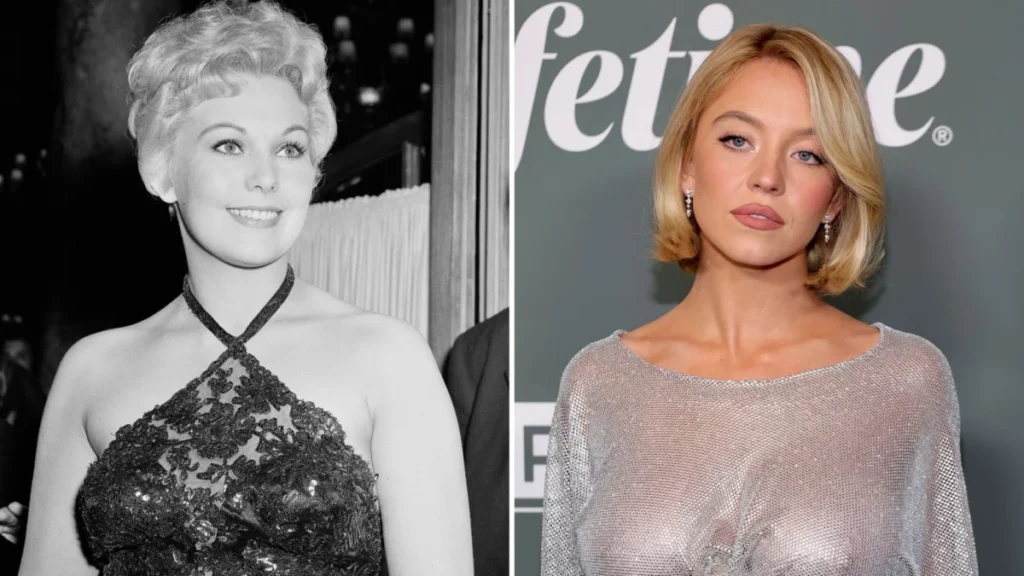

Veteran Hollywood icon Kim Novak has publicly voiced strong reservations about Sydney Sweeney being cast to portray her in the planned biopic Scandalous!, asserting that the Euphoria actress is not the right fit for the role. Novak, whose career spanned decades and cemented her as a cinematic legend, expressed her disappointment and outright disapproval in a recent interview with The Times, a sentiment that casts a shadow over the anticipated film’s future.
“I would never have approved,” Novak stated unequivocally to the publication, as reported in a profile released Friday. Her primary critique of Sweeney centered on her physical appearance, with Novak noting, “[Sweeney] sticks out so much above the waist.” This observation, while direct, hints at Novak’s concern that Sweeney’s distinct physicality would overshadow the nuanced portrayal she believes her life and career deserve.
The biopic, Scandalous!, was announced approximately eighteen months ago and was slated to feature Colman Domingo in the director’s chair. Domingo, who has garnered significant acclaim for his work, including his role in Euphoria, was set to guide Sweeney in bringing to life the story of Novak’s captivating romance with legendary entertainer Sammy Davis Jr. during the 1950s. David Jonsson was reportedly cast as Sammy Davis Jr., a role that would have placed him opposite Sweeney.
Novak elaborated on her concerns, suggesting that Sweeney’s perceived “sexiness” would inevitably steer the narrative towards a solely sexual interpretation of her relationship with Davis Jr. “There’s no way it wouldn’t be a sexual relationship because Sydney Sweeney looks sexy all the time,” Novak explained to The Times. “She was totally wrong to play me.” This perspective suggests that Novak feels the film’s focus might be misdirected, potentially reducing a complex emotional connection to a superficial physical dynamic. She emphasized that her connection with Davis Jr. was built on shared experiences and understanding, rather than solely on physical attraction.
The Complexities of a Hollywood Romance
Novak’s reflections in the interview also delved into the historical context of her relationship with Sammy Davis Jr., a union that generated considerable public attention and, at times, controversy. The era in which they were romantically involved was marked by deeply entrenched racial prejudices, particularly within the Hollywood studio system.
A long-standing rumor surrounding their relationship involved Harry Cohn, the formidable president of Columbia Pictures at the time. According to accounts, Cohn allegedly employed intimidation tactics, including reportedly enlisting a mobster, to pressure Davis Jr. into ending his relationship with Novak. The alleged threat was dire: Cohn’s operatives were said to have warned Davis Jr. that his legs would be broken and he would be blinded unless he married a Black woman. This alleged coercion culminated in Davis Jr. marrying Loray White, a Black singer, in 1958, a year after his reported romance with Novak, as detailed in historical records by Smithsonian magazine.
Novak confirmed her belief in the veracity of these disturbing rumors, stating to The Times, “Oh, I know it was true. Because of the color of [Davis’s] skin, people did terrible things.” Her candid admission underscores the harsh realities faced by interracial couples in the public eye during that period, highlighting the pervasive discrimination that often dictated personal lives.
However, Novak was quick to dispel any notion that she and Davis Jr. had ever obtained a marriage license. “No, no,” she affirmed. “I mean, he loved me. I cared for him deeply. But at that time I never wanted to marry anybody.” This clarifies that while a genuine affection existed between them, a marriage was never on the cards, further distinguishing their connection from a narrative solely driven by societal pressures or perceived obligations.
Scandalous!: A Project in Limbo
The current status of Scandalous! appears uncertain. The Times noted that development on the biopic has seemingly stalled, leaving its production in a state of limbo. This standstill, coupled with Novak’s candid reservations, raises questions about whether the film will ever move forward as initially conceived.
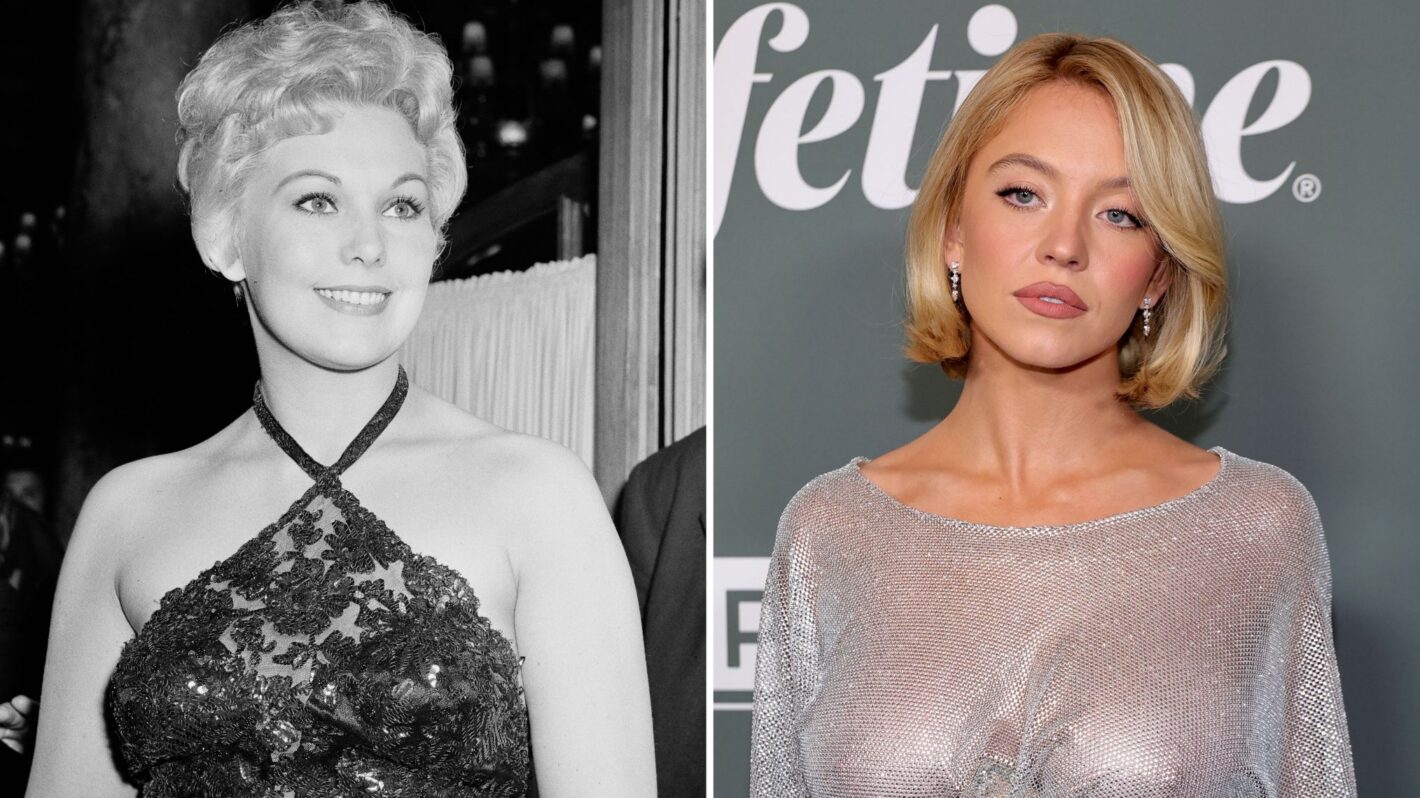
Prior to Novak’s recent statements, Sydney Sweeney had expressed considerable enthusiasm about the prospect of portraying the iconic actress. In an interview with People magazine in October 2025, Sweeney shared her excitement and honor at the potential role. “I’m incredibly honored to be bringing Kim to life. I mean, she is such an amazing actress,” Sweeney had said. She further elaborated on her personal connection to Novak’s story, stating, “I think her story is still very relevant today in that she dealt with Hollywood and scrutiny with her relationships and her own private life and the control of her image. And I think that for me, I relate to it in a lot of different ways.” This suggests that Sweeney saw the biopic as an opportunity to explore themes of fame, personal privacy, and image control, issues that resonate with contemporary celebrities.
The Legacy of Kim Novak and the Evolution of Hollywood Representation
Kim Novak’s career, which began in the 1950s, positioned her as one of Hollywood’s most luminous stars. Her roles in films like Alfred Hitchcock’s Vertigo (1958) and Picnic (1955) showcased her talent, charisma, and a unique screen presence that captivated audiences. She was known for her sophisticated beauty and her ability to convey complex emotions, often playing characters who were both vulnerable and strong.
Novak’s concerns about Sweeney’s casting extend beyond personal preference; they touch upon the broader issue of authentic representation in biographical films. The selection of an actor to portray a real-life individual often involves a delicate balance between capturing the essence of the person and fitting the narrative requirements of the film. Novak’s critique suggests a belief that Sweeney’s physical attributes might detract from her ability to embody the specific qualities that defined Novak during the period depicted in the biopic.
The history of Hollywood biopics is replete with examples where casting choices have been met with debate, both from the subjects themselves and from the public. The challenge lies in translating the lived experiences and unique personas of iconic figures into compelling cinematic narratives. Novak’s perspective highlights the importance of respecting an individual’s legacy and ensuring that their story is told with accuracy and sensitivity, particularly when dealing with complex personal histories and societal pressures.
Wider Implications for Biopic Productions
The controversy surrounding Scandalous! and Kim Novak’s objections serve as a significant case study for the future of biographical filmmaking. The involvement and approval of the subject, or their estate, are increasingly becoming crucial factors in the success and integrity of such projects.
In an era where celebrity culture is under constant scrutiny, and where the lines between public and private lives are frequently blurred, biopics offer a powerful lens through which to examine the lives of influential figures. However, as Novak’s statements suggest, the narrative must be carefully considered to avoid sensationalism or misrepresentation. The focus on the "sexiness" of a potential lead, as perceived by Novak, could indicate a broader industry tendency to prioritize marketable attributes over authentic character portrayal, especially when depicting complex historical relationships.
Furthermore, the stalled progress of Scandalous! could prompt filmmakers to engage more proactively with their subjects or their representatives during the initial stages of development. This collaborative approach can help mitigate potential conflicts and ensure that the final product aligns with the vision and legacy of the individuals being honored. The industry may need to re-evaluate its casting strategies for biopics, prioritizing actors who can authentically inhabit the spirit and essence of their characters, rather than solely focusing on superficial resemblances or current popular appeal.
The situation also brings to the fore the evolving discourse around body image and representation in Hollywood. While Sweeney has been celebrated for her versatility and willingness to take on diverse roles, Novak’s comments highlight how traditional notions of appearance can still influence perceptions of suitability for certain characters, particularly those from a different era with different aesthetic standards. This debate underscores the ongoing need for a more inclusive and nuanced understanding of what constitutes authentic portrayal in cinema.
Ultimately, Kim Novak’s candid remarks have injected a significant dose of reality into the Scandalous! biopic. Her concerns, rooted in her personal experiences and her understanding of her own narrative, underscore the delicate nature of biographical storytelling and the profound impact that casting decisions can have on the perception of a legacy. The future of the film, and indeed the approach to similar projects, may be irrevocably shaped by this public dialogue.