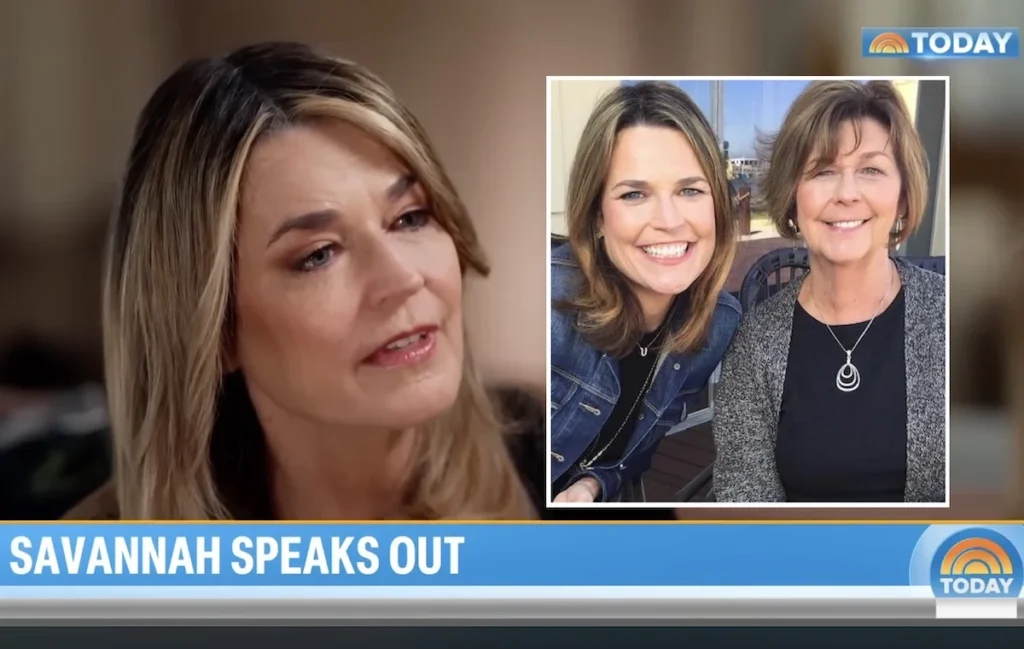

The usually composed façade of "Today" show co-anchor Savannah Guthrie has given way to an outpouring of raw emotion, revealing a deeply personal tragedy that has gripped her family and reverberated across the nation. In a series of candid interviews, Guthrie has spoken with heartbreaking honesty about the disappearance of her mother, Nancy Guthrie, a crisis that has plunged her into a vortex of grief, uncertainty, and profound personal guilt. This harrowing ordeal transcends typical celebrity news, touching upon the universal fears of losing a loved one and the agonizing burden of the unknown.
The Shadow of Disappearance: A Timeline of Unknowing
While specific dates surrounding Nancy Guthrie’s disappearance have been kept largely private, Savannah’s recent emotional revelations indicate a prolonged and agonizing period of uncertainty. The public first became aware of the unfolding tragedy through Savannah’s increasingly somber demeanor on air, culminating in her decision to speak openly about the ordeal. Her initial interview, characterized by a quiet, heavy atmosphere with "Today" show colleague Hoda Kotb, served as the first public acknowledgment of the family’s living nightmare. This interview, and a subsequent part, provided a window into the unfathomable challenges Savannah and her family have faced since Nancy vanished from her Arizona home. The focus of these discussions has been less on investigative specifics, which remain largely under wraps, and more on the devastating emotional landscape Savannah navigates daily. The ongoing nature of the search underscores a timeline marked by agonizing hope and persistent despair, with each passing day deepening the void left by Nancy’s absence.
A Mother’s Agony: Protecting Children from Unspeakable Truths
Perhaps the most poignant aspect of Savannah’s struggle is her attempt to shield her children, 11-year-old daughter Vale and 9-year-old son Charles, from the full weight of the tragedy. This instinct, common to all parents, clashes brutally with the grim reality of a missing grandmother. Savannah articulated the impossible tightrope walk of wanting to protect them while also having to acknowledge a terrifying truth. "That’s so hard with kids, you know? Because you want to protect them," she shared with Hoda Kotb, her voice thick with emotion.
Children, with their innate curiosity and fragile understanding of the world, process such events in profoundly challenging ways. Vale and Charles, old enough to grasp the gravity of the situation but too young to bear its full emotional burden, frequently approach their mother with heartbreaking questions. "They write me all the time, ‘Mama, any leads? Have you heard anything? Any hope?’" Savannah recounted. This direct plea from her children for updates, for any glimmer of progress in a case shrouded in darkness, highlights the unique pain of their experience. They are not merely observers but active participants in the anxious wait, clinging to every potential fragment of news. Savannah revealed the immense pressure to offer them solace and a semblance of certainty, even when she herself is adrift in a sea of doubt. The delicate balance involves providing enough information for them to grieve and understand, yet holding back the full, terrifying scope of the unknown to preserve their innocence as much as possible. This daily negotiation between honesty and protection forms a continuous, agonizing loop for the celebrated anchor, forcing her to confront the limits of parental shielding against a reality she cannot control. The emotional intelligence required to manage such conversations, while battling her own profound sorrow, speaks volumes about her resilience in the face of an unprecedented personal crisis.
The Weight of Fame: Personal Guilt and Public Scrutiny
Beyond the immediate grief and the struggle to protect her children, Savannah Guthrie is grappling with an even more insidious torment: the haunting possibility that her public life and high-profile career may have inadvertently played a role in her mother’s disappearance. This self-blame, a common but particularly cruel manifestation of grief in such ambiguous circumstances, adds an unbearable layer to her suffering.
In a moment of profound vulnerability, Savannah shared a conversation with her brother, Camron, that solidified this terrifying notion. She recounted asking him, "’Like, how dumb could I be? I didn’t want to believe it but do you think because of me?’ And he said, ‘I’m sorry, sweetie, but yeah, maybe.’" This admission from a trusted family member, echoing her darkest fears, validated a guilt that Savannah confessed was "too much to bear." The idea that her professional success, which has brought her into millions of homes daily, could somehow have jeopardized her mother’s safety, is a crushing burden. She articulated the logical, yet terrifying, thought process: "But I knew that – I hope not, we still don’t know. We don’t know anything, so I don’t know that it’s because she’s my mom and somebody thought, ‘Oh, that lady has money, we can make a quick buck,’ that would make sense but we don’t know."
This aspect of the tragedy underscores the unique challenges faced by public figures. While fame offers platforms for advocacy and connection, it can also cast a long, unpredictable shadow over personal lives, making loved ones potential targets. The speculation, both internal and external, about whether Nancy’s disappearance was a random act or a targeted event linked to Savannah’s celebrity, adds immense psychological pressure. This type of guilt is particularly insidious because it offers no clear path to absolution; without answers, the "what if" scenarios relentlessly plague the mind. For Savannah, the battle is not just to find her mother, but also to reconcile with a horrifying possibility that undermines her sense of safety and, perhaps, her very identity. The public scrutiny that inevitably accompanies a high-profile case only amplifies this internal struggle, turning a private agony into a topic of widespread discussion, albeit one largely empathetic.
The Investigative Labyrinth: Search Efforts and Public Appeals
From the moment Nancy Guthrie’s disappearance was reported, law enforcement agencies have been actively involved in the search. The Pima County Sheriff’s office, along with the Federal Bureau of Investigation (FBI), are understood to be leading the complex and challenging investigation. Missing persons cases, especially those with suspected foul play or abduction, are notoriously difficult, often characterized by a lack of immediate clues and the passage of critical time. Investigators typically employ a range of techniques, from ground searches and forensic analysis to interviewing potential witnesses and following every conceivable lead. However, as Savannah herself stated, the overarching truth remains: "We don’t know anything." This lack of concrete information is the cruelest part for the family, leaving them in a perpetual state of uncertainty.
In a desperate bid to galvanize public assistance, Savannah and her family have taken the extraordinary step of offering a substantial reward of up to $1 million for information leading to Nancy Guthrie’s recovery. This significant sum underscores the family’s unwavering determination and the depth of their hope. The FBI’s involvement, highlighted by their inclusion of Nancy Guthrie on their "Wanted: Kidnapping and Missing Persons" list, further indicates the serious nature of the case and the belief that foul play may be involved. The criteria for the reward payout, consistent with FBI guidelines, emphasize the recovery of Nancy Guthrie. Authorities have actively encouraged anyone with even the slightest piece of information to come forward, providing multiple channels for tips: the FBI at 1-800-CALL-FBI or tips.fbi.gov, 88-CRIME, or the Pima County Sheriff’s office at 520-351-4900 or via their dedicated online tip portal. These public appeals are a critical component of many missing persons investigations, often proving instrumental in generating leads when conventional methods reach an impasse. The family’s willingness to put forth such a substantial financial incentive reflects their profound desperation and the belief that someone, somewhere, holds the key to Nancy’s whereabouts.
Psychological Impact of Ambiguity: The Cruelty of "Not Knowing"
The emotional and psychological toll of a missing person case, particularly one without any clear answers or resolution, is immense and enduring. Unlike death, which brings a painful but definitive end, disappearance leaves families in a perpetual state of limbo, a grief without closure. This "ambiguous loss" can be far more psychologically damaging, as hope and despair constantly battle within the minds of those left behind. Family members often experience a prolonged form of trauma, marked by anxiety, depression, post-traumatic stress, and an inability to move forward. The constant questioning from investigators, loved ones, and particularly children, serves as a daily reminder of the unresolved mystery.
For Savannah Guthrie, a public figure, this ordeal is compounded by the lack of privacy inherent in her profession. While the public’s empathy can be a source of comfort, the constant spotlight also means her grief is played out, to some extent, on a national stage. Every public appearance, every interview, becomes an opportunity for scrutiny, even if well-intentioned. The speculation, the theories, and the sheer volume of concern, while indicative of widespread support, also prevent a private space for healing. The uncertainty regarding her mother’s fate – whether she is alive, held captive, or worse – creates a mental landscape dominated by fear and hypothetical scenarios. This psychological burden, characterized by the absence of facts and the relentless presence of questions, is a testament to the profound cruelty of "not knowing." The ability to find peace or begin a healing process is continually thwarted by the open-ended nature of the tragedy.
A Community Rallies: Support Amidst Despair
Despite the isolating nature of her grief, Savannah Guthrie is not entirely alone in this battle. The outpouring of support from her "Today" show family, particularly Hoda Kotb, has been palpable. Kotb’s empathetic interviewing style provided a safe space for Savannah to share her deepest fears, transforming a journalistic segment into a moment of profound human connection. This professional solidarity extends beyond the broadcast, with colleagues and friends undoubtedly offering personal solace and practical assistance behind the scenes.
Beyond her immediate circle, the public, while respecting the family’s privacy, has largely responded with an outpouring of sympathy and concern. Social media platforms, often a breeding ground for negativity, have instead seen an overwhelming number of messages expressing support, prayers, and hope for Nancy’s safe return. This collective empathy from viewers and strangers alike, while not providing answers, serves as a crucial reminder to Savannah that she and her family are not forgotten. In times of profound personal crisis, particularly for those in the public eye, this sense of communal care can be a vital source of strength, underscoring the universal human capacity for compassion in the face of suffering.
An Urgent Plea: Call for Information
As the search for Nancy Guthrie continues, the family’s plea for information remains urgent and unwavering. The substantial reward of up to $1 million is a testament to their desperate hope that a crucial tip could finally bring an end to their agonizing wait. This reward is specifically for information that leads to the recovery of Nancy Guthrie, aligning with the FBI’s criteria for such payouts.
Authorities continue to implore anyone with any knowledge, however seemingly insignificant, to come forward. The smallest detail could be the missing piece of the puzzle that investigators desperately need. Individuals with information or tips are urged to contact the FBI directly at 1-800-CALL-FBI or through their dedicated online portal, tips.fbi.gov. Additional avenues for reporting include 88-CRIME or contacting the Pima County Sheriff’s office by calling 520-351-4900 or submitting a tip via their specific online request form. Every lead is critical, and the family, along with law enforcement, remains committed to pursuing every possible avenue to bring Nancy home and provide Savannah and her children with the answers they so desperately need.
Ultimately, behind the headlines and beyond the polished persona of a television anchor, lies a daughter tirelessly searching for her mother and a mother valiantly attempting to hold her family together amidst unimaginable chaos. There are no easy words or simple solutions for a tragedy of this magnitude, only the enduring pain of uncertainty and the unwavering, yet fragile, hope for resolution.