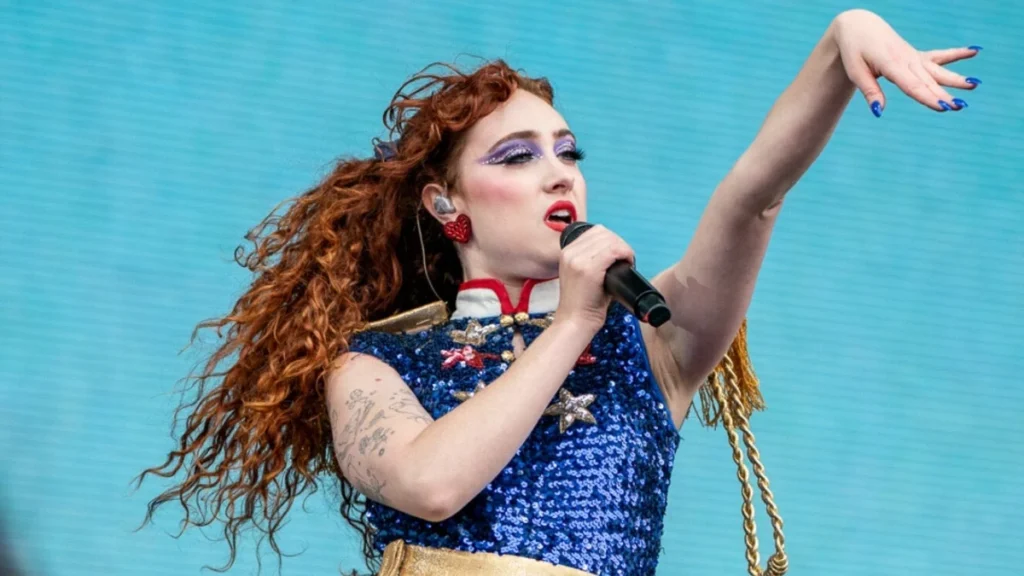

Rio de Janeiro’s Mayor, Eduardo Cavaliere, has issued an unequivocal public declaration banning American pop sensation Chappell Roan from performing at the city’s immensely popular Todo Mundo no Rio festival, a prohibition slated to remain in effect for the entirety of his mayoral term. This extraordinary move by a high-profile city official stems from serious allegations made by Italian soccer star Jorginho Frello, who claimed that a member of Roan’s security team mistreated his 11-year-old stepdaughter during the recent Lollapalooza Brasil festival in São Paulo. The incident, which unfolded over a weekend, rapidly escalated from a personal grievance shared on social media to a significant international incident, touching upon artistic freedom, city governance, and the delicate balance of celebrity-fan interactions in the digital age.
The controversy was ignited following a detailed social media post by Jorginho Frello, the acclaimed midfielder currently playing for Arsenal and the Italy national team, on Saturday, March 20, 2026. Frello, a prominent figure with a substantial global following, utilized his Instagram Stories to describe a distressing encounter involving his family and an individual identified as a security guard for Chappell Roan. His wife and stepdaughter, who were attending Lollapalooza Brasil, were reportedly staying at the same São Paulo hotel as the artist. Frello vividly recounted his stepdaughter’s overwhelming excitement at the prospect of seeing an artist she deeply admired. "My daughter woke up incredibly excited; she even made a sign because she was so happy to see an artist she really admires, or used to admire," Frello wrote, setting a tone of profound disappointment and disillusionment.
According to Frello’s compelling account, the young girl, upon recognizing Roan, merely offered a smile, an innocent gesture born of childhood admiration. However, this seemingly benign interaction allegedly prompted an aggressive and unwarranted response from a security guard associated with the singer. Frello described the guard’s demeanor as "rude and offensive" towards both his stepdaughter and his wife. The incident reportedly escalated to the point where the security guard threatened to file a complaint with the hotel management, further distressing the child and her mother. Frello expressed his dismay, stating, "It’s sad to see this kind of treatment coming from those who should understand the importance of fans. At the end of the day, they are the ones who build all of this. I sincerely hope this serves as a moment of reflection. No one should have to go through this, especially not a child." The post, rapidly shared and amplified, quickly garnered significant attention, not only from Frello’s millions of followers but also from media outlets and public figures across Brazil and internationally.
The Artist’s Response: Distancing from Alleged Misconduct
Chappell Roan, whose real name is Kayleigh Rose Amstutz, addressed the escalating allegations shortly after Frello’s post began its viral spread. In a brief video clip shared on her personal social media channels, the artist sought to clarify her position and emphatically distance herself from the alleged misconduct. Roan asserted that the security guard in question was not a member of her personal touring team. This distinction is crucial, as it implies the individual was likely contracted by the venue, the hotel for general security purposes, or by the Lollapalooza festival itself, rather than being an integral part of her direct entourage. "I didn’t even see a woman and a child," Roan stated, indicating she was entirely unaware of the specific interaction as it unfolded. She further emphasized, "I did not ask the security guard to go up and talk to this mother and child. It’s unfair for security to just assume someone doesn’t have good intentions."
This defense highlights a persistent and complex challenge faced by touring artists: the often-fragmented and multi-layered nature of security operations. While headlining acts typically travel with a dedicated personal security detail responsible for their immediate safety and crowd management, they also rely heavily on a broader network of security personnel—including venue-provided security, festival staff, and hotel security—especially at large-scale events like Lollapalooza Brasil, which attracts hundreds of thousands of attendees. These various layers of security, while indispensable for crowd control and artist protection, can sometimes lead to inconsistencies in approach, communication breakdowns, and scenarios where an artist may not be directly aware of every interaction between security personnel and the public. Chappell Roan’s previous public statements on fan boundaries, made in 2024, indicate a prior awareness of the delicate balance between maintaining personal space and engaging with an enthusiastic fanbase. In those instances, she advocated for respectful interaction, making her current situation particularly ironic and challenging as she navigates the fallout of an incident she claims no direct involvement in.
Mayor Cavaliere’s Decisive and Politically Charged Stance
The incident took a dramatic and politically charged turn when Rio de Janeiro’s Mayor, Eduardo Cavaliere, publicly weighed in. Known for his assertive leadership style and active engagement on social media, Cavaliere did not hesitate to leverage his platform to condemn the alleged behavior and issue a direct consequence. Reposting a screenshot of Frello’s powerful statement, Cavaliere made his unequivocal declaration on March 21, 2026: "I mean that as long as I’m in charge of our city – this young lady @ChappellRoan will never perform at Todo Mundo no Rio! I doubt that Shakira @shakira @Shakira_Brasil would do that!"
Cavaliere’s statement was not merely a ban; it was also a pointed comparison, deliberately juxtaposing Roan with the global icon Shakira, an artist renowned for her engaging fan interactions and long-standing, deep connection with Latin American audiences. To further underscore his solidarity with the Frello family and reinforce the city’s values, the Mayor extended a special invitation to Jorginho Frello’s daughter to be the "guest of honor" at the upcoming Todo Mundo no Rio festival in May, which Shakira is already slated to headline. Frello publicly acknowledged and accepted this gesture by posting heart emojis in response, signaling his appreciation for the Mayor’s swift and decisive support.
The Mayor’s rapid and public action is indicative of a broader trend among public officials to utilize social media as a direct and immediate channel for policy announcements and public engagement, particularly concerning matters of public sentiment and perceived injustice. The decision to ban an artist from a major public event carries significant weight, signaling a clear message about the city’s values and its commitment to protecting its citizens and visitors, especially children. It also highlights the growing influence of celebrity social media posts in shaping public discourse and, in this instance, directly influencing municipal policy regarding cultural events. Such actions can be interpreted as a demonstration of populist governance, where leaders align themselves with widely held public sentiment to project responsiveness and uphold community standards.
Todo Mundo no Rio: A Global Stage of Unprecedented Scale
The Todo Mundo no Rio festival, from which Chappell Roan has been banned, is no ordinary music event. It is a monumental, free concert held annually on the iconic Copacabana Beach, a sprawling natural venue capable of accommodating millions of people. Launched in 2024, the festival quickly established itself as one of the world’s largest single-artist concerts, a testament to Rio de Janeiro’s unparalleled capacity for grand spectacles and its deep connection to global music culture. Its inaugural edition saw pop legend Madonna draw an astonishing 1.6 million people to the sandy shores of Rio, setting a high benchmark for attendance and global visibility.
The festival’s success continued to soar in 2025 when Lady Gaga headlined, breaking Madonna’s attendance record by attracting an estimated 2.5 million enthusiastic fans. These figures are not just statistics; they represent an immense logistical undertaking, a significant economic driver for the city, and profound cultural moments for Rio de Janeiro, reinforcing its status as a global entertainment hub. The event is a strategic initiative by the city to boost tourism, generate substantial economic activity through hospitality and local commerce, and provide free, high-quality entertainment to its residents and visitors. The sheer scale, public accessibility, and global reputation of Todo Mundo no Rio mean that any decision concerning its performers is viewed through a magnified lens, making Mayor Cavaliere’s ban on Chappell Roan a particularly high-profile and impactful decree with potential international ramifications. This year, the festival is set to continue its tradition of featuring global superstars with Shakira as the headliner in May, an event that will undoubtedly attract millions more, rendering the invitation to Frello’s daughter even more symbolic and poignant.
Chronology of Key Events
- Saturday, March 20, 2026: Italian soccer star Jorginho Frello posts a detailed account on Instagram Stories alleging that a security guard associated with Chappell Roan mistreated his 11-year-old stepdaughter and wife at a São Paulo hotel during Lollapalooza Brasil. The post quickly gains widespread attention.
- Late March 20, 2026 / Early March 21, 2026: Chappell Roan responds via a social media video, denying direct involvement in the incident, claiming unawareness of the specific interaction, and stating that the security guard was not part of her personal touring team.
- March 21, 2026: Rio de Janeiro Mayor Eduardo Cavaliere publicly declares on social media that Chappell Roan is banned from performing at the Todo Mundo no Rio festival for the duration of his mayoral term. He reposts Frello’s statement and extends a formal invitation to Frello’s daughter to be a guest of honor at Shakira’s upcoming performance at the festival.
- March 21, 2026: Jorginho Frello responds positively to Mayor Cavaliere’s invitation with heart emojis on social media, publicly accepting the gesture of solidarity.
- May 2026 (Scheduled): Shakira is set to headline the Todo Mundo no Rio festival on Copacabana Beach, an event that will now include Jorginho Frello’s daughter as a special invited guest, a direct outcome of the controversy.
Broader Implications: Artist Accountability, Fan Culture, and Public Governance
The incident involving Chappell Roan and the subsequent ban by Mayor Cavaliere illuminate several critical aspects of contemporary celebrity culture, public governance, and the perpetually evolving relationship between artists and their devoted fans. For Chappell Roan, this ban from one of the world’s largest and most visible music festivals represents a significant professional setback, potentially impacting her future touring opportunities and public image in Latin America, a region known for its fervent and passionate music fanbase. While her defense clarified the nuances of security assignments, the public perception, particularly fueled by a prominent figure like Mayor Cavaliere, can be incredibly difficult to reverse. The incident underscores the principle that artists, even when indirectly involved, are often held accountable for the conduct of individuals associated with their tours or their presence.
The Mayor’s decisive intervention also highlights the increasing trend of political leaders engaging directly with cultural events and public sentiment. In an era where social media amplifies individual grievances and allows for rapid public reaction, politicians are often quick to respond to perceived injustices, especially those involving children, to demonstrate responsiveness and uphold community values. This can be viewed as a form of populist governance, where public figures align themselves with popular sentiment. However, it also raises complex questions about due process and the potential for a single, albeit serious, incident to lead to sweeping professional repercussions for an artist without a formal investigation or comprehensive review.
Furthermore, the episode reignites crucial discussions about fan boundaries, celebrity privacy, and the efficacy of security protocols in the age of omnipresent smartphone cameras and instant digital sharing. The line between enthusiastic admiration and intrusive behavior is constantly debated, and security personnel are frequently tasked with enforcing these delicate boundaries in high-pressure, chaotic environments. The perennial challenge for artists and their teams is to strike a balance between maintaining an approachable public persona and ensuring necessary personal safety and privacy. This incident serves as a stark reminder of the potential fallout when these boundaries are perceived to be mishandled, particularly when a vulnerable party, such as a child, is involved.
The explicit comparison to Shakira by Mayor Cavaliere is also particularly noteworthy. Shakira’s long-standing career is meticulously marked by a carefully cultivated public image of warmth, accessibility, and genuine fan engagement, particularly in Latin America, where she holds an almost revered status. By contrasting Roan’s alleged situation with Shakira’s exemplary reputation, Cavaliere implicitly set a clear standard for artist conduct that resonates deeply with the expectations of his constituents and aligns with the cultural values of Rio de Janeiro. This could inadvertently influence how other international artists perceive their interactions with fans in the region and potentially lead to more stringent guidelines and training for their security teams when touring in Brazil.
Potential Ripple Effects and Future Considerations
The implications of Mayor Cavaliere’s ban extend beyond Chappell Roan’s immediate performance schedule. It could prompt festival organizers globally to re-evaluate their security protocols, refine contractual agreements with performing artists, and ensure clearer lines of responsibility and conduct guidelines for all personnel interacting with the public. Artists themselves may become more proactive in vetting and overseeing third-party security details to prevent similar incidents that could severely damage their reputations and career trajectories. The incident serves as a cautionary tale for the entire music industry.
For the Todo Mundo no Rio festival, while the incident removes one potential performer, its stature as a premier global event remains largely unchallenged. The immediate focus will now shift to the successful execution of Shakira’s highly anticipated headlining performance in May and the symbolic, heartfelt presence of Jorginho Frello’s daughter. The incident, while regrettable, may inadvertently reinforce the festival’s image as an event that prioritizes respect, positive public experience, and strong community values, aligning perfectly with the Mayor’s stated principles.
Ultimately, the incident involving Chappell Roan, Jorginho Frello, and Mayor Eduardo Cavaliere serves as a poignant reminder of the intricate power dynamics inherent in the modern entertainment industry: the immense influence of public figures, the passionate loyalty of fans, and the critical role of those tasked with managing these complex interactions. As the digital age continues to blur the lines between public and private, and as social media amplifies every interaction to a global audience, artists, their management teams, and public officials alike are navigating an increasingly complex landscape where a single moment can have profound and far-reaching consequences. The ban on Chappell Roan from Todo Mundo no Rio stands as a significant and unfolding case study in this evolving paradigm.