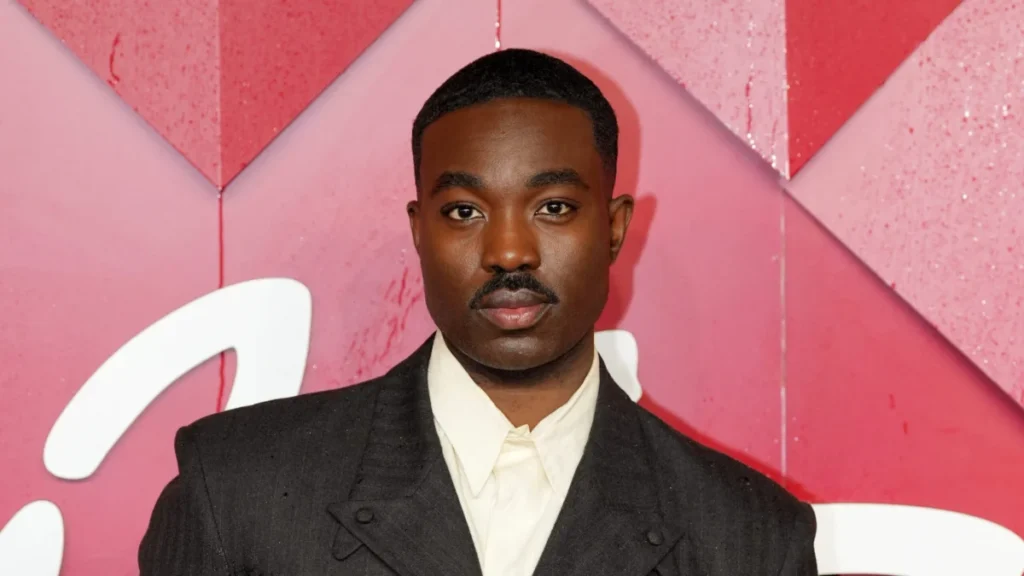

Esteemed British actor Paapa Essiedu has publicly disclosed that he has received a barrage of racist death threats in the wake of his casting as the iconic character Professor Severus Snape in HBO’s highly anticipated Harry Potter television series adaptation. The revelations, made during a candid interview with The Times on Saturday, shed a stark light on the persistent and virulent online harassment faced by actors who step into beloved roles with a reimagined portrayal, particularly when it involves diverse casting choices. Essiedu, known for his compelling performances in I May Destroy You and Gangs of London, described chilling messages, including explicit threats to his life, a disturbing response to the official announcement of his role in April 2025.
Essiedu detailed the severity of the threats he has encountered, stating, "I’ve been told, ‘Quit or I’ll murder you.’" This direct and alarming message underscores the extreme level of animosity some individuals have directed towards the actor for taking on a role traditionally depicted by a white actor. The backlash intensified immediately following the public confirmation of his casting, with a significant portion of the criticism explicitly targeting his race.
"It really matters," Essiedu emphasized, acknowledging the profound impact of such hostility. "The reality is that if I look at Instagram I will see somebody saying, ‘I’m going to come to your house and kill you.’ So while I’m pretty sure I’m not going to be murdered… That could age badly! But, yes, while I hope I’ll be OK, nobody should have to encounter this for doing their job." He drew a poignant comparison, noting the inherent dangers many face in their professions, yet asserting that portraying a wizard in a fantasy series should not elicit such a response. "Many people put their lives on the line in their work. I’m playing a wizard in Harry Potter. And I’d be lying if I said it doesn’t affect me emotionally." His remarks highlight the psychological toll that online harassment, particularly when it escalates to death threats, can take on individuals, regardless of their public stature.
The Iconic Role of Severus Snape and Alan Rickman’s Legacy
The character of Severus Snape is one of the most complex and enduring figures in J.K. Rowling’s Harry Potter universe. The Potions Master of Hogwarts and Head of Slytherin House, Snape is initially presented as an antagonist to Harry Potter, only for his true motivations and unwavering loyalty to Dumbledore to be revealed in a profound twist. His arc, characterized by a tragic unrequited love for Lily Potter and a lifetime of secret heroism, has cemented his place as a fan favorite.
In the original eight-film cinematic adaptation, Severus Snape was famously portrayed by the late British actor Alan Rickman. Rickman’s nuanced performance, imbued with his signature gravitas, wit, and a subtly menacing yet ultimately sympathetic demeanor, became synonymous with the character. His portrayal in films like Harry Potter and the Sorcerer’s Stone (2001) through to Harry Potter and the Deathly Hallows – Part 2 (2011) earned him widespread critical acclaim and solidified Snape’s iconic status in popular culture. Any actor stepping into this role faces the immense challenge of living up to a beloved and deeply entrenched performance, an undertaking made even more arduous by the racialized nature of the backlash Essiedu has experienced.
The HBO Harry Potter Series: A New Vision for a Beloved Franchise
The upcoming Harry Potter television series on HBO represents an ambitious undertaking by Warner Bros. Discovery to adapt J.K. Rowling’s seven novels into a multi-season format, with each book serving as the basis for a single season. This approach promises a more comprehensive and detailed exploration of the wizarding world than was possible in the original film series, allowing for deeper character development and the inclusion of storylines and details often truncated in the movies. Production on the series officially commenced in July of the previous year (presumably July 2024), with filming taking place at the renowned Warner Bros. Studios Leavesden in the U.K., the same location where the original films were brought to life.
The series aims to introduce a new generation of viewers to Hogwarts and its magical inhabitants, while also offering a fresh perspective for long-time fans. The casting process has been a subject of intense speculation and scrutiny, given the global fanbase and the iconic nature of the characters. Alongside Essiedu as Snape, other announced cast members include Dominic McLaughlin in the titular role of Harry Potter, Alastair Stout as Ron Weasley, and Arabella Stanton as Hermione Granger. The ensemble cast also features seasoned actors such as John Lithgow as Albus Dumbledore, Janet McTeer as Professor Minerva McGonagall, Nick Frost as Rubeus Hagrid, and Lox Pratt as Draco Malfoy, among many others. The decision to embrace diverse casting for key roles, including Essiedu’s Snape, reflects a broader industry trend towards more inclusive representation, but also, as Essiedu’s experience demonstrates, a significant point of contention for some segments of the fanbase.
Chronology of Essiedu’s Casting and Public Reaction
The journey to Paapa Essiedu’s official casting as Severus Snape has unfolded over several months, marked by industry whispers, official confirmations, and subsequent public reactions.
- December 2024: The Hollywood Reporter exclusively broke the news that Emmy nominee Paapa Essiedu was being considered for the role of Severus Snape. This initial report generated considerable buzz, sparking both excitement and early, often racially charged, speculation among fans online.
- April 2025: HBO officially confirmed Essiedu’s casting as Professor Severus Snape. This announcement, while celebrated by many as a progressive step towards inclusive representation, simultaneously ignited a firestorm of controversy and vitriolic backlash from a vocal minority online.
- Post-April 2025 to Present: Following the official announcement, Essiedu began receiving the racist death threats and sustained online harassment that he recounted in his recent interview with The Times. This period has seen the actor navigate the challenging reality of public scrutiny intertwined with hateful rhetoric.
- Saturday (Recent): Essiedu’s interview with The Times was published, revealing the extent of the racist threats and his personal reflections on the experience, bringing the issue into mainstream media discourse.
The Broader Landscape of Diverse Casting and Fan Backlash
Essiedu’s experience is not an isolated incident but rather fits into a growing pattern of fan backlash against diverse casting choices in major franchises. In recent years, several high-profile adaptations and reboots have faced similar, often racially motivated, criticism when actors of color are cast in roles previously or traditionally depicted as white.
Examples abound across various beloved universes:
- Star Wars: Actors like John Boyega (The Force Awakens) and Moses Ingram (Obi-Wan Kenobi) have spoken out about the racist harassment they received for their roles in the franchise.
- The Lord of the Rings: The Rings of Power: The Amazon Prime Video series faced a torrent of racist backlash for featuring Black and diverse actors in roles traditionally associated with white characters in J.R.R. Tolkien’s Middle-earth.
- The Little Mermaid (Live-Action): Halle Bailey, a Black actress, received significant racist abuse for her casting as Ariel, a character traditionally depicted as white in the animated Disney classic.
- House of the Dragon: The Game of Thrones prequel series also contended with racist commentary directed at its Black actors, particularly those playing members of the Velaryon family.
This trend highlights a deep-seated resistance within certain fan communities to changes in established character aesthetics, particularly when those changes involve race. While some criticisms may genuinely stem from a desire for canonical fidelity, the rapid escalation to racist slurs, threats of violence, and targeted harassment against actors of color points to a more insidious underlying issue. Critics argue that this backlash often masks thinly veiled bigotry, exploiting the concept of "lore accuracy" to justify exclusionary practices.
Studios and creators, however, are increasingly committed to reflective representation, understanding the importance of diverse casts in resonating with a global audience and fostering a more inclusive media landscape. The decision to cast Essiedu as Snape, therefore, is not merely a creative choice but a statement in this ongoing cultural conversation about who gets to see themselves in the stories that shape our collective imagination.
Online Harassment and Its Societal Implications
The digital age, while offering unprecedented connectivity, has also provided a fertile ground for anonymous harassment and hate speech. Platforms like Instagram, X (formerly Twitter), and other social media sites, despite their content moderation policies, frequently struggle to contain the spread of toxic behavior, leaving public figures vulnerable to targeted attacks. Essiedu’s account underscores the psychological toll this can take. His observation that "even if you successfully ignore it, it doesn’t mean it’s not happening," speaks to the pervasive nature of online hate. Furthermore, he noted, "The issue remains endemic and, anyway, people see stuff and message to ask if I’m OK," demonstrating how such abuse extends beyond the direct recipient, affecting their support networks and creating a climate of fear.
The failure of social media platforms to consistently and effectively curb such behavior has been a persistent criticism. While they often issue statements condemning hate speech, the practical implementation of their policies and the speed of response frequently fall short, allowing perpetrators to continue their harassment. This raises critical questions about platform accountability and the responsibility to protect users, especially those disproportionately targeted. For actors like Essiedu, who are thrust into the public eye, the boundaries between their professional and personal lives become dangerously blurred by online aggression.
Essiedu’s Resilience and Motivational Stance
Despite the abhorrent nature of the threats, Paapa Essiedu has expressed a remarkable resolve, stating that "the abuse fuels me" and "makes me more passionate about making this character my own, because I think of how I felt as a kid." This powerful statement transforms adversity into motivation, highlighting his commitment to the role and its broader significance.
Essiedu elaborated on this profound personal connection: "I would imagine myself at Hogwarts on broomsticks, and the idea that a kid like me can see themselves represented in that world? That’s motivation to not be intimidated by someone saying they’d rather I died instead of doing work I’m going to be really proud of." His words resonate deeply with the growing demand for authentic representation in media. For countless children from marginalized communities, seeing themselves reflected in beloved fictional worlds can be transformative, fostering a sense of belonging and possibility that was historically denied. Essiedu’s dedication to this vision, even in the face of extreme prejudice, underscores the moral imperative behind diverse casting and the vital role it plays in shaping the imaginations and aspirations of future generations.
Official Responses and Industry Support (Inferred)
While HBO and Warner Bros. Discovery have not yet issued a direct public statement specifically addressing Paapa Essiedu’s revelations of death threats as of this report, industry precedent suggests a strong stance against such harassment. Major studios and streaming platforms typically condemn online abuse and threats directed at their talent, emphasizing their commitment to fostering a safe and inclusive environment. It is highly probable that behind the scenes, Essiedu is receiving full support from the production, including security measures and resources to navigate the online vitriol. Public statements from the studio are often issued to reaffirm their values, denounce hate speech, and express solidarity with their cast members, particularly when the harassment involves racism or other forms of discrimination. Such statements serve not only to protect the individual but also to signal to the wider audience that such behavior will not be condoned or tolerated within the franchise’s community.
Broader Impact and Implications for the Harry Potter Franchise
Paapa Essiedu’s experience serves as a sobering reminder of the challenges inherent in reimagining beloved cultural touchstones for a new era. While the Harry Potter franchise continues to command immense global appeal, it has also navigated complex discussions around representation, authorship, and fan engagement. J.K. Rowling’s past controversial statements regarding transgender identity have created divisions within the fanbase and among the original film cast, adding another layer of complexity to the reception of new adaptations. The HBO series, therefore, operates within a charged cultural landscape, attempting to honor the source material while also striving for contemporary relevance and inclusivity.
The decision to cast a Black actor as Severus Snape is a significant step in this direction, signalling a deliberate effort to diversify the wizarding world. Essiedu’s courageous decision to speak out about the death threats not only highlights the dark underbelly of online fandom but also galvanizes support for more inclusive casting practices. His resolve to use the abuse as fuel to create a character that resonates with a wider audience could ultimately redefine how future generations perceive Snape and the Harry Potter universe, ensuring that the magic of Hogwarts is accessible and reflective of all who dream of walking its hallowed halls. The success of the HBO series, both critically and commercially, will undoubtedly be watched closely as a barometer for how a legacy franchise can navigate the demands of modern representation amidst persistent, and at times hateful, resistance.