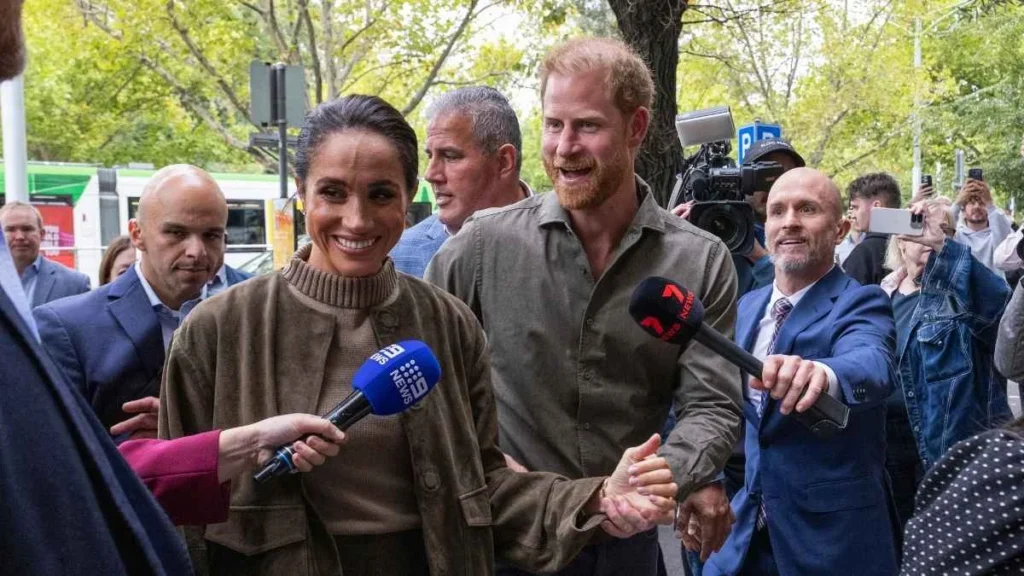

The Duke and Duchess of Sussex, Prince Harry and Meghan Markle, have commenced their highly anticipated four-day unofficial tour of Australia, but the visit has been marked by a significant and strategic shift in their public engagement protocol. In a departure from the traditional optics of royal and high-profile international visits, the couple has reportedly made the decision to cancel all scheduled public walkabouts across their three-city itinerary, which includes stops in Melbourne, Sydney, and Canberra. This move, according to insiders and security analysts, reflects a cautious approach to navigating an increasingly complex security landscape and a vocal segment of public opposition within the Commonwealth nation.
The decision to scrap informal interactions with the public comes at a time when the Sussexes are attempting to redefine their international presence through what critics have termed "quasi-royal" tours. While these visits are intended to promote their philanthropic endeavors and individual projects, they have increasingly become lightning rods for debate regarding security costs, diplomatic protocol, and the couple’s standing relative to the British monarchy. By removing the unpredictable element of the traditional walkabout, the couple’s team aims to maintain a strictly controlled environment, minimizing the potential for disruptive protests or security breaches that could overshadow the core objectives of their visit.
Security Logistics and the Mitigation of Risk
The primary driver behind the cancellation of public walkabouts appears to be a heightened assessment of security risks. Sources close to the planning process indicate that security consultants and local law enforcement expressed concerns over the "unpredictability" of large, open-air gatherings. Unlike official state visits, where the host nation provides a comprehensive security apparatus coordinated through diplomatic channels, the Sussexes’ unofficial status complicates the logistical framework of public safety.
A source familiar with the matter noted that every aspect of the four-day tour is being scrutinized through the lens of safety and public order. The insider explained that planners concluded the risks associated with managing large crowds—particularly those that might include organized protesters—outweighed the PR benefits of the couple meeting the public in an informal capacity. "The goal is to minimize potential flashpoints," the source stated, adding that the Duke and Duchess are "painfully aware" of the mounting unease and public backlash surrounding the nature of the trip.
This cautious stance is likely informed by recent international tours where the couple faced both enthusiastic supporters and vocal critics. By limiting their appearances to ticketed events, summits, and private meetings, the security detail can implement more rigorous screening processes and maintain a perimeter that is far easier to defend than a public street or park.
The Financial Controversy and Public Sentiment in Australia
The tour has not been without significant domestic controversy in Australia. Central to the debate is the issue of funding, specifically regarding the cost of security and policing. Although the Sussexes have maintained that the tour is privately funded, the logistical reality of high-profile visitors requires the involvement of local law enforcement. In states like Victoria and New South Wales, police departments have been forced to deploy additional resources to manage traffic, provide escorts, and ensure general public order during the couple’s movements.
Public dissatisfaction has manifested in a formal petition that has garnered over 46,000 signatures. The petition explicitly calls for no taxpayer funds to be allocated toward any aspect of the visit, arguing that as non-working members of the Royal Family, the Sussexes should be responsible for the entirety of their logistical costs. This sentiment has found a political voice in figures such as David Limbrick, a Member of Parliament, who has publicly called for the couple to reimburse the Australian public for all policing and security-related expenses incurred during their stay.
The financial scrutiny is part of a broader conversation in Australia regarding the nation’s relationship with the monarchy. With a growing republican movement and a government that has, at times, signaled a desire to revisit the constitutional link to the British Crown, the arrival of Harry and Meghan provides a convenient catalyst for debate. Critics argue that "faux royal" tours blur the lines of diplomacy and place an unfair burden on host nations that did not formally invite the couple through state channels.
A Chronology of the Four-Day Itinerary
The Australian tour is structured around several key pillars, focusing on Harry’s advocacy for veterans and Meghan’s lifestyle and empowerment initiatives. The itinerary is as follows:
- Day 1: Arrival and Canberra Engagements: The couple arrived under heavy security, transitioning quickly to private meetings with community leaders. The absence of a public welcoming ceremony was the first indication of the revised strategy.
- Day 2: Melbourne Summit: Prince Harry is scheduled to be the keynote speaker at a leadership summit in Melbourne. The event focuses on mental health and social impact, areas that have been central to his post-royal work.
- Day 3: Sydney Events: Meghan Markle is set to host a high-priced "girls’ weekend" event. This gathering is aimed at networking and empowerment, though it has drawn criticism for its exclusive nature and high entry cost.
- Day 4: Private Meetings and Departure: The final day is reserved for private audiences and philanthropic site visits before the couple departs for the United States.
By sticking to this structured schedule, the couple avoids the "unscripted moments" that characterized their 2018 royal tour of Australia. During that visit, which occurred shortly after their wedding, the couple was met with massive, adoring crowds. The contrast between the 2018 tour and the 2026 unofficial visit highlights the dramatic shift in their public perception and the logistical challenges of their current status.
Comparative Analysis: 2018 vs. 2026
To understand the current tension, one must look back at the Sussexes’ inaugural tour of Australia in 2018. At that time, they were working royals representing Queen Elizabeth II. The tour was a resounding success, featuring 76 engagements over 16 days and the announcement of Meghan’s first pregnancy. The public walkabouts during that trip were iconic, drawing thousands of people to the Sydney Opera House and other landmarks.
In 2026, the landscape is fundamentally different. Having stepped back from royal duties in 2020, the couple no longer has the institutional backing of the Palace or the automatic diplomatic status accorded to working royals. This "third way" of operating—maintaining global profiles while functioning as private citizens—has created a vacuum of protocol. The 2018 tour was about the expansion of the "Royal Brand"; the 2026 tour is viewed by many as an exercise in "Personal Branding," which carries different expectations and levels of public tolerance.
Broader Implications for Future International Visits
The decision to cancel walkabouts in Australia may set a precedent for the Sussexes’ future international travel. If security risks and public protest continue to be a factor, the couple may move toward a model of "closed-door diplomacy," where their interactions are limited to controlled environments and sympathetic audiences. While this strategy ensures safety and protects their image from immediate visual dissent, it also risks further distancing them from the general public and reinforcing the "elitist" narrative often used by their detractors.
Furthermore, the backlash in Australia regarding costs could influence how other Commonwealth nations approach future visits. If the precedent of "reimbursement for policing" gains traction, it could make such tours prohibitively expensive or politically toxic for host cities. This creates a challenging paradox for the Duke and Duchess: to maintain their relevance, they must engage globally, but the very act of engagement triggers the scrutiny that threatens their brand.
Conclusion and Fact-Based Analysis
The cancellation of public walkabouts during the Australian tour is a pragmatic response to a volatile environment. It reflects a shift from the "rockstar" reception of their early marriage to the more polarized reality of their current public life. From a security standpoint, the move is logical; from a public relations standpoint, it is defensive.
As the tour progresses through Melbourne, Sydney, and Canberra, the focus will remain on whether the couple can successfully deliver their message through private events while the debate over their status and funding continues in the public square. The Australian visit serves as a critical test case for the viability of unofficial tours and will likely dictate the strategy for the Sussexes’ global engagements in the years to come. For now, the "Great Southern Land" remains a complex territory for the couple, where the warmth of 2018 has been replaced by the cautious, calculated protocols of 2026.