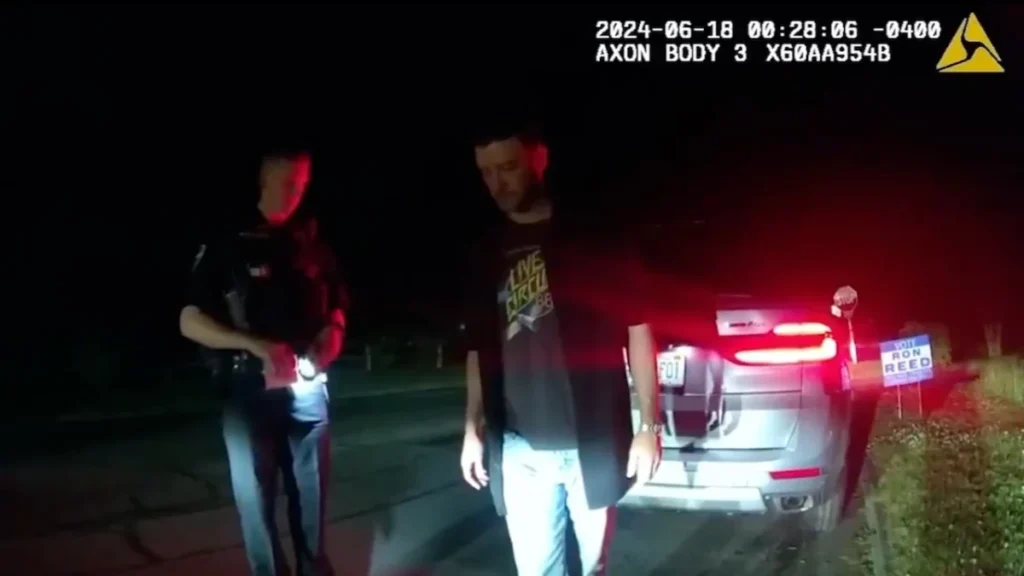

Police body camera footage capturing the June 2024 DWI arrest of pop superstar Justin Timberlake in Sag Harbor, Long Island, has been officially released to the public. The footage emerged following a legal battle initiated by Timberlake’s legal team, who had initially sought to prevent its disclosure. The release marks a significant development in a case that has drawn considerable media attention, offering a candid look into the events that unfolded during the early hours of that summer morning. This release comes nearly two years after the initial incident, following an agreement between Timberlake’s attorneys and the Village of Sag Harbor, with certain portions reportedly redacted.
The Incident: June 2024 Arrest in Sag Harbor
The events leading to the highly publicized arrest occurred on June 18, 2024, when Justin Timberlake, then 43 years old, was pulled over by Sag Harbor Village Police after failing to stop at a stop sign and reportedly swerving his 2025 BMW SUV. The incident took place in the affluent Hamptons village, a popular summer destination known for its celebrity residents and visitors. According to police reports filed at the time, Timberlake was observed exhibiting signs of intoxication, including bloodshot and glassy eyes, a strong odor of an alcoholic beverage emanating from his breath, and impaired speech. When questioned by officers, Timberlake allegedly admitted to having "one martini" at The American Hotel, a well-known establishment in Sag Harbor.
Upon further questioning, Timberlake reportedly refused a chemical test to determine his blood alcohol content (BAC). Under New York State law, refusing a chemical test can lead to immediate license suspension and other penalties, regardless of whether a conviction for DWI is obtained. He was subsequently arrested and charged with one count of Driving While Intoxicated (DWI) and cited for two traffic violations: failing to stop at a stop sign and failing to maintain his lane. He was transported to the Sag Harbor Police Department, where he spent the night, and was arraigned later that morning. The arrest sent shockwaves through the entertainment industry and garnered widespread media coverage, placing Timberlake’s public image under intense scrutiny.
Navigating the Legal Landscape: Plea Deal and Reduced Charges
In the months following the arrest, Timberlake’s legal team engaged in negotiations with prosecutors, ultimately reaching a plea agreement in September 2024. Under the terms of this deal, Timberlake avoided a full DWI conviction. Instead, he pleaded guilty to a non-criminal traffic violation of Driving While Ability Impaired (DWAI). This lesser charge typically carries less severe penalties than a full DWI, which is a criminal offense in New York. The distinction between DWI and DWAI is crucial in New York State law. A DWI charge implies a blood alcohol content (BAC) of 0.08% or higher, or observable impairment regardless of BAC. DWAI, on the other hand, refers to operating a vehicle with impaired ability due to alcohol, but with a BAC below 0.08% (typically between 0.05% and 0.07%), or through the influence of drugs.
The plea agreement allowed Timberlake to avoid a criminal record, which would have had significant implications for his international touring and professional engagements. Penalties for DWAI typically include a fine, mandatory participation in a Victim Impact Panel, and enrollment in the New York State Drinking Driver Program. While his driver’s license was suspended for a period, the overall outcome was widely seen as a favorable resolution for the celebrity, minimizing the long-term legal and professional repercussions of the incident. This type of plea bargain is not uncommon in cases involving first-time offenders or those with strong legal representation, especially when the prosecution faces challenges in proving the higher DWI standard.
The Battle for Transparency: Blocking the Body Cam Footage
The narrative surrounding Timberlake’s arrest took another turn in the intervening period between his plea deal and the recent footage release. In late 2025, it became known that Timberlake’s legal counsel had filed a lawsuit seeking to block the public release of the police body camera footage from his arrest. This move underscored the high stakes involved for public figures in maintaining control over their public image, especially in an era of pervasive digital media. The lawsuit argued that the release of the footage could infringe upon Timberlake’s privacy rights and potentially prejudice future legal proceedings, despite the plea deal already being finalized.
The legal arguments centered on the balance between public transparency and individual privacy. Police body camera footage has become an increasingly vital tool in modern law enforcement, serving purposes ranging from officer accountability to evidence collection. However, its public dissemination, particularly when involving high-profile individuals, often sparks debates about its appropriate use and the extent to which it should be made accessible. Media organizations and proponents of government transparency frequently advocate for the release of such footage, citing the public’s right to know and the importance of police oversight.
Agreement Reached: Release with Redactions
Ultimately, Timberlake’s lawyers and the Village of Sag Harbor reached an agreement this week, leading to the decision to make the body cam footage public. The terms of this agreement reportedly include the redaction of certain portions of the video. These redactions typically involve sensitive information, such as personal identifiers of individuals not involved in the incident, or to protect specific privacy concerns deemed legitimate by the court or by mutual agreement. The decision to release the footage, even with redactions, represents a victory for transparency advocates and reaffirms the growing expectation that police interactions, especially those involving public figures, will be subject to public scrutiny.
The release of the footage offers an unvarnished, albeit partially edited, perspective on the arrest. While the specific contents of the video are now subject to public review, the mere act of its release carries significant implications. It allows the public to form its own judgment on the conduct of both the arresting officers and Timberlake during the encounter, moving beyond the initial police reports and media narratives. For Sag Harbor, a municipality that often finds itself in the spotlight due to its celebrity residents, the handling of this case and the subsequent release of footage set a precedent for future incidents involving high-profile individuals.
Broader Context: Celebrity and Public Scrutiny
Justin Timberlake’s DWI arrest and the subsequent legal proceedings highlight the unique challenges faced by celebrities in the public eye. Every action, particularly those involving legal infractions, is magnified by media attention and subject to intense public scrutiny. Timberlake, known for his clean-cut image as a successful musician, actor, and family man, found this incident to be a significant deviation from his carefully cultivated public persona. Such events can have lasting impacts on a celebrity’s brand, endorsement deals, and overall public perception.
The incident also reignited discussions about accountability, regardless of status. While some might argue that celebrities receive preferential treatment, the public nature of Timberlake’s arrest and the eventual release of the body cam footage demonstrate a degree of transparency that is increasingly demanded in modern society. The digital age ensures that such events, once confined to local police blotters, quickly become global news, fueling extensive commentary across social media platforms and traditional news outlets alike.
New York State DWI Laws: A Brief Overview
To understand the legal context of Timberlake’s case, it is important to grasp the nuances of New York State’s DWI laws. Driving While Intoxicated (DWI) is a serious offense, categorized as a misdemeanor for a first offense. A driver is considered DWI if their BAC is 0.08% or higher, or if their driving ability is substantially impaired by alcohol or drugs. Penalties for a first-time DWI can include fines ranging from $500 to $1,000, a jail sentence of up to one year, and a minimum license revocation of six months.
Driving While Ability Impaired (DWAI), the charge Timberlake pleaded guilty to, is a lesser violation, typically for BAC levels between 0.05% and 0.07%, or when there is observable impairment without meeting the DWI threshold. DWAI is a traffic infraction, not a criminal offense, and carries lighter penalties, including fines between $300 and $500, up to 15 days in jail, and a minimum license suspension of 90 days. For those under 21, New York has a "Zero Tolerance" law, meaning any BAC over 0.02% can lead to license suspension.
Refusal to submit to a chemical test, as Timberlake allegedly did, carries its own set of penalties. A first refusal results in a minimum one-year license revocation and a civil penalty of $500. These penalties are administrative and separate from any criminal or traffic convictions, underscoring the state’s stringent stance on impaired driving.
Implications for Public Image and Legal Precedent
The release of the body camera footage holds several key implications. For Justin Timberlake, it means a renewed focus on an incident he likely hoped had faded from public memory. While the legal repercussions have largely been settled, the visual evidence can significantly impact public perception, potentially leading to a re-evaluation of his image by fans and critics alike. In an era where authenticity is highly valued, the footage provides an unfiltered look at a vulnerable moment for the star.
From a broader legal and societal perspective, the incident reinforces the increasing role of police body cameras in ensuring accountability and transparency. The initial legal battle to block the footage also highlights the ongoing tension between privacy rights, especially for public figures, and the public’s right to access information about law enforcement activities. The eventual agreement to release the footage, even with redactions, suggests a growing consensus that such material should generally be made available, particularly when it pertains to matters of public safety and police conduct. This case may serve as a precedent for future instances involving high-profile individuals and their encounters with law enforcement, further solidifying the expectation of transparency in policing.
The incident also serves as a stark reminder that impaired driving carries serious consequences for anyone, regardless of their celebrity status. The legal system, while offering different avenues for resolution, ultimately holds individuals accountable for their actions on the road. As the footage circulates, it will undoubtedly contribute to ongoing discussions about responsible behavior, celebrity culture, and the evolving landscape of public accountability in the digital age.