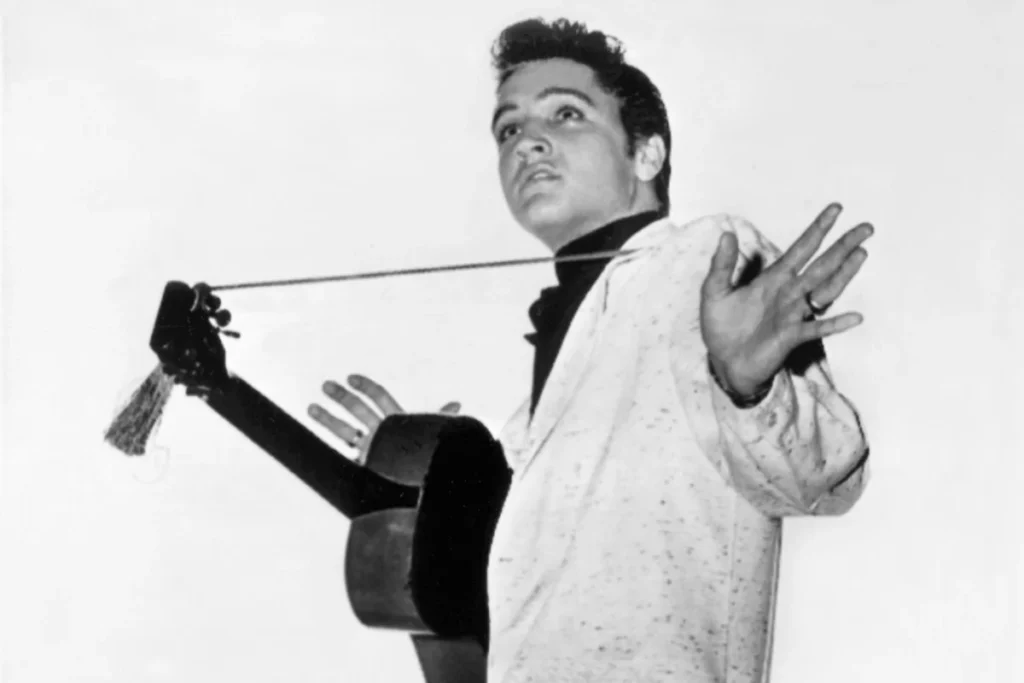

The legal battleground between the artificial intelligence industry and the global music community has expanded dramatically following a high-profile lawsuit filed against leading generative AI music platform Suno. Elvis Presley Enterprises, the corporate entity that governs the intellectual property, name, image, and likeness of the King of Rock ‘n’ Roll, initiated legal proceedings in federal court, alleging that the technology company systematically misappropriated the legendary singer’s voice and catalog. This aggressive legal maneuver arrives hot on the heels of a separate copyright infringement lawsuit filed by the same estate against AI giant Anthropic, signaling a coordinated and formidable pushback by heritage music holders against unauthorized machine learning practices.
At the heart of the complaint are legally novel accusations centered on the unauthorized cloning of Presley’s distinct vocal identity, as well as the uncompensated ingestion of iconic master compositions. Filed by veteran music litigator Richard Busch of the firm Adams & Reese, the lawsuit claims that Suno intentionally, maliciously, and fraudulently harvested decades of recorded human artistry to train its proprietary neural networks. By doing so, the estate argues, Suno has created a competing commercial substitute designed to undermine human creativity and capitalize illicitly on the goodwill of one of history’s most revered cultural figures.
The Timing and Chronology of the Dispute
The legal action filed on Friday, November 6, represents a significant escalation in a multi-front war that has been brewing between content creators and artificial intelligence laboratories since the commercial explosion of generative neural networks. The timeline of legal friction involving Suno dates back to earlier major actions:
- 2024: Major record labels, including Universal Music Group, Sony Music Entertainment, and Warner Music Group, file massive copyright infringement lawsuits against Suno and competing AI firm Udio for utilizing copyrighted sound recordings to train their models without permission.
- Later in 2024: Suno reaches a settlement and licensing agreement with Warner Music Group, though litigation continues with Universal and Sony. Independent artists, led by singer-songwriter Jason Isbell, file a class-action lawsuit against Suno accusing the platform of stealing artist likenesses.
- Weeks Prior to the Current Filing: Elvis Presley Enterprises files a lawsuit against Anthropic, alleging that the company trained its Claude AI model on Elvis Presley song lyrics and materials.
- November 6: Elvis Presley Enterprises files its groundbreaking lawsuit against Suno, coinciding with a separate filing by Eight Mile Style, the music publisher controlling Eminem’s catalog, which targets Suno with similar copyright infringement allegations involving tracks like "Lose Yourself" and "The Real Slim Shady."
Decoding the Tennessee ELVIS Act
This newly minted lawsuit serves as one of the very first rigorous legal tests of the Ensuring Likeness Voice and Image Security (ELVIS) Act. Enacted in Tennessee in 2024, this landmark piece of legislation was specifically engineered to combat the proliferation of unauthorized generative AI deepfakes and vocal cloning.
Historically, right-of-publicity laws across various jurisdictions largely restricted liability to commercial exploitation—such as using an unauthorized photograph of a celebrity to sell a commercial product like shoes or automobiles. The ELVIS Act, however, radically broadens these protections by removing the strict commercial-use limitations and explicitly imposing legal liability on technology companies and developers that build, distribute, or maintain tools capable of cloning an individual’s voice and image without explicit consent.
Lawyers for Elvis Presley Enterprises have positioned Suno as the quintessential target for this legislation. In court documents, the estate contends that Suno’s software infrastructure acts as an automated vehicle for mass identity theft, allowing users to effortlessly replicate the velvety resonance, warm vibrato, and dynamic phrasing that defined Elvis Presley’s legendary vocal signature.
Contrasting Legal Arguments: Generation Versus Inspiration
The core of Suno’s defense in prior litigation rests upon the assertion that its algorithmic architecture does not permit direct vocal cloning or the intentional replication of specific, named artists. Representatives for the AI firm have previously argued in court filings that entering an artist’s name into a prompt functions merely as a stylistic shorthand to indicate a musical genre or production era rather than an instruction to copy a specific human voice.
Elvis Presley Enterprises has forcefully rejected these defensive postures, labeling them unequivocally false. To substantiate their claims, the estate’s legal team submitted documentary evidence, including video links demonstrating that users can generate synthetic audio tracks bearing a striking, undeniable resemblance to Elvis Presley simply by inputting prompts that incorporate his name and biographical elements into Suno’s creation engine.

"Those are NOT examples of Elvis Presley singing. They are synthetic and unlicensed uses of Elvis’ voice and likeness," Richard Busch wrote in the complaint, warning that the current iteration is merely the tip of the iceberg, with thousands of similar generations actively circulating on digital networks.
The Broader Catalogic Assault
Beyond the right-of-publicity claims governed by the ELVIS Act, the lawsuit revisits traditional copyright infringement arguments. Suno is accused of scraping and ingesting some of the most commercially valuable and culturally significant sound recordings in modern music history. The complaint explicitly cites foundational tracks that helped shape American popular culture, including:
- "Can’t Help Falling in Love"
- "Don’t Be Cruel"
- "A Little Less Conversation"
- "All Shook Up"
- "Return to Sender"
- "(You’re the) Devil in Disguise"
Representatives for Authentic Brands Group (ABG), the licensing conglomerate that owns Elvis Presley Enterprises, emphasized the immense commercial and cultural value of the intellectual property under their stewardship. Lark-Marie Antón, spokeswoman for ABG, stated that the evidence compiled in the lawsuit speaks for itself and reaffirmed the company’s commitment to defending its assets against unauthorized technological exploitation.
Economic and Cultural Implications for the Music Industry
The implications of this lawsuit extend far beyond the legal fortunes of a single corporate entity or the legacy of a deceased icon. As artificial intelligence models become increasingly sophisticated at mimicking human artistic expression, the economic model underpinning the global music industry faces an existential threat.
Critics and legal scholars point out that generative AI platforms operate on a fundamentally extractive economic loop. By ingesting decades of human struggle, financial investment, technical training, and emotional expression without compensating the creators or their estates, AI developers can produce infinite streams of competing content at marginal operational costs.
As the legal team for the Elvis estate bluntly summarized in their filing: "The next Elvis won’t pick up a guitar. Suno’s ravenous race to the bottom aims to make human creativity obsolete, coldly replicating without a license in seconds what takes years to learn, struggle with, maintain, and endlessly attempt to make better and perfect."
Outlook and Future Litigation
As the case proceeds through federal court, it will force judges to navigate uncharted legal territory at the intersection of intellectual property law, computer science, and constitutional protections of speech and expression. The outcome will likely set a decisive precedent for how AI companies source training data and whether user-facing generation tools can legally incorporate mechanisms capable of invoking the stylistic and vocal attributes of famous performers, living or deceased.
With Suno currently facing a barrage of parallel lawsuits from major publishers such as Round Hill Music and Reservoir, as well as class actions from independent working musicians, the platform’s foundational business model remains under severe judicial scrutiny. Whether these legal pressures will force a systemic restructuring of the generative AI music sector or prompt a wave of comprehensive industry-wide licensing agreements remains one of the defining questions of the modern digital entertainment landscape.