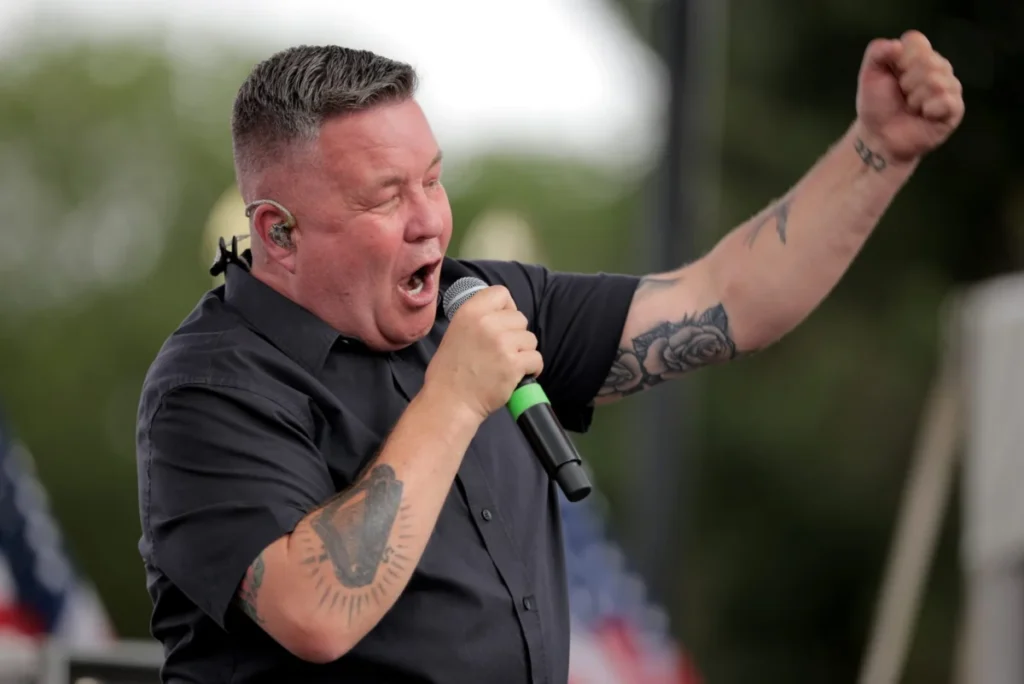

The intersection of popular music and global geopolitics has once again resulted in high-profile professional friction, underscored by recent remarks from Dropkick Murphys frontman and songwriter Ken Casey. Speaking in a mid-September interview with Boston Public Radio, Casey directed sharp criticism at British pop star Ed Sheeran following the controversial removal of American rapper Macklemore from Sheeran’s ongoing stadium trek, the Loop Tour. The dismissal, which unfolded in September 2025, has since catalyzed a wider industry conversation regarding artistic solidarity, the influence of corporate tour promotion, and the responsibilities of headlining acts toward their supporting personnel.
The incident highlights a growing tension within the contemporary live music landscape, where political expression by touring artists frequently clashes with the commercial interests of promoters, venue owners, and corporate sponsors. As the fallout from the Loop Tour continues to reverberate across the international touring circuit, industry analysts and musicians alike are re-examining the unwritten codes of conduct that govern large-scale collaborative musical ventures.
Chronology of the Loop Tour Controversy
The sequence of events leading to Casey’s public commentary began shortly after the launch of Ed Sheeran’s Loop Tour, which was slated to visit major stadiums across the United States. Macklemore, announced as a high-profile supporting act, performed at the initial two dates of the itinerary. During his brief tenure on the tour, the rapper utilized his platform to voice vocal support for Palestinians and offer direct criticism of Israel’s military campaign in Gaza.
These onstage statements quickly generated intense public debate and polarized reactions among concertgoers. By September 14, pressure from various stakeholders—including mounting public criticism and alleged pressure from high-profile venue owners, such as Gillette Stadium owner Robert Kraft—prompted the tour’s U.S. promoter, Messina Touring Group, to officially remove Macklemore from the remaining dates of the tour. The rapid dismissal, executed after just two performances, drew immediate scrutiny from civil rights organizations, free speech advocates, and fellow musicians who viewed the move as an infringement on artistic expression.
The situation escalated significantly in the days following Macklemore’s termination. Demonstrating a principle of solidarity, other supporting acts scheduled to appear on the Loop Tour began withdrawing from their commitments. Aaron Rowe was the first to announce his departure, swiftly followed by prominent artists Finneas and Lukas Graham, who similarly cited their refusal to continue with the trek in light of the promoter’s actions against Macklemore.
Ken Casey and the Dropkick Murphys Perspective
Addressing the controversy during his Boston Public Radio appearance on September 16, Ken Casey did not mince words regarding Ed Sheeran’s handling of the situation. Drawing upon his three decades of experience leading the Boston-based Celtic punk band Dropkick Murphys, Casey emphasized the traditional bonds of mutual support that typically characterize rock and punk touring culture.
“I know that, as a musician for 30 years, anytime we’ve gone on tour we’ve selected the bands that have opened for us — that’s brotherhood, sisterhood, that’s family,” Casey stated during the interview. He elaborated on the interdependence of touring ensembles, noting that shared road experiences forge deep bonds of loyalty. “You live or die with the people you bring on the road. They’re your people.”
Casey directed his primary critique at the headliner’s perceived failure to protect or stand beside a tour partner facing external pressure. “And the fact that Ed Sheeran took the knee, no matter what the cause is, and not stood with his fellow tour partner, just doesn’t, you know, sit right with me. And that’s not how Dropkick Murphys would operate,” he added.

To contextualize his stance on artistic independence and corporate interference, Casey referenced his own band’s recent encounters with political friction during live performances. He pointed to an incident at the 2025 Rocklahoma Festival in Oklahoma, where the Dropkick Murphys openly voiced opposition to the Trump administration during their set.
Reflecting on the commercial consequences of that political expression, Casey observed that roughly half of the assembled festival audience walked away in response. Furthermore, he noted that the onsite reaction from festival management was swift and punitive. “I was told immediately afterwards that angered the owner of the site, and I’m sure we won’t get invited back,” Casey remarked, reinforcing his belief that musicians must remain authentic to their lyrical convictions regardless of financial fallout. “All the artists I loved as a kid, no matter what, it was that they stand by what they sing about. Once you let that go, then you don’t have any worth in your music if you ask me.”
Financial Fallout and Philanthropic Responses
Following his removal from the Loop Tour, Macklemore addressed the financial and moral dimensions of the situation publicly. The artist announced that he would donate his entire $1 million earnings generated from the initial agreements of the Loop Tour directly to humanitarian organizations providing essential aid to Palestinian civilians affected by the ongoing conflict in Gaza.
In tandem with this announcement, Macklemore publicly challenged prominent venue owner Robert Kraft—whose New England Patriots play at Gillette Stadium and who had been implicated in lobbying for the rapper’s removal—to match his $1 million donation. Kraft’s representatives subsequently responded to the public challenge, clarifying that Ed Sheeran had previously approached the stadium owner to request a $2 million financial commitment toward humanitarian relief efforts, bringing a complex web of private philanthropy and public posturing into the spotlight.
Broader Implications for the Live Entertainment Industry
The public split on the Loop Tour and the subsequent commentary from veterans like Ken Casey illuminate several critical challenges currently facing the live entertainment sector. As modern audiences become increasingly polarized along political, social, and geopolitical lines, artists face mounting pressure to either align their public statements with prevailing corporate interests or risk severe commercial repercussions.
Industry observers note that the involvement of third-party promoters, booking agencies, and corporate stadium owners in content moderation during live performances represents a significant shift from historical norms. While punk and rock acts have long embraced anti-establishment rhetoric and controversial political stances—often accepting the risk of diminished booking opportunities—mainstream pop tours have traditionally maintained strict neutrality to safeguard ticket sales and corporate sponsorship agreements.
The decisions made by Aaron Rowe, Finneas, and Lukas Graham to walk away from a major stadium tour demonstrate that a faction of contemporary artists places higher value on ideological consistency and peer solidarity than on the financial upside of high-visibility arena slots. Conversely, the swift action taken by Messina Touring Group and the reported involvement of venue ownership underscore the economic vulnerabilities that promoters and stadium operators manage when performances venture into polarizing geopolitical commentary.
As the concert industry navigates an increasingly volatile socio-political climate, statements from established figures like Ken Casey serve to highlight the ideological divide between underground, independent touring traditions and the corporate machinery of major pop tours. Whether the events surrounding the Loop Tour will prompt a formal re-evaluation of contractual boundaries between headliners, opening acts, and promoters remains to be seen, but the incident has firmly established that artistic autonomy and commercial safety are on an ongoing collision course within the modern music business.