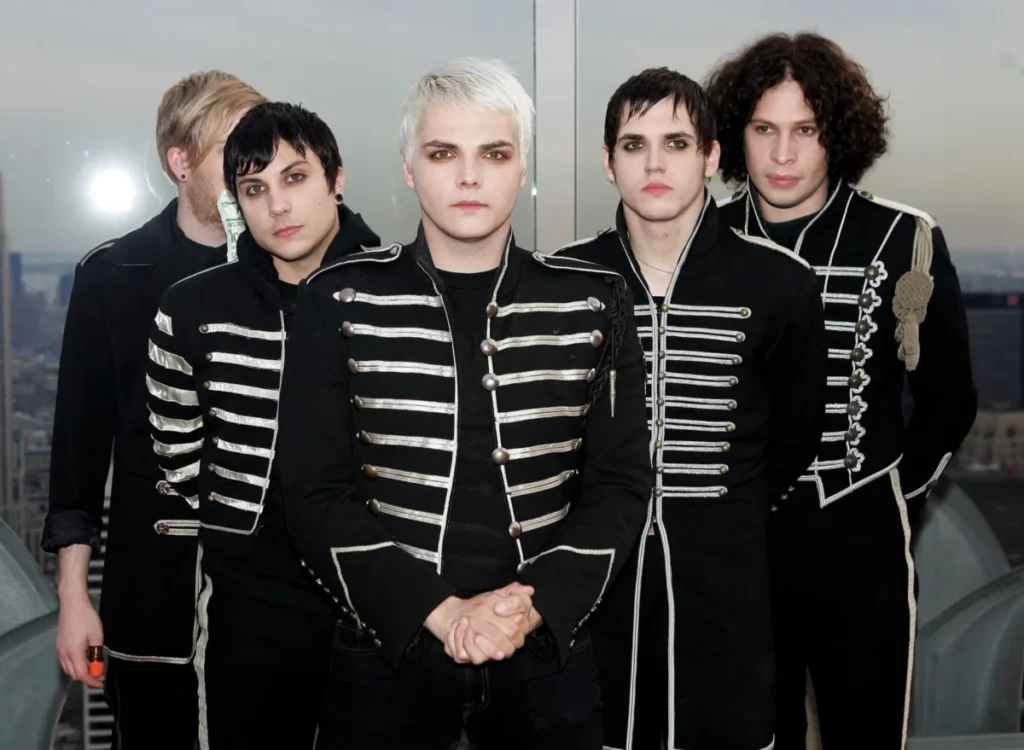

The enduring cultural footprint of mid-2000s alternative rock was underscored in late 2026 as My Chemical Romance experienced a monumental commercial resurgence. Driven by the strategic rollout of a milestone reissue, the band’s seminal 2006 rock opera, The Black Parade, rocketed from No. 139 all the way to No. 1 on the Billboard 200 chart dated November 7, 2026. This extraordinary leap marked the album’s 162nd cumulative week on the prestigious chart, nearly two decades after its initial deployment redefined the emo and punk-pop landscapes.
Main Facts and the 2026 Resurgence
The catalyst behind The Black Parade’s sudden return to the summit of the Billboard 200 was the official release of The Black Parade (20th Anniversary Deluxe Edition). This expanded retrospective was meticulously curated to satisfy long-time devotees and introduce a new generation of listeners to the band’s peak era. While the standard edition of the LP consists of 14 tracks, the deluxe package adds six valuable bonus additions. Among these are three rare B-sides harvested from the original recording sessions and three electrifying live recordings that capture the raw, theatrical energy of the band’s historic touring cycle.
When the deluxe edition hit streaming platforms and physical retail outlets in late 2026, fan demand triggered a massive surge in both digital consumption and vinyl and CD purchases. Industry analysts noted that legacy acts leveraging physical collector packages and anniversary milestones have increasingly dominated physical retail spaces, proving that physical media remains a vital component of modern chart mechanics. For My Chemical Romance, this momentum culminated in a chart-topping placement that few observers could have anticipated for an album originally released twenty years prior.
Chronology: From 2006 Peak to 2026 Triumph
To fully appreciate the magnitude of this 2026 chart triumph, one must look back at the original trajectory of The Black Parade when it first dominated the global music consciousness in the autumn of 2006. Upon its initial release, the album narrowly missed the top spot on the Billboard 200, debuting at No. 2 on the chart dated November 11, 2006. In a quirky historical coincidence of the retail landscape, the album that blocked My Chemical Romance from the top position that week was the Hannah Montana television soundtrack, which was also making its blockbuster debut.
The ensuing two decades transformed The Black Parade from a contemporary commercial success into a generation-defining cultural touchstone. The album spawned iconic rock anthems such as Welcome to the Black Parade, Famous Last Words, I Don’t Love You, and Teenagers. Over the years, the record transitioned from a symbol of teenage angst into a universally acclaimed masterpiece of modern rock production, frequently appearing on retrospective lists of the greatest albums of the 21st century. The 2026 anniversary deluxe edition served as a formal celebration of this legacy, translating decades of accumulated reverence into modern commercial chart dominance.
Supporting Data: The Musical Landscape of November 2006
A retrospective look at the Billboard 200 top 10 from the week of November 11, 2006, paints a vivid picture of a vastly different music industry—one defined by physical CD sales, distinct genre boundaries, and a diverse cross-section of mainstream pop culture.
During that specific week in 2006, the upper echelon of the charts showcased a remarkable demographic and stylistic range. The top 10 featured artists as diverse as Miley Cyrus, who was just 13 years old and at the vanguard of the Disney Channel empire, alongside legendary jazz and traditional pop crooner Tony Bennett, who was then 80 years old.
Furthermore, the rock genre held a formidable presence on the charts that autumn in a way that feels distant from modern streaming-era trends. My Chemical Romance was just one of five distinct rock bands occupying space inside the top 10 that week. They were joined by fellow heavyweights The Killers, Nickelback, Hinder, and Evanescence, demonstrating rock music’s immense commercial gravity during the mid-2000s.
Commercial Dominance and Chart Statistics
The chart environment of late 2006 was also notable for the sheer volume of chart-topping singles generated by the era’s marquee releases. Six of the albums sitting in the top 10 that week ultimately spawned at least one top 10 hit on the Billboard Hot 100, reflecting an era where album cycles and radio singles functioned in powerful, symbiotic harmony.
Among the standout performers of that cohort was Justin Timberlake, whose career-defining solo masterpiece FutureSex/Love Sounds spun off four massive charting hits, including three that reached the coveted No. 1 position on the Hot 100. Similarly, Nickelback’s inescapable commercial juggernaut All The Right Reasons—representing the peak of that band’s commercial power—yielded three separate top 10 hits. Hip-hop mogul Diddy also made a major chart impact during that same window, with his star-studded studio album Press Play generating two major hit singles.
Broader Impact and Industry Implications
The return of My Chemical Romance to the pinnacle of the Billboard 200 carries significant implications for the modern music business. It highlights the growing viability of the "heritage reissue" model, wherein legacy labels and artists mine their archives to create high-value physical and digital deluxe packages. As streaming platforms level the playing field for catalog music, older albums frequently compete with brand-new releases. However, targeted deluxe editions with unreleased material and live cuts provide an extra incentive that galvanizes deeply loyal fan communities into synchronized purchasing campaigns.
Moreover, the achievement speaks volumes about the enduring vitality of alternative and rock music from the 2000s. While contemporary pop, hip-hop, and country often dominate modern streaming metrics, the passionate fanbases cultivated by rock acts during the My Chemical Romance era have matured into economically powerful demographics. These listeners are eager to support physical deluxe editions, vinyl variants, and commemorative merchandise.
As My Chemical Romance celebrates this unexpected yet richly deserved return to No. 1, the milestone serves as a testament to the timeless appeal of theatrical storytelling, robust musicianship, and authentic emotional resonance in popular music. Twenty years after its creation, The Black Parade continues to march forward, proving that true artistic landmarks do not fade with time—they only grow stronger.