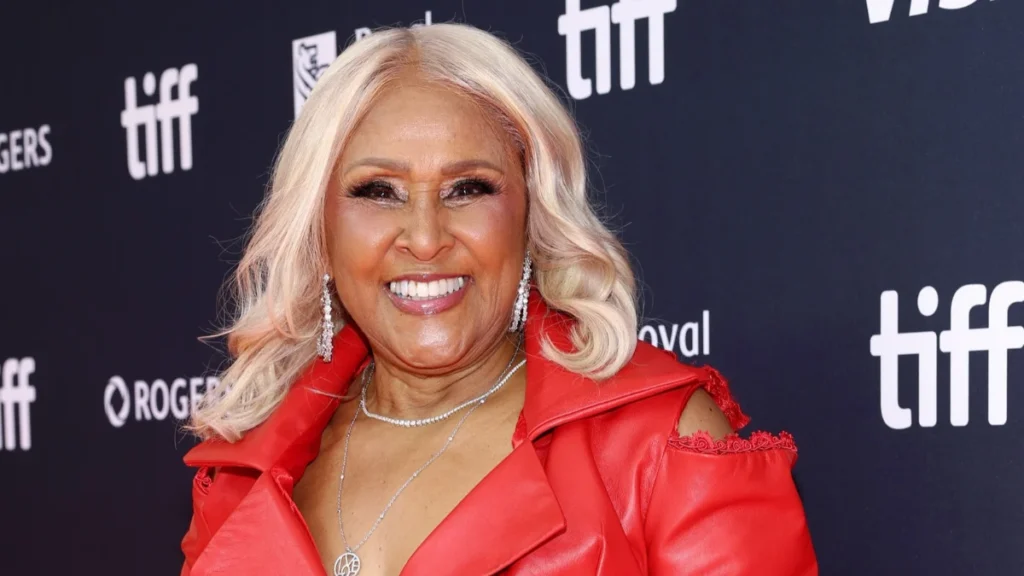

For more than six decades, Darlene Love has possessed one of the most powerful and recognizable voices in American popular music. Yet, for much of that time, her name remained unfamiliar to the general public, overshadowed by the producers, groups, and cultural shifts that shaped the pop and rock landscapes of the 1960s, 70s, and 80s. That long-overdue reckoning arrived at the 2026 Toronto International Film Festival (TIFF), where the deeply anticipated feature-length documentary Darlene Love: I Know Where I’ve Been made its world premiere. Directed by acclaimed filmmaker Barry Avrich and executive produced by award-winning actress Taraji P. Henson, the film places Love—now 85 years old—unabashedly at the center of her own narrative.
Thirteen years after sharing the global stage in the Academy Award-winning 2013 music documentary 20 Feet From Stardom, which finally shone a light on the formidable background vocalists who fueled the hits of superstars, Love is taking her rightful place at the forefront. I Know Where I’ve Been traces her extraordinary journey through the highs of chart-topping success, the devastating lows of industry exploitation and forced obscurity, and a triumphant late-career renaissance. As the film seeks distribution on the heels of its prestigious TIFF debut, it offers both a cinematic tribute to a living legend and a cautionary tale about the systemic inequities historically faced by Black women in the entertainment industry.
The Early Years and the Golden Age of 1960s Pop
To understand the magnitude of Darlene Love’s career is to understand the foundational architecture of 1960s American pop music. Born Darlene Wright in Los Angeles, California, in July 1941, her musical education began in the church choir under the watchful eye of her minister father. By her late teens, her soaring, gospel-trained voice caught the attention of local music circles, quickly leading to session work in Los Angeles’s burgeoning recording studios.
In the early 1960s, Love became an integral pillar of the legendary "Wall of Sound" production empire helmed by producer Phil Spector. Operating primarily as a member of the vocal group The Blossoms—who served as the house backing singers for countless West Coast recordings—Love’s powerhouse vocals breathed life into some of the era’s most definitive anthems. In 1962, she recorded lead vocals on "He’s a Rebel," a track written by Gene Pitney and famously credited to The Crystals. The song soared to number one on the Billboard Hot 100 chart, cementing Love’s voice in the national consciousness, even though few listeners knew who was actually singing.
Throughout the decade, Love’s vocal versatility made her an indispensable asset in the studio. She contributed crucial, uncredited backing vocals to a vast catalog of legendary tracks, including The Ronettes’ timeless masterpiece "Be My Baby" and Bobby "Boris" Pickett’s Halloween novelty smash "Monster Mash." Despite her immense contributions to records that defined a generation, Love rarely received proper financial compensation, public credit, or contractual security. She was, by industry design, an anonymous voice behind the curtain—a reality that would take a heavy emotional and financial toll as the decade progressed.
Navigating Hardship: From Studio Icon to Domestic Labor
The music industry of the 1960s and 1970s was notoriously predatory, particularly toward young Black women navigating complex studio contracts and aggressive management. As musical trends shifted away from traditional girl groups toward psychedelic rock and singer-songwriters, Love found herself increasingly frozen out of the mainstream recording industry. Facing mounting financial pressures and the responsibilities of raising a family, she made the difficult decision to step away from the music business entirely.
To make ends meet during the 1970s and early 1980s, Love traded the glittering Los Angeles recording studios for the quiet, affluent neighborhoods of Beverly Hills, where she found work cleaning houses. The stark contrast between her past life as a chart-topping vocalist—whose voice was still occasionally playing on the radio—and her daily reality as a domestic worker is one of the most poignant chapters of her life. It is a testament to her resilience that she survived this grueling period without losing the spirit or the extraordinary vocal instrument that had first captivated producers two decades prior.
The turning point came in the early 1980s when Love decided to reclaim her musical destiny. Encouraged by friends and musical peers who remembered her towering talent, she returned to singing on the Los Angeles club circuit. This grassroots resurgence ultimately caught the attention of rock icon Bruce Springsteen, who, alongside artists like Steven Van Zandt, championed Love’s comeback and helped reintroduce her to a new generation of rock fans.
A Triumphant Resurgence and Collaborative Legacy
Love’s subsequent career trajectory stands as one of the most inspiring redemption arcs in modern entertainment history. Armed with her peerless vocal agility, she transitioned seamlessly into rock, pop, and television work, collaborating with a who’s who of the music and entertainment industries.
Throughout the 1980s and beyond, Love worked extensively with Bruce Springsteen, contributing to his live performances and recordings. She also forged creative partnerships with pop icon Cher, television bandleader Paul Shaffer, and actress-turned-producer Taraji P. Henson. For decades, Love also became a beloved holiday fixture for millions of television viewers through her annual, show-stopping performances of "Christmas (Baby Please Come Home)" on Late Night with David Letterman and The Late Show with David Letterman, a tradition that spanned nearly three decades and solidified her status as American royalty.
Her cultural footprint further expanded when she stepped onto the silver screen, most notably portraying Danny Glover’s wife, Trish Murtaugh, in the blockbuster Lethal Weapon film franchise throughout the late 1980s and 1990s. Yet, despite these multi-medium achievements, the full scope of her historical contributions to music remained under-appreciated by the broader public until the release of Morgan Neville’s 20 Feet From Stardom in 2013. The documentary not only won the Academy Award for Best Documentary Feature but also finally placed Love’s name in bold letters, proving that her voice could no longer be relegated to the background.
Behind the Lens: Director Barry Avrich and Producer Taraji P. Henson
Darlene Love: I Know Where I’ve Been represents a deeper, more intimate exploration of Love’s life than anything previously produced. Directed by veteran filmmaker Barry Avrich, the documentary combines archival footage, rare performance clips, and candid interviews to paint a vivid portrait of a survivor and an icon.
In an interview with TheWrap following the film’s TIFF premiere, Avrich reflected on the sheer magnitude of Love’s talent and why this project felt essential. "When you think about her voice and you think about her career, it’s the alchemy of the greats," Avrich observed, emphasizing that Love belongs in the same conversational breath as Aretha Franklin, Tina Turner, and Whitney Houston.
Taraji P. Henson, who serves as an executive producer on the project, echoed these sentiments, highlighting the profound cultural relevance of Love’s story. "All the odds were stacked against her, and she still prevailed," Henson noted. "That’s inspiration. That’s a story that is needed now, and I think the universe lined it up this way." Henson’s involvement underscores a growing movement within Hollywood to ensure that pioneering Black women artists receive the biographical documentation and historical preservation they were denied during their active careers.
For Love herself, the documentary is much more than a career retrospective; it is a declaration of agency and a long-awaited moment of personal vindication. Reflecting on the emotional core of the film, Love shared a simple yet powerful sentiment that encapsulates her journey: "In the film, I say this about me, and I didn’t always say it: It’s my turn."
Broader Impact, Industry Implications, and Next Steps
The premiere of I Know Where I’ve Been arrives at a critical juncture in the entertainment industry’s ongoing reckoning with historical exploitation, credit appropriation, and systemic marginalization of Black artists. In recent years, public awareness has grown regarding the ways studio systems, producers, and record labels profited immensely from the labor of Black vocalists while denying them royalties, publishing rights, and basic public recognition.
Documentaries like 20 Feet From Stardom and now I Know Where I’ve Been do vital cultural work by rewriting the official historical record. By shifting the perspective from the corporate architects of the music industry to the artists who actually generated the sound, these films challenge audiences to reevaluate classic catalogs with a more critical and appreciative eye.
As I Know Where I’ve Been seeks a theatrical and streaming distributor following its successful TIFF showcase, industry analysts anticipate significant interest from major studios and platforms eager to capitalize on the enduring appetite for high-quality, character-driven music documentaries. For Darlene Love, the film ensures that her legacy will no longer be left to the footnotes of rock history. At 85 years old, she is no longer waiting in the wings—she is firmly at center stage, commanding the spotlight she has earned a thousand times over.