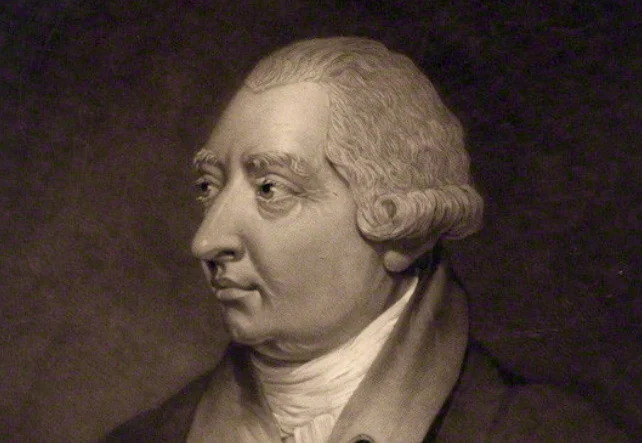

The discovery of Uranus in the spring of 1781 fundamentally altered humanity’s comprehension of the cosmos, doubling the known radius of the Solar System and shattering an astronomical paradigm that had stood since antiquity. Yet, beyond the profound scientific implications of locating a celestial body past the orbit of Saturn, the discovery triggered a fierce international debate over nomenclature. Had history taken a slightly different turn, the seventh planet from the Sun would not bear the name of an ancient Greek deity, but would instead commemorate a reigning British sovereign: King George III.
In the 18th century, the interplay between empirical science and royal patronage defined the landscape of British research. When astronomer William Herschel first turned his custom-built telescope to the night sky from his garden in Bath, he did not immediately realize he was looking at a planet. However, his identification of the object and the subsequent political maneuvers to name it Georgium Sidus offer a fascinating window into the institutional politics, nationalist rivalries, and taxonomic struggles of Enlightenment-era astronomy.
Main Facts of the Discovery and the Royal Tribute
On March 13, 1781, German-born British astronomer William Herschel observed a curious disk-like object while conducting a survey of faint stars using a self-made seven-foot reflecting telescope. Initially cataloging the body as either a fixed star or a comet, Herschel’s meticulous follow-up observations—aided by fellow astronomer Nevil Maskelyne—revealed that the object possessed a circular orbit consistent with a planet.
At the time, the outer boundary of the Solar System was marked by Saturn. The addition of a new planet was an unprecedented event in modern history, as Mercury, Venus, Mars, Jupiter, and Saturn had been known to humanity since antiquity. Recognizing the monumental nature of his find and operating within a system where financial and institutional survival depended heavily on royal favor, Herschel sought to honor his sovereign, King George III.
Herschel proposed naming the celestial body Georgium Sidus, translating to "George’s Star" or "George’s Heavenly Body." The designation was heavily championed by Nevil Maskelyne, the Astronomer Royal, who argued that tying the discovery to the British monarch was a fitting tribute to a king who actively supported scientific endeavors through the royal purse. Consequently, Georgium Sidus began appearing in British astronomical literature and almanacs, anchoring the discovery firmly to British national pride.
Chronology of the Naming Controversy
The timeline of the naming of Uranus spans several decades, moving from a localized nationalist tribute to a hard-fought international consensus.
- March 13, 1781: William Herschel discovers the seventh planet while observing the constellation Gemini from his residence in Somerset, England.
- April to July 1781: As calculations confirm the object is a planet rather than a comet, Herschel formally proposes the name Georgium Sidus in honor of King George III.
- 1782: German astronomer Johann Elert Bode publishes an alternative proposal, Uranus, arguing that the nomenclature of the planets should maintain consistency with classical mythology.
- 1789: Martin Klaproth discovers a new chemical element and names it uranium in honor of Bode’s proposed planetary name, indirectly boosting the scientific popularity of the moniker.
- Early 19th Century: While British astronomers stubbornly cling to Georgium Sidus, international scientific communities across continental Europe rapidly adopt Uranus.
- 1850: The Nautical Almanac, published by the British Admiralty, officially drops Georgium Sidus in favor of Uranus, finally standardizing the planet’s name worldwide nearly seventy years after its discovery.
Supporting Data and Historical Context
The controversy over the name of the seventh planet cannot be understood without examining the socio-political ecosystem of 18th-century science. Scientific research was rarely a self-funding academic enterprise; rather, it relied on the patronage of wealthy elites, aristocracy, and monarchs.
Following his discovery, William Herschel was awarded an annual royal stipend of £200 by King George III. This crucial financial support allowed Herschel to abandon his career as a professional musician and organist, enabling him to dedicate himself entirely to astronomy. He relocated to Windsor near the royal residence, constructed massive telescopes—including his famous 40-foot reflector—and appointed his sister, Caroline Herschel, as his assistant, laying the groundwork for numerous subsequent astronomical discoveries.
Statistically, the astronomical community in Britain was tightly interwoven with state institutions. The Astronomer Royal was a crown appointment, and the Royal Society of London maintained close ties with the court. Naming a planet after the reigning monarch was viewed by British scientists as a standard, albeit grandiose, expression of gratitude and institutional loyalty.
However, continental astronomers—particularly in France and the German states—viewed the British proposal with skepticism and occasional disdain. European science operated under a long-standing tradition where celestial bodies were named after mythological figures from Greco-Roman antiquity. Introducing a contemporary political figure into the pantheon of the heavens disrupted this ancient taxonomic framework. Furthermore, linguists and astronomers pointed out that the Latin word sidus specifically meant "star" or "constellation," making Georgium Sidus technically inaccurate for a planetary body.
Official Responses and International Friction
The divergence of opinion between British and continental astronomers created a quiet diplomatic and scientific standoff. While official British publications embraced Georgium Sidus, French astronomers largely ignored the designation.
Pierre-Simon Laplace and Jérôme Lalande, leading figures in French astronomy, preferred alternative names. Lalande even proposed naming the planet Herschel in honor of its discoverer, a convention occasionally used for comets but one that Herschel himself prudently rejected, as he preferred the royal association.
Johann Elert Bode’s intervention in 1782 provided a middle ground that satisfied both classical tradition and linguistic logic. By proposing Uranus—the Greek primordial god of the sky and father of Saturn—Bode aligned the new planet with the established genealogical tree of the Roman and Greek pantheons. Jupiter was the son of Saturn; Saturn was the son of Uranus. The naming convention was thus restored to a mythological hierarchy.
Despite Bode’s logical argument, British scientific nationalism ensured that Georgium Sidus persisted for decades. Textbooks printed in London well into the 1800s referred to the planet by Herschel’s chosen name, creating a prolonged period of dual nomenclature. It was only as the global scientific community became more interconnected and standardized through international societies that the British establishment relented.
Broader Impact and Implications
The debate over the naming of Uranus holds enduring significance for how science is communicated, standardized, and recorded. The episode highlights the friction between nationalist pride and international scientific consensus. While royal patronage successfully launched Herschel’s career and temporarily stamped a British monarch’s name onto the heavens, it ultimately failed to override the collective preference of the global scientific community for a unified, mythological nomenclature.
The eventual victory of the name Uranus established a vital precedent: celestial bodies discovered outside the direct sphere of a single nation should bear designations that transcend contemporary politics and national boundaries. This principle guided the naming of Neptune in 1846 and Pluto in 1930, ensuring that the solar system remained mapped in the universal language of mythology rather than the shifting tides of earthly politics.
Ultimately, King George III’s place in astronomy was secured not through the permanence of a planetary title, but through the enabling power of royal patronage. By funding William Herschel’s telescopic surveys, the British monarch inadvertently unlocked the outer reaches of the Solar System, permanently expanding humanity’s view of the universe, even if the planet itself ultimately flew under a flag of ancient gods rather than a British crown.