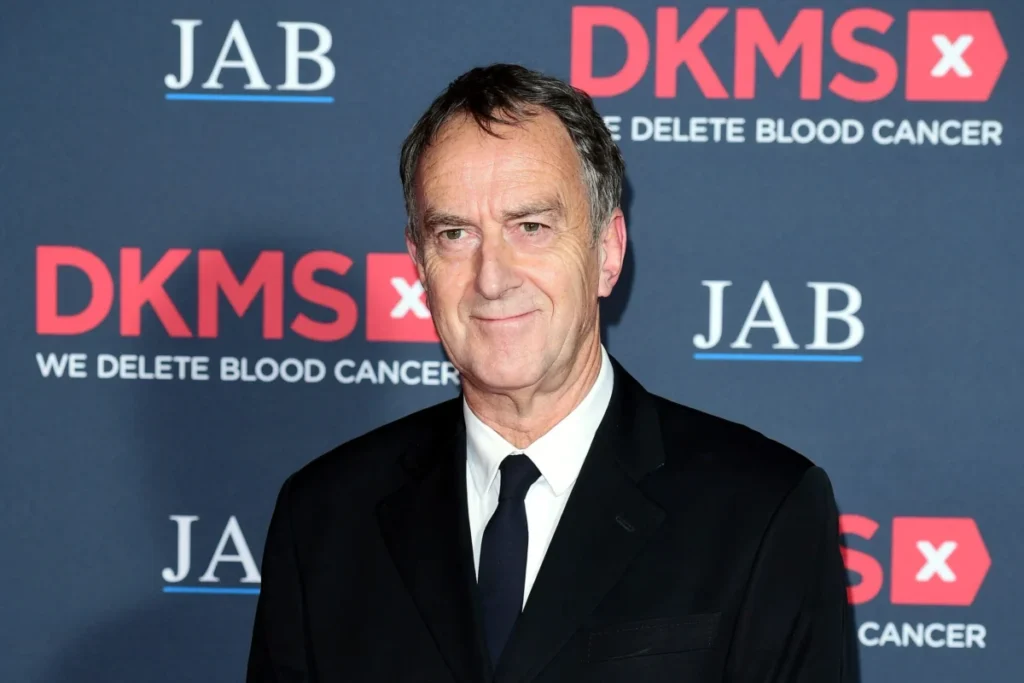

Veteran comedian, broadcaster, and actor Angus Deayton, celebrated for his iconic tenure as the original host of the BBC’s satirical panel show Have I Got News For You, has candidly revealed that his remarkably "fortunate" and extensive career trajectory is primarily owed to serendipitous encounters, particularly his formative meeting with the acclaimed screenwriter Richard Curtis during their undergraduate years at Oxford University in the late 1970s. Speaking on The Inner Table: The Art Of Living Well podcast with City AM columnist Libby Brodie, Deayton, now 70, offered a reflective overview of his journey through British entertainment, emphasizing the transformative power of these early connections that, he asserts, fundamentally reshaped his life’s path and propelled him into a world he had never initially envisioned for himself.
The Genesis of a Collaboration: Oxford’s Hallowed Halls and the Dawn of a Partnership
Deayton’s formative years at Oxford University in the late 1970s were, by his own admission, not initially focused on a career in performance. It was within this intellectually vibrant yet socially fertile environment that he crossed paths with Richard Curtis, a burgeoning talent who would later become one of Britain’s most successful screenwriters, directors, and producers, celebrated for romantic comedy blockbusters such as Love Actually, Notting Hill, and Four Weddings And A Funeral. Oxford at that time was, as it remains today, a renowned crucible for comedic and dramatic talent, with its various student theatre groups and revues acting as informal incubators for future stars. The university’s dramatic societies, including the famed Oxford Revue and the Oxford University Dramatic Society (OUDS), have historically served as a launchpad for countless figures who would go on to shape British comedy and theatre, from the Monty Python troupe to Rowan Atkinson and Hugh Laurie. It was in this rich tradition that Deayton found himself drawn, somewhat reluctantly at first, into the performing arts.
Deayton credits Curtis explicitly with being the catalyst for his pivot into acting and writing. "I’d never even thought about performing at all – it was entirely his fault that I was goaded into performing on stage towards the end of my degree," Deayton recounted during the podcast. "Prior to that, I’d never even considered acting or writing. It was purely through meeting him." This statement underscores the profound impact of mentorship and peer influence, particularly in creative fields where encouragement and opportunity can be as crucial as raw talent. Curtis, known for his keen eye for comedic potential and his energetic drive, evidently saw something in Deayton that Deayton himself had yet to fully recognize.
Their nascent partnership quickly bore fruit. Deayton detailed how Curtis "drafted" him into performing at the Edinburgh Festival Fringe after two performers unexpectedly withdrew from a show. The Edinburgh Fringe, an annual arts festival held in Scotland, is globally recognized as the largest arts festival in the world and a critical proving ground for emerging comedians and performers. A successful run at the Fringe can be a career-defining moment, attracting the attention of talent scouts, producers, and television executives. For Deayton, this impromptu appearance was precisely that: an unplanned step that irrevocably set him on his professional course.

Early Breakthroughs: From Parody Songs to Radio Satire
The collaboration between Deayton and Curtis extended beyond the stage. Their shared comedic sensibilities led them to record a Bee Gees parody track under the moniker "The Hee Bee Gee Bees." This satirical venture, titled "Meaningless Songs (In Very High Voices)," unexpectedly topped the charts in Australia, a testament to their early knack for sharp, popular humour. While a playful aside, this success demonstrated their ability to connect with a broad audience and provided a tangible, if whimsical, early career highlight.
The duo’s more significant "big break," as Deayton termed it, arrived with the creation of the BBC Radio 4 comedy programme Radio Active. Launched in 1980, Radio Active was an ingenious spoof of British commercial radio stations, featuring a chaotic array of presenters, jingles, and fictional programmes. Deayton co-wrote and performed in the show, which ran for an impressive seven years, until 1987. Radio Active became a cult hit, praised for its clever satire and inventive characterizations. It was a crucial platform for both Deayton and Curtis, allowing them to hone their comedic writing and performing skills in a mainstream broadcast environment. The success of Radio Active not only established their reputations but also paved the way for its television adaptation, KYTV, which aired on BBC Two from 1989 to 1993, further cementing their status in British comedy. These early successes provided a solid foundation, showcasing Deayton’s versatility as both a writer and performer long before he became a household name.
The Defining Role: Hosting Have I Got News For You
The pinnacle of Angus Deayton’s broadcasting career undoubtedly arrived with his role as the original host of Have I Got News For You (HIGNFY). The BBC satirical panel show, which debuted in 1990, revolutionized British television comedy. At a time when political satire was gaining traction but hadn’t yet fully permeated mainstream light entertainment, HIGNFY offered a fresh, irreverent, and often scathing take on the week’s news. Deayton recounted the audition process: "Then this programme called Have I Got News for You was looking for a presenter, and they auditioned two of us, and I got the job." This seemingly understated account belies the monumental impact the role would have on his career and the landscape of British television.
For 12 years, from 1990 to 2002, Deayton was the calm, sardonic, and impeccably dressed anchor of HIGNFY, expertly navigating the often-anarchic exchanges between team captains Ian Hislop and Paul Merton. His deadpan delivery, sharp wit, and ability to steer the conversation with a subtle raise of an eyebrow or a perfectly timed barb became integral to the show’s success. He served as the unflappable ringmaster, allowing Hislop and Merton to unleash their comedic and satirical firepower while maintaining a semblance of order and intellectual credibility.

During Deayton’s tenure, HIGNFY garnered widespread critical acclaim and immense popularity, regularly attracting millions of viewers. The show’s innovative format, combining news quizzes with biting political commentary and improvisational comedy, was a significant departure from traditional panel shows. It became a cultural phenomenon, influencing countless subsequent comedy programmes and solidifying its place as a cornerstone of British television. Deayton’s masterful handling of the show earned him multiple BAFTA TV awards, a testament to his exceptional skill as a presenter and his profound contribution to the show’s early, defining era. The specific awards HIGNFY won during or around his hosting period include several BAFTAs for Best Light Entertainment Programme, recognizing the show’s outstanding quality and cultural impact under his stewardship. His departure from the show in 2002, amidst personal controversy, marked the end of an era, but his legacy as the original and arguably most iconic host remains undiminished.
A Versatile Performer: Beyond the Panel Show
While Have I Got News For You might be his most recognizable role, Angus Deayton’s career spans a much broader spectrum, showcasing his versatility as an actor and presenter. His acting credits include appearances in some of Britain’s most beloved comedy series, demonstrating his ability to seamlessly transition between different comedic styles and dramatic roles.
He featured in an episode of the iconic sitcom One Foot In The Grave (1990), known for its dark humour and Victor Meldrew’s curmudgeonly antics. Deayton also appeared in Blackadder, one of the BBC’s most celebrated historical sitcoms, and in Mr. Bean, alongside Rowan Atkinson, playing the often exasperated straight man to Bean’s chaotic character. These roles, though often minor, placed him within the pantheon of classic British comedy.
In later years, Deayton took on more substantial acting parts in popular television dramas and comedies. He played a recurring role as Philip Ryan in the school-based drama Waterloo Road (2009-2011), showcasing a more serious acting facet. He also appeared in the ITV comedy series Benidorm (2012-2014), portraying the character of Donald Healey, and in the BBC Three sitcom Pramface (2012-2014), where he played Alan. These roles demonstrated his enduring appeal and adaptability, proving he was far more than just a quiz show host.
Beyond acting, Deayton continued his presenting duties. He hosted the reality cooking show Hell’s Kitchen (2004) and was a guest host on the popular panel show Would I Lie To You? (2007), where his dry wit and composure were perfectly suited to the format. His continued presence across diverse television genres underscores a career marked by longevity and a keen understanding of various entertainment landscapes.

Reflections on a "Fantastic Life": The Art of Living Well
During his reflective interview on The Inner Table: The Art Of Living Well podcast, Angus Deayton articulated a profound sense of contentment and gratitude for his journey. "I’ve had a fantastic life, a fantastic career, and I’ve enjoyed every minute of it. I can’t pretend that I would do something radically different," he stated, offering a rare glimpse into his personal philosophy. This sentiment highlights a career path that, while perhaps unplanned in its initial stages, ultimately brought him immense satisfaction and fulfillment.
He reiterated the significance of those pivotal early connections: "I have been fortunate in a couple of regards, I think. People I’ve met, for example, who have changed my life. Like Richard Curtis, who I met at Oxford University." This emphasis on human connection as a driving force behind professional success resonates deeply, suggesting that talent, while essential, is often amplified and directed by the right relationships and opportunities.
Deayton also offered an optimistic outlook on his personal life, stating, "I maintain that every decade has been better than the one before." This perspective, he explained, is not solely career-driven but also encompasses personal milestones, such as becoming a parent. "Partly because of the way my career has gone – and when I had my child and all those things. Every decade has had something that’s made it better than the one before." This holistic view of success and happiness, where professional achievements intertwine with personal growth and family life, provides a well-rounded portrait of a man who genuinely feels he has lived a fortunate and rich existence. The podcast interview, scheduled for release on July 21 across Spotify, Apple Podcasts, and YouTube, promises a deeper dive into these reflections, offering listeners valuable insights into the mindset of a seasoned entertainer.
The Enduring Legacy and Broader Implications
Angus Deayton’s career serves as a compelling case study in the power of serendipity, collaboration, and sustained talent in the notoriously fickle entertainment industry. His story underscores several key implications for aspiring professionals and the industry at large.

Firstly, the narrative highlights the profound impact of networking and mentorship. Deayton’s chance meeting with Richard Curtis at Oxford was not merely a social encounter but a professional catalyst that opened doors he hadn’t even known existed. This illustrates how university environments, beyond academic learning, can be vital incubators for future collaborations and career paths, particularly in creative fields where informal connections often lead to formal opportunities.
Secondly, Deayton’s journey exemplifies adaptability and longevity. From radio spoofs and parody songs to satirical panel shows, sitcoms, and drama, he has consistently evolved and remained relevant across decades. His ability to inhabit different roles, whether as a quick-witted host or a character actor, speaks to a fundamental versatility that has allowed him to weather changes in industry trends and maintain a prominent presence.
Finally, his foundational role in Have I Got News For You has left an indelible mark on British television. He helped define the format and tone of satirical news comedy, influencing a generation of broadcasters and comedians. The show’s enduring success, even after his departure, is a testament to the robust framework he helped establish. His sardonic, unflappable style set a high bar for political satire, proving that intelligence and wit could be both entertaining and critically engaging.
In an industry often characterized by fleeting fame, Angus Deayton’s career stands as a testament to the lasting value of genuine talent, strategic collaboration, and a philosophical appreciation for life’s fortunate turns. His reflections on The Inner Table podcast offer not just a retrospective on his own achievements but also a broader commentary on the unexpected paths to a fulfilling and successful life in the public eye.