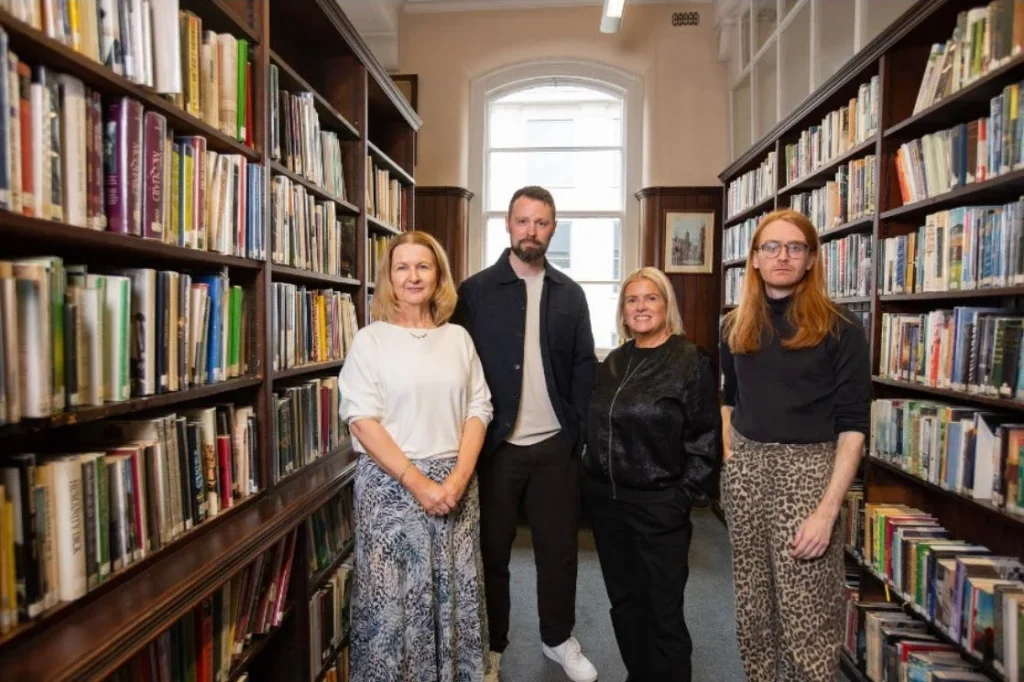

Four distinguished artists from Northern Ireland have been selected as recipients of the Major Individual Awards (MIA), a premier funding initiative designed to catalyze high-level artistic production and elevate local talent on the international stage. Each recipient will receive grants of up to £15,000, provided by the Arts Council of Northern Ireland through National Lottery funding. This financial injection is intended to facilitate the development of ambitious, large-scale projects that range from literary historical fiction and geological poetry to immersive sensory theater and fine art confronting the complexities of regional history.
The MIA program remains the most significant annual investment provided by the Arts Council for individual creative practitioners. By alleviating the financial barriers to creative exploration, these awards serve as a vital mechanism for professional development, allowing artists to undertake research, travel, and experimentation that would otherwise remain beyond their scope.
The 2024 Recipients and Their Projects
The four artists selected for this year’s cohort represent a diverse cross-section of the Northern Irish creative sector. Their projects are not only distinct in medium but also in their thematic depth and geographical scope of research.
Padraig Regan, a poet known for their precise and evocative use of language, will utilize the funding to develop a new collection of poetry. Regan’s project focuses on the intersection of geology and linguistics, examining how the slow, transformative processes of the natural world can be articulated through verse. By exploring the physical foundations of the earth, Regan aims to bridge the gap between hard science and the fluid nature of human language.
Author Bernie McGill is embarking on a research-heavy project centered on the life of Eleonora Giulia Amalia Duse, the legendary Italian actress who dominated the stage from the late 19th century to the early 20th century. To ensure historical accuracy and narrative richness, McGill’s funding will support specialized research residencies at the Cini Foundation and the Museo Civico di Asolo in Italy. This work promises to bring a fresh, contemporary lens to the life of an iconic performer, effectively mapping the historical intersections between Northern Irish literature and European theater history.
Andrew Stanford, a visionary in the realm of inclusive and accessible performance, is developing an immersive sensory theater production titled "Home in a Boat!" Designed to be experienced within the domestic sphere, the project challenges traditional perceptions of venue-based theater. By focusing on sensory engagement, Stanford aims to make high-quality artistic experiences accessible to families regardless of their proximity to traditional cultural hubs, effectively pioneering new modes of engagement for inclusive audiences.
Pádraig Mac Cana, a visual artist and painter, is tasked with the challenging objective of visualizing the enduring legacy of the Northern Ireland Troubles. His upcoming series of paintings seeks to confront historic trauma through a rigorous process of investigation. As part of his award, Mac Cana will conduct extensive research at several of the United Kingdom’s most significant cultural and historical institutions, including the British War Museum, the British Library, and the Imperial War Museum, alongside site-specific research in London.
A Legacy of Support: The Context of the MIA
The Major Individual Awards exist within the broader framework of the Support for the Individual Artist Programme (SIAP). Since its inception, the SIAP has been the cornerstone of the Arts Council of Northern Ireland’s strategy to maintain a vibrant, self-sustaining cultural ecosystem.
The National Lottery, which provides the essential funding for these awards, has played a critical role in the region’s cultural development over the past several decades. Since the introduction of National Lottery funding in 1994, billions of pounds have been directed toward arts, heritage, and community projects across the UK. In Northern Ireland, this funding has acted as a stabilizer, particularly during periods of economic volatility, ensuring that artists can continue to create work that reflects the unique socio-political landscape of the region.

Historically, the MIA has been a launching pad for artists who have gone on to achieve national and international acclaim. By awarding these grants, the Arts Council essentially "bets" on the long-term career trajectories of these individuals, betting that the time and resources provided will result in work that enriches the cultural capital of Northern Ireland.
Official Perspectives on Artistic Development
Gilly Campbell, the Director of Arts Development at the Arts Council of Northern Ireland, emphasized that these awards are not merely financial gifts but strategic investments in creative infrastructure.
"Congratulations to all four artists in receiving the Major Individual Artists award," Campbell stated. "These awards will enable these enormously talented artists to undertake a substantial piece of new work and reflects the Arts Council’s commitment to creating the conditions in which to grow artistic talent through experimentation and innovation."
Campbell’s sentiment highlights a shift in arts administration toward "process-led" funding. Rather than simply funding a final product, the Arts Council is increasingly prioritizing the time, research, and collaborative environments that allow artists to innovate. This approach recognizes that true cultural breakthroughs—such as the creation of a new sensory theater format or a rigorous historical inquiry into trauma—require a significant investment of time that traditional commercial models often fail to support.
Analysis: Implications for the Northern Irish Cultural Sector
The impact of these awards extends beyond the individual recipients. By supporting projects that engage with both global history (such as McGill’s study of Duse) and specific regional trauma (such as Mac Cana’s exploration of the Troubles), the Arts Council is effectively positioning Northern Irish artists as participants in a broader, global discourse.
- Cultural Diplomacy: When artists like McGill or Mac Cana undertake research in Italy or London, they are acting as cultural ambassadors. The resulting works will likely be exhibited or published internationally, thereby increasing the visibility of Northern Ireland’s creative sector on the world stage.
- Inclusive Innovation: Andrew Stanford’s work represents a significant trend in the post-pandemic arts landscape: the democratization of theater. By bringing high-quality, immersive art into the home, the project addresses issues of accessibility that have long plagued the arts sector.
- Historical Reconciliation: Pádraig Mac Cana’s project is particularly significant given the current political climate. By confronting the "lingering historic trauma" of the Troubles, the arts provide a safe, reflective space for society to process complex collective memories. The use of the Imperial War Museum as a research base suggests a scholarly, thorough approach to what is undoubtedly a sensitive subject.
The Role of Research and Methodology in Contemporary Art
A notable aspect of this year’s cohort is the emphasis on research-led practice. None of the four recipients are producing work based solely on intuition or spontaneous inspiration; rather, they are engaging in deep, iterative research processes.
For instance, Padraig Regan’s focus on geology requires a synthesis of scientific literature and poetic form. This "interdisciplinary" approach is increasingly common in contemporary art, where the lines between academic research and creative practice are becoming blurred. The Arts Council’s support for such projects signals a recognition that the most impactful art of the 21st century often resides at the intersection of various disciplines.
Future Outlook and Sustainability
As the Northern Irish arts sector navigates the challenges of the 2020s—including rising costs of production and shifting audience behaviors—the Major Individual Awards serve as a necessary anchor. While the funding provided is substantial for an individual artist, it also serves as a stamp of approval that often helps recipients secure further funding, grants, or gallery representation.
The long-term success of these projects will be measured not just by the completion of the work, but by its legacy. Whether it is through a published book of poetry, a series of touring paintings, or a new sensory theater kit, the output of these four artists will contribute to the ongoing narrative of Northern Ireland.
In conclusion, the Major Individual Awards represent a clear commitment to excellence. By empowering Padraig Regan, Bernie McGill, Andrew Stanford, and Pádraig Mac Cana, the Arts Council of Northern Ireland is ensuring that the region’s creative output remains robust, reflective, and globally competitive. As these projects move from the research phase to the production phase over the coming year, the public can expect a series of contributions that challenge existing boundaries and offer new ways of understanding the human experience. Through the continued support of the National Lottery and the Arts Council, Northern Ireland continues to prove that even in a small region, the potential for significant, innovative, and deeply impactful art is immense.