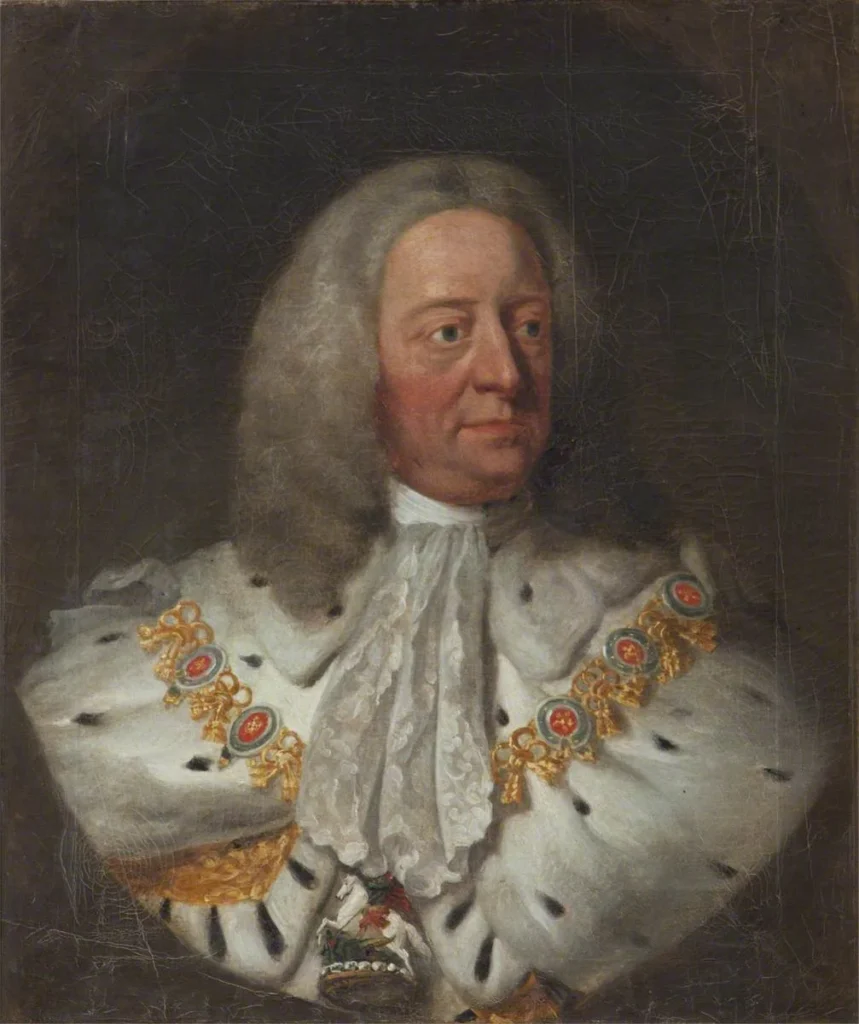

As the autumn season transitions the English landscape into rich shades of gold and amber, history records a unique alignment between the changing of the calendar and the lineage of the British monarchy. Over the centuries, the tenth month of the year has served as the birth marker for five distinct kings of England and Great Britain. While these sovereigns shared a common birth month, their paths to the throne varied dramatically, reflecting the turbulent political dynamics, succession crises, and constitutional shifts that defined their respective eras.
From medieval child-monarchs navigating baronial revolts to Hanoverian princes thrust onto the British stage from continental Europe, the lives and reigns of these five October kings offer a compelling lens through which to view the evolution of the British Crown. Examining their origins, accessions, and reigns reveals how autumn births frequently coincided with pivotal turning points in British history.
Chronological Overview of the October Kings
The historical record demonstrates that royal births in October were spaced across centuries of dynastic change, beginning in the thirteenth century and concluding at the dawn of the Georgian era.
- Henry III: Born October 1, 1207; Reigned 1216–1272.
- Richard III: Born October 2, 1453; Reigned 1483–1485.
- Edward VI: Born October 12, 1537; Reigned 1547–1553.
- James II: Born October 14, 1633; Reigned 1685–1688.
- George II: Born October 30, 1683; Reigned 1727–1760.
Each of these rulers inherited a distinct set of domestic and international challenges. Their paths to the throne underline the precarious nature of early modern and medieval succession, where birth order, military conflict, and parliamentary intervention frequently dictated the distribution of supreme power.
Medieval Beginnings: Henry III and the Crucible of Barons’ Wars
The lineage of October monarchs begins in the medieval era with the birth of Henry III on October 1, 1207, at Winchester. Born to the deeply controversial King John and Isabella of Angoulême, the infant prince arrived at a time when the Plantagenet dynasty desperately required a secure male heir to solidify its authority against disaffected nobility and foreign threats.
King John’s turbulent reign had brought the realm to the brink of civil war, a crisis temporarily papered over by the signing of Magna Carta in 1215. However, upon John’s death in October 1216, the nine-year-old Henry was thrust onto the throne amid a French invasion and a fractured kingdom. Crowned hurriedly at Gloucester Cathedral on October 28, 1216, the young king’s early years were managed by capable regents, most notably William Marshal, Earl of Pembroke, who worked to stabilize the realm and restore royal authority.
As Henry matured into his personal rule, his reign became characterized by prolonged financial instability, strained relations with his barons, and artistic patronage—most notably the rebuilding of Westminster Abbey. Despite facing the Second Barons’ War led by Simon de Montfort, Henry III maintained a remarkably resilient reign that lasted fifty-six years, making his childhood accession one of the most consequential in English history.
The Unlikely Ascent: Richard III and the Shadow of the Roses
Unlike Henry III, who was born into the immediate succession, Richard III entered the world with no realistic expectation of wearing the crown. Born on October 2, 1453, at Fotheringhay Castle in Northamptonshire, Richard was the twelfth child of Richard, Duke of York. His birth coincided with a period of severe national instability; King Henry VI of the House of Lancaster was experiencing debilitating mental health episodes, prompting Richard of York to assume the protectorship of the realm.
The escalating friction between the rival factions of Lancaster and York soon erupted into the Wars of the Roses—a decades-long dynastic conflict that reshaped the English political landscape. Throughout his youth, young Richard experienced the bitter realities of exile, warfare, and familial loss.
It was only following the sudden death of his brother, King Edward IV, in 1483, and the subsequent disputed legitimacy of Edward’s sons, that Richard ascended the throne. His brief and controversial reign ended dramatically on the battlefield of Bosworth Field in 1485, where he became the last English king to die in combat, bringing a definitive end to the Plantagenet dynasty.

Tudor Hope and Tragedy: The Reign of Edward VI
Moving into the sixteenth century, the birth of Edward VI on October 12, 1537, at Hampton Court Palace fulfilled the long-standing dynastic ambitions of King Henry VIII. Following the tumultuous annulment of his marriage to Catherine of Aragon and the execution of Anne Boleyn, Henry VIII desperately required a legitimate male heir to secure the fledgling Tudor Protestant state.
Edward’s birth was celebrated nationwide, though it was tragically marred by the death of his mother, Jane Seymour, who succumbed to postnatal complications just days later. Like Henry III before him, Edward ascended the throne at the tender age of nine following his father’s death in January 1547.
Governed by a series of Lord Protectors—initially his uncle Edward Seymour, Duke of Somerset, and later John Dudley, Duke of Northumberland—Edward’s reign was defined by the rapid acceleration of the English Reformation. Protestant doctrine was systematically enforced, Catholic imagery was removed from churches, and the first Book of Common Prayer was introduced. However, Edward’s fragile health cut his reign short. He died of a pulmonary infection in July 1553 at the age of fifteen, triggering a succession crisis that temporarily elevated Lady Jane Grey before the accession of Mary I.
Stuart Turmoil: James II and the Crisis of Monarchy
The seventeenth-century contribution to the list of October kings is James II, born on October 14, 1633, at St James’s Palace. As the second surviving son of Charles I and Queen Henrietta Maria, James initially held little prospect of inheriting the crown, standing firmly behind his elder brother, Charles.
James’s formative years were defined by the cataclysmic upheaval of the English Civil War. Following the execution of Charles I in 1649, James spent years in continental exile before returning to England during the Restoration of the Monarchy in 1660, where he was designated as Lord High Admiral and heir presumptive.
However, James’s overt Catholicism and his increasingly autocratic governance style placed him on a collision course with the predominantly Protestant Parliament. When he succeeded his brother as King James II and VII in 1685, his efforts to secure religious toleration for Catholics alienated his traditional supporters. The crisis culminated in the Glorious Revolution of 1688, when a coalition of parliamentarians invited the Dutch stadtholder, William of Orange, and James’s own daughter, Mary, to assume the throne. James fled into exile in France, marking the final permanent displacement of a reigning British monarch.
The Hanoverian Transition: George II and the European Inheritance
The final monarch to claim an October birthday is George II, who was born in Hanover on October 30, 1683. As the firstborn son of Prince George Louis of Hanover (later King George I) and Sophia Dorothea of Celle, the young prince was born into the minor nobility of the Holy Roman Empire, far removed from the British succession.
The geopolitical landscape shifted dramatically for the young prince following the passage of the Act of Settlement 1701, which ensured that the British crown would pass to Protestant descendants of the House of Hanover, bypassing closer Catholic relatives of the Stuarts. Consequently, George’s father ascended the British throne in 1714, and George himself was created Duke of Cambridge before eventually succeeding to the British throne in 1727.
George II’s thirty-three-year reign spanned a period of significant commercial expansion, military conflict—including the War of the Austrian Succession and the Jacobite rising of 1745—and the consolidation of the cabinet system of government, dominated by figures such as Sir Robert Walpole and William Pitt the Elder. Dying in 1760 at the age of seventy-six, George II remains the last British sovereign to have been born in the month of October.
Broader Impact and Historiographical Significance
While the clustering of five monarchs’ birthdays in October is largely a historical coincidence, the trajectories of their lives offer profound insights into the mechanics of monarchical power in Britain. From the medieval baronial checks on Henry III to the parliamentary supremacy established in the wake of James II’s downfall, these autumn-born rulers navigated eras of profound constitutional transformation.
Historians note that the challenges faced by these five kings—ranging from minority regencies to contested successions and ideological polarization—helped forge the modern constitutional framework of the United Kingdom. Whether through the tragedy of early bereavement, the burdens of unexpected succession, or the high-stakes politics of religious and dynastic conflict, the October kings left an indelible mark on the historical tapestry of the British monarchy.