

The streets of Norway’s capital fell into a respectful and poignant silence on a crisp September afternoon as the nation bid its final farewell to the beloved late monarch, King Harald. Thousands of mourners lined the route from the Royal Palace to Oslo Cathedral, bearing witness to a deeply traditional and solemn state funeral. The historic procession marked the end of an era for the Scandinavian nation, closing the chapter on a reign defined by modernization, unwavering public duty, and a profound, personal connection between the sovereign and the Norwegian people.
At precisely noon, the funeral bier carrying King Harald departed the Royal Palace for the final time. In a departure from traditional horse-drawn carriages, the late king was transported on a specially designated Mercedes-Benz G-Class vehicle, a modern touch overseen by His Majesty The King’s Guard, who led the procession with meticulous precision. Walking directly behind the bier was the newly ascended sovereign, King Haakon, alongside key members of the immediate royal family, including Crown Princess Ingrid Alexandra, Prince Sverre Magnus, and Princess Märtha Louise.
The poignant foot procession underscored the personal grief intertwined with the public display of mourning. Behind the walking royals, Queen Sonja and Queen Mette-Marit followed by car, accompanied by Princess Astrid, who attended to pay her final respects to her beloved brother. Foreign royalty, including members of the Swedish Royal Family, as well as international heads of state, government ministers, and global dignitaries, formed an impressive contingent trailing closely behind the royal vehicles. Among the notable international leaders present was Ukrainian President Volodymyr Zelenskyy, whose attendance underscored Norway’s enduring diplomatic ties and standing on the global stage.
A Solemn Chronology of the State Funeral
The state funeral of King Harald followed a meticulously planned timeline designed to balance public grief with private familial mourning.
The sequence of events commenced early in the morning with the lying-in-state protocols, culminating at 12:00 PM when the funeral bier left the Royal Palace escorted by the military guard. The procession wound its way through the historic heart of Oslo, cheered silently by citizens draped in Norwegian flags and dressed in black or muted autumn tones.
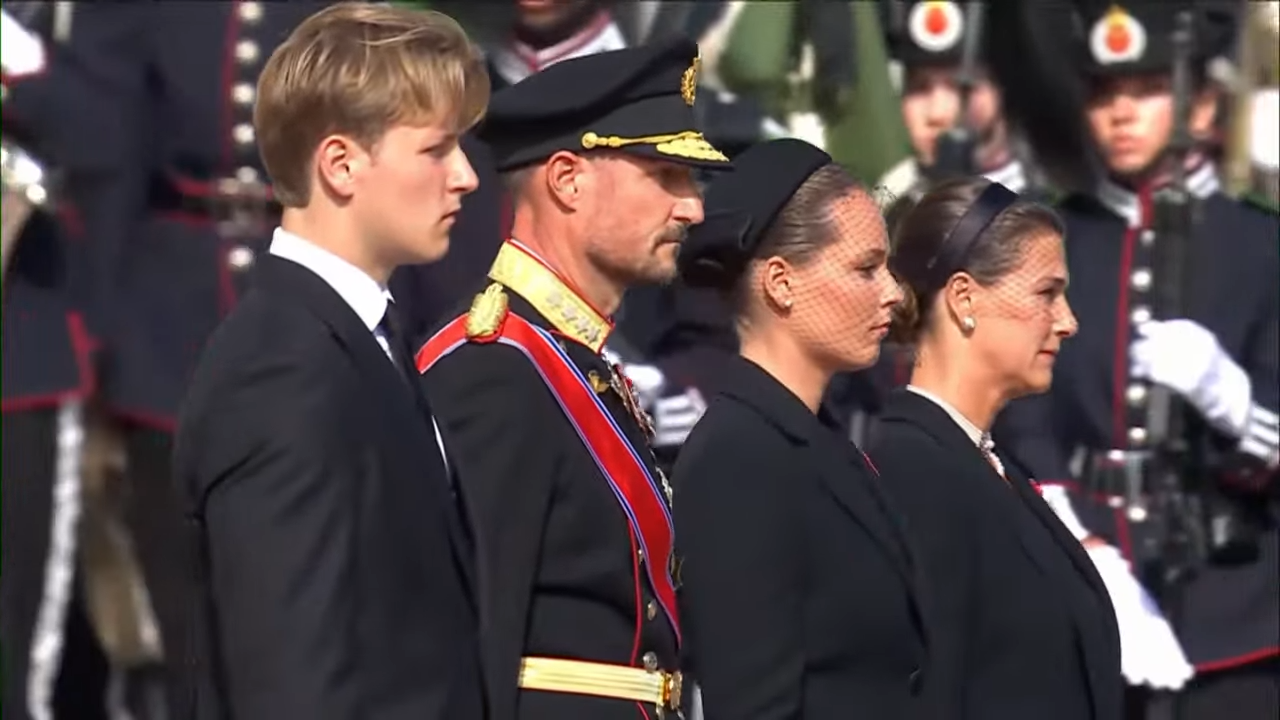
At 1:00 PM, the procession arrived at the historic Oslo Cathedral, where the main funeral service commenced. The religious service was led by Bishop Olav Fykse Tveit, the Presiding Bishop of the Church of Norway. The liturgy included traditional hymns, scriptural readings, and musical tributes that reflected King Harald’s deep Christian faith and his lifelong dedication to his homeland. As the service officially began, a nationwide moment of silence was observed, uniting the entire country in shared remembrance.
Following the public cathedral service, the proceedings shifted to a private sphere. A private ceremony is scheduled to take place at Akershus Castle Church, attended exclusively by the Norwegian Royal Family and visiting foreign royal guests. Concluding these private rites, King Harald’s bier will be returned to the Royal Palace, where the late monarch will be laid to rest in the royal crypt, joining generations of his royal forebears who shaped the destiny of modern Norway.
Background and Context of a Historic Reign
King Harald’s passing marks a monumental watershed moment for the Norwegian monarchy. Ascending to the throne in 1991 following the death of his father, King Olav V, Harald V reigned for more than three decades. Throughout his tenure, he earned the affectionate title of the "People’s King" due to his down-to-earth demeanor, his championing of inclusivity, and his steadfast resilience through personal health challenges and national crises alike.
During his reign, King Harald navigated significant social and cultural transformations in Norway. He was widely praised for his progressive outlook, notably defending multiculturalism, gender equality, and the rights of marginalized communities. His famous 2016 speech celebrating Norway’s diversity—in which he famously noted that Norwegians are "girls who love girls, boys who love boys, and boys and girls who love each other"—resonated globally and cemented his legacy as a modern, empathetic constitutional monarch.
Furthermore, his partnership with Queen Sonja, whom he famously fought to marry against considerable institutional resistance during his time as crown prince, remained a cornerstone of his public life. Their decades-long marriage became a symbol of enduring commitment that further endeared the royal couple to the public.
International Presence and Diplomatic Significance
The state funeral drew an extraordinary gathering of international dignitaries, highlighting the high regard in which King Harald was held internationally. Representatives from nearly every European royal house were in attendance, demonstrating the deep dynastic ties linking the Scandinavian monarchies to the wider European aristocracy.
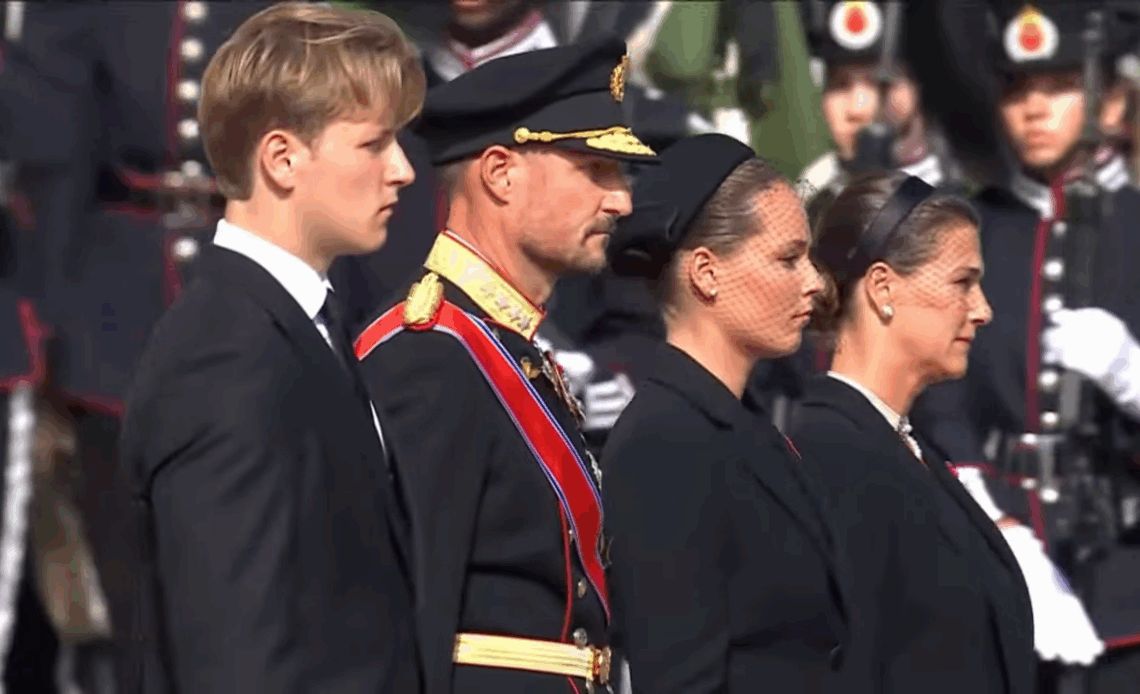
In addition to European royals, foreign heads of state and government leaders traveled to Oslo to express their condolences. The presence of Ukrainian President Volodymyr Zelenskyy carried particular geopolitical significance, reflecting Norway’s robust humanitarian and political support for Ukraine amidst ongoing conflict. Security forces maintained a high, albeit unobtrusive, presence across Oslo, ensuring the safety of visiting dignitaries while allowing the public unobstructed access to mourn along the procession route.
Official statements from foreign leaders poured in throughout the week leading up to the funeral. Heads of state praised King Harald’s statesmanship, his commitment to democratic values, and his role as a stabilizing pillar in Nordic politics. The broad international turnout underscored the late king’s quiet yet effective diplomatic footprint, which often extended far beyond ceremonial duties.
Implications for the Monarchy Under King Haakon
As Norway closes this historic chapter, the accession of King Haakon brings both continuity and a subtle generational shift to the Scandinavian throne. Having prepared for this role over many years, King Haakon inherits a monarchy that enjoys high public approval ratings, largely due to the groundwork laid by his father and grandfather.
Political analysts note that while the core constitutional duties of the sovereign remain unchanged, King Haakon will face the unique challenge of steering the institution through an increasingly digital and fast-paced era. However, with the active participation of younger royals, such as Crown Princess Ingrid Alexandra—who walked prominently in the funeral procession—the Norwegian royal house appears well-positioned to maintain its relevance and connection to the younger generations of Norwegians.
The outpouring of grief observed across Oslo and throughout the country in the days leading up to the funeral demonstrates that the institution of the monarchy remains deeply embedded in the national identity of Norway. As the crypt doors close at Akershus Castle Church, the nation pivots from mourning the loss of a historic patriarch to supporting a new sovereign, ensuring that the legacy of King Harald endures in the daily fabric of Norwegian civic life.