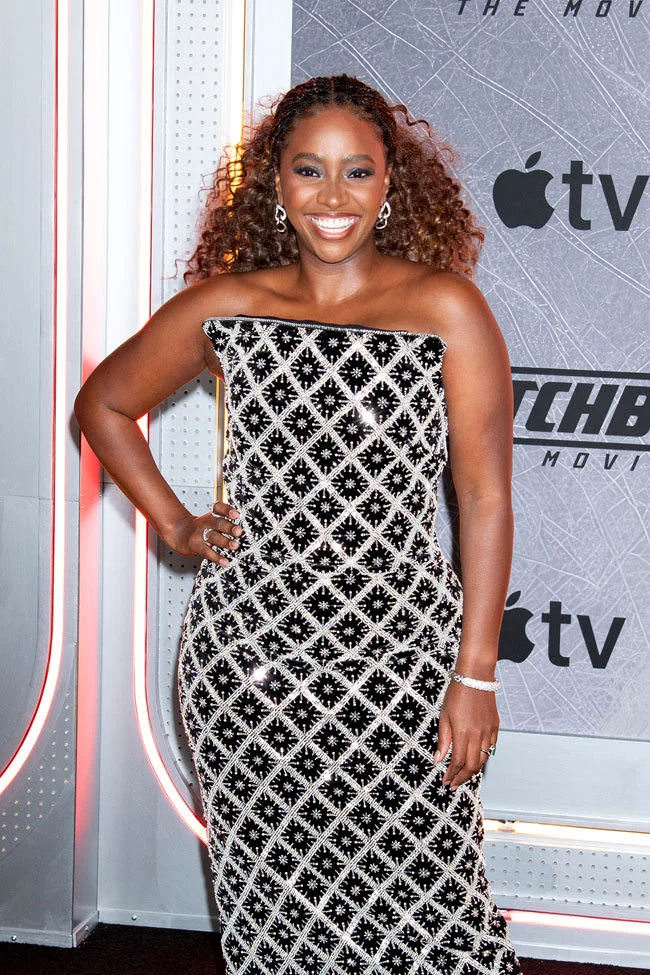

The red carpet outside the New York City premiere of Matchbox The Movie on October 6, 2026, buzzed with the high-energy anticipation typical of major Hollywood intellectual property adaptations. Drawing heavy inspiration from the iconic Mattel die-cast toy line, the feature film represents the latest high-profile collaboration between major toy conglomerates and premiering studio executives. Cast members Sam Richardson, Teyonah Parris, Arturo Castro, Jessica Biel, and John Cena assembled before a dense wall of photographers and media outlets to mark the official theatrical rollout of the Apple Original Film, produced in partnership with Skydance Media and Mattel Films.
As the entertainment industry continues to mine nostalgic toy chests for cinematic gold following the monumental success of predecessors like Barbie, the fashion choices of the ensemble cast sparked immediate interest from fashion critics and pop culture analysts alike. The New York premiere served not merely as a showcase for a globe-trotting action comedy, but as a runway highlighting contemporary menswear trends, structured evening wear, and the recurring debate over coordinated couple styling on the red carpet.

Main Facts of the Premiere and Production Background
Matchbox The Movie brings the decades-old miniature vehicle brand to life through a narrative lens helmed by director and executive producer Sam Hargrave, known for his kinetic action direction. Written by David Coggeshall, the storyline follows a tight-knit group of childhood friends whose ordinary lives are disrupted when an undercover Central Intelligence Agency agent, played by John Cena, re-enters their small-town reality. The character—their former childhood group leader—unwittingly drags them into an international conspiracy and a high-stakes, cross-border mission to avert global catastrophe.
Financially and logistically, the film is backed by prominent industry heavyweights. David Ellison, Dana Goldberg, and Don Granger produce the feature on behalf of Skydance Media, while Robbie Brenner and Ynon Kreiz oversee production for Mattel Films. Jules Daly rounds out the primary production team, with Patrick Newall and Elizabeth Bassin acting as executive producers. The premiere event itself functioned as the cornerstone of Apple TV’s autumn promotional campaign, designed to capture public enthusiasm ahead of the film’s wide distribution.

Chronology of the Intellectual Property Boom
The journey of Matchbox from a nursery staple to a multi-million-dollar cinematic property follows a deliberate, calculated timeline that accelerated dramatically in the wake of recent toy-to-screen blockbusters.
The initial concept of adapting the Mattel die-cast car line gathered corporate momentum as Mattel Films expanded its footprint beyond traditional manufacturing into a full-scale entertainment studio. Following the massive global box-office triumphs of live-action adaptations based on classic toys, studios aggressively sought out untapped catalog properties. Matchbox, which has produced millions of miniature vehicles since its inception in 1953 by Jack Odell for Lesney Products, offered a recognizable brand with a built-in cross-generational demographic.

By the early 2020s, partnerships were solidified between Mattel Films and Skydance Media to develop an action-oriented screenplay. Production announcements followed swiftly, with casting updates rolling out across trade publications to build steady momentum. The selection of Sam Hargrave as director underscored the studio’s intent to position the film as a stunt-heavy, action-adventure franchise rather than a simplistic children’s property. The culmination of this multi-year development cycle arrived with the October 2026 New York premiere, setting the stage for public audience reception.
Red Carpet Fashion Analysis: Sartorial Choices of the Cast
The ensemble’s arrival at the New York venue offered a distinct study in contemporary red-carpet styling, balancing formal traditionalism with modern textural experiments.

Sam Richardson opted for an unconventional approach to formalwear, stepping out in a richly detailed statement jacket paired with a traditional dress shirt, tailored trousers, and a necktie. Fashion commentators noted the inherent strength of the jacket’s standalone design, though critical assessments highlighted the complexities of tone-on-tone color pairing. The nuanced gradients of blue within the ensemble occasionally blended together, prompting discussions among stylists regarding the necessity of sharp contrast to allow statement outerwear to command visual prominence.
Teyonah Parris arrived in a striking creation by designer Nadine Merabi. Known for her consistent red-carpet poise, Parris navigated the evening in a structured silhouette that emphasized crisp architectural lines, notably incorporating a squared-off neckline. While the overall presentation projected elegance, industry critics analyzed the stiffness of modern architectural bodices, contrasting the rigid structure of the gown with the fluid movement typically favored in premiere attire. Her ensemble was punctuated by statement earrings that critics universally lauded as the focal point of the look.
Arturo Castro demonstrated a successful execution of tone-on-tone menswear styling. His tailored suit showcased harmonious color layering that maintained a cohesive visual identity without appearing monotonous. Sartorial observers pointed out that the addition of a foundational accessory—such as a minimalist black tie—would have anchored the look, providing a definitive anchor to an otherwise well-executed monochromatic palette.

Jessica Biel chose a design from luxury Italian fashion house Dolce & Gabbana. While executed with the precision expected of the storied brand, fashion analysts noted that the silhouette leaned heavily on familiar, classic tropes rather than pushing stylistic boundaries. The gown functioned as a reliable, safe choice for a high-profile press event, though it lacked the avant-garde experimentation frequently seen at major metropolitan film debuts.
John Cena, accompanied by Shay Shariatzadeh, generated significant commentary regarding both his individual attire and the concept of coordinated couple dressing. Cena donned a patterned suit that elicited comparisons to classic cinematic character tropes, prompting discussions on the viability of bolder patterns in menswear. However, tailoring critics raised technical concerns regarding the garment’s fit, noting that slim-cut trousers can occasionally compromise the intended drape of a suit, particularly on an athletic frame. Concurrently, style analysts debated the enduring industry consensus regarding "matchy" couple dressing, noting that while coordinated aesthetics can project unity, distinct individual styling often yields a more compelling photographic result.
Statements, Reactions, and Industry Implications

While formal post-premiere press conferences focused primarily on the technical challenges of executing practical action sequences and translating a non-narrative toy line into a cohesive cinematic universe, industry insiders have offered broader analyses regarding the implications of the release.
The strategy behind Matchbox The Movie reflects a structural shift in how major technology companies and traditional Hollywood studios approach intellectual property. With Apple Original Films distributing the project alongside Skydance and Mattel, the film represents the intersection of streaming accessibility and tentpole theatrical marketing. Analysts suggest that the success of such adaptations relies heavily on balancing nostalgic reverence with self-aware humor, ensuring that adult audiences who played with the original toys find equal footing with younger demographics experiencing the brand for the first time.
Furthermore, the red-carpet reception underscores the increasing commercial importance of premiere fashion as a marketing vehicle. In an era where social media engagement often dictates initial public interest, the sartorial choices of actors like John Cena, Jessica Biel, and Teyonah Parris serve as vital touchpoints for digital amplification. As fashion commentary blends seamlessly with traditional entertainment journalism, events like the Matchbox New York premiere function as multifaceted marketing platforms—simultaneously promoting a studio’s financial investment while driving cultural discourse across global fashion and lifestyle channels.