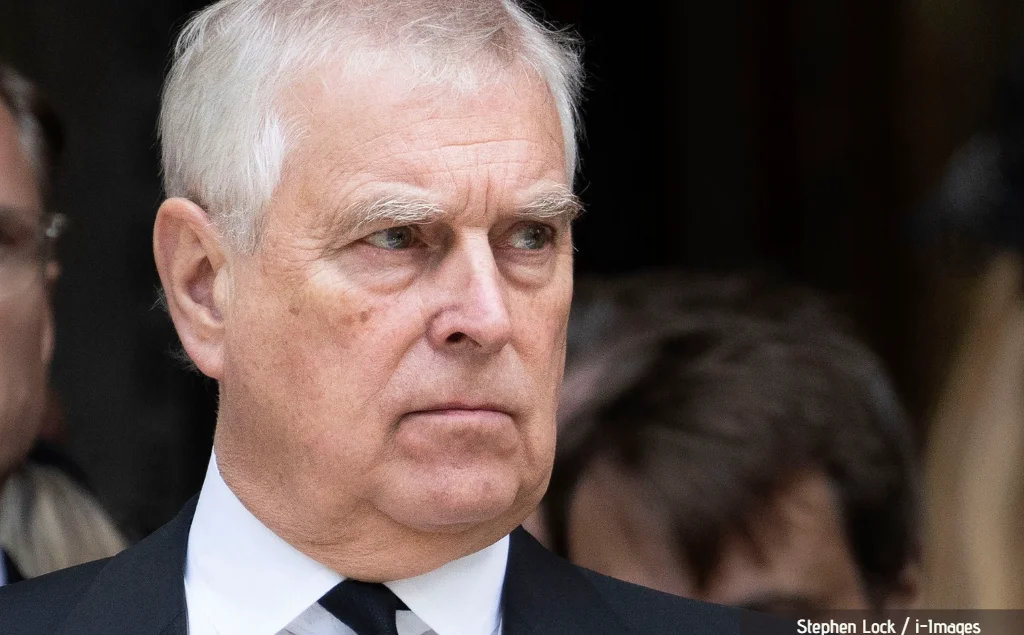

Andrew Mountbatten-Windsor has initiated formal legal proceedings against Thames Valley Police, challenging the lawfulness of the search warrants executed during his dramatic arrest earlier this year. The legal challenge, first reported by The Daily Telegraph, targets the Chief Constable of Thames Valley Police and focuses on the validity of the judicial permissions that allowed law enforcement officers to raid multiple properties linked to the former royal.
The move marks a significant escalation in the ongoing legal and constitutional fallout surrounding the King’s younger brother. It comes months after his high-profile detention on his birthday, an event that sent shockwaves through the British establishment and further strained the monarchy’s relationship with its remaining extended members. Legal experts note that the judicial review application will test the strict procedural thresholds required for issuing search warrants at high-security private residences, potentially setting a precedent for how police investigate prominent public figures.
The Arrest and Raids at Sandringham and Windsor
The underlying events trace back to February 19, when law enforcement officers descended on the Sandringham estate in Norfolk. Mountbatten-Windsor, who currently resides in a property on the estate, was arrested on suspicion of misconduct in public office. The arrest coincided pointedly with his birthday, adding an extra layer of public scrutiny to an already sensationalized morning.
Simultaneously, a coordinated series of police operations unfolded. Officers executed search warrants not only at his new Norfolk residence but also at Royal Lodge in Windsor, his long-time home. The simultaneous raids involved the seizure of numerous digital devices, documents, and personal effects intended to be scoured for evidence relating to the police inquiry.
Following his apprehension, Mountbatten-Windsor was transported to Aylsham police station, where he remained in custody for an intensive 13-hour interrogation. Law enforcement officials ultimately released him late in the evening without immediate criminal charges. However, his release was accompanied by the caveat that he remains under active police investigation, leaving the threat of potential prosecution hanging over him as the inquiry continues.
Challenging the Central Criminal Court Warrants
At the heart of the newly launched legal action is the mechanism by which the police gained entry to his homes. Mountbatten-Windsor’s high-powered legal team has filed for a judicial review against the Chief Constable of Thames Valley Police, specifically contesting the legality of the search warrants used to justify the February raids.
These warrants were not issued by standard magistrates’ courts; rather, they were authorized by the Central Criminal Court, commonly known as the Old Bailey. The timing of the authorization is a central pillar of the defense’s argument, having been granted mere hours before the police executed the operations on February 18.
Judicial reviews of search warrants typically center on whether the issuing judge was provided with sufficient, lawfully obtained evidence to justify the severe intrusion of a search, and whether the police acted strictly within the boundaries of the powers granted. If Mountbatten-Windsor’s legal team successfully demonstrates that the warrants were legally flawed, any material seized during the raids could potentially be ruled inadmissible in any future proceedings, dealing a severe blow to the prosecution’s evidentiary framework.
Timeline of Events and Escalating Scrutiny
To understand the gravity of the current legal battle, it is necessary to examine the cascading series of events that brought the former prince to this juncture. The timeline of his downfall and subsequent legal entanglements spans several years of mounting public and institutional pressure:
- November 2019: Mountbatten-Windsor participates in a catastrophic BBC Newsnight interview intended to address his controversial friendship with convicted sex offender Jeffrey Epstein. The public backlash is immediate and severe, forcing him to step back from all working royal duties.
- January 2022: Amid mounting legal pressure from civil lawsuits in the United States, Queen Elizabeth II strips her son of his military affiliations and royal patronages. He also ceases to use the style "His Royal Highness" (HRH) in an official capacity.
- February 2022: A multi-million-dollar financial settlement is reached to resolve a civil sexual assault lawsuit brought against him in New York by Virginia Giuffre, though the settlement contains no formal admission of liability.
- October 2025: In a decisive move led by the Crown to distance the institution from ongoing controversies, King Charles officially strips his younger brother of his remaining royal titles. The formal designation of "Prince" is revoked, and his historic dukedom is formally removed from the Roll of Peerage.
- February 18, 2026: Warrants are issued at the Central Criminal Court for the search of properties linked to Mountbatten-Windsor.
- February 19, 2026: On his birthday, Mountbatten-Windsor is arrested at the Sandringham estate on suspicion of misconduct in public office. He undergoes a 13-hour detention at Aylsham police station before being released under investigation.
- Current Date: Legal representatives for Mountbatten-Windsor file a claim for a judicial review against Thames Valley Police, targeting the legality of the Central Criminal Court search warrants.
The Epstein Connection and Public Office Scrutiny
The criminal inquiry that led to the February arrest is rooted directly in the enduring fallout from Mountbatten-Windsor’s associations with the late American financier Jeffrey Epstein. For years, critics, anti-monarchy groups, and survivors of Epstein’s abuse questioned the nature of the relationship between the royal and the convicted sex offender, particularly regarding official government or trade-related activities undertaken while Mountbatten-Windsor served as the UK’s Special Representative for International Trade and Investment.
The specific suspicion of misconduct in public office indicates that investigators are probing whether official privileges, state resources, or diplomatic statuses were utilized in a manner that breached the threshold of criminal wrongdoing during his tenure as a trade envoy. Misconduct in public office is a common law offense in England and Wales that carries a maximum sentence of life imprisonment, highlighting the severe legal exposure the former royal faces should formal charges eventually be brought.
Public revelations continued to emerge long after his initial withdrawal from public life. Investigative reports and newly unsealed legal documents from foreign jurisdictions continually brought fresh scrutiny to his interactions with Epstein, eventually prompting law enforcement agencies to review whether threshold criteria for a criminal investigation had been met.
Institutional Fallout and the Monarchy’s Stance
The ongoing legal battles of the eighth-in-line to the throne present a continuous headache for Buckingham Palace and King Charles, who has sought to streamline and modernize the British monarchy while distancing it from past scandals.
When the King orchestrated the stripping of his brother’s titles in late 2025, it was widely interpreted as an unprecedented effort by the sovereign to draw a hard line between the core working royal family and individuals facing severe reputational or legal peril. By removing the peerage from the Roll of Peerage and stripping the HRH style, the Crown effectively relegated him to a private citizen, albeit one carrying the intense glare of historical and media attention.
Despite these measures, the actions of a former senior royal inevitably cast long shadows over the institution. Palace officials have maintained a strict policy of silence regarding the criminal investigation and the subsequent legal maneuvers, reiterating that matters of law enforcement and the judiciary are entirely independent of the royal household. Observers note that this calculated distance is essential for preserving the constitutional neutrality of the Crown, even as the legal drama involving a member of the wider Windsor family unfolds in the High Court.
Broader Implications and Next Steps
As the application for a judicial review makes its way toward a hearing, the immediate battlefield will be procedural rather than substantive. The High Court will need to grant permission for a full judicial review to proceed, a step that requires Mountbatten-Windsor’s legal team to demonstrate an arguable case that the Central Criminal Court erred in issuing the warrants or that Thames Valley Police executed them unlawfully.
Should the challenge succeed, it could severely hamper the ongoing police investigation by invalidating key pieces of physical and digital evidence gathered during the raids. Conversely, should the courts rule in favor of the police, the investigation into misconduct in public office will proceed unhindered, leaving the former prince to face the ongoing weight of police bail conditions and the looming prospect of a charging decision by the Crown Prosecution Service.
Ultimately, this legal maneuver underscores the aggressive defense strategy being mounted by Mountbatten-Windsor’s legal representatives. By challenging the foundational legality of the police’s earliest investigative steps, they are signaling a willingness to aggressively contest every facet of the state’s case, ensuring that the saga surrounding the former prince will remain a dominant fixture of British legal and public life for the foreseeable future.