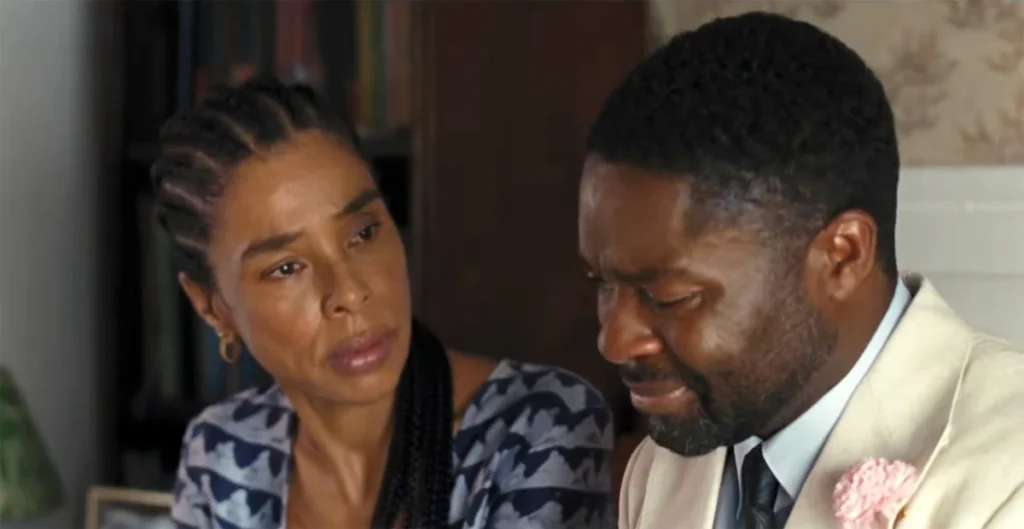

Distributor Neon has officially released the primary United States trailer and promotional artwork for Clarissa, an independent feature film that transposes Virginia Woolf’s seminal 1925 modernist novel Mrs. Dalloway to contemporary Lagos, Nigeria. Directed by the filmmaking sibling duo Arie Esiri and Chuko Esiri in what serves as their highly anticipated sophomore feature following their acclaimed debut This Is My Desire, the film is scheduled to arrive in select domestic theaters on December 11, 2026.
The literary adaptation made its world premiere earlier this year at the 2026 Cannes Film Festival, subsequently maintaining momentum on the international autumn circuit with screenings at the Toronto International Film Festival (TIFF) and the Zurich Film Festival. Driven by an ensemble cast that features Sophie Okonedo, India Amarteifio, David Oyelowo, Ayo Edebiri, Toheeb Jimoh, and Nikki Amuka-Bird, Clarissa reimagines the classic interior monologue-driven narrative within the bustling, vibrant, yet deeply reflective landscape of modern urban Nigeria.
Main Facts and Plot Overview

At its narrative core, Clarissa explores the inner turmoil and societal pressures experienced by its titular protagonist, played by Academy Award nominee Sophie Okonedo. Set over the course of a single day, the film follows a prominent Lagos society wife as she meticulously prepares to host an evening gathering at her residence. Amidst the logistics of party preparation, Clarissa finds herself drifting into intense introspection regarding her youth, the divergent paths of her peers, and the pivotal life choices that ultimately led her to marry a respected, established man rather than her former romantic partner, a passionate young poet.
As evening falls and guests begin to arrive—including figures from her distant past—the narrative expands into an intimate group reckoning. The characters are forced to confront shared histories, lingering passions, suppressed desires, and the melancholy of unfulfilled ambitions. Rather than framing the story around sweeping political or collective societal movements, the Esiri brothers focus sharply on individual destinies, capturing a suspended moment in time defined by existential questioning and emotional vulnerability.
The cinematic aesthetic mirrors this thematic interiority. Shot by cinematographer Jonathan Bloom on 35mm film stock, Clarissa utilizes physical celluloid to impart a warm, nostalgic texture that complements the narrative’s exploration of memory and time. Critics and festival programmers have noted the meticulous attention to production design, lighting, and pacing, which works to translate Woolf’s stream-of-consciousness literary techniques into a distinct visual language suited for contemporary African cinema.
Chronology and Festival Circuit Journey

The path to Clarissa’s domestic theatrical release spans multiple years of development, production, and international presentation.
Following the breakout success of their debut feature, Arie and Chuko Esiri turned their creative focus toward adapting Woolf’s London-centric masterpiece into a West African context. Screenwriter Chuko Esiri restructured the original text’s temporal framework to fit the socio-economic and cultural realities of modern Lagos, preserving the core themes of class, aging, regret, and post-war (or post-colonial) disillusionment while grounding them in a distinctly Nigerian milieu. Production was mounted with financing and backing from industry veterans, bringing together producers Theresa Park and Nicholas Weinstock alongside the directors.
The finished film achieved its first major milestone when it was selected for the 2026 Cannes Film Festival, placing the Esiri brothers firmly on the global cinema map and generating early critical praise for its bold transatlantic and trans-cultural literary translation. Following its Cannes debut, Clarissa traveled across the Atlantic to the Toronto International Film Festival in September 2026, where TIFF programmers lauded its visual and thematic precision. A subsequent screening at the Zurich Film Festival further solidified its reputation as a prestige international title heading into the winter awards and specialty box office season.
With Neon acquiring the distribution rights for North America, the studio slated the film for a strategic December release window—a traditional timeframe for high-end independent and awards-contending cinema. The rollout will begin in select US markets on December 11, 2026, allowing word-of-mouth momentum from the festival circuit to fuel its theatrical footprint.

Cast and Creative Collaborations
Clarissa boasts a powerhouse ensemble cast comprising some of the most recognizable and acclaimed actors working across British, American, and Nigerian screens.
Sophie Okonedo anchors the film in the lead role, bringing her extensive dramatic pedigree—spanning stage, television, and film—to the complex emotional states of a woman caught between public duty and private longing. She is joined by India Amarteifio, who portrays younger iterations or parallel emotional counterparts within the narrative arc, alongside David Oyelowo, whose presence adds gravitas to the ensemble’s exploration of middle-aged reflection. The cast also features Ayo Edebiri, Toheeb Jimoh, and Nikki Amuka-Bird, creating a cross-pollination of international talent that bridges Hollywood, West End, and Nollywood sensibilities.
Behind the camera, the creative leadership remains anchored by the Esiri brothers. Arie Esiri and Chuko Esiri co-directed the project, with Chuko penning the screenplay. Their previous collaborative work, This Is My Desire (also known internationally as Eyimofe), established their reputation for patient, observational storytelling and rich visual texture. In Clarissa, that directorial ethos is applied to a text traditionally viewed as untranslatable due to its heavy reliance on internal psychological states rather than external plot action. Through the use of Jonathan Bloom’s 35mm cinematography, the directors have substituted Woolf’s written prose with tactile framing, natural lighting, and rhythmic editing.

Broader Impact and Industry Implications
The release of Clarissa marks a notable milestone for African cinema and international co-productions, demonstrating the viability of adapting classic Western canonical literature through non-Western cultural lenses. By shifting Mrs. Dalloway from post-World War I London to contemporary Lagos, the filmmakers engage in a dialogue about post-colonial modernity, the pressures of upper-class societal expectations, and the universal nature of aging and personal compromise.
For Neon, the acquisition and distribution of Clarissa reinforces the studio’s ongoing commitment to backing auteur-driven international cinema that appeals to specialty and arthouse audiences. Following a year of successful festival runs, the film enters a competitive December theatrical landscape where specialty distributors vie for adult audiences seeking high-quality drama.
As the official US trailer suggests, the film avoids sensationalism in favor of a tender, melancholic atmosphere. Observers note that its success at the box office will rely heavily on critical endorsement and sustained cultural discussion surrounding its unique premise. By proving that modernist European texts can find resonant new life in African urban centers, Clarissa opens doors for further cross-cultural literary adaptations, expanding the boundaries of what global independent cinema can achieve aesthetically and narratively.