
The cinematic landscape is preparing for a unique dual-release event this October 2026, as distributor Mubi brings both a deeply personal documentary and a remastered 4K print of a modern masterpiece back to the big screen. The centerpiece of this cultural retrospective is Making Marie Antoinette, an enchanting and unprecedented behind-the-scenes documentary captured during the production of Sofia Coppola’s 2006 historical drama. What elevates the project from a standard making-of featurette into a profound piece of cinema is its lineage: the documentary was filmed by Eleanor Coppola, the late matriarch of the Coppola family and an accomplished filmmaker in her own right, who quietly documented her daughter’s artistic process on location at the Palace of Versailles in early 2005.
Following a celebrated festival run at the Telluride Film Festival and the New York Film Festival earlier this fall, Mubi has officially released the trailer and official poster for the documentary. Simultaneously, the studio has launched a trailer for a brand-new 4K theatrical re-release of the original 2006 feature film. Both the documentary and the remastered fictional feature are scheduled to premiere in select United States theaters on October 23, 2026. This dual rollout offers audiences a rare opportunity to re-examine a film that was divisive upon its initial debut but has since been reclaimed by critics and fans alike as a defining visual and thematic touchstone of 21st-century cinema.
A Mother’s Lens on an Auteur in the Making
At the heart of Making Marie Antoinette is a unique maternal and creative perspective. In early 2005, when Sofia Coppola was just 34 years old and undertaking her ambitious follow-up to Lost in Translation, her mother Eleanor was a constant presence on the Versailles set. Armed with a video camera and a lifelong observer’s eye, Eleanor amassed roughly 80 hours of raw footage. As Eleanor remarked in her personal journals, capturing the miniature, highly orchestrated world inside her viewfinder became a source of ongoing fascination.

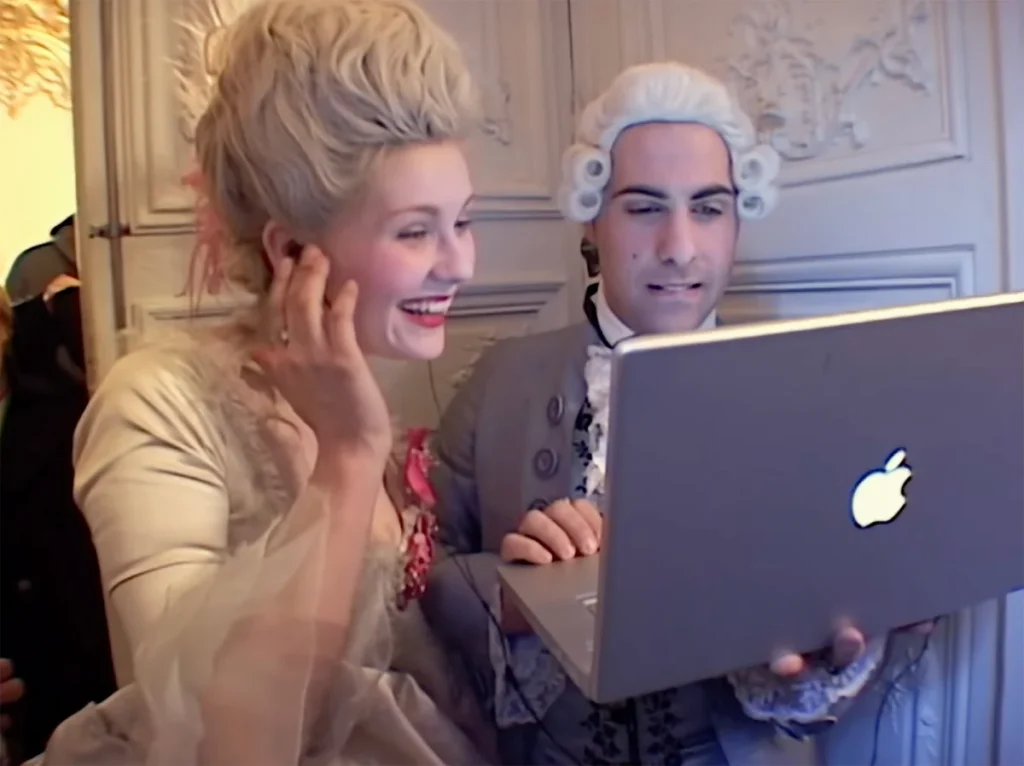
The resulting footage offers an access-all-areas invitation behind the scenes of a production that was famously misunderstood by contemporary audiences. Through Eleanor’s lens, viewers witness not only the logistical hurdles of filming inside historical French landmarks but also the intimate mechanics of an auteur shaping her distinctive artistic vision. The documentary features candid moments of collaboration between the director, her crew, and cast members—with interactions involving actor Jason Schwartzman, who portrayed King Louis XVI, standing out as particularly illuminating highlights of the production’s lighter, behind-the-scenes camaraderie.
A Collaborative Completion Across Decades
The journey of Making Marie Antoinette from raw home video to a polished, professional documentary is a narrative defined by dedication, family legacy, and perseverance. For years, the 80 hours of tape sat largely untouched. However, during the global pandemic lockdowns in the early 2020s, Eleanor Coppola began the arduous process of organizing, reviewing, and assembling the footage into a cohesive narrative structure.
Tragically, Eleanor passed away in 2024 before the project could reach its final form. Determined to honor her mother’s vision and preserve this invaluable historical record of the 2005 shoot, Sofia Coppola stepped in to help complete the editing process. To anchor the visual material with emotional resonance, acclaimed actress Diane Lane was brought in to narrate the film, reading directly from Eleanor’s personal journals written during the 2005 production. This multi-layered collaboration—spanning a mother recording her daughter at work, the mother assembling her memories years later, and the daughter finishing the tribute after her mother’s passing—transforms the documentary into a touching, multi-generational artistic statement.
Chronology of a Legacy: From 2005 Production to 2026 Theatrical Release
To fully understand the significance of this 2026 release, it is essential to trace the timeline of both the original feature film and its newly minted companion documentary:

- Early 2005: Principal photography for Sofia Coppola’s Marie Antoinette takes place on location in France, primarily within the historic halls and grounds of the Palace of Versailles. During this time, Eleanor Coppola captures approximately 80 hours of behind-the-scenes video footage and maintains detailed written journals.
- May 2006: Marie Antoinette has its world premiere in competition at the 59th Cannes Film Festival, where it receives a notoriously polarized reception from critics, famously drawing a mix of boos and applause due to its modern anachronisms, pop-rock soundtrack, and internalized character study style.
- October 2006: The film receives its general theatrical release in the United States, cementing its status as a box-office disappointment domestically while slowly finding an appreciative audience overseas and within specific cultural subcultures.
- 2020–2022: Amid pandemic lockdowns, Eleanor Coppola revisits her 2005 archives, beginning the intricate task of cutting the 80 hours of footage into a structured feature documentary.
- 2024: Eleanor Coppola passes away. Sofia Coppola, alongside producers including Rachel Dengiz, Mario Gianani, Youree Henley, and Lorenzo Mieli, steps in to oversee the final editing stages and complete the project.
- Fall 2026: Making Marie Antoinette makes its high-profile festival debut at the Telluride Film Festival and the New York Film Festival, drawing widespread critical praise for its intimate tone and historical value.
- October 23, 2026: Mubi releases Making Marie Antoinette in select theaters nationwide, paired simultaneously with the nationwide theatrical 4K re-release of the remastered 2006 Marie Antoinette feature.
Re-Evaluating a 21st-Century Cinematic Cornerstone
When Marie Antoinette arrived in cinemas in 2006, the cinematic landscape was largely unprepared for Sofia Coppola’s radical approach to historical biography. Rather than offering a traditional, dry, and reverential period piece, Coppola crafted a pastel-hued, empathetic psychological portrait of a teenage Austrian archduchess thrust into the suffocating, hyper-scrutinized confines of the French court. Utilizing a contemporary soundtrack featuring bands like The Strokes, New Order, and Bow Wow Wow, alongside confectionary costume design by Milena Canonero that eventually won an Academy Award, the film prioritized emotional resonance, sensory immersion, and adolescent isolation over rigid historical accuracy.
In the two decades since its premiere, critical consensus has undergone a dramatic shift. As noted by programmers at the New York Film Festival, the film is now widely embraced as a 21st-century cinematic cornerstone. It is celebrated as a pristine distillation of Sofia Coppola’s recurring thematic interests: the crushing weight of celebrity, the isolating nature of immense wealth, and the quiet internal lives of young women navigating systemic pressures. Kirsten Dunst’s nuanced, restrained performance as the doomed young queen, alongside a stellar supporting cast featuring Jason Schwartzman, Judy Davis, Rose Byrne, and Jamie Dornan, has been rightfully reassessed as a masterclass in modern acting.
Behind the Creative Team
The production pedigree behind Making Marie Antoinette reflects decades of industry excellence. Eleanor Coppola, who passed away in 2024, established a notable filmmaking career independent of her famous familial ties, directing the acclaimed narrative features Paris Can Wait (2016) and Love Is Love Is Love (2020), in addition to her legendary work documenting the chaotic making of her husband Francis Ford Coppola’s Vietnam War epic, Apocalypse Now (resulting in the acclaimed 1991 documentary Hearts of Darkness: A Filmmaker’s Apocalypse).
The documentary is produced by a seasoned team consisting of Sofia Coppola, Rachel Dengiz, Mario Gianani, Youree Henley, and Lorenzo Mieli. Their collective efforts ensure that the documentary maintains an authentic, unvarnished perspective, avoiding superficial hagiography in favor of a genuine examination of artistic labor, family dynamics, and the physical reality of filmmaking.

Broader Impact and Industry Implications
The simultaneous theatrical release of Making Marie Antoinette and the 4K restoration of the original film highlights a growing trend in modern distribution: the strategic re-contextualization of cult classics through supplementary archival media. Distributors like Mubi are increasingly recognizing that contemporary audiences—particularly younger cinephiles who discovered these works via streaming or social media platforms—crave deeper engagement with the filmmaking process.
Furthermore, the project serves as a poignant epilogue to the career of Eleanor Coppola, cementing her legacy not merely as a supportive figure within a famous cinematic dynasty, but as a perceptive, independent chronicler of artistic creation. By presenting the making of Marie Antoinette through the loving, critical, and observant eyes of a mother watching her daughter command a massive Hollywood production, the documentary transcends standard promotional material. It becomes a standalone work of art about female authorship, legacy, and the passing of creative torches from one generation to the next.
As audiences head to theaters on October 23, 2026, to experience both the pristine 4K restoration on the big screen and the deeply personal documentary recounting its creation, they will not only be revisiting a misunderstood classic. They will be witnessing a rare, multi-layered dialogue between two generations of visionary female filmmakers, preserved forever on film.