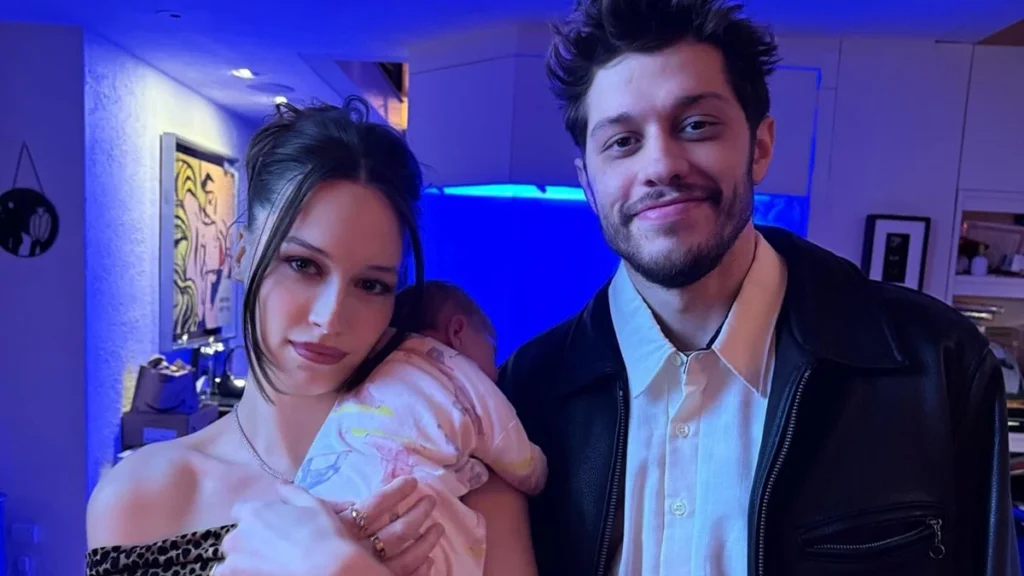

Comedian and actor Pete Davidson has offered a remarkably candid look into his personal evolution, revealing that the arrival of his baby daughter has fundamentally shifted his worldview, priorities, and relationship with the entertainment industry. Known for much of the past decade as a ubiquitous presence in late-night television, blockbuster comedies, and tabloid headlines, Davidson now maintains that the relentless pursuit of professional validation has taken a back seat to the quiet realities of fatherhood.
In a wide-ranging interview with Variety, the former Saturday Night Live star opened up about the profound transformation he experienced upon welcoming his daughter, Scottie—named in poignant tribute to his late father. For a performer who once defined his self-worth by his professional output and public perception, the birth of his child served as an immediate and definitive realignment of what truly matters. As Davidson steps into this new chapter of his life, his shifting perspective offers a fascinating glimpse into how major life milestones can completely redefine a high-profile career in the public eye.
The Paradigm Shift: From Industry Validation to Domestic Fulfillment
For years, Pete Davidson’s career trajectory was defined by an unrelenting work ethic. Rising through the ranks of the stand-up comedy circuit before landing a coveted spot on Saturday Night Live at just 20 years old, Davidson quickly became one of the most recognizable faces in modern entertainment. His resume expanded rapidly to include feature films, critically acclaimed television projects, and high-profile comedy tours. However, this relentless pursuit of success came with a psychological toll.
Reflecting on his pre-fatherhood mindset, Davidson confessed that he was deeply entrenched in the validation loop of the entertainment business. He described a state of existence where he was "living or dying" by the industry’s reception, allowing public opinion and career milestones to dictate his emotional well-being.
That intense psychological investment evaporated almost the exact moment he met his daughter. Describing the transformative experience of holding Scottie for the first time, Davidson noted that his internal calculus changed instantly. The pressures of Hollywood, the anxiety surrounding project reception, and the constant need for professional achievement suddenly paled in comparison to the simple act of being a father. "Oh my God, none of this f***in’ matter at all," he recalled thinking.
This epiphany has translated into a markedly more relaxed approach to his professional endeavors. Rather than chasing every major commercial opportunity or bending to the grueling demands of peak Hollywood production schedules, Davidson now views acting and comedy through a pragmatic lens. Work is simply a job—one that he appreciates, but one that ultimately serves to support his primary vocation: being present at home. If a project affords him the chance to do compelling work, he welcomes it; if not, he views the resulting free time as a welcome bonus that allows him to spend more precious hours with his child.
Honoring a Legacy: The Significance Behind Baby Scottie
The naming of Davidson’s daughter carries deep emotional resonance. By naming her Scottie, Davidson chose to honor his late father, Scott Davidson, a New York City firefighter who tragically lost his life in the line of duty during the September 11 terrorist attacks.
The loss of his father has been a defining narrative thread throughout Davidson’s life and artistic output, frequently informing the raw, vulnerable tone of his stand-up comedy and semi-autobiographical projects, such as the critically praised film The King of Staten Island. Becoming a father himself while carrying the name of his own father forward creates a powerful generational bridge. It highlights a conscious effort to heal, rebuild, and establish a new lineage rooted in stability, presence, and active parental engagement.
This heightened awareness of mortality and legacy was further underscored by Davidson’s recent work in his film How to Rob a Bank, in which he portrays a father battling lung cancer. The thematic parallels between his artistic role and his real-life responsibilities as a new parent have added an extra layer of gravity to his daily choices. Discussing the emotional weight of the role and his own life, Davidson emphasized a fierce determination to remain a constant, steady presence in his daughter’s life. "I will do whatever it takes to be here for my daughter," he stated, reflecting a protective instinct that has quickly become central to his identity.
Balancing Public Persona and Private Responsibility
Transitioning from a high-profile bachelor frequently featured in celebrity gossip columns to a dedicated family man represents a sharp pivot for Davidson. Over the past several years, his romantic life and public persona were frequent subjects of media fascination, often overshadowing his artistic achievements. The relentless media scrutiny created an environment where privacy was difficult to maintain.
Now, fatherhood has provided a stabilizing anchor. Davidson has admitted that looking at his daughter instills a mixture of profound gratitude and a grounded sense of responsibility. "Alright, I don’t want to f**k this up," he remarked, capturing the universal anxiety and determination shared by new parents everywhere. By framing fatherhood as an unmitigated "blessing," Davidson is consciously recalibrating his public footprint, trading the chaotic whirlwind of tabloid culture for the grounding predictability of domestic life.
This evolution is part of a broader trend among millennial and Gen Z performers who are increasingly prioritizing work-life balance over the traditional Hollywood hustle culture. The pandemic and subsequent shifts in industry norms have prompted many high-profile artists to reevaluate their relationship with constant production, choosing instead to protect their mental health and personal relationships.
Career Implications and Future Outlook
While Davidson’s immediate priorities have shifted inward toward his home life, his career in comedy and acting remains robust. The entertainment landscape has historically proven accommodating to performers who mature alongside their audiences, and Davidson’s willingness to embrace vulnerability has always been his strongest asset as an artist.
From his early days on late-night television to his transition into serious cinematic roles, Davidson’s appeal has relied heavily on his self-aware authenticity. By openly discussing his mental health struggles, his grief, and now the transformative realities of fatherhood, he continues to cultivate a deep, empathetic connection with his fanbase.
Industry analysts note that this shift in perspective may actually enhance Davidson’s creative output. Actors who are well-rested, grounded, and emotionally secure often bring a greater depth and nuance to their performances. Rather than burning out in the relentless pursuit of industry validation, Davidson is positioning himself for a sustainable, long-term career that allows him creative freedom without sacrificing his personal well-being.
Ultimately, Pete Davidson’s journey into fatherhood highlights a universal truth: major life events have a unique way of stripping away the superficial and illuminating what truly endures. As he navigates the challenges and joys of raising his daughter Scottie, Davidson is writing a new chapter—one where his greatest achievement is not found on a movie poster or a late-night stage, but in the simple, irreplaceable moments spent at home.