
The journey from Dublin to the western coast of Ireland is a three-hour transit across the heart of the Emerald Isle, a route that has become increasingly defined by a shift in traveler behavior. Where tourism once focused exclusively on urban centers and high-traffic monuments, a new wave of visitors is prioritizing immersive, rural experiences. The transition from the bustling capital to the pastoral quiet of County Clare is not merely a geographic relocation; it represents a broader trend in the hospitality sector: the rise of the luxury farmstay.
The Evolution of Rural Hospitality in Ireland
For decades, the Irish hospitality market was bifurcated between large-scale luxury hotels in metropolitan hubs and modest bed-and-breakfast operations. However, data from the Irish Tourism Industry Confederation (ITIC) suggests a significant pivot since 2020. The post-pandemic landscape has seen an 18% increase in demand for "secluded staycations," specifically those offering self-contained, high-end accommodations on working agricultural land.
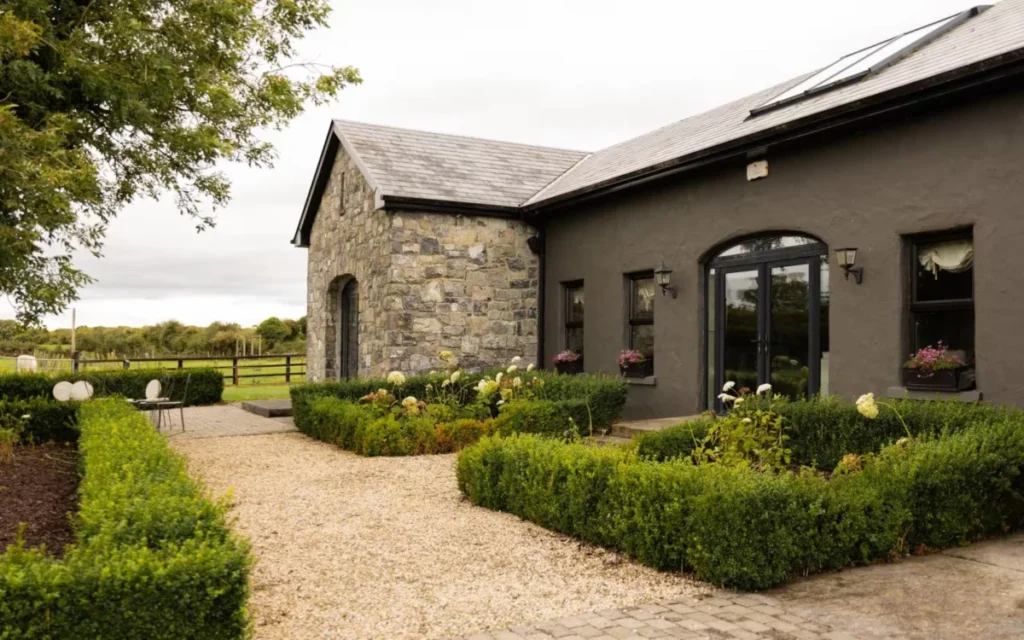
The property in question, located just outside the village of Corofin, serves as a prime case study for this shift. Spanning 70 acres of active organic farmland, the site integrates a modern architectural aesthetic with the traditional constraints of rural Irish geography. The structure, a two-bedroom, purpose-built dwelling, features design elements—such as stone accents, tiled roofing, and high-reaching ceilings—that allow the building to exist in harmony with the surrounding landscape rather than dominating it.
Architectural Integration and Design Philosophy
Architects specializing in rural development have increasingly moved toward an open-concept design that maximizes natural light, countering the traditional, smaller-room layouts found in older Irish farmhouses. By utilizing floor-to-ceiling windows and exposed beams, the designers have created a living space that feels expansive despite the building’s relatively modest footprint.

The interior aesthetic, often described in industry circles as "refined rustic," leverages neutral tones, slipcovered furniture, and tactile textiles like woven accents. From a functional standpoint, the inclusion of a wood-burning fireplace is not merely an aesthetic choice; it serves as a central thermal mass for the home, acknowledging the reality of the Irish climate. This design strategy serves a dual purpose: it provides a high-end experience for visitors while ensuring the structure remains energy-efficient and sensitive to its rural context.
The Proximity Factor: Balancing Isolation and Accessibility
One of the primary logistical challenges for rural hospitality providers is the balance between isolation and access. County Clare, home to some of Ireland’s most significant natural landmarks, provides an ideal geography for this model.
The Burren National Park, a karst landscape of immense geological importance, is situated only 10 minutes from the farmstead. The Cliffs of Moher, a signature site of the Wild Atlantic Way that draws over a million visitors annually, is approximately 30 minutes away. This proximity allows for a "hub-and-spoke" model of tourism: visitors maintain a quiet, rural base while enjoying seamless access to major regional attractions.
Economic impact reports from local Clare tourism boards indicate that visitors who opt for rural stays are more likely to spend at local high-street businesses—such as those in Corofin—compared to travelers staying in large resort complexes. This dispersal of tourist expenditure is a key goal for regional development, helping to sustain small-town economies that might otherwise be bypassed by mass-transit tour groups.
Operational Infrastructure and Sustainability
The internal operations of such farmstays are increasingly focused on the circular economy. The kitchenette model, featuring induction cooking and high-efficiency appliances, minimizes the carbon footprint of the guest experience. Furthermore, the inclusion of farm-to-table provisions—such as sourdough from local producers and eggs harvested directly from the property—serves as an educational tool for visitors regarding local food security and agricultural practices.

The presence of secondary accommodation, such as the three additional cabins on this property, illustrates the scalability of the model. Even when fully occupied, the spatial layout of the 70-acre estate ensures that privacy is maintained. This is a critical factor for the modern traveler, who seeks the communal aspects of a working farm without the loss of individual autonomy.
Chronology of the Modern Farmstay Experience
The typical guest experience, as evidenced by recent logs and visitor feedback, follows a distinct rhythm:
- Arrival and Transition: The transit from the Dublin metropolitan area involves a gradual adjustment to rural driving conditions, characterized by lower speeds and the frequent need to navigate narrow, winding roads.
- Integration: Upon check-in, guests are introduced to the farm’s ecosystem, including livestock management practices and the specific local flora of the Burren region.
- Exploration: Mid-stay periods are characterized by excursions to the Cliffs of Moher or the Burren, balanced by returning to the farm for evening downtime.
- Departure: The conclusion of the stay often involves a final engagement with the agricultural environment, reinforcing the connection between the traveler and the rural landscape.
Broader Economic and Environmental Implications
The trend of "farm-based luxury" is not without its critics, particularly regarding the potential for over-commercialization of agricultural land. However, proponents argue that for many small-scale Irish farmers, diversifying into tourism is a necessary survival strategy. As traditional livestock farming margins fluctuate, the ability to capitalize on the aesthetic value of the land provides a stable revenue stream.
Furthermore, these properties are often required to adhere to strict local planning permissions that prioritize the preservation of the landscape. For instance, the use of local stone and specific roof pitches is often mandated to ensure that new construction does not detract from the cultural heritage of County Clare.
From an environmental perspective, the absence of centralized air conditioning—common in older buildings—is increasingly viewed as a positive feature. By relying on natural ventilation and the temperate climate of the Atlantic coast, these homes achieve a lower energy intensity than standard hotels. The primary challenge remains the management of waste and water in rural areas, where infrastructure is often less robust than in urban centers.
.jpg)
Conclusion: The Future of Rural Tourism
The success of farmstays in County Clare points toward a sustained interest in "slow travel." As global tourism markets become increasingly saturated, the demand for experiences that offer silence, space, and a connection to the land is expected to grow.
Whether the guest is a family utilizing the multi-room configurations or a solo traveler seeking respite from urban density, the value proposition remains the same: the luxury of being elsewhere. As the infrastructure in rural Ireland continues to modernize, the challenge will be to maintain the balance between the authentic, rugged nature of the Irish countryside and the sophisticated expectations of the international visitor. For now, the model established in Corofin provides a blueprint for how the Irish agricultural sector can successfully integrate with the modern tourism economy, ensuring that the rolling hills and quiet lanes of the west coast remain a viable destination for generations to come.