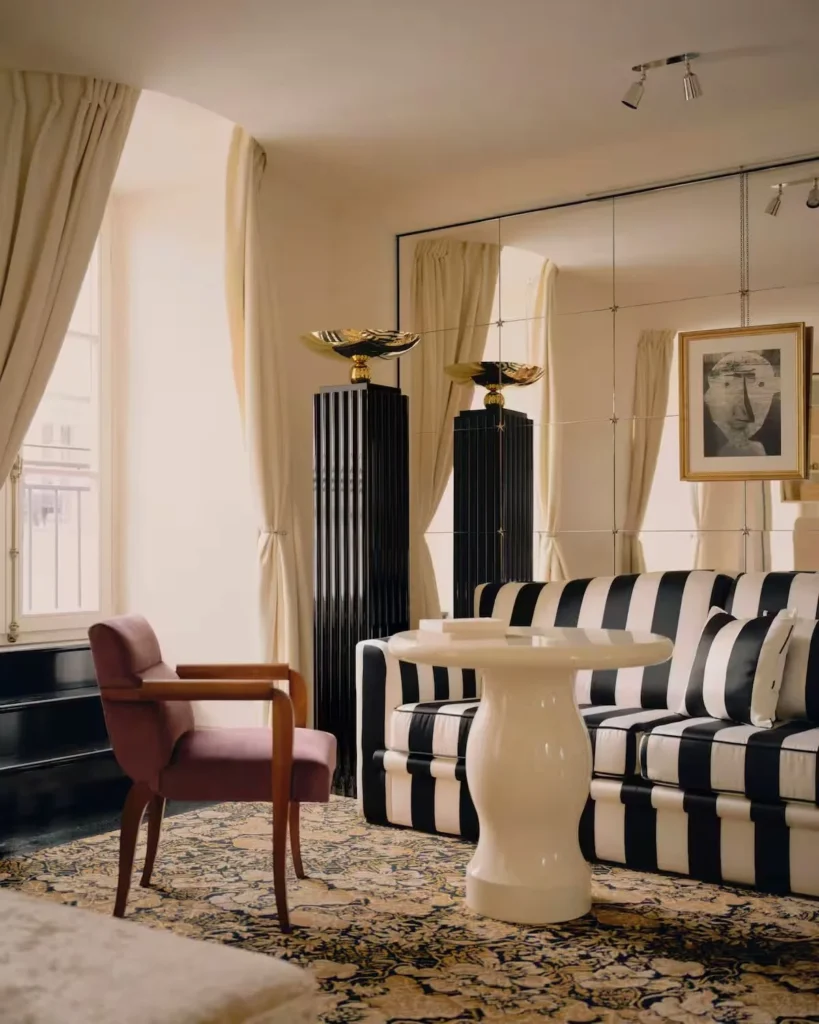

Few cities in the world exude as much architectural significance and cultural density as Paris, where every boulevard serves as a historical narrative and every facade appears as a curated work of art. The French capital continues to maintain its status as a global epicenter for design, fashion, and tourism, drawing millions of international visitors annually. For the seasoned traveler, the allure of Paris is magnified by its distinct urban planning, characterized by the rigorous symmetry of Haussmannian avenues and the intricate, wrought-iron flourishes of Belle Époque balconies. As the city prepares for the mid-September arrival of Maison&Objet—the prestigious bi-annual international trade fair for interior design—the demand for high-end, short-term residential rentals has reached a seasonal peak.
While Paris offers a legendary hospitality landscape consisting of world-class palaces and boutique hotels, an increasing segment of the traveling public is seeking the autonomy and aesthetic immersion provided by luxury apartments. This shift reflects a broader trend in global tourism toward "live-like-a-local" experiences that prioritize residential design over standardized hotel service models.
The Evolution of the Parisian Short-Term Rental Market
The Parisian short-term rental market has undergone significant professionalization over the past decade. Faced with stringent municipal regulations aimed at protecting the city’s long-term housing stock, property managers and luxury rental agencies have pivoted toward fully licensed, high-service models. These properties often integrate the amenities of a five-star hotel—such as 24-hour concierge, professional housekeeping, and bespoke interior design—with the privacy of a private residence.
Data from the Paris Convention and Visitors Bureau suggests that visitors staying in private accommodations tend to have longer average trip durations compared to those in traditional hotels. This is particularly relevant for the professional design community attending events like Maison&Objet, which serves as a barometer for global trends in furniture, lighting, and home accessories. The fair, which attracts over 60,000 professional attendees, often necessitates stays that span a full week, making the inclusion of kitchens, laundry facilities, and living areas highly desirable for participants.

Curated Stays: A Survey of Architectural and Design Excellence
The following properties represent a cross-section of Paris’s most distinctive residential-style accommodations, each selected for its architectural integrity, historical context, or proximity to design-centric districts.
Marais and the Historic Core
In the Marais district, 9Confidentiel stands as a testament to the influence of contemporary French design. With interiors spearheaded by Philippe Starck, the property bridges the gap between 1920s nostalgia and modern functionalism. The use of pale oak parquet and graphic textiles demonstrates a refined approach to texture that appeals to design professionals. Nearby, the Artist’s Studio in the heart of the Marais offers a different experience, allowing guests to inhabit a 17th-century garret with original exposed wooden beams and a wood-burning fireplace, serving as a tangible connection to the city’s pre-industrial past.
The Left Bank: Intellectual and Artistic Heritage
The 6th and 7th arrondissements continue to draw those seeking the intellectual legacy of the Rive Gauche. The Madison Hôtel, situated on Boulevard Saint-Germain, utilizes a sophisticated Art Deco palette of olive and mustard velvet, providing a subtle nod to the jazz-age history of the neighborhood. Across the river, the Hôpital des Orfèvres district offers the Hôtel des Orfèvres, which draws aesthetic inspiration from the historical concentration of goldsmiths in that area, utilizing rich, layered textiles to create a jewel-box atmosphere.
For those requiring proximity to the Eiffel Tower, the Paris Saint-Dominique apartment provides a rare combination of modern air conditioning and a private roof terrace, offering unobstructed views of the Iron Lady. The property serves as a case study in how modern luxury amenities can be successfully integrated into the dense, historic fabric of the 7th arrondissement.
Modernist and Industrial Influences
Not all luxury stays in Paris lean into the 19th century. The Bright Loft near Bastille is situated in a building originally commissioned by Gustave Eiffel to house workers during the construction of the Eiffel Tower. The interior design honors this heritage by highlighting the industrial metal beams, which are echoed in the structure of the Tower itself. By blending these historic industrial elements with contemporary glass partitions and American-sized kitchen appliances, the property offers a unique synthesis of engineering history and modern family-friendly utility.

Economic and Urban Implications of Luxury Rentals
The rise of these high-end, serviced rental models has prompted a discourse on urban sustainability. The City of Paris maintains some of the world’s most restrictive regulations regarding short-term rentals, requiring owners to register properties and, in many cases, obtain commercial change-of-use permits. Consequently, the properties that remain on the market are increasingly those that have been vetted and managed by professional firms, ensuring compliance with local tax and safety ordinances.
From an economic standpoint, the presence of these properties supports a diverse ecosystem of ancillary service providers. Beyond the real estate owners, these rentals sustain local concierge services, specialized cleaning teams, and luxury transit providers. For the city, this segment of the hospitality market is essential for attracting high-net-worth individuals and professionals who prioritize residential space, such as families with young children or designers hauling samples and prototypes for events like Paris Design Week.
Assessing the Shift in Traveler Preferences
Market analysis indicates that the "Airbnb-style" stay has evolved from a budget-friendly alternative to a luxury category in its own right. Travelers are now selecting properties based on the "curation" of the space. Whether it is the Eames-style lounge chair found in the Luxury Flat on Île Saint-Louis or the bespoke millwork designed by Hélène Van Marcke at L’Atelier 35 in Montmartre, the interior design of the rental is now as much a draw as the location itself.
This trend is corroborated by the increased interest in "design-led" tourism. Visitors are no longer satisfied with neutral-toned hotel rooms; they seek environments that reflect the artistic soul of the city. Properties such as the renovated apartment in Saint-Georges, which features a vintage steamer trunk coffee table and midcentury teak furniture, cater directly to this desire for an authentic, curated Parisian narrative.
Strategic Planning for the Autumn Season
As September approaches, the influx of visitors for Maison&Objet and the various fashion-related events creates a competitive environment for short-term housing. Industry experts recommend that travelers prioritize properties with verified professional management, particularly those offering "perks" such as central air conditioning and luggage storage, which are often inconsistent in older Parisian buildings.

Furthermore, the integration of technology—such as digital entry codes and centralized mobile concierge services—has become the standard for the upper echelon of the rental market. This technological leap allows for a seamless transition from transit to residence, reducing the friction that often accompanies international travel.
Conclusion: The Future of the Parisian Pied-à-Terre
The Parisian accommodation market is currently in a state of high-end stabilization. As the city continues to host major international events, the demand for spaces that offer both historical character and modern convenience will likely persist. By choosing to stay in a professionally managed, design-forward apartment, visitors not only secure a comfortable base of operations but also gain a deeper, more intimate perspective on the residential architecture that defines the City of Light. Whether in the historic Marais or the quiet luxury of Auteuil, the modern Parisian rental market ensures that the traveler’s experience remains as stylish and elevated as the city itself.