
A New Era of Presentation
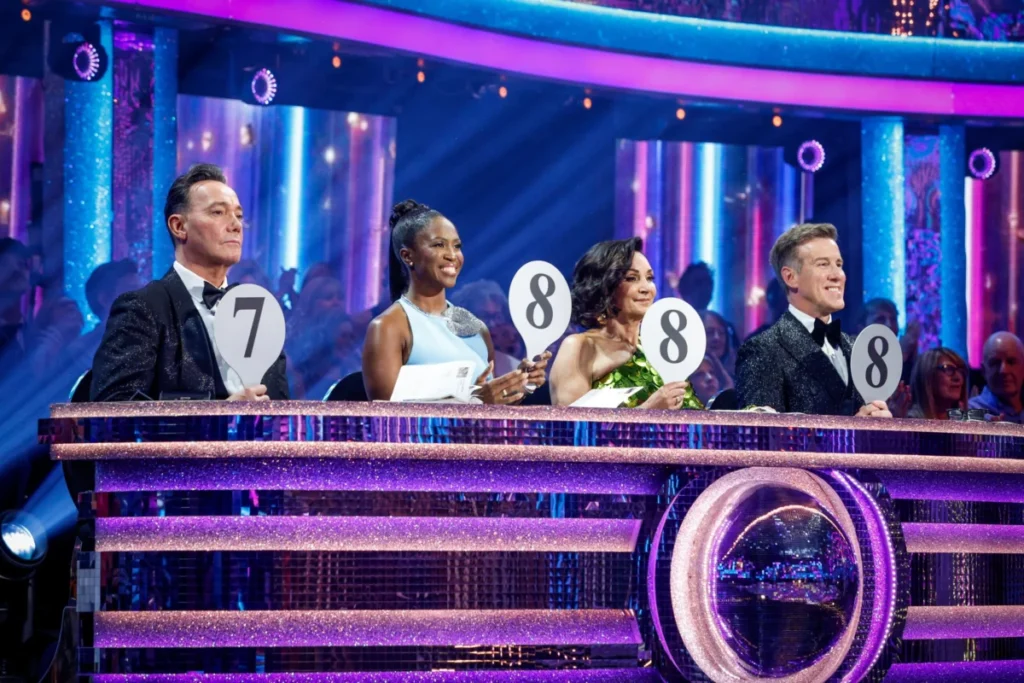
The transition of the presenting mantle represents the most notable change in the show’s recent history. Following the departures of long-standing fixtures Claudia Winkleman and Tess Daly, the BBC introduced a trio of new hosts: Emma Willis, Josh Widdicombe, and professional dancer turned presenter Johannes Radebe. This structural shift was clearly on display during Saturday’s broadcast, with Willis and Widdicombe positioned alongside the judging panel to facilitate the critique, while Radebe provided an intimate, behind-the-scenes perspective from the "Claudatorium" balcony.
For many fans of the franchise, the introduction of a three-person presenting team is a calculated move by the BBC to modernize the show’s dynamic. By splitting the responsibilities, the network aims to maintain the high-energy pacing required for a live production while leveraging the unique chemistry between the seasoned broadcaster Willis, the comedic timing of Widdicombe, and the inherent dance expertise of Radebe. Early feedback suggests that this division of labor allows for more nuanced interactions between the hosts and the contestants, particularly in the immediate aftermath of the judges’ scoring.

Performance Highlights and Leaderboard Dynamics
The competitive nature of the series was immediately established, with social media star John Nellis setting the benchmark for the evening. Alongside his professional partner, Katya Jones, Nellis delivered a sophisticated foxtrot set to Alex Warren’s "Ordinary." The performance earned a commendable 31 points, drawing high praise from the judging panel. Motsi Mabuse and Shirley Ballas, both fixtures of the show’s authority, lauded the routine as the standout performance of the night. Craig Revel Horwood, typically the most stringent of the judges, characterized the dance as "classy, elegant, and graceful," a rare commendation for a first-week performance.
Trailing slightly behind in the standings was Australian singer Delta Goodrem, paired with professional Kai Widdrington. The duo secured 29 points for their Samba to "Baiana" by Barbatuques, showcasing technical precision that solidified their status as early contenders for the Glitterball trophy.
Conversely, the bottom of the leaderboard presented a three-way tie, highlighting the steep learning curve faced by the celebrity contestants in their debut week. Actress Melanie Walters and Aljaz Skorjanec, former footballer Shaun Wright-Phillips and Alexis Warr, and Paralympian Dame Sarah Storey and Julian Caillon all finished with a score of 15 points. The diversity of the bottom three—spanning the worlds of professional sports, acting, and endurance athletics—underscores the unpredictability of the competition, as celebrities from vastly different physical backgrounds attempt to master unfamiliar dance disciplines under intense studio pressure.

Ratings Context and Viewer Behavior
While a peak of five million viewers is a significant achievement in the contemporary media landscape, it follows the series’ launch episode, which reached a higher peak of 5.8 million and an average of 5.3 million. In the context of modern broadcasting, industry analysts note that overnight ratings—the metric typically cited for live linear viewing—no longer represent the totality of a show’s reach.
A spokesperson for the BBC commented on the figures, stating: "Strictly was the most-watched programme of the night, with a peak of five million viewers. As ever, overnight ratings do not give the full picture of all those who watch in an on-demand world." This sentiment reflects a broader industry trend where linear viewing is increasingly supplemented by catch-up services. Notably, Saturday’s episode currently occupies the number one spot on the BBC iPlayer’s "most popular" chart, indicating that the audience for the show remains robust, even if consumption patterns have shifted toward digital and non-linear platforms.
The Evolution of the Strictly Format
The decision to forgo a public vote and elimination during the first live show is a strategic hallmark of the series’ longevity. By providing contestants with a "free pass" in the first week, the production allows celebrities to acclimate to the intensity of the studio environment without the immediate threat of departure. This approach encourages a higher degree of risk-taking in early choreography, as contestants are not yet forced to play it safe to avoid the bottom of the public vote.

The show operates on a strict timeline, with the training process beginning weeks in advance. The choreography for the first show must balance basic technical requirements—the "fundamentals" of the specific dance style—with the need for entertainment value. The decision to feature a foxtrot for the top-scoring pair and a cha-cha for those at the bottom illustrates the varying difficulty levels inherent in the dance styles assigned for the premiere.
Broader Implications for the BBC
The success of this year’s debut reinforces the enduring cultural relevance of Strictly Come Dancing. Despite the departure of its two most recognizable faces, the show has successfully retained its core demographic while signaling a willingness to evolve. The inclusion of figures like John Nellis, who represents a new generation of digital-native stars, alongside established personalities like Melanie Walters and Dame Sarah Storey, ensures the program remains relevant across multiple age cohorts.
As the series moves into "Movie Week," the complexity of the performances is expected to increase significantly. The judges will likely demand greater characterization and narrative consistency, requiring the celebrities to move beyond mere technical steps. For the new presenters, the upcoming weeks will serve as a litmus test for their ability to maintain the show’s tight production schedule during more demanding, themed episodes.

Future Outlook
The transition to a new presenting trio, the record-breaking interest on streaming platforms, and the high-caliber performances of the initial week suggest that Strictly Come Dancing is well-positioned for the remainder of the season. The challenge for the BBC will be to sustain this momentum. As the competition progresses, the introduction of the public vote will introduce a new layer of volatility, often leading to discrepancies between the judges’ technical scores and the audience’s preferences.
Historical data suggests that the "Strictly effect"—the phenomenon where contestants undergo significant physical and personal transformations through the rigors of dance training—is what drives long-term audience engagement. As the season progresses, the narrative arcs of the individual couples, their personal hurdles, and their growth on the dance floor will become as critical to the show’s success as the choreography itself.
In conclusion, the first live show of the latest series has effectively navigated the transition period, delivering both the spectacle and the competitive tension expected by its audience. With five million viewers tuning in and a strong performance on digital catch-up services, the BBC has successfully reaffirmed the franchise’s dominance in the Saturday night television landscape. As the celebrities prepare for the thematic challenges of Movie Week, the focus will shift from simple survival to the mastery of performance, a test that will ultimately determine who remains in the running for the series title. The combination of a refreshed hosting lineup and a diverse cast of contestants ensures that the upcoming weeks will remain a focal point of national conversation, maintaining the series’ status as a staple of British popular culture.