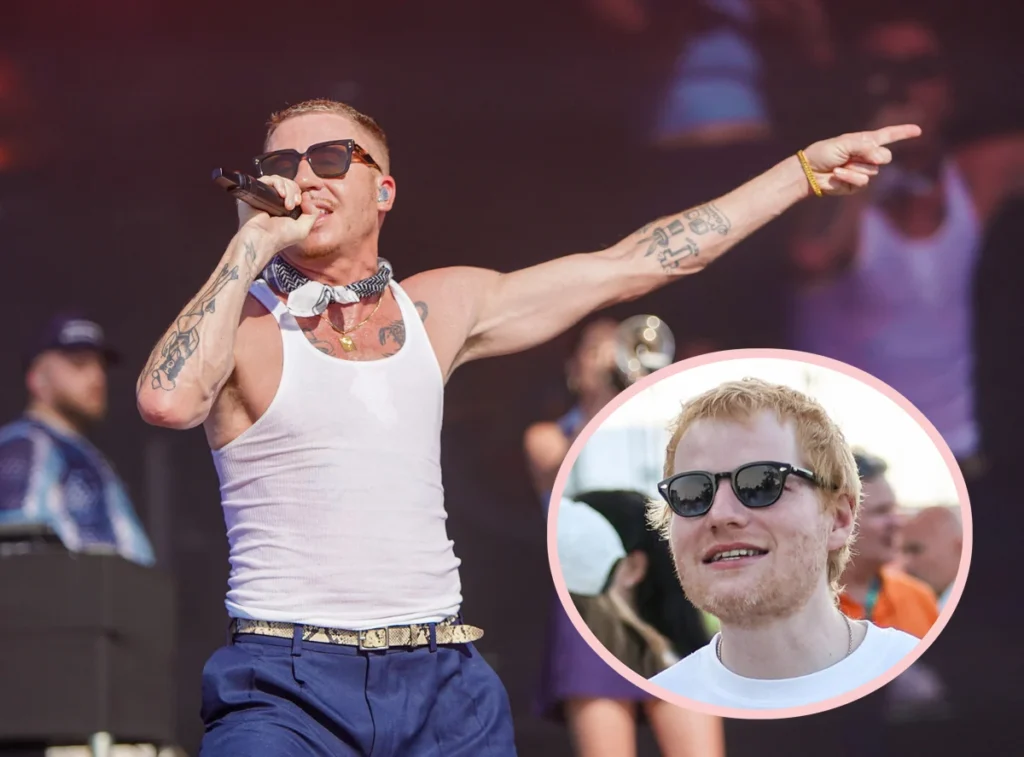

The intersection of celebrity activism and the geopolitical landscape of the Israel-Hamas conflict has resulted in a significant professional repercussion for rapper Macklemore. Following a series of performances on Ed Sheeran’s "Loop Tour," in which Macklemore openly advocated for Palestinian rights and displayed imagery of the conflict, the artist has been formally removed from the remaining tour dates. This development follows a week of escalating public discourse involving fellow artist Pink, venue operators, and the owner of the New England Patriots, Robert Kraft.
Chronology of Events
The controversy originated during the weekend of September 4 at MetLife Stadium in New Jersey. While performing as the opening act for Ed Sheeran, Macklemore utilized the stage to voice support for Palestinians, displaying visuals from Gaza on the stadium’s large screens. During his set, he performed his track "Hind’s Hall," a song named in honor of the pro-Palestinian student protests at Columbia University, which were sparked by the death of six-year-old Hind Rajab in Gaza.
In the days following the performance, the reaction on social media was immediate and polarized. On September 7, singer Pink shared a post on Instagram that criticized Macklemore’s actions, sparking a wave of online discourse. By September 11, Pink issued a formal clarification of her position, noting that her initial repost was impulsive and not reflective of her full perspective.
On September 14, reports confirmed that Macklemore had been removed from the remainder of the tour. Macklemore released a detailed statement regarding the situation, citing a conversation with Ed Sheeran in which the latter explained that pressure from venue owners—specifically Robert Kraft—had led to an ultimatum regarding the rapper’s continued presence on the tour.
The Stance of Involved Parties
The discourse surrounding the event has been defined by three distinct perspectives: the artist’s advocacy, the venue operator’s commitment to "safe environments," and the public criticism regarding the perceived targeting of Jewish identity.
Macklemore’s Position
In his public statement, Macklemore emphasized that he did not view himself as a victim, but rather focused on the humanitarian crisis in Gaza. He acknowledged the professional strain his actions placed on Ed Sheeran, noting that their 13-year friendship remained intact despite their fundamental disagreement on the efficacy of an "apolitical" stance. Macklemore argued that there is no neutral position in the face of the reported loss of life in the region, stating that if his advocacy for "Free Palestine" cost him his stage time, he considered his efforts successful in bringing attention to the humanitarian crisis.
Pink’s Clarification
Pink’s subsequent statement clarified that her objection was not to the concept of free speech, but to the specific context in which Macklemore delivered his message. She highlighted a 2014 incident involving Macklemore, where he was criticized for wearing a costume that included a prosthetic nose and beard, which many labeled an antisemitic caricature. She expressed concern that his recent stadium performance, coupled with the imagery used, created an environment where Jewish attendees felt targeted, rather than merely engaged in political discourse. Pink affirmed her support for humanitarian aid while condemning Hamas as a terrorist organization.
Robert Kraft’s Official Response
Robert Kraft, owner of the New England Patriots and the Gillette Stadium, issued a statement on September 14 justifying the decision to bar Macklemore from the venue. Kraft stated that the decision was rooted in a commitment to preventing "hate speech" and cited a "broader history of antisemitic rhetoric and imagery" associated with the rapper. Kraft emphasized that his actions were not intended to minimize Palestinian suffering but to reject what he characterized as selective advocacy that ignores the actions of Hamas. He noted that his philanthropic work has long supported Palestinian athletic and entrepreneurial ventures, arguing that one can support Palestinians while simultaneously opposing Hamas and antisemitism.
Broader Context and Humanitarian Data
The conflict in Gaza has resulted in profound humanitarian consequences. According to data from the United Nations Office for the Coordination of Humanitarian Affairs (OCHA) and the Ministry of Health in Gaza, the casualty figures have surpassed tens of thousands, with a significant percentage of the victims being women and children. The scale of the destruction has led to widespread international calls for a ceasefire and increased humanitarian aid access.
The controversy highlights a growing trend in the entertainment industry where artists are increasingly pressured to align their public platforms with specific political stances. The tension between venue operators—who prioritize brand safety and audience inclusivity—and artists, who often view their platforms as vehicles for social activism, has become a point of friction.
Analysis of Implications
The removal of an artist from a high-profile tour due to their political speech carries significant implications for the music industry.
- The Role of Venue Owners: The case demonstrates the increasing power of venue ownership groups to influence the content of live performances. By wielding control over stadium access, figures like Robert Kraft are effectively setting boundaries on what discourse is permitted in public-facing events.
- The "Neutrality" Debate: The tension between Macklemore’s insistence that "neutrality is impossible" and Sheeran’s "apolitical stance" illustrates a deep divide in the cultural zeitgeist. Artists are increasingly finding that the middle ground is shrinking, and the refusal to take a definitive side is often interpreted by both activists and critics as a failure of moral responsibility.
- The Antisemitism vs. Anti-Zionism Discourse: The incident reflects the broader societal struggle to distinguish between legitimate criticism of state policies and rhetoric that crosses into antisemitism. The inclusion of the 2014 costume controversy in the current debate highlights how past actions can color the interpretation of current political advocacy, creating a cumulative effect on how an artist’s message is received by the public.
As of mid-September, Ed Sheeran has not issued a formal statement regarding the specific pressure from venue owners or the internal dynamics of his decision to remove Macklemore. The event serves as a stark reminder of the complexities of global politics when brought onto the global stage of pop culture, where the balance between artistic expression and communal safety remains fragile. For stakeholders in the music industry, this incident may lead to more rigid contractual clauses regarding stage content and political speech, potentially altering the landscape of live performance for the foreseeable future.