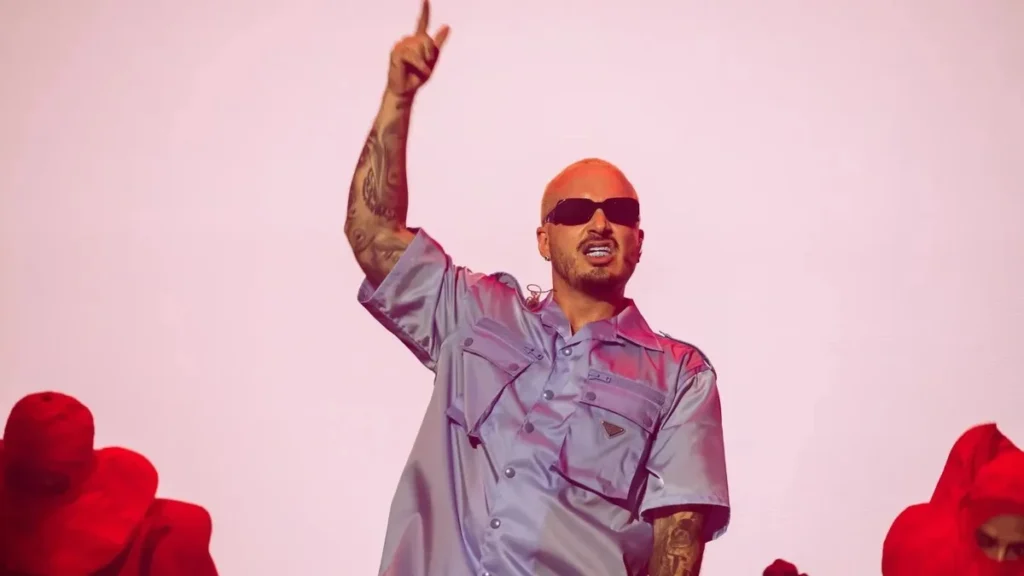

The Palco Mundo, the legendary main stage of the Rock in Rio festival, witnessed a significant cultural convergence this past Saturday as Colombian reggaeton titan J Balvin delivered an hour-long set that served as both a career retrospective and a heartfelt tribute to the Brazilian music scene. The performance, which drew a massive crowd to the Cidade do Rock, functioned as a bridge between the established rhythms of Latin urban music and the burgeoning, high-energy pop and funk soundscapes currently dominating the South American charts.
A Masterclass in Cross-Cultural Collaboration
J Balvin’s appearance at the 2026 edition of Rock in Rio was not merely a standard touring stop; it was a curated exploration of his deep-rooted ties to Brazil. Throughout his sixty-minute set, the Medellín-born artist pivoted between his global chart-toppers and specific deep cuts that resonate with the Brazilian audience. By integrating local stars into his performance, Balvin effectively neutralized the language barrier that once hindered non-English music, proving that the sonic texture of reggaeton is inherently compatible with the melodic sensibilities of Brazilian pop.
The setlist was strategically designed to peak during these collaborative moments. Balvin opened with his signature high-energy delivery, maintaining a tight command of the stage before transitioning into his historical collaborations with Brazilian superstar Anitta. The crowd responded with fervor during performances of "Bola Rebola"—the 2019 smash featuring Tropkillaz and MC Zaac—and the 2017 hit "Downtown." Balvin took several moments throughout the set to speak directly to the audience, expressing his admiration for the Brazilian music industry and acknowledging Anitta’s role in opening the door for his frequent collaborations within the region.
The Surprise Cameos: Sampaio and Melody
The climax of the evening occurred when Balvin introduced two of Brazil’s most provocative and popular young artists: DJ and producer Pedro Sampaio and the viral pop sensation Melody. The integration of these guests was not a peripheral addition but a central component of the set’s narrative.
When Pedro Sampaio joined Balvin on stage for "Perversa," the energy in the stadium shifted toward a more electronic, funk-infused aesthetic. Sampaio, known for his ability to blend traditional Brazilian funk beats with global pop production, brought a distinct local flavor that elevated the reggaeton tracks into something entirely new. The synergy between Balvin’s rhythmic flow and Sampaio’s production style underscored a growing trend in the Latin music market: the fusion of regional sub-genres to create a "Pan-Latin" sound that is increasingly resistant to categorization.
The inclusion of Melody added a layer of youth-driven pop energy. Together with Sampaio, the trio performed "JETSKI," a track that effectively brought the intersection of reggaeton and Brazilian funk to its peak. The chemistry on stage served as a visual representation of the current streaming landscape, where Brazilian artists and Latin American urban stars are increasingly finding common ground on global playlists.
The Broader Context: Rock in Rio’s Evolution
Rock in Rio, since its inception in 1985, has evolved from a rock-centric festival into a massive, multi-genre cultural event. Hosting a reggaeton heavyweight like J Balvin on the Palco Mundo is a testament to the shifting demographics of the global music industry.
For decades, the festival was dominated by Anglo-American rock acts. However, in recent years, the inclusion of artists like Balvin, Bad Bunny, and Karol G has reflected a significant shift in consumer behavior. Data from streaming platforms like Spotify and Apple Music consistently show that Spanish and Portuguese-language tracks are among the most consumed content in the world, often outperforming English-language counterparts in key emerging markets. By centering a major segment of the show around Brazilian artists, Balvin capitalized on the festival’s unique position as a global gateway for Latin American talent.
The Movement: A Shift in Global Music Dominance
In a recent interview with GQ, J Balvin addressed the broader implications of his success and the success of his peers. When asked about the potential for recording an English-language album, Balvin was emphatic in his refusal, citing the current global music climate. "It’s our moment," he stated. "It’s not a trend. Now it’s really a movement."
This sentiment is backed by industry metrics. Over the last five years, the global share of Latin music has surged. According to IFPI (International Federation of the Phonographic Industry) reporting, the Latin American music market has seen consistent double-digit growth, driven primarily by the global adoption of urban rhythms. Balvin’s set at Rock in Rio was a live manifestation of this data. By refusing to conform to the traditional "crossover" requirement of recording in English, Balvin is setting a precedent that artists from the Global South can reach the pinnacle of global stardom—including headlining the world’s most prestigious festivals—while maintaining their native language.
Analyzing the Impact of the Performance
From a music industry perspective, the Balvin-Sampaio-Melody collaboration is significant for several reasons:
- Cultural Diplomacy: By elevating local artists like Melody and Sampaio to the main stage, Balvin ensures that the spotlight is shared. This creates a reciprocal relationship where the international star gains local credibility, and the regional artists gain exposure to a global audience.
- Streaming Synergy: Collaborative live performances frequently trigger spikes in streaming data for the songs performed. Following the performance, industry analysts anticipate a notable increase in the discovery of "JETSKI" and "Perversa" by international audiences who may not have been familiar with these artists prior to the set.
- Genre Fluidity: The performance demonstrated that "reggaeton" is becoming an umbrella term for a variety of rhythmic influences. The incorporation of Brazilian funk—a genre characterized by heavy bass and syncopated percussion—into a reggaeton set indicates that the next evolution of Latin pop will likely be even more hybrid in nature.
Future Implications for Touring
As the dust settles on the 2026 Rock in Rio event, the success of Balvin’s set provides a blueprint for other international artists visiting Brazil. The era of the "one-size-fits-all" international tour is arguably coming to an end. Artists who choose to engage with the local culture—rather than simply performing a standard setlist—are seeing higher levels of audience engagement and social media virality.
The viral clips circulating on platforms like X (formerly Twitter) and TikTok, showing the crowd’s ecstatic reaction to the surprise guests, underscore the effectiveness of this strategy. For J Balvin, the Rock in Rio appearance was a victory lap that solidified his status as a master of the global stage. It was a performance that acknowledged the history of the festival, embraced the current state of the industry, and looked toward a future where the distinction between "international" and "local" music continues to blur.
As the music industry continues to fragment and decentralize, the ability to create these "moment-in-time" collaborations will remain a core competency for top-tier artists. J Balvin’s ability to leverage his platform for such a meaningful, high-profile cross-cultural showcase confirms his role as one of the primary architects of the modern global music landscape. The success of this event serves as a clear indicator that for the foreseeable future, the center of gravity in the pop music world will remain firmly rooted in the collaborative, bilingual, and borderless spirit that defines the current Latin American movement.