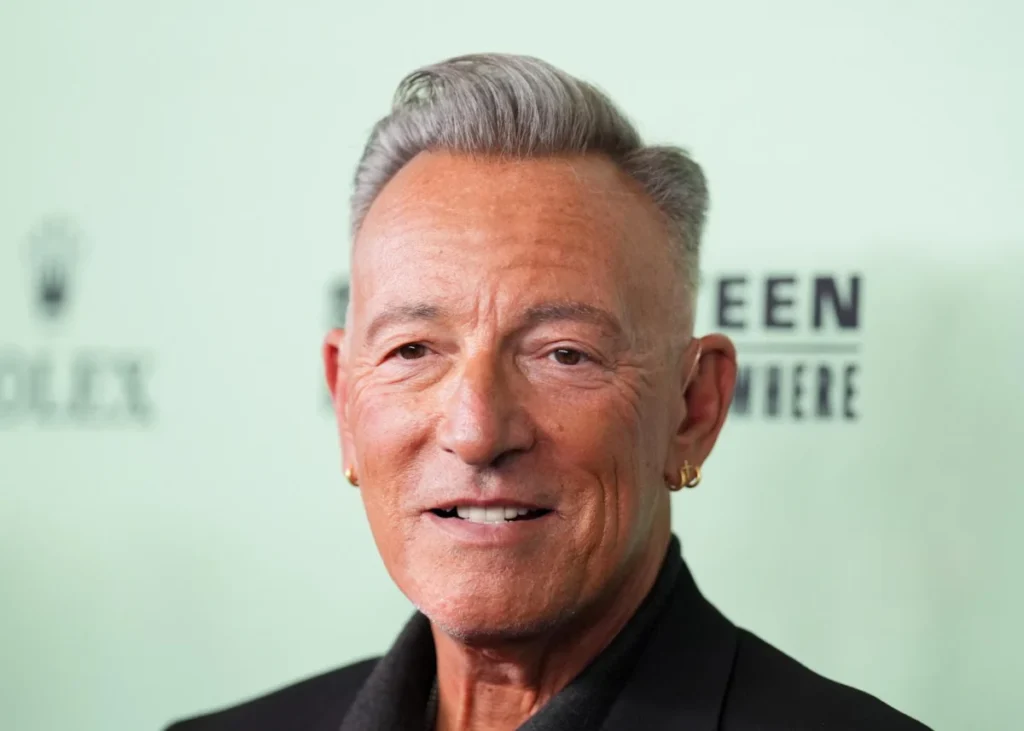

Rock icon Bruce Springsteen has firmly defended the socio-political messaging of his recent Land of Hope and Dreams Tour, making it clear that he harbors no regrets about alienating segments of his fanbase. In a comprehensive interview with Rolling Stone, the legendary singer-songwriter articulated his philosophy on blending decades of catalog music with contemporary political discourse, addressing the fierce debates sparked by his concert themes, and offering insight into his creative future as he prepares for new musical releases.
The tour, which spanned 20 dates across the United States, commenced on March 31 in Minneapolis and concluded on May 30 in Philadelphia. The run of shows was deeply intertwined with the charged political climate of 2026, serving as an artistic reflection of national anxieties, policy disputes, and cultural divisions. Rather than tempering his approach to maintain broad appeal, Springsteen embraced the friction, asserting that his decades-long career has afforded him the autonomy to present his art entirely on his own terms.
Chronology of the Tour and Catalyst Events
The ideological foundation for the Land of Hope and Dreams Tour was laid earlier in the year with the January release of Springsteen’s protest song "Streets in Minneapolis." Written in direct response to the controversial deaths of René Good and Alex Pretti during a high-stakes confrontation with federal immigration authorities, the track immediately set a combative and reflective tone for the artist’s upcoming public appearances.
The spring tour utilized this momentum to construct a narrative arc centered on American identity, civil liberties, and political critique. Each evening’s performance opened with Edwin Starr’s anti-war anthem "War," establishing a stark thematic framework before the E Street Band even launched into their own material. Throughout the setlist, Springsteen deliberately integrated socially conscious tracks from his extensive catalog, including "Born in the U.S.A.," "Death to My Hometown," "Long Walk Home," and "Youngstown." The concerts consistently closed with a poignant rendition of Bob Dylan’s "Chimes of Freedom."
Between musical numbers, Springsteen frequently addressed the audience directly, incorporating speeches that criticized the current administration—specifically targeting the Trump administration’s policies and governance. These monologues frequently divided concertgoers, drawing vehement criticism from conservative fans while galvanizing progressive supporters.
Deconstructing "Born in the U.S.A." and the State of the Nation
A central focus of Springsteen’s recent commentary has been the complex history of his 1984 blockbuster hit, "Born in the U.S.A." Long misunderstood as a blind, jingoistic celebration of patriotism rather than a critical examination of the treatment of Vietnam War veterans, the song has been approached with caution by its creator in recent domestic performances.
During the Land of Hope and Dreams Tour, however, Springsteen chose to reintroduce the track into his U.S. setlists, strategically positioning it between "War" and "Death to My Hometown." By anchoring the song within a sequence explicitly addressing militarism and economic hardship, Springsteen aimed to strip away its misinterpretations and place it in direct conversation with 2026 political realities.
When asked about the composition of the shows, Springsteen described the entire enterprise as an intentional mirror of the country’s social fabric. He noted that the concert was designed to encapsulate the state of the nation, treating his music not merely as entertainment, but as an ongoing historical record.
Public and Fan Reactions
The incorporation of overt partisan commentary and anti-administration rhetoric inevitably triggered polarization among ticket holders. Reports of audience members walking out, alongside heated online debates, highlighted the deep political fault lines running through contemporary American culture.
Springsteen, however, expressed complete indifference toward the commercial and popular fallout of his stances. Acknowledging the vocal opposition he encountered both in-person and online, the musician adopted a pragmatic perspective, emphasizing that artistic integrity must supersede commercial calculations. His philosophy remains rooted in creating the work he feels compelled to make and allowing the audience to self-select accordingly.
Upcoming Political Engagements and Midterm Implications
Springsteen’s political engagement extends beyond the stage and into the electoral arena. Looking ahead to the midterm elections, the artist has openly stated his preference for a shift in congressional power, expressing hope that the Democratic Party will regain control of both the House of Representatives and the Senate.
To that end, the musician is slated to make at least one more high-profile, politically adjacent appearance before voters head to the polls. Next month, Springsteen is scheduled to join activist and guitarist Tom Morello for a special live performance in Washington, D.C., further aligning his public platform with progressive advocacy.
Multimedia Expansion and Future Musical Projects
While the live itinerary of the Land of Hope and Dreams Tour has concluded, the experience is being preserved for a broader audience through a phased digital release. The initial component, titled Bruce Springsteen and the E Street Band: Land of Hope and Dreams American Tour (Philadelphia Freedom Cut), features the first seven songs from the Philadelphia performance and is currently streaming on YouTube. Additional installments capturing the remainder of the concert are scheduled to roll out in subsequent releases.
Beyond the concert film, Springsteen’s creative output shows no signs of slowing down. The artist revealed he currently has two distinct album projects in development. One record has already been completed, while a second project is nearing its final stages of production, with Springsteen intending to finalize and release the latter first.
Regarding future touring plans, Springsteen indicated that while he remains open to performing live, he has no intention of returning to the grueling, marathon schedules of the past, which historically featured massive runs of up to 140 shows with the E Street Band. Instead, the focus has shifted toward deliberate, highly curated projects that allow the veteran rocker to communicate his message on his own schedule.