
The intersection of high-concept fashion and commercial beauty branding reached a new milestone this week as global music sensation Doja Cat unveiled a striking visual campaign in partnership with MAC Cosmetics. The artist, known for her chameleonic approach to personal style and her willingness to subvert traditional red-carpet expectations, appeared in a meticulously curated ensemble that blended elements of avant-garde structuralism with classical glamour. Central to the presentation was a fully translucent latex micro minidress that served as a canvas for a sophisticated play on texture, transparency, and color theory. The imagery, disseminated via the official MAC Cosmetics digital platforms, has sparked extensive discourse regarding the evolution of celebrity brand ambassadorships and the current trajectory of the "naked dress" trend within the upper echelons of the fashion industry.
Technical Specifications of the Ensemble
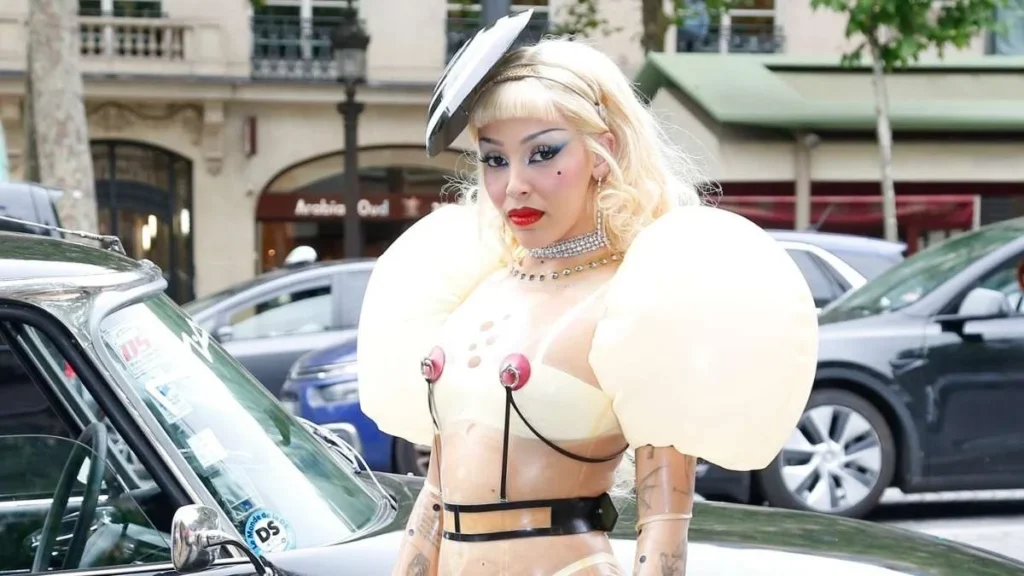
The garment at the center of the campaign is a masterclass in modern material engineering. Constructed from a high-grade, see-through latex, the micro minidress utilizes a body-hugging silhouette designed to accentuate the wearer’s form while maintaining a rigid, almost architectural integrity. The design features a complex garter-style system integrated with a functional belt, providing a structured, industrial feel that contrasts sharply with the delicate nature of the underlying layers.
To balance the provocative nature of the sheer latex, the designers incorporated voluminous, fully puffed sleeves. This stylistic choice introduces a romantic, neo-Victorian element to the outfit, creating a juxtaposition between the "hard" aesthetic of the synthetic material and the "soft" aesthetic of the silhouette. Beneath the transparent exterior, Doja Cat wore a coordinated lingerie set in a muted light yellow. The bra featured a plunging neckline and ultra-thin straps, while the matching bottoms maintained the minimalist theme, allowing the external latex structure to remain the focal point of the visual narrative.
The Artistry of Ivan Núñez: Achieving the Hyper-Glam Aesthetic
The visual impact of the ensemble was significantly heightened by the work of celebrity makeup artist Ivan Núñez. According to statements released alongside the campaign, Núñez was tasked with creating a look that complemented the unique properties of the latex fabric. Upon viewing the outfit, Núñez opted for what he described as a "hyper-glam, doll-like aesthetic," a choice that aligns with Doja Cat’s frequent exploration of the "uncanny valley" and hyper-feminine archetypes.
The technical execution of the makeup involved several key components:
- The Foundation and Complexion: A flawless, porcelain-like finish was achieved to mimic the smooth surface of the latex.
- Ocular Emphasis: Núñez utilized sharp, vibrant blue eye makeup to create a stark contrast against the warm tones of the artist’s skin and the yellow of the lingerie.
- The Signature Red Lip: A classic, bold red lip served as the anchor of the look, providing a timeless element of high-fashion glamour.
- The Strategic Beauty Mark: In a nod to classical cinema and mid-century modeling, a beauty mark was added. Núñez noted that this detail was specifically intended to "echo the playful energy" of the polka-dotted gloves that accompanied the look, demonstrating a holistic approach to the styling process.
Contextualizing Doja Cat’s Fashion Evolution
To understand the significance of this latest appearance, it is necessary to examine Doja Cat’s broader impact on the fashion landscape over the past 24 months. Born Amala Ratna Zandile Dlamini, the artist has transitioned from a viral internet sensation to a formidable force in the fashion world. Her appearances at international fashion weeks have become highly anticipated events, often characterized by extreme commitment to a theme.
In early 2023, her appearance at the Schiaparelli Haute Couture show in Paris—where she was covered in 30,000 hand-applied Swarovski crystals—set a new standard for celebrity attendance at runway shows. Similarly, her interpretation of the "Karl Lagerfeld: A Line of Beauty" theme at the 2023 Met Gala, where she utilized facial prosthetics to embody Lagerfeld’s cat, Choupette, demonstrated a move toward performance art within the realm of public appearances. This latest collaboration with MAC Cosmetics continues this trajectory, moving away from standard commercial beauty shots toward a more editorial, high-concept form of storytelling.
The Strategic Partnership with MAC Cosmetics
MAC Cosmetics (Make-up Art Cosmetics) has a long-standing history of aligning itself with disruptive and influential figures in the arts. Since its inception in Toronto in 1984, the brand has maintained a "M·A·C for All" philosophy, which has seen collaborations with everyone from RuPaul and Lady Gaga to Rihanna and Miley Cyrus.
The decision to feature Doja Cat in such a bold, fashion-forward capacity reflects the brand’s commitment to staying relevant in an increasingly crowded beauty market. By leveraging Doja Cat’s reputation as a risk-taker, MAC reinforces its position as a brand for professional artists and those who view makeup as a tool for self-expression rather than mere concealment. Industry analysts suggest that these types of high-visibility campaigns are essential for legacy brands to maintain "cultural equity" among Gen Z and Millennial consumers who prioritize authenticity and creative edge in the brands they support.
Chronology of Recent High-Fashion Engagements
The unveiling of the latex minidress look follows a series of strategic moves by Doja Cat’s management and styling teams:
- Late 2023: Doja Cat begins a more intensive collaboration with high-fashion houses, moving away from ready-to-wear into custom couture pieces.
- Spring 2024: The artist headlines several music festivals, using the stage as a laboratory for testing avant-garde beauty looks.
- May 2024: Initial teasers for a new collaboration with MAC London appear, hinting at a shift toward a more "structured" and "synthetic" aesthetic.
- Current Release: The full campaign images are released, documenting the "doll-like" latex concept and providing technical details on the artistry involved.
Analysis of Market Trends: The Rise of "Tactile Fashion"
The use of latex and sheer materials in this campaign is reflective of a broader trend in the fashion industry often referred to as "Tactile Fashion" or "Subversive Basics." Following years of loungewear dominance during the global pandemic, there has been a significant pivot toward materials that demand attention and challenge the boundaries of public and private attire.
Data from fashion search engines indicates a 45% increase in searches for "latex clothing" and "sheer dresses" over the last fiscal year. By adopting these trends, Doja Cat and MAC Cosmetics are not merely following a fad but are participating in a shift toward "hyper-visibility." This trend is characterized by the use of unconventional materials to reclaim the public gaze, a move that is particularly effective in the digital-first economy of Instagram and TikTok.
Industry and Public Reaction
While official statements from MAC Cosmetics have focused on the technical brilliance of the makeup, industry insiders have been quick to praise the synergy between the garment and the cosmetic application. Fashion critics have noted that the look successfully navigates the fine line between "commercial appeal" and "editorial risk."
Social media metrics indicate that the post featuring the latex look garnered significantly higher engagement rates than standard product-focused posts. This suggests that consumers are more likely to interact with brand content when it is presented through a high-concept, narrative-driven lens. While some conservative segments of the public have questioned the provocative nature of the see-through attire, the consensus among fashion professionals is that the look is a calculated and successful exercise in brand positioning.
Broader Implications for the Beauty Industry
The Doja Cat x MAC collaboration highlights a growing trend where the boundaries between makeup, fashion, and performance art are increasingly blurred. In the modern era, a beauty brand cannot rely solely on the quality of its pigments; it must also sell a lifestyle and a specific cultural viewpoint.
For MAC, this campaign serves as a reminder of its roots in the professional artistry community. For Doja Cat, it solidifies her status as a muse for the modern age—one who is capable of turning a commercial endorsement into a moment of cultural commentary. As the beauty industry continues to evolve, it is likely that we will see more brands adopting this "editorial-first" approach, moving away from traditional studio photography in favor of more challenging, artistically rigorous campaigns.
In conclusion, Doja Cat’s recent appearance in the translucent latex micro minidress is more than a mere fashion choice; it is a strategic alignment of personal brand and corporate identity. By embracing a "hyper-glam, doll-like aesthetic," the artist and MAC Cosmetics have created a visual moment that resonates across the fields of fashion, beauty, and digital media, setting a high bar for future celebrity collaborations in the industry.