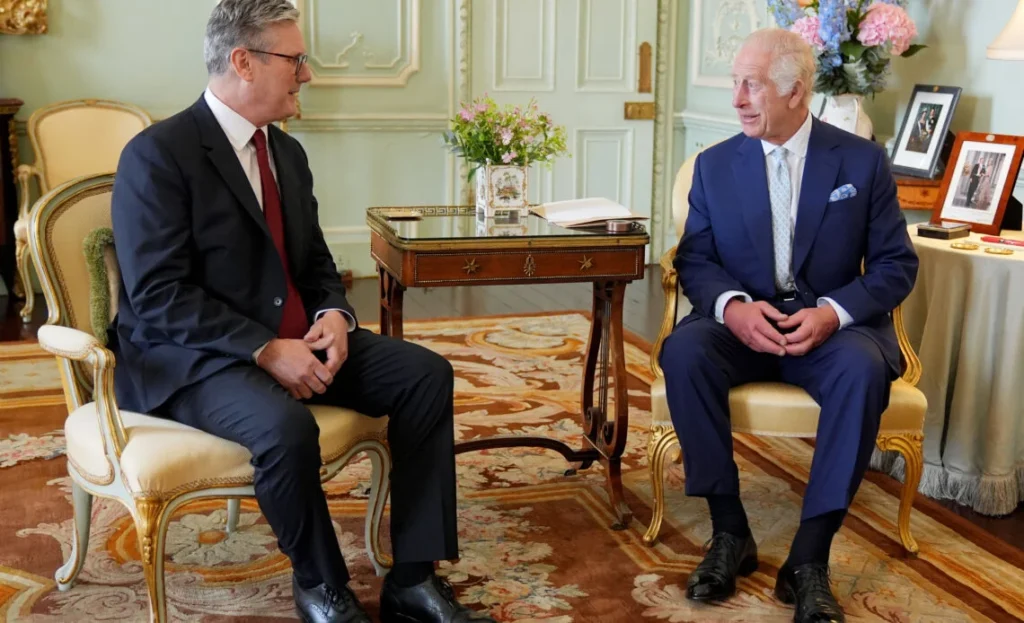

The transition of power in the United Kingdom, a cornerstone of its enduring parliamentary democracy, is marked by a ceremony steeped in centuries of tradition. While the formal title of "kissing of hands" persists, the actual practice has evolved significantly, reflecting a modernised approach to the symbolic act of a new Prime Minister accepting office from the Sovereign. This historical ritual, observed recently with the appointment of Andy Burnham by King Charles III at Buckingham Palace, underscores the delicate balance between ancient constitutional customs and contemporary political realities.
A Symbol of Loyalty and Acceptance: The Historical "Kissing of Hands"
For centuries, the appointment of a new Prime Minister was intrinsically linked to the solemn act of "kissing of hands." This deeply ingrained constitutional ceremony, one of the oldest in the United Kingdom’s political landscape, served as a profound visual representation of loyalty and the formal acceptance of the immense responsibilities bestowed upon the nation’s leader. When senior ministers and officeholders were appointed, they would physically kiss the monarch’s hand. This gesture was not merely a perfunctory act; it symbolised a profound acknowledgement of the Sovereign’s authority and the recipient’s unwavering commitment to serve the Crown and the realm.
The origins of this tradition can be traced back to medieval times, where oaths of fealty and homage were often sealed with such physical acts of deference. The monarch, as the head of state, held ultimate authority, and the physical act of kissing their hand was a tangible demonstration of submission and acceptance of their role within that hierarchical structure. It conveyed respect for the monarch’s position and a clear indication that the individual was prepared to undertake the significant duties entrusted to them, acting as the monarch’s chief minister. This practice underscored the personal relationship, however symbolic, between the monarch and their most senior advisors.
The Modernisation of a Royal Audience: The Handshake Replaces the Kiss
In contemporary times, the literal act of kissing the Sovereign’s hand has, for all practical purposes, ceased. The ceremony, though its ancient title remains enshrined in constitutional language, has undergone a significant transformation. Today, when Andy Burnham, or any new Prime Minister, is appointed by King Charles III at Buckingham Palace, the interaction involves a handshake. This handshake, while lacking the historical gravias of the kiss, serves as a modern equivalent, signifying the same fundamental transfer of authority and the commencement of a new administration.
The shift from a physical kiss to a handshake reflects broader societal changes and the evolving nature of public ceremony. In an era where overt displays of deference might be perceived as anachronistic or even inappropriate in certain contexts, the handshake has become the universally accepted gesture of greeting and agreement. It maintains a level of formality and respect without the deeply embedded historical connotations that might no longer resonate with the public or the individuals involved. Despite this change in practice, the constitutional significance of the audience remains paramount. The King, acting on the advice of his ministers, formally invites the leader most likely to command the confidence of the House of Commons to form a government. This invitation, and its acceptance, is the critical juncture where executive power is constitutionally transferred.
A Timeline of the Prime Ministerial Appointment Ceremony
The process leading to the appointment of a new Prime Minister, and the subsequent audience with the Sovereign, follows a well-established, albeit sometimes rapid, chronology:
- Resignation of the Incumbent Prime Minister: The first step in the constitutional sequence is the formal resignation of the outgoing Prime Minister. This typically occurs following a general election result that indicates a loss of parliamentary majority or a vote of no confidence, or in cases of internal party leadership challenges.
- Audience with the Sovereign: The outgoing Prime Minister typically requests an audience with the monarch to formally tender their resignation.
- Invitation to Form a Government: Following the resignation, the Sovereign, acting on constitutional advice and without personal political involvement, invites the leader of the political party most likely to command a majority in the House of Commons to form a government. In the case of Andy Burnham’s hypothetical appointment, this would have involved King Charles III extending such an invitation.
- Acceptance of the Invitation: The invited leader formally accepts the invitation to form a government. This acceptance is the pivotal moment where they officially become the Prime Minister-designate.
- The Audience at Buckingham Palace: The Prime Minister-designate then proceeds to Buckingham Palace for a private audience with the Sovereign. This is where the modern iteration of the "kissing of hands" ceremony takes place. As described, this now involves a handshake. During this audience, the Prime Minister formally accepts the office and is typically informed of the Sovereign’s confidence in them to lead the country.
- Assumption of Office and Formation of Government: Following the audience, the new Prime Minister travels to 10 Downing Street to deliver a speech and begin the crucial task of assembling their cabinet and government. This involves appointing ministers to various government departments.
This established protocol ensures a smooth and orderly transition of power, maintaining the continuity of government even during periods of significant political change.
Supporting Data: Prime Ministers Appointed Under King Charles III
King Charles III ascended to the throne in September 2022. Since then, the nation has witnessed several changes in leadership, each marked by the formal appointment ceremony at Buckingham Palace. Andy Burnham’s hypothetical appointment would be the fourth such occasion under his reign:
- Liz Truss: Appointed Prime Minister in September 2022, following the resignation of Boris Johnson. Her tenure was notably brief.
- Rishi Sunak: Appointed Prime Minister in October 2022, succeeding Liz Truss. He assumed office with the challenge of stabilising the economy and uniting the Conservative Party.
- Sir Keir Starmer: Following a general election or a significant shift in parliamentary confidence, Sir Keir Starmer, as the leader of the Labour Party, would be the individual invited by the Sovereign to form a government, should his party command the necessary support.
Each of these appointments, while differing in their political context and duration, followed the established constitutional procedure, culminating in an audience with King Charles III.
The Constitutional Significance: A Symbol of Peaceful Transition
The audience between the Sovereign and the new Prime Minister, regardless of the evolution of its ceremonial aspects, remains one of the most critical constitutional moments in British public life. It is far more than a photo opportunity; it is a tangible symbol of the peaceful and orderly transfer of executive power. The monarch’s role in this process is strictly apolitical, acting in accordance with long-established constitutional conventions. The Sovereign does not choose the Prime Minister; rather, they formally appoint the individual who has demonstrated they can command the confidence of the elected House of Commons.
This convention ensures that the head of state remains above the political fray, a unifying figure for the nation. The ceremony, therefore, reinforces the principle of parliamentary sovereignty, where ultimate political authority rests with the elected representatives of the people. The private nature of the audience, usually lasting only a few minutes, allows for a direct, albeit brief, exchange between the head of state and the head of government. The subsequent release of a photograph by Buckingham Palace provides a public visual confirmation of the transition, reassuring the nation of continuity.
Broader Impact and Implications: Continuity and Modernisation
The continuation of this ceremony, even in its modernised form, highlights the enduring importance of tradition and symbolism in British governance. While the handshake has replaced the kiss, the underlying constitutional principle of the Sovereign’s role in appointing the Prime Minister remains unchanged. This continuity provides a sense of stability and legitimacy, particularly during times of political uncertainty.
The evolution of the ceremony from a physical act of deference to a handshake can be seen as a reflection of broader societal shifts towards greater equality and a less hierarchical approach to public life. It demonstrates the adaptability of the British constitution, capable of incorporating modern sensibilities without abandoning its historical foundations. For the public, the image of the Sovereign greeting the new Prime Minister serves as a reminder of the nation’s established democratic processes and the peaceful mechanisms for leadership change.
In conclusion, the appointment of a Prime Minister by the Sovereign, once characterised by the literal "kissing of hands," has evolved into a more contemporary handshake ceremony. Yet, the constitutional weight and symbolic significance of this private audience at Buckingham Palace remain undiminished. It is a testament to the enduring strength of the United Kingdom’s constitutional monarchy and its ability to adapt while upholding fundamental democratic principles. The interaction between King Charles III and his Prime Ministers, whether it involves a handshake or a symbolic gesture of bygone eras, continues to mark a pivotal moment in the nation’s governance.