
The British Broadcasting Corporation has unveiled a comprehensive, star-studded promotional campaign, featuring nearly 100 household names, designed to underscore its profound cultural and economic impact on the United Kingdom, particularly as the institution braces for critical discussions surrounding its Royal Charter renewal and future funding model. Released on Sunday, the three-minute film anchors comedian and actor Romesh Ranganathan in a journey across the BBC’s most iconic programmes, sets, and studios, as he seeks to answer the seemingly simple yet strategically loaded question: "What has the BBC ever done for me?" This ambitious endeavour serves as a timely and spirited defence of the BBC’s public service mandate, echoing a similar campaign from 40 years ago, and aims to articulate its enduring relevance in an increasingly fragmented media landscape.
The Campaign Unveiled: A Star-Studded Defence
The promotional film, directed by Dougal Wilson, known for his work on "Paddington In Peru," commences with Romesh Ranganathan seated in the legendary Queen Vic pub from "EastEnders." He is seen perusing a newspaper headline that provocatively asks, "Is the BBC really worth it?" Engaging with barmaid Tracey (played by Jane Slaughter), Ranganathan vocalizes the central query: "You have got to ask – what has the BBC ever done for me?" This rhetorical question sets the stage for a cinematic exploration of the BBC’s multifaceted contributions to British life, culture, and economy.
As Ranganathan navigates through the Corporation’s vast universe, he encounters a constellation of talent, each segment highlighting a distinct aspect of the BBC’s output. The campaign cleverly weaves in appearances by figures from diverse genres. Coldplay frontman Chris Martin is revealed at a piano, adding a musical dimension. Claudia Winkleman, a staple of BBC entertainment, also features, underscoring the broadcaster’s appeal in popular culture. Ranganathan himself delivers a line encapsulating the debate: "If you’re a fan of Ian Beale, or if The Traitors has any appeal, who cares if they’ve raised two and a half billion for charity, what has the BBC ever done for me?" This sardonic tone allows the campaign to directly address and pre-empt common criticisms while simultaneously showcasing the breadth of its programming.
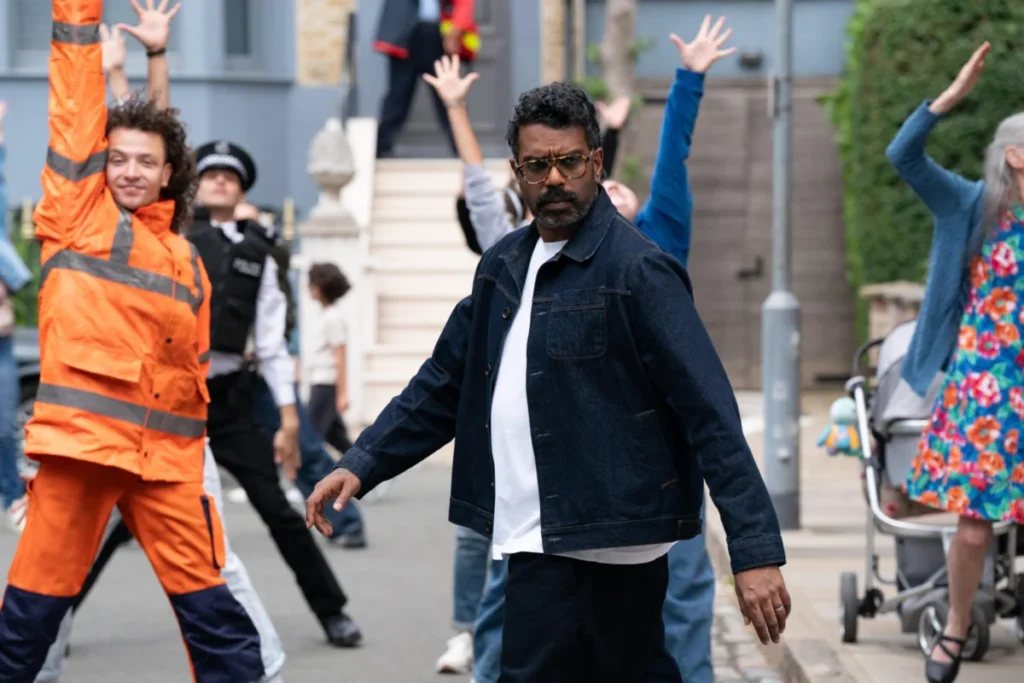
The narrative progresses with Ranganathan stepping onto a bustling street, enumerating further benefits: the BBC’s role in "introducing the nation to Adele," its commitment to "thoroughly" verifying news, and its provision of beloved personalities like Mary Berry, major cultural events such as Glastonbury, and the ubiquitous presence of "celebs on the telly." The film goes on to highlight the BBC’s unparalleled coverage of sports, exemplified by Wimbledon, and its cultivation of "a love of nature" through acclaimed series like "Springwatch." A key differentiator, often cited by the BBC, is also emphasized: its unique position as a major broadcaster that "avoids having advertisements," a direct consequence of its licence fee funding model.
In a poignant scene set on the set of "Call The Midwife," Ranganathan asserts that the BBC "does a lot for British storytelling," showcasing its commitment to drama and authentic narratives. The campaign then takes a more assertive turn, as Ranganathan humorously dismisses critics with a defiant "stuff your Apprentice and Match Of The Day," before the scene shifts to Louis Theroux, poised over a switch in a studio, delivering a stark warning: "none of this exists if we don’t want it to." This moment serves as a powerful reminder of the fragility of public service broadcasting and the collective decision required to sustain it.

Towards the film’s climax, Ranganathan is handed a folder containing compelling statistics. He reveals that the public’s investment in the BBC, through the licence fee, generates "more than six and a half billion pounds for the economy," a figure he acknowledges sounds "pretty good." The journey culminates on the iconic "Strictly" dancefloor, where Ranganathan poses the central question one final time. Judge Anton Du Beke appears, holding up a perfect "10" score paddle, only to be playfully told to "bog off" by Ranganathan, adding a touch of characteristic British humour. The film concludes with the powerful on-screen message: "There’s a BBC for each of us. Funded by all of us."
Beyond the core journey with Romesh Ranganathan, the campaign features an impressive roster of stars, reinforcing the BBC’s widespread appeal and influence across generations and genres. This includes prominent figures like Alan Carr, Peter Capaldi, Sara Cox, Graham Norton, Vernon Kay, Greg James, and Ruth Jones. The campaign also boasts appearances from international talents such as Cate Blanchett and Daisy Ridley, alongside much-loved personalities like Chris McCausland, Clive Myrie, Stacey Solomon, and even iconic BBC characters like Pudsey Bear and a contingent of Daleks, illustrating the sheer breadth of its creative universe.
A Timely Endeavour: The Charter Renewal Context
This elaborate campaign is far from a mere celebration; it is a strategically timed and meticulously crafted intervention during a period of intense scrutiny and existential debate for the BBC. The Corporation is currently entering a "crucial period of charter renewal discussions," a quinquennial process where its Royal Charter – the constitutional document that sets out its public purposes, guarantees its independence, and outlines its funding – is reviewed and potentially revised by the government. The current Royal Charter is set to expire in 2027, making the lead-up to these discussions paramount for the broadcaster’s future.
The question of "how the organisation should be funded" is central to these debates. For over a century, the BBC has been primarily funded by the licence fee, a mandatory annual charge paid by every household in the UK that owns a television or watches/records live television broadcasts or uses BBC iPlayer. This model has faced increasing pressure and criticism in recent years, particularly concerning its perceived fairness, its relevance in the age of subscription streaming services, and the criminalisation of non-payment. Recent licence fee freezes, imposed by the government, have placed significant financial strain on the BBC, leading to budget cuts, programme reductions, and staff redundancies.
Critics often question the value for money offered by the licence fee, particularly from those who feel they do not consume enough BBC content to justify the cost, or who prefer commercial alternatives. Concerns about political impartiality, especially in news coverage, and the BBC’s perceived "wokeness" or alignment with certain social viewpoints, also frequently surface. Furthermore, the BBC operates in an intensely competitive global media market, vying for audience attention with well-funded international streaming giants like Netflix, Amazon Prime Video, and Disney+, as well as a vibrant domestic commercial broadcasting sector. In this context, the new campaign serves as a robust pre-emptive strike, aiming to re-establish the BBC’s unique public value proposition in the minds of the public and policymakers alike.
Echoes of the Past: A Legacy Reimagined
The current campaign draws direct inspiration from a seminal 1986 BBC promotional film featuring the legendary comedian John Cleese. That campaign, also posing the question "What has the BBC ever done for me?", was similarly released during a period of debate about the BBC’s role and funding, albeit in a different media landscape. By consciously referencing this historical precedent, the BBC aims to tap into a sense of tradition and long-standing public service, positioning the current discussions as part of an ongoing dialogue about its place in national life rather than a sudden, unprecedented crisis.

The BBC has explicitly stated that the new film shares the "same spirit" as its 1986 predecessor, describing it as a "joyful celebration of the programmes, people and moments that have become part of our national life, and a reminder of the place the BBC continues to hold in our everyday lives." This continuity underscores the BBC’s enduring mission, even as the methods and context evolve. The 1986 campaign was effective in its time, and the hope is that this modern reinterpretation, with its contemporary stars and references, will resonate with a new generation while reminding older audiences of the BBC’s consistent presence and impact.
Quantifying Impact: Beyond Entertainment
One of the campaign’s critical objectives, as articulated by the BBC, is to shift the conversation beyond mere entertainment and quantify the Corporation’s broader societal and economic contributions. The film highlights the impressive figure of £6.5 billion generated for the economy by the money the public pays to the BBC. This economic impact extends far beyond direct employment within the organisation. It encompasses significant investment in the creative industries across the UK, supporting independent production companies, technical services, and a vast supply chain. The BBC’s commissioning power acts as a major driver for regional economies, fostering talent and infrastructure outside London. Furthermore, the BBC’s global sales arm, BBC Studios, exports British content worldwide, generating significant revenue and promoting UK soft power and cultural influence on the international stage.
The campaign also rightly points to the £2.5 billion raised for charity, primarily through iconic annual appeals such as Children in Need and Comic Relief. These initiatives have become deeply ingrained in the national consciousness, mobilising millions of pounds each year for vital causes and demonstrating the BBC’s unique capacity to unite the nation for philanthropic purposes. Beyond these direct financial contributions, the campaign implicitly champions other less tangible but equally crucial benefits:
- Trustworthy News: In an era of misinformation and ‘fake news,’ the BBC’s commitment to "thoroughly" verifying news is a cornerstone of its public service, providing impartial and accurate information to millions daily.
- Cultural Hub: From Glastonbury’s global broadcast to the promotion of diverse artistic endeavours, the BBC acts as a vital platform for British culture, making high-quality arts and music accessible to all.
- Educational Content: While not explicitly detailed in the campaign snippet, the BBC has a long history of educational programming, from Bitesize resources for students to groundbreaking documentaries that inform and inspire.
- Social Cohesion: Programmes like "EastEnders" and major national events coverage provide shared experiences and common talking points, fostering a sense of national identity and community.
- Innovation: Historically, the BBC has been at the forefront of broadcast technology, from colour television to digital radio and streaming platforms, driving innovation in the sector.
Leadership’s Rationale: Articulating Public Value
In a blog post accompanying the campaign’s launch, Kerris Bright, the BBC’s Chief Customer Officer, elucidated the strategic intent behind this monumental effort. She articulated that the campaign’s primary aim was to "ensure the BBC gets credit for the fundamental impact it has on society, as well as the things it makes." This statement underscores a perceived gap between the public’s consumption of BBC content and their recognition of its broader societal contributions. Bright further emphasized the "important moment" of the campaign’s release, directly linking it to the impending government process of renewing the BBC’s Royal Charter and determining its future funding mechanism.
The sentiment from BBC leadership is clear: this campaign is not merely about celebrating past achievements, but about actively shaping the narrative for its future. It seeks to remind both the public and political stakeholders that the BBC is more than just a collection of popular programmes; it is an intrinsic part of the UK’s social fabric, an economic engine, a trusted news source, and a global cultural ambassador. Director-General Tim Davie, while not explicitly quoted in the initial article snippet, has consistently championed the BBC’s public value, arguing that its unique funding model allows it to take risks, serve all audiences, and deliver high-quality, impartial content that commercial entities might not. This campaign is a tangible manifestation of that strategic vision, aiming to solidify public and political support for the BBC’s continued existence as a publicly funded institution.
The Diverse Tapestry of BBC Offerings
The campaign cleverly showcases the immense breadth and depth of the BBC’s programming, illustrating how it truly caters to "a BBC for each of us." The fleeting glimpses and mentions are a testament to this diversity:

- Long-running Soaps: "EastEnders," with its Queen Vic setting and mention of Ian Beale, highlights the BBC’s role in creating enduring fictional worlds that reflect British society.
- Modern Thrillers: "The Traitors" signifies the BBC’s ability to produce contemporary, engaging entertainment that captures the national imagination.
- Music and Talent Discovery: The reference to "introducing the nation to Adele" underlines the BBC’s crucial platform for emerging and established musical talent.
- Culinary Icons: Mary Berry represents the BBC’s success in lifestyle programming and creating beloved national figures.
- Major Events: Glastonbury and Wimbledon demonstrate the BBC’s unparalleled commitment to covering significant national and international events, making them accessible to millions.
- Nature Documentaries: "Springwatch" embodies the BBC Natural History Unit’s world-leading expertise in showcasing the wonders of the natural world, inspiring environmental awareness.
- Period Drama: "Call The Midwife" exemplifies the BBC’s strength in historical storytelling, often tackling sensitive social issues with grace and impact.
- Business Reality & Sports: "The Apprentice" and "Match Of The Day" showcase the BBC’s popular offerings in reality television and live sports analysis, catering to diverse audience interests.
- Strictly Come Dancing: The iconic dancefloor and Anton Du Beke’s appearance highlight the sheer entertainment value and broad appeal of BBC’s flagship Saturday night shows.
- Documentary & Factual: Louis Theroux’s presence alludes to the BBC’s commitment to high-quality, thought-provoking documentary filmmaking.
This deliberate curation of programme highlights serves to remind audiences of the sheer volume and variety of content they receive through the BBC, much of which they might take for granted until prompted to reflect upon it.
Challenges and the Road Ahead
Despite the star power and strategic messaging, the BBC faces significant challenges in the lead-up to charter renewal. Public opinion on the licence fee remains divided, with calls for reform or alternative funding models gaining traction. The digital transformation of media consumption means that younger audiences, in particular, are increasingly turning to on-demand and social media platforms, making the BBC’s traditional linear broadcast model feel less relevant to some. The campaign’s direct address to "Is the BBC really worth it?" acknowledges these criticisms head-on.
The implications of this campaign are far-reaching. If successful, it could galvanise public support for the BBC’s current model, strengthening its hand in negotiations with the government. It could also encourage greater engagement with the breadth of BBC content, reminding audiences of the value they derive. However, if it fails to sway public or political opinion sufficiently, the BBC could face further funding cuts, a fundamental restructuring of its charter, or even a complete overhaul of its funding mechanism, potentially moving towards a subscription model or increased commercialisation. Such changes would profoundly alter its public service remit and its unique position in British life.
The Enduring Question: What’s Next for the BBC?
The BBC’s new all-star campaign is a powerful and timely intervention in a critical period for the UK’s national broadcaster. By leveraging the star power of nearly 100 beloved personalities and revisiting a classic campaign premise, the BBC aims to re-articulate its indispensable value to the nation, both culturally and economically. With the Royal Charter renewal on the horizon and the ongoing debate surrounding its funding model, the question "What has the BBC ever done for me?" is no longer rhetorical, but a direct appeal for public and political affirmation. The answer, as the BBC hopes to demonstrate through this campaign, is a tapestry of entertainment, information, education, and shared national moments, all "funded by all of us" for the benefit of "each of us." The success of this campaign will play a significant role in shaping the narrative and ultimately the future trajectory of one of the world’s most iconic broadcasting institutions.