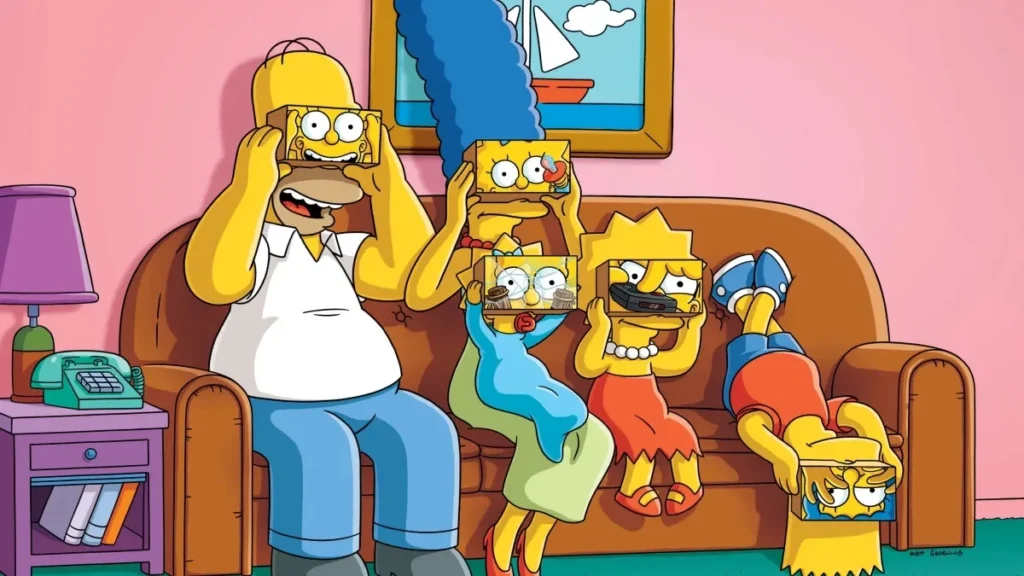

For viewers who have diligently followed The Simpsons over its recent seasons, a subtle yet significant shift in the animated series’ iconic opening sequence has become apparent: the diminishing presence of its hallmark couch gags. This long-standing tradition, once a guaranteed fixture, has seen a considerable reduction in new episodes. Matt Selman, a prominent showrunner for the acclaimed series, has now provided a comprehensive explanation for this strategic pivot, shedding light on the evolving priorities of television production in the contemporary media landscape.
Speaking on the Australian podcast Four Finger Discount, which is dedicated to all things Simpsons, Selman articulated the primary rationale behind the change. "I wish we could have the time for a funny couch gag every episode, but I’m not going to cut the storytelling short to do so," Selman stated, emphasizing a renewed focus on narrative integrity. "I want to tell the best story we can, and to do that, we’re going to need twenty minutes and forty seconds." This declaration underscores a fundamental shift in resource allocation, prioritizing the main narrative arc over an introductory comedic interlude, no matter how beloved.
When the podcast host raised the pertinent issue of the "skip intro" feature prevalent in the streaming era, suggesting it naturally contributes to the obsolescence of lengthy opening sequences like the couch and chalkboard gags, Selman acknowledged the validity of this observation. He further elaborated on the financial implications, noting, "If I had infinite money, I would put a couch gag in every episode that would just pop up on streaming, and you’d be surprised by it, but we have to put our money into what’s in the main product first." This candid admission reveals the practical constraints faced by even a globally recognized and successful production like The Simpsons, where creative aspirations must align with budgetary realities. Selman also confirmed the show’s awareness of this viewer behavior, adding, "But that ‘skip intro’ phenomenon you mentioned, we have a joke about that… in the episode Extreme Makeover: Homer Edition [a special premiering this Sunday, April 19th, on Disney+], so you’re thinking the way we’re thinking." This indicates a self-referential nod to modern consumption habits, demonstrating the show’s ongoing engagement with its audience and the cultural zeitgeist.
Currently navigating its 37th season, The Simpsons has secured a renewal through Season 40, a testament to its enduring popularity and cultural significance. The show’s ability to adapt, even by modifying cherished traditions, appears to be a key factor in its remarkable longevity.
The Enduring Legacy of The Simpsons and Its Iconic Opening
The Simpsons holds an unparalleled position in television history, recognized globally as the longest-running American animated series, the longest-running American sitcom, and the longest-running American prime-time scripted series. Debuting as a series of shorts on The Tracey Ullman Show in 1987 before launching as a standalone half-hour program on December 17, 1989, the show quickly established itself as a cultural phenomenon. Its satirical portrayal of American life, through the lens of the eponymous working-class family, resonated deeply with audiences worldwide, earning it critical acclaim, numerous awards including 35 Primetime Emmy Awards, and a permanent place in the pantheon of television.
Central to The Simpsons‘ initial charm and distinctive identity was its opening credit sequence. Beyond the iconic cloud opening, the saxophone solo, and the chaotic dash to the living room, two elements consistently provided a fresh burst of humor: the chalkboard gag and the couch gag. The chalkboard gag, where Bart Simpson writes a different, often subversive, sentence on the blackboard as punishment, offered a quick, topical laugh. However, it was the couch gag that truly captured the imagination and became a mini-episode in itself.
The very first couch gag, featured in the inaugural episode "Simpsons Roasting on an Open Fire," was a simple affair: the family rushes to the couch, only to find Homer already occupying the prime spot, prompting them to squeeze awkwardly around him. Over the decades, these gags evolved dramatically, transitioning from minor variations on the family’s seating arrangement to increasingly elaborate, surreal, and often artistically ambitious sequences. They served multiple purposes: a reliable source of pre-episode humor, a creative outlet for animators and writers, and, crucially, a flexible segment to adjust episode runtimes to fit the precise commercial television slot – typically around 21 minutes and 30 seconds for a half-hour program.
Evolution of the Couch Gag: A Canvas for Creativity
Throughout the 1990s and early 2000s, the couch gags became progressively more inventive, often referencing pop culture, art history, or internal show jokes. As the series entered its later years, particularly from the mid-2000s onwards, the gags became a celebrated platform for guest animators and directors to infuse their unique styles into the fabric of The Simpsons.
Notable examples include the chilling and elaborate Halloween-themed opening directed by Guillermo del Toro for "Treehouse of Horror XXIV" (2013), which packed dozens of horror film references into a minute-long sequence. Similarly, acclaimed street artist Banksy directed a controversial and politically charged opening in 2010, depicting the grim realities of an Asian sweatshop allegedly producing Simpsons merchandise. Indie animator Don Hertzfeldt provided a surreal, existential, and critically lauded gag for "Clown in the Dumps" (2014), pushing the boundaries of the show’s visual style. These instances elevated the couch gag from a simple comedic beat to a significant artistic statement, often garnering more critical attention than the episode itself.
The decision to feature such elaborate gags was a conscious creative choice, demonstrating the show’s willingness to experiment and collaborate. However, these sequences also required considerable resources – time, budget, and creative energy – which, as Matt Selman now reveals, are increasingly being reallocated to the main storytelling.
The Streaming Paradigm Shift and "Skip Intro" Culture
The landscape of television consumption has undergone a radical transformation in the last decade, primarily driven by the proliferation of streaming services. Platforms like Disney+, Netflix, Hulu, and HBO Max have fundamentally altered how audiences engage with episodic content. One of the most significant features introduced by these services is the "skip intro" button, allowing viewers to bypass opening credit sequences entirely and dive directly into the narrative.
This seemingly minor feature has had profound implications for television production. Viewers, particularly those binge-watching multiple episodes of a series, often prefer to maintain narrative momentum without interruption. Industry data, while not always publicly available for specific shows, broadly indicates high utilization rates for the "skip intro" function across various genres. For a show like The Simpsons, where intros could sometimes run for over a minute, incorporating both the chalkboard and couch gags, this presented a dilemma. If a significant portion of the audience is skipping these meticulously crafted segments, the investment in their production becomes harder to justify, especially when facing budgetary constraints.
Selman’s comments directly address this new reality. The "infinite money" hypothetical highlights that if resources were limitless, the creative team would gladly continue producing elaborate gags. However, in the real world of television production, every dollar spent on an opening sequence that many viewers skip is a dollar not spent on enhancing the core narrative, character development, animation quality, or other elements within the main body of the episode. This strategic reallocation is a practical response to evolving viewer habits and the economic pressures of content creation in a highly competitive streaming market.
Chronology of Change and Production Realities
- December 17, 1989: The Simpsons premieres with its first full-length episode, "Simpsons Roasting on an Open Fire," featuring the inaugural couch gag.
- 1990s-Early 2000s: Couch gags become a consistent and increasingly varied feature, establishing themselves as a beloved part of the show’s identity.
- Mid-2000s-Early 2010s: The era of elaborate, guest-directed, and critically acclaimed couch gags flourishes, demonstrating the show’s creative ambition.
- Recent Seasons (approx. mid-30s onwards): Astute viewers begin to notice a gradual reduction in the frequency and complexity of couch gags.
- April 18, 2026: Showrunner Matt Selman’s interview on the Four Finger Discount podcast is released, publicly explaining the reasons for the shift.
- April 19, 2026: The episode Extreme Makeover: Homer Edition premieres on Disney+, featuring a meta-joke about the "skip intro" phenomenon, further confirming the production team’s awareness of modern viewing habits.
- Season 37: The current season where the reduced frequency of couch gags is a noticeable trend.
- Through Season 40: The Simpsons is renewed, signaling its continued presence in the television landscape, albeit with evolving production choices.
The decision to phase out the couch gags is not a sudden, arbitrary one but rather a measured response to a confluence of factors. Production cycles for animated series are lengthy and complex. Each episode requires meticulous planning, scripting, voice acting, animation, and post-production. Allocating additional time and budget for a minute-long sequence that may not even be seen by a significant portion of the audience represents a trade-off. Selman’s statement about needing "twenty minutes and forty seconds" for the main story highlights the tight constraints of modern episodic television, even on streaming platforms which traditionally offer more flexibility than linear broadcast.
Implications for The Simpsons and the Industry
The implications of this shift are multifaceted. For The Simpsons, it signals an ongoing commitment to narrative quality. By reallocating resources from the opening gag, the show aims to deliver more robust and engaging storylines within the main body of the episode. This strategic choice reflects a mature understanding of its audience, prioritizing the core content over what has, for many, become a disposable introductory element.
From a fan perspective, reactions are likely to be mixed. Long-time devotees, who grew up with the anticipation of each new couch gag, might feel a twinge of nostalgia or even disappointment at the loss of a cherished tradition. The unique creativity and often subversive humor embedded in these gags were a significant part of the show’s identity. However, many viewers, especially those accustomed to the rapid pace of streaming, may find the streamlined approach more efficient, allowing them to get straight to the episode’s plot without delay. The social media buzz following Selman’s explanation indicates a broad awareness and discussion among the fanbase, reflecting both understanding and a degree of lament for the changing format.
For the broader television industry, The Simpsons‘ decision serves as a high-profile example of how even the most established and iconic series are adapting to the realities of the streaming age. It underscores a growing trend where opening credits, once elaborate and integral to a show’s identity, are becoming shorter, more functional, or entirely optional. This reflects a shift in storytelling philosophy, moving towards immediate engagement and minimizing anything perceived as a barrier to entry for the main content. Other long-running shows might take cues from this, further accelerating the evolution of television intros.
Ultimately, The Simpsons phasing out its couch gags is a testament to its pragmatism and adaptability. As it continues its historic run through Season 40, the series demonstrates a willingness to evolve and make strategic choices to maintain its relevance and quality in an ever-changing media landscape, even if it means bidding farewell to a beloved, albeit increasingly skipped, tradition. The focus remains on telling the best stories possible, ensuring that the heart of Springfield continues to beat strongly for generations to come.