
Following the critical and commercial triumph of the Academy Award-winning Oppenheimer, writer-director Christopher Nolan has pivoted from the birth of the atomic age to the foundations of Western literature. His latest venture, a star-studded adaptation of Homer’s The Odyssey, represents a monumental shift in contemporary filmmaking, prioritizing tactile reality over digital artifice. In collaboration with production designer Ruth De Jong, Nolan has executed a production strategy that eschews the industry-standard reliance on blue and green screens in favor of a 91-day global shoot that spanned six countries. This commitment to practical effects and authentic locations aims to immerse both the cast and the audience in a world that feels physically realized, despite its roots in ancient mythology.

The Philosophical Foundation of the Production
The creative partnership between Nolan and De Jong, which reached a zenith during the construction of the Los Alamos set for Oppenheimer, is built on a shared ethos: the belief that an environment dictates the performance. For The Odyssey, this meant rejecting the controlled environments of modern soundstages for the unpredictable elements of the natural world. De Jong, speaking on the production’s methodology, noted that the objective was to provide the actors with a world they could truly inhabit. By removing the abstraction of digital backgrounds, the production team sought to capture genuine reactions to wind, sea, and stone.
This "practical-first" approach is increasingly rare in an era where high-budget epics often utilize "The Volume" or extensive CGI environments. Nolan’s insistence on physical builds and on-location filming serves as a rebuttal to the trend of digital saturation. The production designer recalled that when she asked for the parameters of the project’s scope, Nolan’s response was characteristically ambitious: "The entire world." This directive set the stage for a logistical undertaking that would test the limits of modern production management.

A Chronology of the 91-Day Global Shoot
The production of The Odyssey was organized as a relentless 91-day sprint, beginning with high-intensity sequences in the North and moving toward the Mediterranean and North Africa. The schedule was designed to mirror the arduous nature of the protagonist’s journey, often placing the cast in challenging environments to mirror the fatigue and resolve of their characters.
- Phase One: The Underworld and the Sorceress (Iceland and Scotland): The production began in the stark, volcanic landscapes of Iceland. The island’s black sand beaches served as the backdrop for Hades, providing a naturally somber and otherworldly atmosphere. From there, the crew moved to the rugged cliffs of Scotland, where the stormy waters of the North Atlantic provided the setting for Odysseus’s encounter with the sorceress Circe, portrayed by Samantha Morton.
- Phase Two: The Home of the Nymph (Morocco): The production then shifted to the remote coasts of Morocco. Here, the team utilized the pristine, isolated shorelines to depict the island of Ogygia, where Charlize Theron’s Calypso holds the Greek king captive.
- Phase Three: The Fall of Troy (Ouarzazate and Essaouira): In the mud-brick villages of Morocco’s Ouarzazate province, the team constructed a massive recreation of Troy. The phase concluded on the beaches of Essaouira for the pivotal Trojan Horse sequences.
- Phase Four: The Return to Ithaca (Sicily and Italy): The final stages of the location shoot took place in the Mediterranean. The 15th-century Castle of Santa Caterina on the island of Favignana stood in for the Bronze Age palace of Ithaca.
- Phase Five: Internal Palace Chambers (Los Angeles): The production concluded with complex interior scenes filmed on massive soundstages in California, where the "Megaron" or great hall was meticulously reconstructed.
Constructing the Ancient World: Technical Feats and Logistics
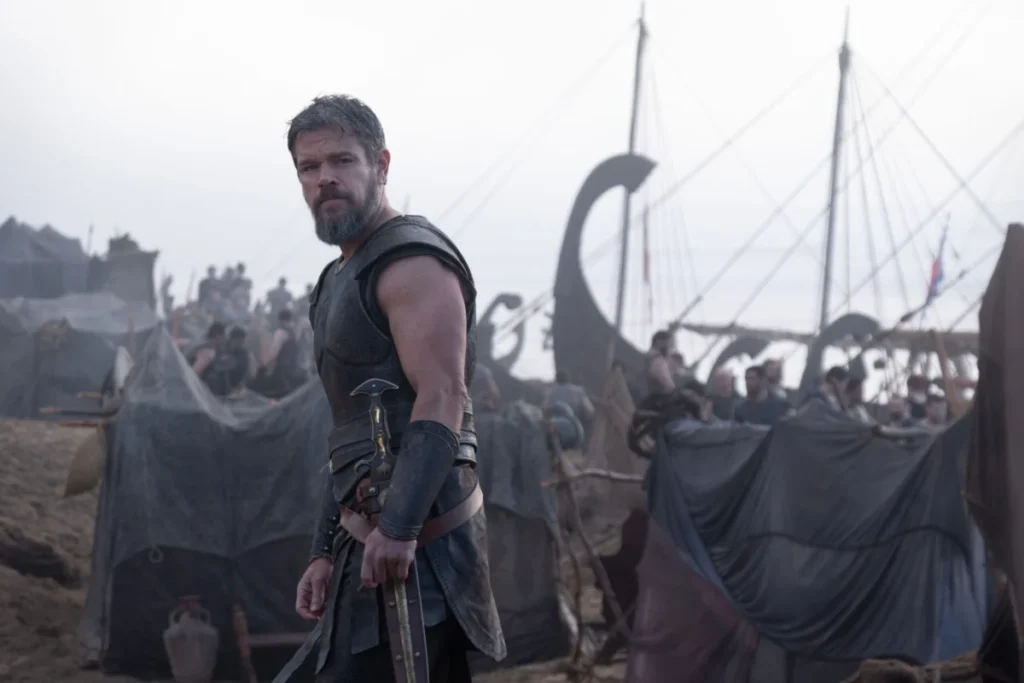
The scale of the physical builds required for The Odyssey rivaled the engineering feats of the ancient world itself. One of the most significant challenges was the creation of Odysseus’s "hero ship." Rather than building a static prop, De Jong sourced a 115-foot-long vessel from Stavanger, Norway. The production team then retrofitted the ship with bronze decaling and period-accurate ornamentation, transforming it into a functional Greek warship. This vessel was not merely for show; it was sailed across the Mediterranean, carrying the cast and a full crew of rowers through actual sea conditions from the coast of Scotland to the shores of Morocco.

The recreation of Troy represented another massive investment in practical design. De Jong and her team built two-and-a-half acres of sets in the Ouarzazate province. This included the Temple of Athena, monumental gates, towers, and winding stairs. To ensure the environment felt lived-in and authentic, the team even imported mature olive trees to dot the landscape. During the filming of the sack of Troy, the production burned sets they had spent months building, ensuring that the fire and smoke captured on film were as real as the structures themselves.
In Sicily, the choice of the Castle of Santa Caterina for Ithaca’s exterior required the cast and crew to hike up a 900-foot terrain daily. The castle’s weathered "bones" provided a texture that De Jong believed could not be replicated. This commitment to authenticity extended to the Trojan Horse. The hollow wooden structure was designed and built in Los Angeles and shipped overseas. During filming in Essaouira, actors were required to pack into the belly of the horse while the structure sat half-submerged in the freezing coastal waters, a testament to Nolan’s demand for physical realism.

The Star-Studded Ensemble and Their Physical Challenges
A production of this magnitude required a cast capable of enduring the physical rigors of the shoot. Matt Damon leads the film as Odysseus, the weary king of Ithaca. His performance is supported by Anne Hathaway as the steadfast Penelope and Tom Holland as their son, Telemachus. The casting of Robert Pattinson as the villainous suitor Antinous adds a layer of contemporary intensity to the palace-bound segments of the film.
The actors were frequently subjected to the same environmental stressors as their characters. Hathaway and Holland’s scenes at the Castle of Santa Caterina were filmed in the actual Mediterranean heat, while the warriors on the hero ship were required to coordinate their rowing with the rhythm of the waves. Mia Goth, playing a servant to Penelope, and Samantha Morton also participated in on-location shoots that emphasized the tactile nature of their surroundings. By placing these high-profile actors in genuine, often uncomfortable environments, Nolan and De Jong ensured that the "epic" scale of the film was reflected in the performances.

Supporting Data and Production Metrics
The logistical data behind The Odyssey underscores the sheer ambition of the project:
- Total Production Duration: 91 days of principal photography.
- Countries Visited: 6 (Iceland, Scotland, Morocco, Italy, Greece, and the United States).
- Troy Set Size: 2.5 acres of mud-brick and timber construction.
- Vessel Length: 115 feet (fully seaworthy).
- Soundstage Dimensions: The Ithaca Megaron set spanned the length of two football fields and stood three stories high.
- Terrain Elevation: 900-foot daily ascent for the Ithaca exterior crew.
Broader Impact and Cinematic Implications
The industry’s reaction to the production of The Odyssey has been one of both awe and scrutiny. De Jong herself likened the film to Lawrence of Arabia, a benchmark for the "Big Picture" era of Hollywood filmmaking. By choosing to build instead of render, Nolan is making a definitive statement about the future of the medium. The success of this film could signal a shift back toward practical epic filmmaking, encouraging other studios to invest in physical production rather than post-production effects.

Furthermore, the choice of locations has provided a significant economic boost to the regions involved, particularly in Morocco and Sicily, where local craftsmen and laborers were employed to assist in the massive builds. The use of historic sites like the Castle of Santa Caterina also highlights the intersection of cultural heritage and modern entertainment.
As The Odyssey enters theaters, the primary point of analysis for critics and audiences alike will be the "seamlessness" De Jong aimed for. The goal was to create a film where the audience would never guess they were looking at a set. In an age of digital exhaustion, Christopher Nolan’s journey to the ends of the earth may prove that the most effective way to capture the fantastical is to build it for real. The legacy of this production will likely be defined by its refusal to take the easy path, mirroring the very journey of the hero at its center.