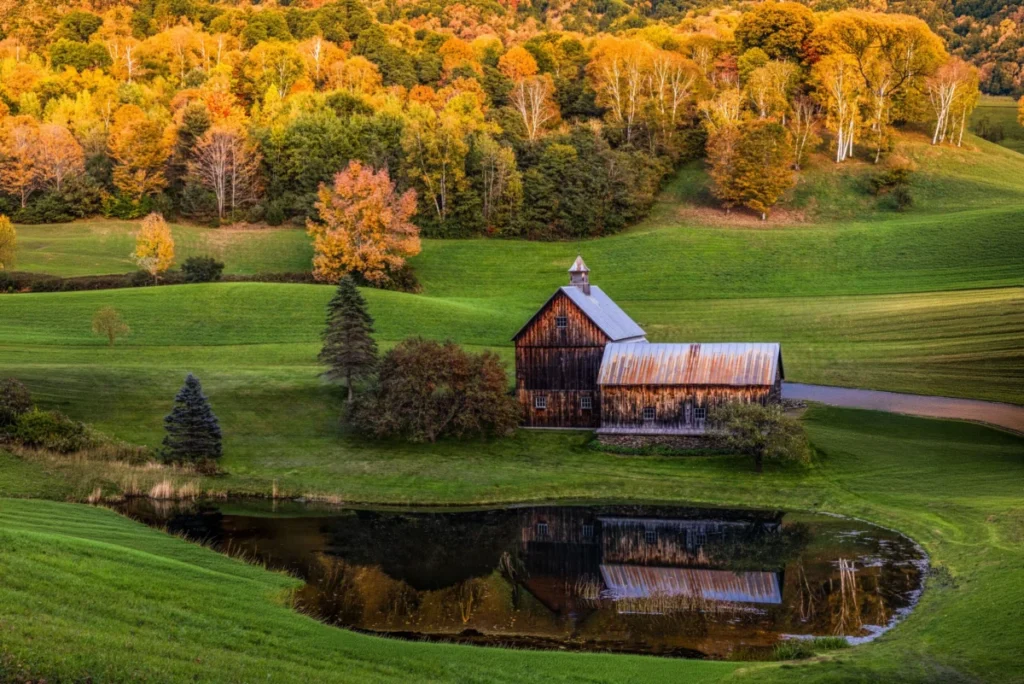

October has evolved into a critical window for the domestic travel industry, marking a transition from the high-velocity summer season to a more curated, aesthetic-focused period of "shoulder season" tourism. As foliage peaks across the Northern Hemisphere, travelers are increasingly seeking destinations that offer more than natural scenery; there is a burgeoning demand for locales where architectural integrity, historical preservation, and thoughtful interior design intersect with the seasonal change. From the brick-lined corridors of the Hudson Valley to the sunbaked adobe of the American Southwest, the most successful October destinations are those that have successfully leveraged their built environments to create a sense of "autumnal magic." This phenomenon, often referred to by economists as "aesthetic tourism," contributes billions to local economies, particularly in small towns that have preserved their historical footprints against the tide of modern homogenization.
The Economic and Cultural Shift Toward Design-Centric Travel
The shift toward design-centric travel in October is supported by recent consumer data indicating that "Gen X" and "Millennial" travelers are prioritizing heritage and authenticity over traditional resort experiences. According to recent travel sentiment reports, nearly 60% of luxury travelers now cite "local architecture and history" as a primary factor in destination selection. This trend is particularly visible in October, a month where the "golden hour" light—a result of the sun’s lower angle in the sky—accentuates the textures of historic facades, from weathered cedar shingles in New England to the ornate cast-iron cornices of the Midwest.
Hudson, New York: The Industrial-to-Aesthetic Transformation
Hudson, New York, serves as a primary case study in the revitalization of a river town through design. Originally a 19th-century whaling port and later an industrial center, Hudson faced significant economic decline in the mid-20th century. However, the preservation of its compact downtown, specifically Warren Street, has allowed it to emerge as a premier destination for interior designers and collectors.

The architectural landscape of Hudson is dominated by beautifully preserved 19th-century brick buildings. In October, these structures provide a stark, warm contrast to the cooling temperatures of the Hudson Valley. Businesses such as FINCH and Red Chair have turned Warren Street into a commercial hub for vintage Swedish, Belgian, and French antiques, attracting a demographic that views shopping as an extension of museum-going.
The crown jewel of the area’s architectural heritage is Olana, the State Historic Site located just outside the city. Designed by Hudson River School painter Frederic Edwin Church and architect Calvert Vaux, the Moorish-inspired villa was constructed between 1870 and 1891. Its intricate tilework and dramatic vistas of the Hudson River are particularly striking when framed by the peak orange and red hues of the surrounding woodland. The local hospitality sector has mirrored this commitment to design; The Maker Hotel, for instance, utilizes Belle Époque glamour and rich textiles to cater to the "sweater weather" aesthetic, reinforcing Hudson’s status as a design capital.
Galena, Illinois: A Timeline of Preservation in the Midwest
In the American Midwest, Galena, Illinois, represents one of the most remarkably intact examples of 19th-century urban planning. The town’s history is rooted in the lead mining boom of the 1820s to the 1850s, during which it was the wealthiest city in Illinois. When the boom ended and the Galena River silted up, the town entered a period of "benign neglect" that inadvertently preserved its Federal, Greek Revival, and Italianate architecture.
Today, 85% of Galena’s buildings are listed on the National Register of Historic Places. October is the town’s peak tourism month, driven by the visual synergy between the rolling hills of the Driftless Area and the three-tiered town layout. The Ulysses S. Grant Home, a gift to the General from the city in 1865, remains a focal point for Victorian domestic design, featuring original furnishings that provide a window into 19th-century middle-class life.

Economic data from the Jo Daviess County Tourism Board suggests that fall tourism accounts for nearly 35% of the region’s annual revenue. Local officials note that the preservation of the "curb appeal" of Main Street—with its tall arched windows and original storefronts—is the primary driver of this traffic. "People don’t just come for the leaves; they come for the feeling of stepping back in time," noted a representative from the local historical society.
Santa Fe, New Mexico: The Persistence of Pueblo Revival
While the Northeast and Midwest focus on the changing colors of deciduous trees, Santa Fe, New Mexico, offers an alternative October experience centered on the earthy palette of the high desert. Santa Fe’s architectural identity is legally protected by a 1912 building ordinance that mandates the Pueblo Revival style, ensuring the city maintains its signature terracotta and sunbaked adobe appearance.
October’s cooler temperatures make it the ideal season for exploring Canyon Road, a half-mile stretch containing over 100 art galleries and studios. The architectural continuity—characterized by low-slung silhouettes, reclaimed vigas (ceiling beams), and kiva fireplaces—creates a unified aesthetic experience that is unique in the United States.
The Georgia O’Keeffe Museum and the Palace of the Governors (the oldest continuously occupied public building in the U.S.) serve as anchors for this heritage. Furthermore, the modern hospitality industry in Santa Fe, led by properties like Bishop’s Lodge, has successfully integrated these centuries-old traditions with contemporary luxury. By using handwoven textiles and sculptural architectural elements, these establishments prove that Indigenous-inspired design remains relevant and "fresh" to the modern traveler.

Carmel-by-the-Sea, California: Whimsy and Coastal Conservation
On the Pacific Coast, Carmel-by-the-Sea offers a departure from the grandiosity of the Hudson Valley or the austerity of Santa Fe. Carmel’s design narrative is defined by "whimsy," specifically the fairytale cottages designed by Hugh Comstock in the 1920s. These structures, featuring crooked chimneys and swooping rooflines, were originally built to house dolls made by Comstock’s wife but eventually came to define the town’s residential aesthetic.
Carmel’s commitment to design is matched by its commitment to the environment. The Tor House, built by poet Robinson Jeffers using granite boulders from the nearby shore, exemplifies the "organic architecture" movement, where the built environment is meant to exist in harmony with the rugged coastline.
October in Carmel is often characterized by "Indian Summer" conditions—clearer skies and warmer temperatures than the foggy summer months. This weather attracts a discerning crowd interested in the Carmel Art Association, one of the state’s oldest cooperatives. The lack of street addresses in Carmel—a tradition maintained to encourage neighbors to meet at the post office—adds a layer of social design that reinforces the town’s "village" atmosphere.
Woodstock, Vermont: Agrarian Heritage and the Conservation Movement
Woodstock, Vermont, is frequently cited as the quintessential New England autumn destination. Its design appeal lies in its "village green" layout and its collection of Federal and Greek Revival architecture. However, Woodstock’s significance goes deeper than aesthetics; it is the birthplace of the American conservation movement.

The Marsh-Billings-Rockefeller National Historical Park is the only national park in Vermont and the only one in the U.S. focused on the history of land stewardship. The mansion’s interiors and the surrounding formal gardens, influenced by Frederick Law Olmsted, tell a story of how design can be used to promote environmental health.
Adjacent to the park, Billings Farm & Museum showcases 19th-century agrarian craftsmanship. The beautifully preserved barns and outbuildings serve as a reminder that in Vermont, design has historically been a function of utility and resilience. The Taftsville Covered Bridge, one of the oldest in the state, remains a primary subject for photographers in October, representing the intersection of 19th-century engineering and natural beauty.
Broader Implications: The Impact of "Aesthetic Overtourism"
While the influx of visitors in October is a boon for local economies, it also presents challenges related to "aesthetic overtourism." Towns like Hudson and Woodstock must balance the needs of residents with the demands of thousands of "leaf peepers" and design enthusiasts. In famous "Halloween towns" like Sleepy Hollow, New York, or Salem, Massachusetts, the seasonal surge can overwhelm local infrastructure, leading to a tension between the preservation of a town’s character and its commercial exploitation.
The rise of October design travel also has implications for real estate. In many of the towns mentioned, property values have surged as urban dwellers seek "second homes" in historically significant areas. This "Hudson-fication" of small towns can lead to the displacement of long-term residents, creating a sanitized version of the "magic" that originally drew visitors.

Conclusion: The Future of Seasonal Design Tourism
The best places to visit in October are those that offer a narrative. Whether it is the story of a mining town that refused to change (Galena) or an artist who built a Moorish palace in the woods (Hudson), these destinations succeed because they offer a sense of place that cannot be replicated.
As travelers become more sophisticated, the demand for "thoughtful design" will likely continue to grow. October, with its unique light and transitional atmosphere, remains the peak season for this exploration. For the towns that have invested in the preservation of their architectural and cultural heritage, the "autumnal magic" is not just a seasonal occurrence—it is a sustainable economic model that celebrates the enduring power of good design.