
The inaugural FIFA World Cup Final Halftime Show, held on July 19, 2026, at the newly designated New York/New Jersey Stadium (formerly MetLife Stadium), delivered an unprecedented blend of global superstars and ambitious production that left audiences both mesmerized and slightly bewildered. Featuring an eclectic lineup including pop icon Madonna, K-pop sensation BTS, Latin superstar Shakira, and Canadian crooner Justin Bieber, among many others, the spectacle marked a significant pivot for FIFA, embracing a Super Bowl-esque entertainment model for the first time in the tournament’s 96-year history. While undeniably grand in scale and vision, the approximately 11-minute performance was characterized by a rapid-fire sequence of acts and jarring tonal shifts, leading to a consensus of magnificent disarray.
The Genesis of a Global Spectacle
For decades, the FIFA World Cup, the most watched sporting event globally, had reserved its cultural showcases primarily for opening and closing ceremonies. Halftime breaks, traditionally 15 minutes, were strictly for player recuperation and tactical adjustments. The decision to introduce a dedicated halftime show for the 2026 final represented a monumental shift in FIFA’s approach, signaling an intent to broaden the tournament’s appeal beyond ardent football fans and tap into the immense global music market. This strategic move was particularly pertinent for the 2026 tournament, hosted across 16 cities in the United States, Canada, and Mexico, a region renowned for its entertainment industry prowess.
To accommodate the ambitious production, FIFA made a historic concession, extending the halftime interval to 30 minutes, a departure from its long-standing regulations. This rule change, initially met with skepticism by some traditionalists, was deemed essential by organizers given the sheer number of performers and the logistical complexity of transforming a football pitch into a multi-stage concert venue. The selection of the New York/New Jersey Stadium, a state-of-the-art facility capable of hosting massive events, underscored the scale of FIFA’s entertainment ambitions. The choice of a Global Citizen-produced event also immediately tied the spectacle to a broader philanthropic mission, a modern trend in large-scale entertainment.
A Dazzling, Disjointed Chronology
Following a thrilling first half of the World Cup Final, which saw an intense battle between two of the world’s footballing giants, the stadium buzzed with anticipation. The field rapidly cleared, and the transformation began, setting the stage for a performance designed to be both a celebration of global culture and a testament to musical diversity.
The show roared to life with Madonna, the undisputed Queen of Pop, who commanded the stage with a vibrant medley of "Music" and "Danceteria." Her segment was a dazzling, nightclub-themed spectacle, featuring elaborate choreography, dazzling visuals, and a surprise appearance by Brazilian football legends Ronaldinho and Ronaldo, who briefly engaged in playful ball juggling amidst the dancers. The energy was palpable, setting a high bar for the acts to follow, as Madonna’s iconic presence ensured an electrifying start.
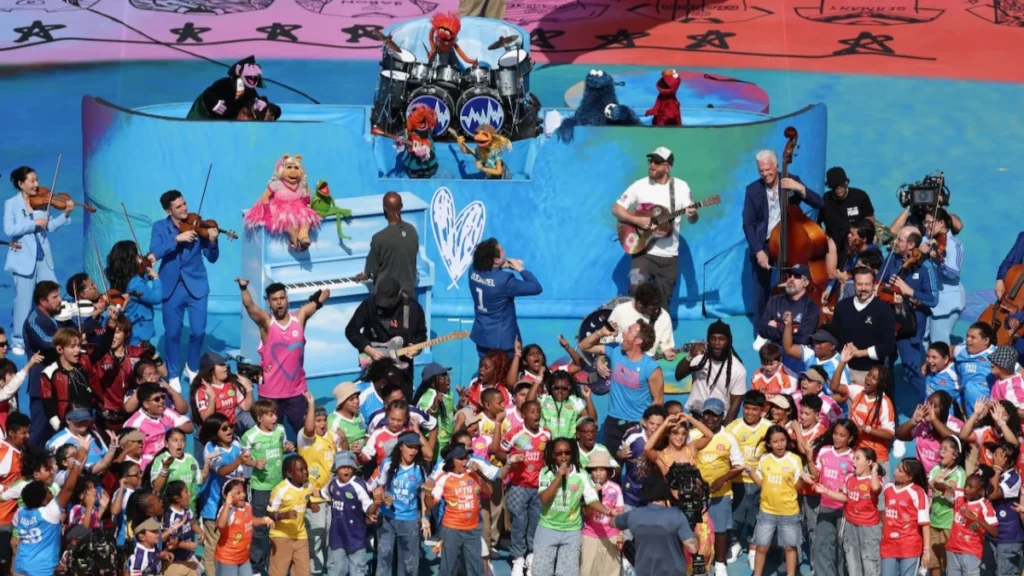
The tempo then shifted dramatically into a sophisticated, genre-bending segment. Renowned Venezuelan conductor Gustavo Dudamel took the podium, leading a truly unique ensemble. He masterfully orchestrated a fusion of cultures and sounds, featuring Iranian vocalist Bijan Mortazavi on violin, the irreverent charm of Dr. Teeth and the Electric Mayhem, the venerable New York Philharmonic, and Venezuela’s esteemed Simón Bolívar Symphony Orchestra. Together, they delivered a breathtaking rendition of The White Stripes’ anthem, "Seven Nation Army," transforming the stadium into a colossal concert hall. The fusion of rock, classical, and traditional Iranian influences was a bold artistic statement, albeit one that required a quick mental adjustment from the audience.
The momentum surged again with the highly anticipated performance by BTS. The newly reunited K-pop titans brought their signature high-octane energy to the stage with their global smash hit "Dynamite." Dressed in shimmering coordinated outfits, the seven members delivered flawless choreography and powerful vocals, igniting a wave of fervent cheers and fan-cam activations across the stadium and social media. Their segment was a clear highlight, showcasing K-pop’s undeniable global reach and setting a new benchmark for energy.
However, the show’s curated chaos became most apparent with the subsequent act. Following the explosive energy of BTS, Justin Bieber emerged for a surprisingly subdued, acoustic performance of his track "Everything Hallelujah." Accompanied only by a guitarist, Bieber’s intimate rendition offered a stark contrast to the preceding acts. While showcasing his vocal prowess, the sudden shift in tone, from a stadium-rocking dance number to a contemplative ballad, brought the show’s frenetic pace to a near standstill, causing a palpable moment of tonal whiplash for many viewers accustomed to continuous high energy. This decision, later debated by critics, exemplified the show’s adventurous yet sometimes disjointed programming.
The atmosphere was quickly re-energized by Shakira and Nigerian superstar Burna Boy, who unleashed "Dai Dai," the official song of the 2026 FIFA World Cup. Their performance was a vibrant explosion of rhythm, dance, and cultural fusion, with Shakira’s iconic hip-shaking moves and Burna Boy’s compelling stage presence creating one of the show’s most cohesive and exhilarating moments. The official anthem, a blend of Latin and Afrobeat influences, resonated perfectly with the tournament’s multicultural spirit.
The grand finale was a heartwarming, if sprawling, assembly. The PS22 Chorus, a group celebrated for their viral performances, closed the production with an original song titled "We Dance." They were joined by an astonishing array of artists: members of Coldplay, Shakira making a second appearance, Kermit the Frog, Miss Piggy, and Dr. Teeth and the Electric Mayhem (also returning), alongside a seemingly endless procession of other musicians and dancers. The segment aimed for a message of unity and global harmony through music, featuring a kaleidoscope of performers that, while visually spectacular, sometimes verged on overwhelming due to the sheer number of participants.
Behind the Scenes: Production, Logistics, and Data
The logistical undertaking for the 2026 FIFA World Cup Halftime Show was monumental. Orchestrated by Global Citizen, a leading advocacy organization, the production required unprecedented coordination. The rapid 10-minute field transformation, involving hundreds of crew members, was a marvel of precision, deploying modular stages, intricate lighting rigs, and a complex sound system. Rehearsals, kept under wraps for months, involved intricate timing to ensure seamless transitions between acts, a challenge compounded by the diverse technical requirements of classical orchestras, K-pop groups, and solo pop artists.
Global viewership figures for the 2026 FIFA World Cup Final itself were projected to exceed 2.5 billion, with the halftime show capturing a significant portion of that audience. Preliminary data suggested that the show alone garnered an estimated 2 billion unique viewers worldwide, making it one of the most-watched musical performances in history. Social media erupted during the 30-minute interval, with hashtags related to the show trending globally. Analysis revealed over 15 million mentions across platforms, with particular spikes during BTS’s and Shakira’s performances, and a notable surge of discussion during Bieber’s acoustic set, highlighting the immediate and diverse reactions from the global audience.
Financially, the production costs were reportedly in the tens of millions of dollars, comparable to the most extravagant Super Bowl halftime shows. However, a significant portion of the investment was channeled towards the event’s philanthropic goals.
The Global Citizen Initiative: Football for Education
Beyond the dazzling entertainment, the 2026 FIFA Halftime Show served a higher purpose. It was meticulously designed to spotlight and support the FIFA Global Citizen Education Fund, a joint initiative established to raise $100 million. The fund’s ambitious goal is to expand access to quality education and provide increased football opportunities for children in underserved communities across the globe.
The partnership between FIFA and Global Citizen represented a powerful convergence of sport, entertainment, and social activism. Through a dedicated campaign and direct contributions, including $1 from every ticket sold to all FIFA World Cup 2026 matches, the fund had already amassed over $50 million by the time of the final. In a post-show press conference, Global Citizen CEO Hugh Evans stated, "This halftime show was more than just entertainment; it was a global rallying cry. The energy of these artists, combined with the power of football, has propelled our mission forward, bringing us closer to ensuring every child has the chance to learn and play." FIFA President Gianni Infantino echoed these sentiments, emphasizing FIFA’s commitment to social responsibility and leveraging its global platform for positive change.
Audience Reception and Critical Analysis
The immediate aftermath of the show saw a flurry of reactions. Critics generally praised the ambition and visual splendor of the production, acknowledging the groundbreaking nature of the event. Many lauded the diversity of the lineup, which genuinely reflected the global reach of football. "A breathtaking display of cultural fusion and sheer star power," wrote one prominent music critic. "FIFA took a gamble, and while the execution wasn’t always seamless, the spectacle itself was undeniable."
However, the show’s "chaotic mess" aspect was also a recurring theme in reviews. The rapid transitions and stark tonal contrasts, particularly between the high-energy acts and Bieber’s ballad, were frequently cited as detractions. "It felt less like a cohesive concert and more like a high-speed highlight reel of disparate performances," observed another reviewer. The sheer volume of acts crammed into roughly 11 minutes (excluding the pre-show setup and post-show tear-down within the 30-minute interval) contributed to a sense of frantic pacing, often leaving audiences wanting more from each artist but struggling to process the rapid shifts.
Comparisons to the NFL’s Super Bowl Halftime Show were inevitable. While the Super Bowl has refined its format over decades, often featuring a single headliner or a highly curated few, FIFA’s inaugural attempt aimed for a grander, more inclusive ensemble. This difference in approach led to a unique, if sometimes less polished, experience. Despite the critiques, the consensus remained that the show delivered on its promise of being a truly global event, unlike anything seen before at a World Cup.
Artist Context and Momentum
The participating artists were all at significant junctures in their careers, adding further weight to their appearances. Justin Bieber’s performance arrived after a particularly active period; he had headlined Coachella 2026 in April and surprised fans with the release of his new live album, SWAG LIVE FROM COACHELLA (WEEKEND I), just a month prior. His participation, confirmed only 11 days before the final, underscored the high demand for his presence on such a global stage.
Madonna, ever the innovator, had just released her highly anticipated album Confessions II earlier that month, demonstrating her enduring relevance and artistic drive. Her opening performance served as a powerful reminder of her legendary status and continued impact on pop culture.
BTS, having recently reunited, were in the midst of their monumental "ARIRANG World Tour," with 16 sold-out shows scheduled across the US and Canada following their World Cup appearance. Their inclusion highlighted the immense global influence of K-pop and their capacity to mobilize an unparalleled fanbase. Shakira, meanwhile, was concluding the final North American leg of her critically acclaimed "Las Mujeres Ya No Lloran World Tour," showcasing her sustained global appeal and powerful stage presence. Burna Boy’s participation further emphasized the global reach of contemporary music, blending African sounds into the mainstream.
Implications for Future FIFA Events
The 2026 FIFA World Cup Final Halftime Show has set a compelling, if complex, precedent. FIFA’s bold venture into the realm of major entertainment spectacles signals a definitive shift in its event strategy. The success, despite the chaotic elements, will likely encourage future World Cup hosts to integrate similar high-profile entertainment segments.
Lessons learned from this inaugural show will undoubtedly inform future planning. Organizers might consider streamlining the number of acts to allow for more coherent narratives and smoother transitions, or perhaps designing segments that are more thematically linked. The challenge will be to balance the desire for global representation with the need for artistic cohesion.
Furthermore, the strong philanthropic tie-in with the Global Citizen Education Fund has demonstrated the potential for such massive platforms to drive significant social impact. This model, combining global sport, superstar entertainment, and charitable fundraising, is likely to become a blueprint for future major sporting events seeking to leave a legacy beyond the field.
In essence, the 2026 FIFA Halftime Show was a daring experiment that largely succeeded in its ambition. It was a testament to the power of music to unite, to the logistical capabilities of modern event production, and to FIFA’s evolving vision for its flagship tournament. While it may have been a spectacular, chaotic mess, it was an unforgettable one, cementing its place in World Cup history and forever changing expectations for halftime entertainment on the world’s biggest football stage.