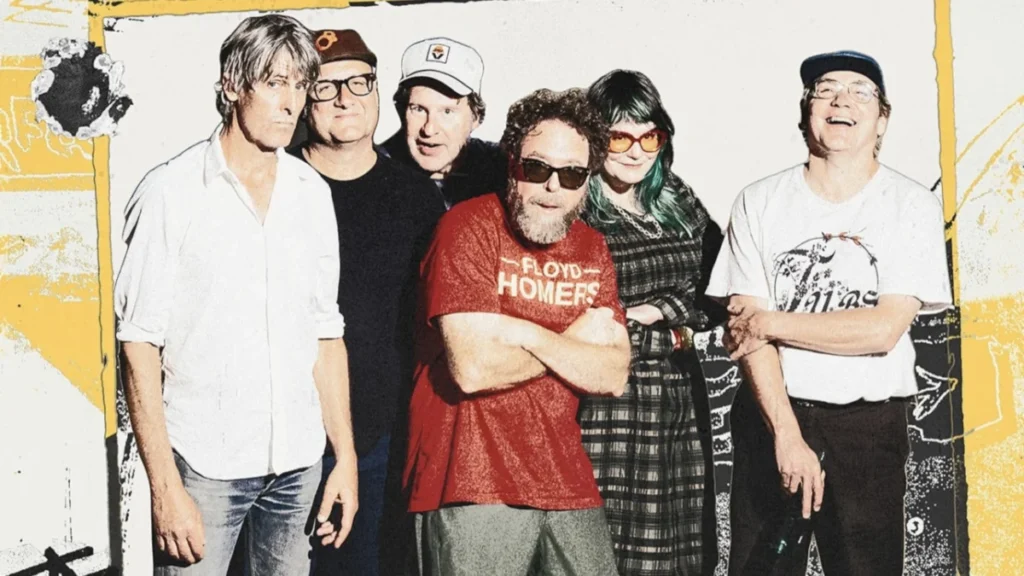

The venerable indie rock outfit Pavement commenced their brief but anticipated U.S. tour on Saturday, July 17th, with an appearance at the Mosswood Meltdown festival in Oakland, California. The opening night was marked by an unexpectedly playful, albeit undeniably "clunky," rendition of Led Zeppelin’s iconic 1971 rock anthem, "Stairway to Heaven." This performance, described by onlookers as "wretched" yet clearly executed with a significant degree of intentional humor, served as a bold statement of the band’s enduring irreverence and a distinctive kick-off to their latest run of live dates.
An Unconventional Opening Night in Oakland
The Mosswood Meltdown, known for its eclectic lineups and vibrant, counter-cultural atmosphere, provided an apt stage for Pavement’s characteristic brand of musical subversion. Held at Mosswood Park, the festival draws a diverse crowd appreciative of its punk, indie, and experimental leanings, making it a fitting venue for a band that has consistently defied conventional rock stardom. Pavement, whose career has been punctuated by periods of activity and hiatus, has cultivated a reputation for performances that blend tightly structured, intelligent songwriting with moments of spontaneous chaos and ironic detachment. Their decision to tackle "Stairway to Heaven," a song often regarded with almost religious reverence in rock circles, was therefore not entirely out of character but still managed to surprise and delight their dedicated fanbase.
The performance unfolded as part of a robust 25-song set that showcased the breadth of Pavement’s catalog. The evening began with "Silence Kid," a track from their seminal 1994 album Crooked Rain, Crooked Rain, immediately signaling to the audience that they were in for a deep dive into the band’s influential discography. The set also featured perennial crowd-pleasers such as "Cut Your Hair," "Range Life," and "Summer Babe," underscoring their enduring appeal and the timelessness of their distinctive sound. However, it was the interlude involving the Led Zeppelin cover that truly became the talking point of the night, swiftly circulating across social media platforms via fan-shot videos.
The Performance Unpacked: From Viral Hit to Iconic Subversion
The transition into "Stairway to Heaven" was ingeniously woven into the fabric of their setlist, immediately following a performance of their late-blooming hit, "Harness Your Hopes." This 1999 track, originally a deep cut, experienced an unforeseen surge in popularity in 2017, driven by streaming algorithms, and subsequently achieved viral status a couple of years later, particularly on platforms like TikTok. The opening chords of "Harness Your Hopes" share a subtle, almost coincidental, melodic similarity with the initial acoustic arpeggios of "Stairway to Heaven," a connection Pavement frontman Stephen Malkmus and the band evidently seized upon for comedic effect.
As the familiar, yet distorted, notes of the Led Zeppelin classic began to emerge, the audience’s reaction reportedly shifted from recognition to amusement. Malkmus, renowned for his laconic delivery and often cryptic lyrics, leaned heavily into the parody. His vocal performance during the cover was a masterclass in calculated amateurism. He eschewed the original’s poetic, ethereal verses for an improvised stream of consciousness, famously rhyming "fandangos" with "I like mangoes" at one point. This whimsical approach escalated as the song progressed, culminating in Malkmus’s atonal moaning, a humorous and exaggerated impression of Robert Plant’s soaring, operatic vocal style. The deliberate awkwardness of his delivery starkly contrasted with the original’s gravitas, transforming the hallowed anthem into a vehicle for Pavement’s signature deadpan humor.
Despite Malkmus’s vocal antics, the band’s guitarists—Scott Kannberg (aka Spiral Stairs) and Malkmus himself—managed to inject moments of genuine musicality, delivering what were described as "excellent six-string stunts." This juxtaposition of Malkmus’s "wretched" vocals with competent, albeit stylistically skewed, instrumental passages further underscored the intentionality of the performance. It wasn’t a botched attempt born of inadequacy, but a carefully calibrated act of "taking the piss," a British idiom for playful mockery. This act, common in the annals of rock and roll for bands wishing to comment on or poke fun at the perceived pomposity of their predecessors, served as both a tribute and a critique, highlighting Pavement’s anti-establishment ethos and their ability to find humor in rock’s most sacred cows. The immediate and widespread sharing of fan videos online cemented the moment as a highlight of the festival, generating significant buzz and setting a distinct, lighthearted tone for the remainder of their tour.
Pavement’s Legacy of Anti-Establishment Artistry
Pavement’s career, spanning from the late 1980s through the late 1990s and rekindled in recent years, has consistently challenged the conventions of rock music. Emerging from the vibrant independent music scene of the late 1980s, the band quickly became torchbearers for the "slacker rock" movement, characterized by a lo-fi aesthetic, intricate guitar work, and often oblique, intellectual lyrics. Albums like Slanted and Enchanted (1992) and Crooked Rain, Crooked Rain (1994) cemented their status as indie rock progenitors, influencing countless bands with their unique blend of cynicism, wit, and melodic invention.
Central to Pavement’s identity has always been an ironic distance from the grandiosity and self-seriousness often associated with rock stardom. Stephen Malkmus, in particular, embodies this anti-rock-star persona, known for his understated stage presence, dry wit, and a lyrical style that often deconstructs or comments on popular culture and the music industry itself. This intrinsic skepticism towards commercialism and rock mythology makes their choice to perform "Stairway to Heaven" particularly poignant. It’s a song synonymous with stadium rock excess and guitar-god virtuosity—everything Pavement, in its essence, subtly critiques. Their "clunky" cover, therefore, is not merely a joke but a reaffirmation of their core artistic values: humor, spontaneity, and a refusal to take themselves, or indeed the canon of rock music, too seriously. Throughout their history, Pavement has often incorporated unexpected covers or improvised lyrical tangents into their live shows, cultivating an environment where the unexpected is not just tolerated but celebrated by their discerning audience. This continuous thread of playful subversion reinforces their unique position in music history, proving that their artistic voice remains as distinct and compelling as ever.
Deconstructing "Stairway to Heaven": A Sacred Cow of Rock
Led Zeppelin’s "Stairway to Heaven" holds an almost unparalleled position in the pantheon of rock music. Released on their untitled fourth album in 1971, it rapidly transcended its status as a mere album track to become a global phenomenon, an anthem that defined an era and a generation. Its intricate structure, progressing from a delicate acoustic folk opening through a majestic electric rock crescendo, coupled with Robert Plant’s evocative, mystical lyrics, cemented its reputation as a masterpiece of composition and performance.
The song’s cultural significance is vast. It is one of the most frequently played songs on classic rock radio, a staple of guitar store jam sessions, and a benchmark for aspiring musicians. Its iconic status has also made it a target for both sincere tribute and playful parody. Given its complexity and the emotional weight it carries for millions of fans, attempting to cover "Stairway to Heaven" is a loaded act. A faithful rendition risks falling short of the original’s perfection, while a radical reinterpretation risks alienating purists. Pavement’s approach navigated this minefield by embracing intentional imperfection and humor, effectively sidestepping the pressure of direct comparison.
The choice of "Stairway to Heaven" by Pavement is particularly noteworthy because it pits their signature lo-fi, ironic aesthetic against the polished, epic grandeur of Led Zeppelin. Led Zeppelin symbolized the apex of rock virtuosity and mythological status; Pavement, conversely, embodied a more grounded, intellectual, and often self-deprecating approach. By selecting this particular "sacred cow" of rock, Pavement engaged in a dialogue with rock history, not through reverence, but through affectionate, yet pointed, irreverence. It was an acknowledgment of the song’s power, twisted through Pavement’s unique lens, transforming an act of potential sacrilege into a moment of brilliant, self-aware comedy that only a band of Pavement’s stature and artistic confidence could pull off.
A Deliberate Act of Humour and Reinvention
The "clunky cover" was not an accident; it was a deliberate artistic choice, a hallmark of Pavement’s creative philosophy. The band’s history is replete with instances where they’ve eschewed technical perfection in favor of raw energy, lyrical cleverness, or simply a good laugh. This performance at Mosswood Meltdown was a quintessential example of Pavement engaging in "meta-music" – music that comments on music itself. By performing "Stairway to Heaven" in such an unconventional manner, they were effectively critiquing the notion of musical purity and the often-overburdened reverence for classic rock anthems.
The contrast between Stephen Malkmus’s intentionally poor vocal performance and the relatively "excellent six-string stunts" by the guitarists is crucial to understanding the band’s intent. It suggests a carefully choreographed act where different elements of the band were playing distinct roles. While Malkmus was indulging in vocal parody, the guitarists were demonstrating that the band still possessed the musical chops to execute the song’s challenging instrumental passages, albeit with Pavement’s signature slightly askew interpretation. This interplay amplified the humor and confirmed that the performance was a conscious, controlled experiment in musical deconstruction rather than a moment of genuine struggle.
Such a performance deepens the connection with their existing fanbase, who appreciate Pavement’s intellectual humor and their anti-establishment stance. It reinforces the idea that attending a Pavement concert is not just about hearing their hits played perfectly, but about experiencing an unpredictable, live artistic event where the band’s personality shines through every note and every ironic gesture. For a band that has often been seen as aloof or enigmatic, moments like this provide a direct, albeit humorous, insight into their collective personality and their enduring commitment to art over artifice. It serves as a reminder that true artistry can often be found in the courage to challenge expectations and redefine what a "good" performance can be.
Broader Context: Pavement’s Recent Resurgence
The Mosswood Meltdown performance and the subsequent tour dates are not isolated events but part of a broader narrative of Pavement’s renewed activity and continued relevance in the contemporary music landscape. Following their significant hiatus, the band has steadily re-engaged with their legacy and even ventured into new creative territory. The year 2025, in particular, marked a notable period of resurgence for Pavement.
One of the most significant developments was the release of their first new studio recording in 25 years. This was a cover of Jim Pepper’s "Witchitai-To," a poignant and culturally significant song by the Native American jazz saxophonist. This recording was featured on the soundtrack for Alex Ross Perry’s biopic, Pavements, a project that itself garnered considerable attention, further solidifying the band’s cultural footprint. The decision to release a cover as their first new material in decades, rather than an original composition, speaks volumes about their approach to their own musical output and their preference for engaging with existing material in their distinctive way.
In the same year, Pavement also made their first late-night television appearance in 15 years, performing on a prominent national talk show (likely The Late Show with Stephen Colbert, given its penchant for indie acts). This appearance served as a powerful signal of their return to the public eye and their enduring appeal to a mainstream audience, even while maintaining their indie sensibilities. These events collectively demonstrate that Pavement is not merely resting on its laurels but actively shaping its ongoing narrative, proving that a band known for its slacker image can still be productive and culturally impactful decades into its career. The "Stairway to Heaven" cover, therefore, fits perfectly into this recent history of calculated and often humorous engagement with their own past and the broader musical world.
Setting the Tone for the Tour: An Expectation of the Unexpected
The "clunky" cover of "Stairway to Heaven" at Mosswood Meltdown served as an unmistakable declaration of intent for Pavement’s ongoing U.S. tour. It immediately communicated to audiences that these shows would be characterized by spontaneity, humor, and a refusal to adhere strictly to conventional performance norms. For a band that has always valued artistic freedom over rigid adherence to setlists or fan expectations, this opening night performance established a clear precedent: expect the unexpected.
This approach is likely to deepen the concert experience for their dedicated fanbase, who flock to Pavement shows precisely for these unscripted, often irreverent, moments. It signals that while the band will undoubtedly deliver performances of their beloved catalog, there will also be room for improvisation, self-parody, and a general air of relaxed enjoyment from the musicians themselves. Such an atmosphere fosters a unique connection between the band and its audience, transforming a mere concert into a shared, dynamic event.
The tour, though short, is therefore poised to be more than just a nostalgic trip through their greatest hits. It represents Pavement’s continued evolution as a live act, capable of both honoring their past and subverting expectations in the present. This ability to remain fresh and unpredictable is a testament to their enduring creativity and their unique place in the landscape of alternative rock, proving that a band’s legacy can be continuously enriched by a willingness to embrace humor and challenge norms.
The Full Setlist and Remaining Tour Dates
Beyond the memorable "Stairway to Heaven" interlude, Pavement delivered a comprehensive 25-song set at the Mosswood Meltdown, demonstrating their deep catalog and versatile live presence. The set list included fan favorites and deep cuts, showcasing the band’s artistic range. Key songs performed included "Silence Kid" to open the show, followed by essential tracks like "Cut Your Hair," "Range Life," "Stereo," "Gold Soundz," and "Shady Lane," among many others. The main set culminated with "Summer Babe," their iconic debut single, before the band returned for an encore that concluded with "AT&T."
Following their Oakland triumph, Pavement’s short U.S. tour continues with a series of highly anticipated dates across the country. Fans eager to witness more of Pavement’s unique blend of musicality and irreverence can find tickets for the following remaining dates:
- 07/21 – Saint Paul, MN @ Palace Theatre
- 07/22 – Chicago, IL @ The Salt Shed
- 07/23 – Cleveland, OH @ Agora Theater & Ballroom
- 07/25 – Richmond, VA @ The National
- 07/27 – Nashville, TN @ Ryman Auditorium
- 07/28 – Nashville, TN @ Ryman Auditorium
Tickets for these performances are available through various official vendors, allowing fans to experience Pavement’s distinctive live show, which promises to be as engaging and unpredictable as their legendary career.
Concluding Thoughts: Pavement’s Enduring Charm
Pavement’s "clunky" cover of "Stairway to Heaven" was far more than a simple novelty act; it was a microcosm of their enduring artistic philosophy. It demonstrated their profound understanding of rock history, their characteristic wit, and their unwavering commitment to a brand of indie rock that values intelligence and humor above all else. By taking on one of rock’s most sacred cows and treating it with such playful irreverence, Pavement reaffirmed their identity as critical thinkers and joyful subversives.
This performance, coming on the heels of renewed creative output and significant public appearances in 2025, underscores Pavement’s continued relevance and their ability to captivate audiences decades after their initial breakthrough. It serves as a testament to the fact that authentic artistic expression often lies not in flawless execution, but in the courage to be unconventional, to provoke thought, and, sometimes, to simply have a bit of fun at one’s own expense. As their tour progresses, Pavement continues to solidify their unique place in music history, proving that their charm, wit, and unpredictable artistry remain as potent and compelling as ever.