
Jung Yun-ho, better known by his stage name Yunho of the legendary K-pop duo TVXQ, recently appeared on the MBC variety program Radio Star to provide a candid reflection on his two-decade-long career. During the broadcast on July 15, the veteran artist moved beyond the typical promotional cycle to engage in a deeply personal discussion regarding the criticisms that have trailed his acting career since his debut on the small screen. By addressing his past "acting controversies" directly, Yunho demonstrated a level of self-awareness and professional growth that has resonated with both industry insiders and the general public.
A Legacy of Criticism and the "Acting-dol" Stigma
The phenomenon of "acting-dols"—K-pop idols who transition into acting—has long been a double-edged sword in the South Korean entertainment industry. While idols bring established fanbases and significant domestic and international visibility to a project, they are often subjected to harsher scrutiny than rookie actors who have followed a traditional academic or theatrical path. Yunho, who debuted as the leader of TVXQ in 2003, entered the acting world at a time when this stigma was at its peak.
His first major role in the 2009 MBC drama Heading to the Ground became a focal point for critics. Despite his massive popularity as a singer, his portrayal of a struggling soccer player was met with lukewarm reviews, with many viewers pointing toward stiff delivery and awkward facial expressions. For years, clips from his early work were circulated online as memes, often cited as examples of the "bad acting" that can occur when a musical superstar is cast in a lead role without sufficient dramatic training.

On Radio Star, Yunho did not shy away from these past failures. He acknowledged the weight of public opinion, stating that he was well aware of how he was perceived during those formative years. "As I mentioned last time I was on the show, there is no place lower I can go when it comes to acting," he remarked, utilizing a self-deprecating humor that highlighted his resilience.
The Turning Point: Disney+’s Low Life and a New Evaluation
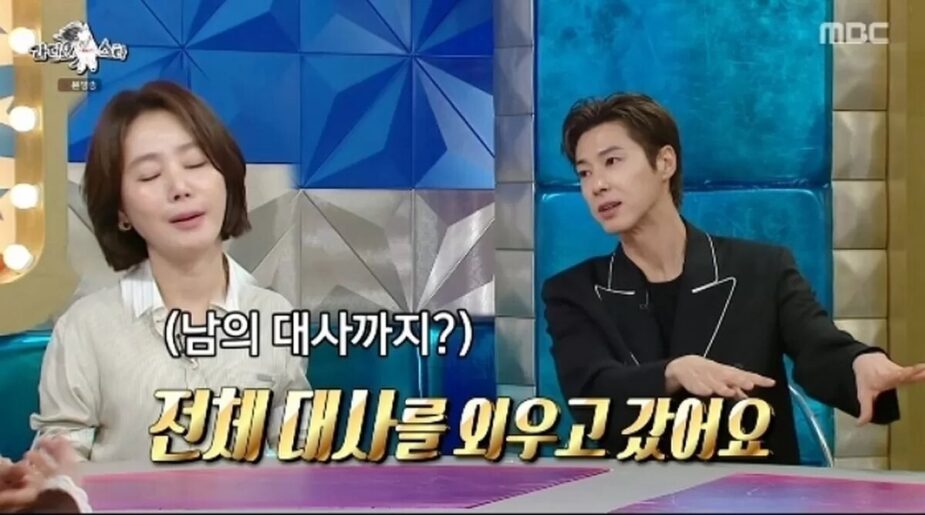
The narrative surrounding Yunho’s acting began to shift significantly following his performance in the Disney+ original series Low Life (also known as The Scoundrels). Set in the 1970s and based on a popular webtoon by Yoon Tae-ho, the series required a grit and nuance that differed vastly from Yunho’s previous romantic or idol-centric roles.
Industry analysts note that Low Life served as a critical "re-evaluation" period for Yunho. The role demanded a mastery of the Mokpo dialect and a deep understanding of a character operating within a high-stakes, ethically grey environment. The positive reception of his performance was not accidental; rather, it was the result of a rigorous, almost obsessive, preparation process that the artist detailed during his interview.
Behind the Scenes: The Accidental Audition and Mokpo Immersion
One of the most striking revelations from the Radio Star episode was Yunho’s description of the casting process for Low Life. In a rare moment of vulnerability, he confessed that he attended the initial script reading without fully realizing it was a formal audition. This misunderstanding led to a lack of preparation that was immediately called out by the production team.

"I was criticized for my lack of preparation at the first reading," Yunho admitted. Rather than retreating from the criticism, the artist took an unconventional approach to secure the role. He requested a second chance from the director and subsequently disappeared to Mokpo for two weeks.
Mokpo, a port city in the South Jeolla Province, has a distinct regional dialect and cultural atmosphere that was central to his character’s identity. Yunho spent those fourteen days immersing himself in the local environment, observing the speech patterns of the residents, and studying the nuances of the regional lifestyle. This "method" approach allowed him to return to the production team with a transformed performance that eventually won him the part.
Extreme Preparation: Memorizing the Entire Script
The extent of Yunho’s dedication became even more apparent when he revealed his study habits during the filming of Low Life. While it is standard for actors to memorize their own lines and cues, Yunho took the extraordinary step of memorizing the entire script—including the lines of his co-stars and the stage directions.
"I memorized the entire script to see how I would interact with the senior actors," he explained. This level of preparation was intended to give him a holistic understanding of the narrative flow and the emotional beats of every scene, ensuring that he was never "caught off guard" by the performances of his veterans.
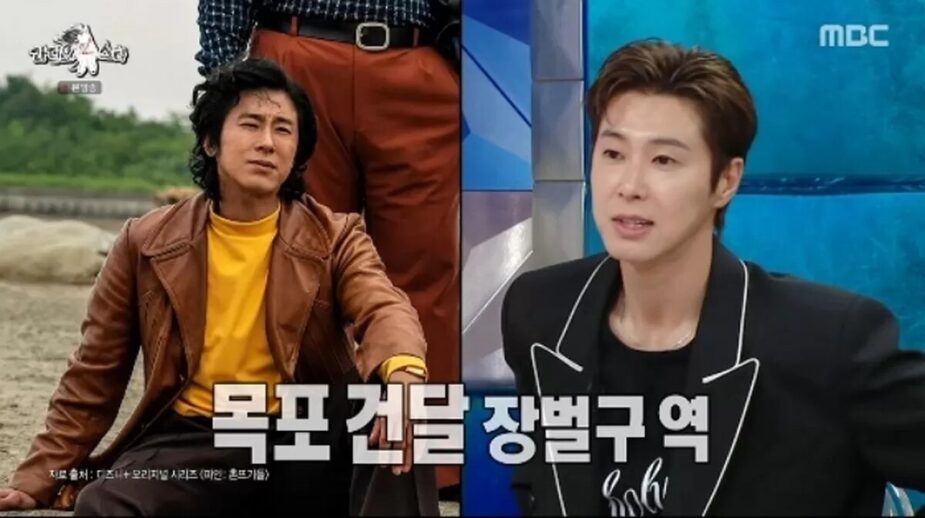
This revelation drew a look of genuine shock from fellow guest and veteran actress Kim Sung Ryung. Having worked in the industry for decades, Kim noted that such a feat is nearly unheard of. "Of course, I am surprised. I’ve never seen anyone do that before," she commented, providing a professional endorsement of Yunho’s work ethic.
Addressing the Past: "I Just Didn’t Know How to Act"
In a moment of refreshing honesty, Yunho revisited the specific lines and scenes that had been the subject of mockery in the past. He clarified that his failure in earlier roles was not due to a lack of effort, but rather a lack of technical skill and understanding of the medium.
"I memorized the entire script back then, too," he said, referring to his early projects. "I just didn’t know how to act." This distinction is crucial in understanding Yunho’s trajectory. It suggests that while the "passion" he is famous for has always been present, it took years of experience and a willingness to fail publicly for that passion to be channeled into effective craft.
Timeline of Jung Yun-ho’s Acting Evolution
To understand the significance of Yunho’s recent "re-evaluation," one must look at the chronology of his career:
- 2003: Debuts as the leader of TVXQ.
- 2009: Makes his lead acting debut in Heading to the Ground. The show suffers from low ratings and heavy criticism of his performance.
- 2011: Takes a supporting role in Poseidon, showing slight improvement but still facing skepticism.
- 2013: Appears in Queen of Ambition. While the drama is a hit, Yunho’s performance is still viewed through the lens of an "idol-actor."
- 2014: Stars in the historical drama The Night Watchman’s Journal, where he begins to receive praise for his action sequences and physical acting.
- 2017: Following military service, he stars in Meloholic, experimenting with a more comedic and versatile persona.
- 2023: Appears in the office drama Race, earning steady reviews for a more grounded and mature performance.
- 2024: Stars in Low Life, marking a career-high in critical acclaim and effectively silencing long-standing "bad acting" narratives.
Broader Implications for the K-pop Industry
Yunho’s journey offers a blueprint for other idols seeking longevity in the acting world. His willingness to address his "dark history" rather than ignore it reflects a shift in how veteran idols manage their legacies. In an era where every mistake is archived on social media, Yunho’s strategy of radical honesty and "over-preparation" serves as a defensive wall against cynicism.
Furthermore, his success in Low Life reinforces the importance of casting directors looking past an idol’s "stage persona" to find their raw potential. When paired with directors who are willing to be blunt and demanding—as was the case with his experience in the Low Life casting—idols can transition from being mere "visual draws" to respected character actors.
Conclusion: The Persistence of Passion
Jung Yun-ho has long been nicknamed "Passion Mansour" in South Korea, a reference to his seemingly bottomless pit of energy and enthusiasm. While this trait was sometimes treated as a joke in variety shows, his recent disclosures on Radio Star prove that this passion is his greatest professional asset.
By directly addressing his controversies, Yunho has effectively closed a chapter on a decade of criticism. He has transitioned from a pop star who tried to act into an actor who happens to be a pop star. As he continues to take on more complex roles, his story remains a testament to the idea that in the world of entertainment, technical skill can be learned, but the resilience to survive public failure is a much rarer commodity. For Yunho, the "low place" he once occupied in the eyes of critics is now a distant memory, replaced by a reputation for being one of the most hard-working and dedicated professionals in the industry.