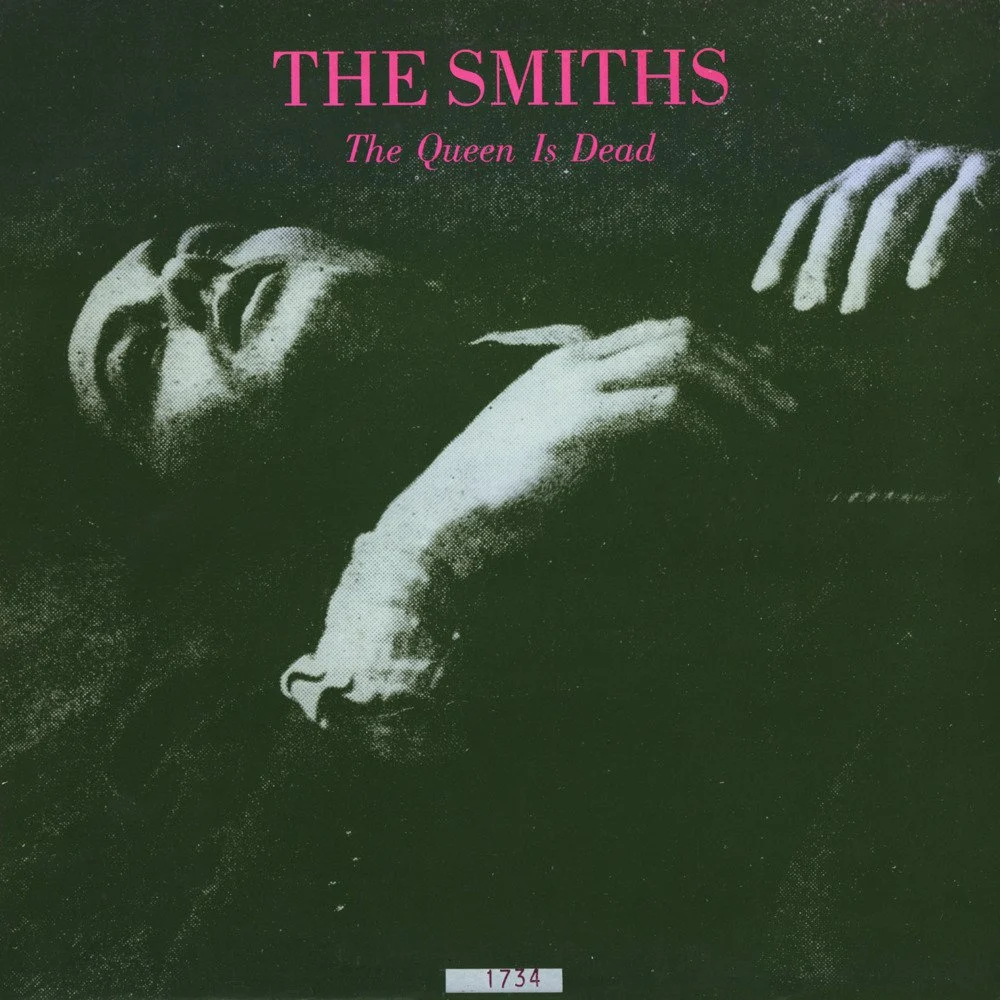

Forty years ago, on June 16, 1986, The Smiths released The Queen Is Dead, an album that would swiftly become a cornerstone of British music and a defining statement of a generation. Clocking in at just under 37 minutes, this seminal work masterfully distilled the complex anxieties, societal critiques, and deeply personal laments of 1980s Britain into a potent collection of songs. It tackled themes ranging from the superficiality of the music industry and unrequited love to regicide, suicide, organized religion, and the enduring human condition. Reissued for its 40th anniversary, the album’s resonance remains undiminished, its intricate lyrical tapestry — largely crafted by vocalist Morrissey — feeling as poignant and provocative today as it did upon its initial release.
The Socio-Political Landscape of 1980s Britain
To fully appreciate the impact of The Queen Is Dead, it is essential to understand the turbulent backdrop against which it was conceived. The mid-1980s in the United Kingdom were dominated by the Conservative government of Prime Minister Margaret Thatcher. Her policies, characterized by privatization, deregulation, and a strong stance against trade unions, led to significant social upheaval. High unemployment rates, particularly in traditional industrial areas, fostered widespread disillusionment and a sense of disenfranchisement among young people. The miners’ strike of 1984-1985 had left deep scars, symbolizing a brutal clash between the working class and state power.
Culturally, the decade was marked by a blend of aspirational consumerism and a burgeoning alternative scene that sought to critique or escape the mainstream. Against this backdrop, The Smiths emerged as articulate, intellectual outsiders. Their music, a unique fusion of Johnny Marr’s intricate, jangling guitar work, Andy Rourke’s melodic basslines, Mike Joyce’s precise drumming, and Morrissey’s distinctive vocal delivery and poetic lyrics, offered solace and a voice to those who felt alienated. Morrissey’s lyrics, often steeped in literary references and characterized by a blend of self-pity, mordant wit, and social commentary, provided a stark contrast to the polished pop of the era.
The Genesis and Critical Acclaim
The Queen Is Dead followed the band’s self-titled debut (1984) and Meat Is Murder (1985), both of which had established their unique sound and lyrical themes. The recording sessions for the album were reportedly fraught with internal tensions, yet they ultimately produced some of The Smiths’ most enduring and cohesive material. Released by Rough Trade Records, a prominent independent label, the album quickly ascended the UK charts, peaking at number two, and achieved modest success in the United States, reaching number 71 on the Billboard 200.
Upon its release, The Queen Is Dead garnered widespread critical acclaim. Reviewers lauded its lyrical depth, musical sophistication, and its ability to capture the zeitgeist of the era. NME hailed it as "the greatest British rock album since Sgt. Pepper’s," while Melody Maker described it as "a record of genuine brilliance, a work that captures the essence of a nation in turmoil." Its reputation has only grown over the decades, consistently appearing on lists of the greatest albums of all time from publications like Rolling Stone, NME, and Q Magazine.
A Deep Dive into Morrissey’s Lyrical Landscape
The album’s enduring power lies significantly in Morrissey’s lyrical contributions. His ability to weave together the deeply personal with sharp social observations, often employing a complex mix of melancholy, humor, and outright vitriol, made The Queen Is Dead a benchmark for intelligent songwriting.
1. "The Queen Is Dead"
The album opens with its incendiary title track, a seven-minute epic that sets the tone for the entire record. Morrissey, known for his provocative statements, unleashes a torrent of anti-establishment sentiment. The lyrics boldly challenge the British monarchy, an institution often seen as beyond reproach, depicting it as an antiquated and irrelevant relic. Lines like "I say, Charles, don’t you ever crave / To appear on the front of the Daily Mail / Dressed in your mother’s bridal veil?" illustrate a biting satire aimed at the perceived absurdity of royalty. Beyond the crown, Morrissey broadens his critique to organized religion, lamenting the societal structures that exploit and control individuals. The stark image of "her very lowness with her head in a sling" follows earlier, less direct criticisms, showcasing an evolution in his confrontational style. The track captures a sense of profound disillusionment with national symbols, articulating a feeling of loneliness and alienation for those outside the perceived mainstream.
Sample Lyric: "Pass the pub that wrecks your body / And the church who’ll snatch your money / The Queen is dead, boys, and it’s so lonely on a limb."
2. "Frankly, Mr. Shankly"
This track offers a sardonic glimpse into Morrissey’s complex relationship with the music industry and, specifically, his former label, Rough Trade Records, and its head, Geoff Travis (often assumed to be the "Mr. Shankly" of the song). The lyrics reveal a fascinating duality: a public persona of a sensitive, wilting flower contrasted with a sharp, almost cynical ambition. Morrissey critiques the poetic pretensions of the label head while simultaneously expressing a desire for fame over moral righteousness. The song is a masterful exercise in passive aggression and witty insult, highlighting the commercial realities that often clash with artistic integrity. It underscores a thematic tension prevalent in Morrissey’s work: the yearning for authenticity against the backdrop of an often-shallow world.
Sample Lyric: "Fame, fame, fatal fame / It can play hideous tricks on the brain / But still, I’d rather be famous than righteous or holy / Any day, any day, any day."
3. "I Know It’s Over"
Stripped of much of his characteristic wit, "I Know It’s Over" stands as perhaps the most emotionally devastating song in The Smiths’ canon. It is a raw, unvarnished exploration of profound loneliness and the crushing weight of unrequited love or existential despair. The six-minute ballad builds slowly, Morrissey’s voice conveying a vulnerability that is both heartbreaking and universal. The bridge, in particular, delivers a gut punch, as the narrator confronts his own perceived worth in the face of persistent solitude. The simple, stark realization that "tonight is just like any other night" resonates with anyone who has grappled with persistent isolation, rendering the absence of humor all the more poignant. This track exemplifies Morrissey’s capacity to articulate the deep-seated sorrows of the human experience.
Sample Lyric: "If you’re so very good-looking, why do you sleep alone tonight? / I know, ’cause tonight is just like any other night."
4. "Never Had No One Ever"
Following the emotional intensity of "I Know It’s Over," "Never Had No One Ever" continues the theme of profound isolation, albeit with a slightly different lyrical approach. While the original article suggests a "stalker" vibe, a more objective interpretation reveals a narrator grappling with a pervasive sense of being overlooked and unloved. The lyrics convey a deep-seated yearning for connection and an inability to achieve it, leading to a feeling of being perpetually outside. The "bad dream" lasting "20 years, 7 months, and 27 days" is a poignant metaphor for a life defined by emotional deprivation. The song captures the quiet desperation of someone who has always felt an outsider, struggling to break free from a cycle of solitude.
Sample Lyric: "I had a really bad dream / It lasted 20 years, 7 months, and 27 days."
5. "Cemetry Gates"
This track offers a quintessential Morrissey moment, showcasing his intellectualism and deep appreciation for literature. Set in Manchester’s Southern Cemetery, the song is a contemplative stroll through a graveyard, where the narrator muses on mortality and the lives of those buried beneath the earth. Morrissey name-drops literary giants like John Keats, W.B. Yeats, and his personal hero, Oscar Wilde, emphasizing the connection between art, death, and enduring legacy. The lyrics reflect on the shared human experience of birth, life, and death, observing that despite individual passions and struggles, the ultimate fate is the same for all. It’s a profound, yet understated, meditation on the universality of human existence and the fleeting nature of life.
Sample Lyric: "All those people, all those lives / Where are they now? / With loves and hates and passions just like mine / They were born and then they lived and then they died."
6. "Bigmouth Strikes Again"
"Bigmouth Strikes Again" directly addresses Morrissey’s controversial public image and his tendency towards provocative statements. It’s a self-aware, almost defiant, commentary on the consequences of his outspokenness. The lyrics portray the narrator as a martyr for free speech, drawing a famously audacious parallel between himself and Joan of Arc. This comparison, both humorous and indicative of a burgeoning rock star ego, highlights Morrissey’s awareness of his own impact and the reactions he provokes. The song encapsulates the tension between public perception and self-identity, demonstrating Morrissey’s willingness to embrace his role as a provocateur, even if it meant alienating some.
Sample Lyric: "Now I know how Joan of Arc felt / As the flames rose to her Roman nose and her Walkman started to melt."
7. "The Boy With The Thorn in His Side"
This song delves into the universal experience of youthful insecurity, misunderstanding, and the struggle for self-acceptance. The "thorn" serves as a powerful metaphor for an internal pain or persistent feeling of being out of place, a sentiment deeply relatable to adolescents and young adults. Morrissey’s lyrics capture the bewildering uncertainty of navigating life without a clear roadmap, the feeling that everyone else seems to have an instruction manual for existence while you are merely improvising. The desperate questions – "When you want to live, how do you start? / Where do you go? / Who do you need to know?" – articulate a profound sense of lostness and a yearning for guidance that remains unanswered.
Sample Lyric: "And when you want to live, how do you start? / Where do you go? / Who do you need to know?"
8. "Vicar in a Tutu"
Demonstrating Morrissey’s often-overlooked sense of humor, "Vicar in a Tutu" is a lighthearted yet subtly subversive track. It contrasts the somber reputation of religious figures with an image of a pirouetting priest, injecting a dose of camp and absurdity into a traditionally conservative setting. The song playfully critiques religious hypocrisy and rigid social norms by presenting a clergyman who finds joy and freedom in an unexpected form of expression. Morrissey, despite his often-acerbic critique of religion, refrains from condemnation, instead highlighting the vicar’s naturalness in his unconventional pursuit. It’s a testament to his ability to find humor in the incongruous and challenge expectations of solemnity.
Sample Lyric: "The monkish monsignor, with a head full of plaster, said / My man, get your vile soul dry-cleaned."
9. "There Is a Light That Never Goes Out"
Often cited as one of The Smiths’ most beloved songs, "There Is a Light That Never Goes Out" epitomizes the band’s ability to transform intimate vulnerability into a universally resonant anthem. The lyrics depict an intense, almost overwhelming emotional connection experienced during a car ride, where the narrator finds solace and profound joy in the presence of another. The song explores the terrifying beauty of falling deeply for someone, acknowledging the inherent risks and anxieties of such a powerful bond. Yet, instead of succumbing to fear, the narrator embraces the moment, even fantasizing about a shared, romanticized demise. It’s a powerful ode to finding refuge and meaning in human connection, a light that transcends the mundane and the tragic.
Sample Lyric: "And if a 10-ton truck kills the both of us / To die by your side / Well, the pleasure, the privilege is mine."
10. "Some Girls Are Bigger Than Others"
The album concludes with a track that, at first glance, appears almost deliberately anti-climactic. "Some Girls Are Bigger Than Others" sees Morrissey adopting a detached, almost bored tone to discuss physical attraction, specifically referencing women’s bodies. The famously celibate frontman expresses a profound disinterest in the purely physical aspects, lamenting that "From the Ice Age to the Dole Age, there is but one concern." However, beneath this apparent superficiality lies a deeper longing for intimacy and connection, expressed through the desire to exchange pillows. The song serves as a peculiar, yet fitting, end to an emotionally charged album, bringing the listener back to a more mundane reality after a journey through profound introspection and societal critique. It underscores Morrissey’s consistent thematic focus on emotional connection over physical desire.
Sample Lyric: "Send me the pillow / The one that you dream on / And I’ll send you mine."
Enduring Legacy and Cultural Impact
Forty years on, The Queen Is Dead remains a monumental achievement in British music. Its influence extends far beyond its initial release, shaping the sound and lyrical approach of countless indie and alternative bands that followed. The album cemented The Smiths’ reputation as intellectual and articulate artists, capable of blending biting social commentary with deeply personal emotional landscapes. Johnny Marr’s intricate guitar work on tracks like "The Queen Is Dead" and "There Is a Light That Never Goes Out" has become iconic, inspiring generations of guitarists.
Morrissey’s lyrical contributions, in particular, solidified his position as one of popular music’s most distinctive and controversial figures. His ability to articulate alienation, despair, and frustrated desire with such wit and poetic flair resonated deeply with a significant audience. While his post-Smiths career has been marked by increasing controversy, the lyrical genius displayed on The Queen Is Dead stands as a testament to his artistic prowess at its peak. The album is not merely a nostalgic artifact but a living document that continues to speak to contemporary issues of identity, social critique, and the universal search for meaning and connection in a complex world. Its celebration at 40 years is a recognition of its timeless relevance and its indelible mark on the cultural landscape.