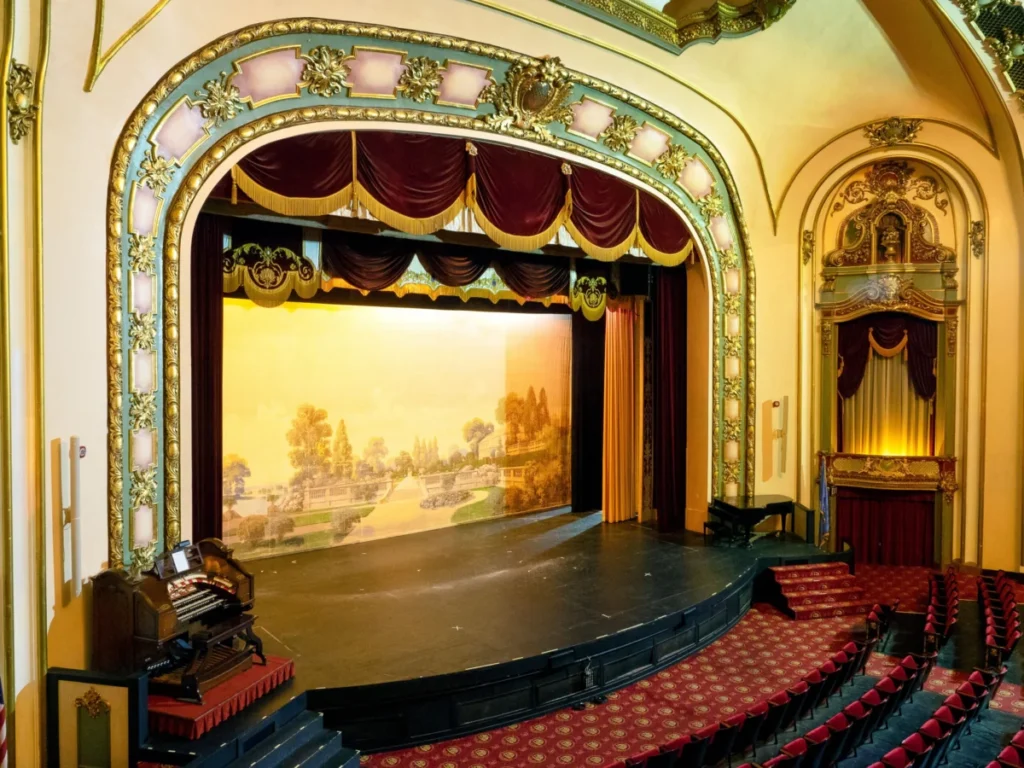

The cultural landscape of the United States is deeply intertwined with the evolution of its motion picture houses, serving as both architectural landmarks and the beating hearts of local communities. For over four decades, Benita VanWinkle, a photographer and associate professor of visual arts at High Point University, has traversed the country to document these structures. Her extensive research and visual documentation culminate in the upcoming publication, America’s Hometown Movie Theaters: Please Remain Standing, scheduled for release by Bauer & Dean Publishers in September 2026. The book catalogs 395 theaters, all constructed prior to 1965, capturing the intricate designs ranging from Neoclassical facades to exotic Egyptian-inspired interiors. Beyond the aesthetic value, VanWinkle’s work highlights a narrative of resilience, detailing how local populations have organized to save these historic venues from the brink of demolition, repositioning them as essential gathering places in a digital age.

The Evolution of the American Movie Palace
The history of cinema architecture in the United States reflects broader shifts in American society, wealth, and artistic aspiration. In the early 20th century, the transition from "nickelodeons"—small, often cramped storefront theaters—to grand "movie palaces" marked a significant cultural milestone. During the 1920s and 1930s, theater owners and architects sought to provide an escapist experience that began the moment a patron stepped off the sidewalk.
The architectural styles featured in VanWinkle’s documentation are diverse. Neoclassical designs, with their grand columns and symmetrical proportions, were intended to lend an air of respectability and permanence to the burgeoning film industry. Simultaneously, the "Atmospheric" theater style, popularized by architect John Eberson, utilized ornate plasterwork and lighting to simulate outdoor environments, such as Italian gardens or Spanish courtyards, under a "sky" of twinkling stars and drifting clouds.

The Egyptian-inspired designs mentioned in the collection were largely a result of "Egyptomania" following the 1922 discovery of Tutankhamun’s tomb. Theaters like the Grauman’s Egyptian Theatre in Hollywood set a trend that rippled across small-town America, where local architects incorporated lotus-shaped columns, hieroglyphic motifs, and sphinxes into their designs. These structures were more than just buildings; they were monuments to the exoticism and glamour that the silver screen promised.
The Coleman Theatre: A Case Study in Preservation
A primary example of this architectural and social resilience is the Coleman Theatre in Miami, Oklahoma. Built in 1929 by George L. Coleman Sr., a local mining magnate, the theater is a masterpiece of Spanish Colonial Revival architecture. Its exterior, characterized by intricate terra cotta work, masks an interior that was once described as a "palace of dreams."

The Coleman Theatre’s history mirrors the trajectory of many venues featured in VanWinkle’s book. It originally hosted vaudeville acts and silent films, featuring a "Mighty Wurlitzer" pipe organ that provided the soundtrack for the era’s cinematic offerings. As the film industry shifted toward talkies and eventually toward the multiplex model of the 1970s and 80s, many such theaters fell into disrepair. However, the Coleman survived through a concerted community effort. In 1989, the Coleman family donated the theater to the City of Miami, sparking a multi-million dollar restoration project funded by grants, private donations, and thousands of hours of volunteer labor. Today, it stands as a fully operational performing arts center, proving that historic preservation can serve as a catalyst for municipal pride and economic revitalization.
A Chronology of the American Cinema House
The timeline of the theaters documented by VanWinkle provides a roadmap of American urban development:

- 1905–1915: The Nickelodeon Era. Small, localized venues predominate. Architecture is functional and often repurposed from existing retail space.
- 1915–1930: The Rise of the Movie Palace. The "Golden Age" of cinema architecture. Large-capacity venues are built with lavish budgets, featuring grand lobbies, crystal chandeliers, and pipe organs.
- 1930–1945: Art Deco and Modernism. Following the Great Depression, theater design becomes more streamlined. Neon lighting and geometric patterns replace the heavy ornamentation of the previous decade.
- 1945–1965: The Mid-Century Transition. Post-war theaters begin to prioritize comfort and technology, such as air conditioning and widescreen formats like CinemaScope. This period also sees the rise of the drive-in theater, a uniquely American phenomenon.
- 1970s–1990s: The Era of Neglect and Demolition. The advent of the suburban multiplex and home video leads to the closure of many downtown single-screen houses.
- 2000s–Present: The Preservation Movement. A renewed interest in "Main Street" revitalization leads to the restoration of historic theaters as multi-purpose venues.
Data and Economic Implications of Theater Restoration
The preservation of the 395 theaters documented in America’s Hometown Movie Theaters is not merely a sentimental endeavor but an economic one. According to data from the National Trust for Historic Preservation, historic theaters are often the "anchor tenants" of downtown districts. For every dollar spent on a ticket at a restored historic theater, an average of $12 is spent in the surrounding local economy on dining, parking, and retail.
Furthermore, the League of Historic American Theatres (LHAT) notes that these venues are significantly more sustainable than new constructions. The "embodied energy"—the energy consumed by all of the processes associated with the production of a building—contained within these older structures makes their restoration a greener alternative to demolition and new builds. VanWinkle’s photography serves as a record of these "green" assets, many of which have been retrofitted with modern projection and sound technology while maintaining their historic integrity.

Social Impact and Community Identity
VanWinkle emphasizes that theaters have historically been "places where we get to see a different version of ourselves." In the mid-20th century, the local theater was often the only place where members of a community, regardless of socioeconomic status, could share a collective experience. While the history of these spaces also includes periods of segregation and exclusion, the modern preservation movement often focuses on making these venues inclusive community hubs.
"Theaters help bring people together to learn and laugh and just be in community," VanWinkle states. This sentiment is echoed by urban planners who argue that the loss of "third places"—spaces that are neither work nor home—contributes to social isolation. By documenting these theaters, VanWinkle provides a visual argument for the necessity of shared physical spaces in an increasingly fragmented digital society.

Professional Analysis of the Documentary Project
The 40-year duration of VanWinkle’s project lends it a unique longitudinal perspective. By photographing these theaters over decades, she has captured the "tales of resilience" she mentions. Some theaters in her collection may have been vibrant in the 1980s, fallen into ruin by the 2000s, and emerged as restored gems by 2020. This documentation is vital for architectural historians and preservationists, providing a high-fidelity record of materials and designs that are no longer common in modern construction.
The decision to limit the scope to theaters built before 1965 is significant. This cutoff marks the end of the traditional "single-screen" era before the industry moved toward the more utilitarian architecture of the multiplex. By focusing on this era, VanWinkle highlights a period when architecture was used as a marketing tool—where the building itself was as much of an attraction as the film being screened.

Future Outlook for America’s Historic Theaters
As America’s Hometown Movie Theaters: Please Remain Standing prepares for its 2026 release, the state of historic cinema remains at a crossroads. While many theaters have been successfully saved, others remain threatened by rising real estate costs and the ongoing shift in film distribution models.
The success of VanWinkle’s featured theaters often depends on a "hybrid" model of operation. Many of the 395 theaters have transitioned from purely showing first-run films to hosting live theater, concerts, film festivals, and community meetings. This adaptability is the key to their survival.

In conclusion, Benita VanWinkle’s work is more than a photography book; it is a comprehensive archive of American cultural history. The structures she documents are the physical manifestations of a century of dreams, technological progress, and community spirit. As these "stunning structures" continue to stand, they offer a bridge between the cinematic history of the past and the community-focused future of American towns. Through her lens, the plea to "please remain standing" is not just a title, but a call to action for the continued stewardship of America’s architectural heritage.