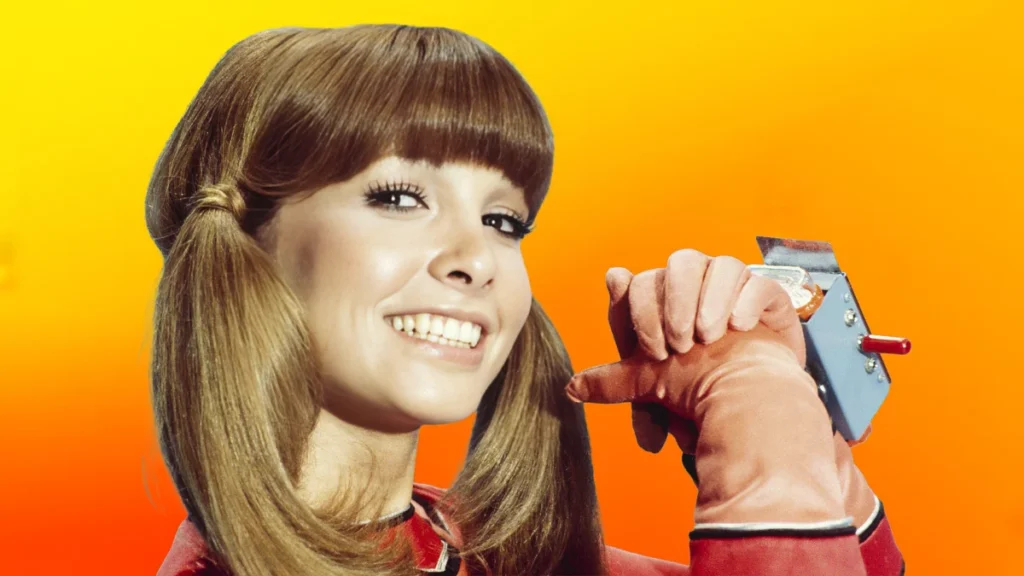

The vibrant, kaleidoscopic world of Saturday morning television in the 1970s was a fertile ground for imaginative children’s programming, and among its most memorable offerings was Electra Woman and Dyna Girl. This superhero comedy, a brainchild of the prolific Sid and Marty Krofft, premiered on ABC on September 11, 1976, swiftly carving out a niche for itself with its campy charm and energetic performances. At its core, the series featured Deidre Hall as the titular Electra Woman and Judy Strangis as her eager, pint-sized sidekick, Dyna Girl. The dynamic duo’s adventures were deliberately crafted in the vein of the popular Batman television series of the late 1960s, aiming for a similar blend of action, humor, and a distinctly tongue-in-cheek sensibility that appealed to both children and the adults who often found themselves watching alongside them.
The genesis of Electra Woman and Dyna Girl can be traced back to the Krofft brothers’ established success in creating visually distinctive and whimsical children’s shows. Their signature style, characterized by elaborate costumes, innovative puppetry, and a general sense of playful absurdity, was evident in previous hits like H.R. Pufnstuf and Lidsville. With Electra Woman and Dyna Girl, they turned their attention to the burgeoning superhero genre, seeking to create original characters that could capture the imagination of a young audience. The choice to center the series on two female superheroes, a relatively novel concept for the era, was also a progressive element that distinguished it from many of its male-dominated counterparts.
A Look at the Stars: Deidre Hall and Judy Strangis
Deidre Hall, already establishing herself as a prominent figure in television, brought a poised and commanding presence to Electra Woman. Her portrayal captured the essence of a seasoned, capable heroine, while also allowing for moments of comedic exasperation with her younger partner. However, it was Judy Strangis, as the diminutive yet formidable Dyna Girl, who often stole the show. Her boundless energy, sharp wit, and impressive physical comedy made her an instant fan favorite.
Strangis’s casting was particularly noteworthy given her extensive experience in the entertainment industry, which belied her young age. Her journey into the spotlight began much earlier than many might have expected, tracing back to an unexpected connection with a legendary entertainer: Spike Jones. Jones, the iconic bandleader known for his satirical and surreal musical numbers, was Strangis’s uncle. This familial tie provided her with an early gateway into the world of performance.
The Early Career of Judy Strangis
Long before donning a superhero costume, Judy Strangis made her debut on The Spike Jones Show, a variety program that aired in the early 1960s. These early appearances, though perhaps not directly in a superhero context, provided her with invaluable on-camera experience and honed her comedic timing. This was not merely a fleeting childhood novelty; Strangis was actively building a foundation for a career in entertainment. Her involvement with her uncle’s show was a testament to her burgeoning talent and a clear indicator of her early aptitude for performance.
Beyond the Spike Jones connection, Strangis had already accumulated a respectable resume of television guest appearances and even a film role prior to Electra Woman and Dyna Girl. These earlier credits, while perhaps less prominent than her role as Dyna Girl, demonstrate a consistent presence in the industry and a growing understanding of the demands of acting. This background allowed her to step into the role of Dyna Girl with a seasoned professionalism, contributing significantly to the show’s overall success and appeal. Her ability to embody the character with such conviction and charm was undoubtedly a result of these formative experiences.
The Krofft Formula: Camp, Comedy, and Spectacle
The Krofft brothers’ creative philosophy was deeply rooted in a desire to entertain through visual flair and a lighthearted approach to storytelling. Electra Woman and Dyna Girl was a perfect embodiment of this ethos. The show embraced a heightened reality, complete with outlandish villains, improbable plots, and a visual aesthetic that was both bold and deliberately artificial. This deliberate embrace of "camp" was not a flaw but a central tenet of its appeal, allowing the series to transcend simple children’s fare and become a cult favorite.
The series often drew parallels to the Adam West-led Batman series, which had captivated audiences a decade prior. Like its predecessor, Electra Woman and Dyna Girl reveled in its own artificiality. The villains were often eccentric and melodramatic, their schemes comically convoluted, and the heroes’ victories achieved through a combination of genuine bravery and often serendipitous, humorous circumstances. The bright, stylized costumes, the often-obvious special effects, and the rapid-fire dialogue all contributed to a sense of playful exaggeration that was central to the show’s charm. This approach allowed the series to be enjoyed on multiple levels, providing straightforward entertainment for younger viewers while offering a layer of ironic amusement for older audiences.
Supporting Data: Saturday Morning Landscape of 1976
The television landscape of 1976 was dominated by a few major networks, with Saturday mornings being a prime slot for children’s programming. ABC, CBS, and NBC all vied for the attention of young viewers, offering a diverse array of cartoons, live-action shows, and educational programs. In this competitive environment, Electra Woman and Dyna Girl stood out due to its live-action format and its focus on original superhero characters, rather than adaptations of established comic book properties, which were more common.
The era was also characterized by a certain innocence in children’s television. While action and adventure were present, overt violence was generally downplayed, and storylines often revolved around moral lessons or the triumph of good over evil in a clear-cut manner. Electra Woman and Dyna Girl fit comfortably within this paradigm, presenting its villains and their nefarious plots in a way that was exciting but never truly frightening. The show’s debut on September 11, 1976, placed it among other popular Saturday morning staples, contributing to a weekend ritual for many families.
The Wider Impact and Legacy
While Electra Woman and Dyna Girl enjoyed a respectable run during its initial broadcast, its true legacy has grown over time. The series has become a beloved piece of retro television, fondly remembered by those who grew up watching it. Its influence can be seen in subsequent iterations and reboots, as well as in its enduring appeal to fans of superhero narratives and 1970s pop culture. The show’s embrace of female superheroes was ahead of its time, and its unique blend of camp and genuine heart has cemented its place in television history.
The series has experienced several revivals and adaptations, indicating its lasting appeal. A web series was produced in 2016, starring Grace Helbig as Electra Woman and Hannah Hart as Dyna Girl, which aimed to recapture the spirit of the original while updating it for a contemporary audience. These continued efforts to bring the characters back to the screen underscore the enduring fascination with Electra Woman and Dyna Girl and their unique brand of superheroics.
Broader Implications: Representation in Children’s Media
The inclusion of two female leads in a superhero program in the 1970s was a significant step forward in terms of representation in children’s media. At a time when female characters in action-oriented roles were less common, Electra Woman and Dyna Girl offered young viewers strong, capable female role models. This was particularly important in a genre often dominated by male heroes. Their adventures showcased teamwork, intelligence, and bravery, demonstrating that girls could be just as heroic and powerful as their male counterparts.
The show’s creators, the Krofft brothers, were known for their willingness to push creative boundaries. Their decision to prioritize female leads in Electra Woman and Dyna Girl reflected a progressive vision for children’s entertainment. While the show itself was infused with the playful, often exaggerated style of the era, the underlying message of empowerment for young girls was a valuable contribution to the television landscape of the time. The success and continued affection for the series suggest that audiences were ready for and receptive to such diverse representation.
Conclusion: A Lasting Impression
Electra Woman and Dyna Girl remains a testament to the enduring power of imaginative storytelling and the Krofft brothers’ unique brand of entertainment. The series, anchored by the engaging performances of Deidre Hall and Judy Strangis, captured the spirit of its time while offering a glimpse into a more inclusive future for superhero narratives. From its origins in the playful world of Spike Jones to its vibrant Saturday morning debut, Judy Strangis’s journey was a remarkable one, culminating in her iconic role as Dyna Girl. The show’s legacy continues to resonate, reminding audiences of a time when superheroes were not only powerful but also undeniably fun, and when two women proved that they could save the day with style and wit. The show’s lasting impact lies not only in its nostalgic charm but also in its early, albeit stylized, contribution to the ongoing conversation about representation and heroism in popular culture.