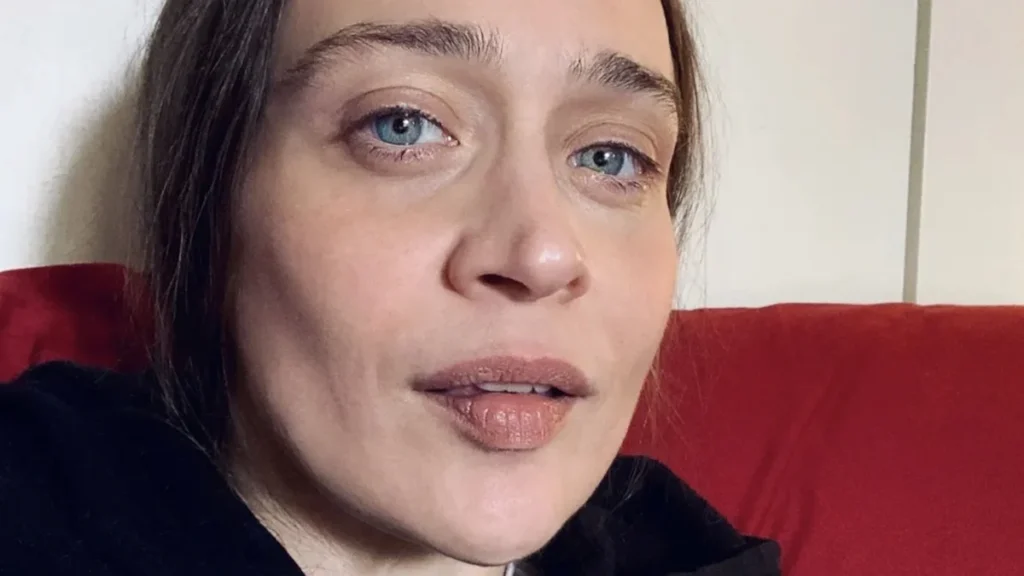

In a poignant and unvarnished statement shared via social media on a recent Friday, acclaimed artist Fiona Apple candidly addressed her current creative impasse, revealing a profound struggle to articulate the overwhelming global crises she perceives as an "endless barrage of horrors." The video, posted by her friend and roommate Zelda Hallman on Instagram, offered fans an intimate glimpse into the mind of an artist grappling with the immense pressure of responding to contemporary suffering through her craft.
Apple explained that after a recent night dedicated to writing, she felt an urgent need to connect with her audience. She directly posed the question she anticipated many might be asking: "I wonder if you’re wondering if I’m even trying to write about what’s going on in the world right now." Her answer was unequivocal yet tinged with frustration: she is indeed trying, but is "really struggling with it." This admission resonates deeply with a public often seeking artistic interpretation and solace during turbulent times, and with artists themselves who navigate the complexities of their role in an increasingly fractured world.
The core of Apple’s difficulty, she elaborated, lies in the distinction between personal narrative and broader social commentary. When writing about herself, she asserted, "You’re the authority," and "Nobody can get let down." This autonomy provides a creative safety net, allowing for uninhibited expression. However, when the subject matter extends to the suffering of others, the creative process becomes fraught with higher stakes and self-imposed expectations. "Maybe I’m letting perfect get in the way of good," she mused, acknowledging the paralyzing effect of perfectionism when confronted with the gravity of global events. The sheer scale of "this fucking endless barrage of horrors," as she termed it, makes focused creative work challenging. Even when focus is achieved, relentless self-questioning and doubt plague her artistic choices. Crucially, Apple sought to preempt any misinterpretation of her creative silence, emphasizing, "I just didn’t want you to think that I was turning a blind eye" or "that I didn’t care." Her struggle, she conveyed, stems from a deep empathy and a heightened sense of responsibility, not apathy.
Concluding her heartfelt message, Apple articulated a vulnerable self-assessment of her current standing as a musician. "I just don’t want to let anybody down. I’m letting myself down right now, I know that, as an artist," she confessed. Despite this internal struggle, she affirmed her commitment to broader engagement, stating, "I know that there’s other things to do other than writing songs, and I’m doing what I can elsewhere." Yet, she underscored her perceived primary vocation: "But this is my job to show what’s going on. That’s what I want to try to do. I’m going to keep trying." This declaration highlights the artist’s internal conflict between the desire to contribute meaningfully and the formidable challenge of translating overwhelming reality into art.
The Weight of the World: Unpacking the "Endless Barrage"
While Fiona Apple’s video did not explicitly detail the specific "horrors" burdening her, Zelda Hallman’s accompanying caption provided crucial context, painting a stark picture of the global landscape influencing Apple’s creative block. Hallman listed a litany of interconnected crises that collectively represent the immense challenge for an artist striving for truthful and impactful commentary.
-
The Horror in Gaza and Sudan: The caption directly referenced the ongoing humanitarian catastrophes in both regions. In Gaza, the conflict has resulted in widespread destruction, massive displacement, and an acute humanitarian crisis, with international bodies consistently reporting dire conditions, including severe food insecurity and a collapse of healthcare infrastructure. The United Nations and various NGOs have documented tens of thousands of casualties and millions displaced, amidst calls for sustained humanitarian access and an end to hostilities. Similarly, Sudan has been embroiled in a devastating civil conflict since April 2023, leading to one of the world’s largest displacement crises, with millions fleeing their homes internally and across borders. Reports from aid organizations detail widespread violence, food shortages, and a collapsing economy, with significant international efforts focused on brokering peace and delivering aid in the face of immense logistical and security challenges. The sheer scale of suffering, loss of life, and systemic instability in these regions presents an immense emotional and intellectual burden for any artist attempting to comprehend and convey the experience.
-
Cruelty Aimed at Trans Kids: The past few years have seen a dramatic rise in legislative efforts and public discourse targeting transgender youth, particularly in the United States. Numerous states have enacted or proposed laws restricting access to gender-affirming care, banning transgender athletes from sports, and limiting discussions of gender identity in schools. According to the Human Rights Campaign, over 500 anti-LGBTQ+ bills were introduced in state legislatures in 2023 alone, a significant portion directly impacting transgender children and their families. These legislative attacks are compounded by societal discrimination, often leading to increased rates of mental health issues, including anxiety, depression, and suicidal ideation, among trans youth. The political and social climate creates an environment of fear and vulnerability, making it a profoundly difficult subject to address with the nuance and sensitivity it demands.
-
Assault on Women’s Bodily Autonomy: The overturning of Roe v. Wade by the U.S. Supreme Court in June 2022 marked a seismic shift in reproductive rights, eliminating the constitutional right to abortion and allowing individual states to ban or severely restrict the procedure. This decision immediately led to "trigger bans" in many states, drastically limiting access to reproductive healthcare for millions of women. Globally, while some countries have expanded abortion access, others continue to maintain highly restrictive laws, and even in nations with legal abortion, access can be challenging due to social stigma, lack of providers, and geographical barriers. The broader discourse around bodily autonomy also extends to issues like forced sterilization, maternal mortality rates, and access to contraception, all of which contribute to a complex landscape of ongoing struggle for women’s rights worldwide.
-
Abuse and Terror Inflicted on Immigrants and Their Families: Immigration policies and practices around the world have been a source of significant controversy and human rights concerns. In many countries, including the U.S. and those in Europe, stringent border enforcement, detention centers, and policies leading to family separations have drawn widespread criticism from human rights organizations. Reports of inadequate conditions in detention facilities, lack of due process, and the trauma inflicted on migrant children and families are regularly documented. The political rhetoric surrounding immigration often dehumanizes migrants, contributing to an environment of fear and insecurity for those seeking refuge or a better life. The complexities of international law, national sovereignty, and individual human rights converge in this highly charged area, posing significant moral and ethical dilemmas.
-
Erosion of Voting Rights and Civil Liberties: Democratic institutions globally face various challenges, including concerns about the integrity of elections and the protection of fundamental civil liberties. In the United States, debates over voter identification laws, gerrymandering, restrictions on voter registration, and the purging of voter rolls have been ongoing, with critics arguing these measures disproportionately affect minority communities and young voters. Beyond voting, civil liberties such as freedom of speech, assembly, and privacy have also faced challenges in various contexts, from surveillance technologies to restrictions on protest rights and press freedom. The perceived weakening of these foundational pillars of democracy adds another layer to the "barrage of horrors" that an artist might feel compelled to address, fearing the long-term implications for society.
-
Disappearance of Indigenous and Black Children: This critical issue highlights systemic inequalities and a lack of attention from mainstream media and law enforcement. In North America, the crisis of Missing and Murdered Indigenous Women, Girls, and Two-Spirit People (MMIWG2S) represents a profound human rights tragedy, with Indigenous women and girls facing disproportionately high rates of violence and disappearance. Similarly, Black children, particularly girls, are often reported missing at higher rates but receive significantly less media coverage and investigative resources compared to their white counterparts. This disparity underscores systemic racism and neglect within judicial and media systems, leading to a "silence" that Hallman’s caption specifically referenced. The ongoing pain and injustice associated with these disappearances are a testament to deeply entrenched societal biases.
Fiona Apple’s Legacy: Art as Activism
Fiona Apple’s struggle is particularly noteworthy given her established career as an artist renowned for her raw honesty, emotional depth, and often biting social commentary. Since her debut with "Tidal" in 1996, Apple has consistently challenged conventions, both musically and thematically. Her work has frequently explored personal trauma, mental health, misogyny, and societal pressures, often with a fierce, uncompromising voice. Albums like "When the Pawn…" (1999) and "Extraordinary Machine" (2005) solidified her reputation as a formidable songwriter who refused to shy away from uncomfortable truths.
Her most recent album, "Fetch the Bolt Cutters" (2020), was lauded for its visceral exploration of female rage, confinement, and the breaking of silence, themes that resonated powerfully during the early stages of the COVID-19 pandemic and the burgeoning #MeToo movement. The album earned critical acclaim, including two Grammy Awards, cementing her status as a vital voice in contemporary music.
Moreover, Apple has actively engaged in explicit social advocacy through her music in recent years. In 2023, she released "Pretrial (Let Her Go Home)," a powerful song specifically highlighting the detrimental effects of the cash-bail system, particularly on women, girls, and Black mothers. This track, her first new music since "Fetch the Bolt Cutters," was a direct call to action, demonstrating her willingness to use her platform for targeted social justice causes. The song’s proceeds were directed to organizations working to reform the bail system, further underscoring her commitment beyond just artistic expression. Similarly, her co-writing credit on Cara Delevingne’s June 2023 song "Need It" suggests continued engagement with collaborative projects, even amidst her personal creative block on broader issues. These examples confirm that her current struggle is not due to a lack of conviction or a disinterest in social issues, but rather a profound wrestling with the form and adequacy of her artistic response to an overwhelming confluence of global tragedies.
The Broader Implications: Artists in an Age of Crisis
Fiona Apple’s candid admission opens a broader dialogue about the role of artists in an age of continuous global crisis. Historically, artists have often served as chroniclers, critics, and conscience-keepers of their societies. From protest songs of the civil rights era to anti-war anthems, art has provided both a mirror to reality and a catalyst for change. However, the current era, characterized by 24/7 news cycles, social media echo chambers, and the constant onslaught of information, presents unprecedented challenges for creative individuals.
The expectation for artists to "speak out" or "use their platform" has intensified, particularly in the digital age where public figures are often held to immediate account for their perceived silence or perceived inadequacy of response. This pressure can be immense, leading to what Apple describes as the fear of "letting people down" or "letting perfect get in the way of good." The psychological toll of constantly processing and attempting to articulate widespread trauma can lead to burnout, creative paralysis, or a sense of futility. How does one encapsulate the suffering in Gaza, the systemic racism evident in missing persons cases, and the erosion of fundamental rights, all within the confines of a song or an album, without trivializing, misrepresenting, or simply being overwhelmed?
Apple’s struggle humanizes the creative process, demonstrating that even for a celebrated and deeply insightful artist, the act of creation is not immune to the weight of the world. It underscores that empathy can be a double-edged sword: a source of inspiration but also a profound burden. Her experience resonates with many, not just artists, who feel overwhelmed by the sheer volume and gravity of global issues and question their own capacity to make a meaningful difference.
Her insistence on "other things to do other than writing songs" also highlights the multifaceted nature of activism and engagement. While art can be a powerful form of protest and awareness, direct action, advocacy, and support for organizations working on the ground are equally vital. Apple’s ongoing contributions to causes like bail reform illustrate her commitment to these "other things."
Ultimately, Fiona Apple’s sincere video serves as a powerful reminder that the act of bearing witness and transforming observation into art is a profound and often painful endeavor. Her commitment to "keep trying" offers a glimmer of hope – not just for her fans awaiting new music, but for anyone grappling with the challenge of responding to the world’s sorrows. It affirms that even in struggle, the pursuit of truth and meaningful expression remains a vital human endeavor, underscoring the enduring power and necessity of artistic voices, even when those voices are temporarily caught in the silent, wrestling throes of creation.