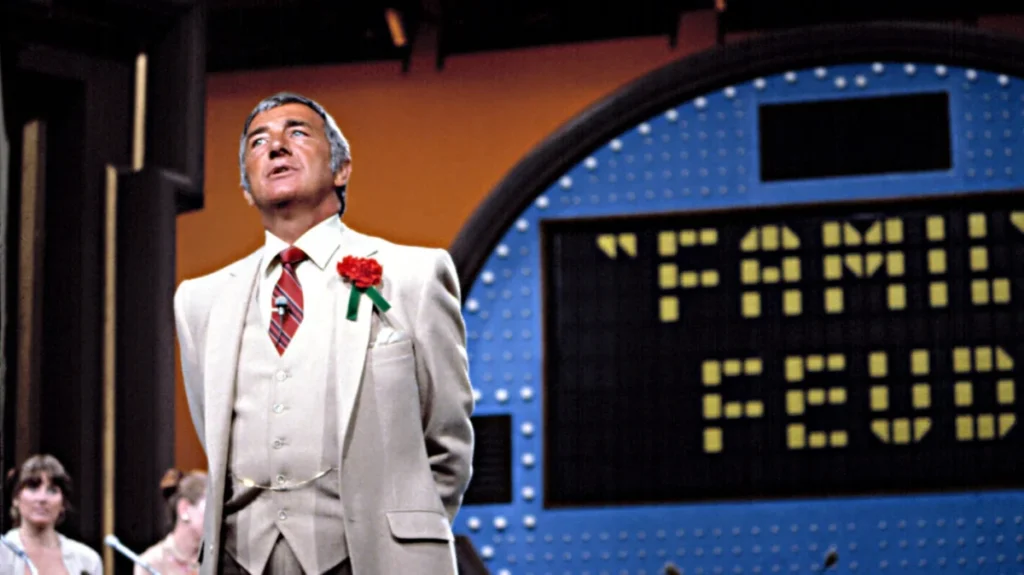

The enduring appeal of the game show Family Feud is a testament to its simple yet captivating premise, a formula that has resonated with audiences for nearly five decades since its debut on July 12, 1976. This iconic Mark Goodson production, initially helmed by the charismatic Richard Dawson, transformed a national pastime – guessing popular opinions – into a television phenomenon, blending family-friendly competition with moments of delightful absurdity. The show’s success is not merely a matter of longevity but a reflection of its ability to tap into universal human experiences: the desire for connection, the pressure of performance, and the inherent humor found in everyday thoughts.
The Genesis of a Game Show Giant
The brainchild of producer Mark Goodson, renowned for his prolific work in the game show arena with hits like What’s My Line? and The Price Is Right, Family Feud emerged during a period when television was increasingly seeking formats that could foster communal viewing. Goodson’s vision was to create a show that was accessible to everyone, regardless of age or background. He envisioned a contest where the "answers" were not the result of obscure knowledge but rather the common perceptions of a broad segment of the population. This democratic approach to gameplay was revolutionary, shifting the focus from individual intellect to collective consciousness.
Richard Dawson, a beloved personality best known for his role as Corporal Peter Newkirk in the World War II sitcom Hogan’s Heroes, was selected as the original host. Dawson’s tenure, spanning from 1976 to 1985 on ABC, was marked by his distinctive hosting style. He possessed a remarkable ability to connect with contestants, creating an atmosphere of warmth and genuine interest. His most memorable, and perhaps controversial, trademark was his habit of bestowing a kiss upon the female contestants before and after their turns at the podium. While some viewed this as an endearing gesture, reflecting the era’s more casual social norms, it has since become a point of historical discussion and a symbol of a bygone television era. Dawson’s approach humanized the game, making the families feel like relatable neighbors rather than distant competitors.
The Core Gameplay: A Survey of the Common Mind
At its heart, Family Feud pits two families, each comprised of five members, against each other in a battle of wits and popular opinion. The central mechanic involves contestants attempting to guess the most popular responses to survey questions posed to a panel of 100 individuals. These questions, often framed with a touch of wit and designed to elicit a range of plausible, and sometimes unexpected, answers, form the backbone of the show’s appeal. Examples like "Name a reason for kneeling" or "Name something you do with a remote control" are intentionally broad, allowing for a spectrum of responses from the mundane to the hilariously obscure.
The "survey says" element is crucial. The top answer on the board, representing the most common response, carries the highest point value, driving strategic gameplay. Families must not only recall popular opinions but also anticipate what others might have said. The tension mounts as families "strike out" by failing to identify an answer within a certain number of attempts, potentially ceding control of the board and accumulated points to their opponents. This dynamic creates a compelling push-and-pull, where a family on the verge of defeat can swiftly turn the tables with a well-placed answer.
Evolution and Longevity: A Resilient Format
The original run of Family Feud on ABC concluded in 1985. However, the show’s popularity necessitated its revival. In 1988, a syndicated version debuted, with Dawson returning to host, further solidifying his legacy with the program. This renewed engagement proved the show’s enduring appeal, demonstrating that its core format transcended network broadcasting.
The show has since seen a succession of charismatic hosts, each bringing their unique flavor to the proceedings. Ray Combs took the reins from 1988 to 1994, followed by Louie Anderson from 1994 to 1995. However, it was Steve Harvey, who assumed hosting duties in 2010, who ushered in a new era of unprecedented popularity for Family Feud. Harvey’s blend of humor, empathy, and quick wit has resonated with a contemporary audience, making the show a consistent ratings success. His signature catchphrases and his genuine reactions to the contestants’ answers have become integral to the show’s modern identity, drawing in millions of viewers each week.
Data and Demographics: The Broad Appeal of Family Feud
The sustained success of Family Feud can be analyzed through various metrics. In recent years, the show has consistently ranked among the top-rated syndicated television programs. For instance, during the 2022-2023 television season, Family Feud was among the top three most-watched syndicated shows in the United States, often attracting an average of over 7 million viewers per episode. This impressive viewership spans a wide demographic, appealing to families, younger audiences, and older viewers alike.
The show’s accessibility is a key factor. Unlike trivia-based game shows that require specialized knowledge, Family Feud relies on common sense and an understanding of societal perceptions. This inclusivity ensures that viewers can easily relate to the questions and the answers, fostering a sense of shared experience. The diverse range of families who participate also contributes to its broad appeal, reflecting the multicultural fabric of contemporary society.
The "Awkward Answers" Phenomenon: Humor in the Face of Pressure
A significant part of Family Feud‘s enduring charm lies in the often-hilarious "awkward answers" that contestants provide under pressure. The survey questions, designed to be open-ended, can lead to responses that are either wildly off the mark or startlingly literal. The scenario of a family member, under the bright lights and the ticking clock, grasping for an answer can result in moments of pure comedic gold.
Consider the question, "Name a reason for kneeling." While the expected answers might include "to pray," "to propose," or "to tie your shoe," the show has a rich history of contestants delivering answers like "to be beheaded" or "to get a better view of the dog’s behind." These unexpected turns are not the result of poor game design but rather a deliberate exploration of the human mind’s capacity for both logical deduction and creative, if sometimes nonsensical, association when faced with a challenge. The broadcast of these gaffes, often highlighted in popular social media clips and compilations, further fuels the show’s cultural relevance and comedic appeal. This element of surprise and the relatable human struggle to perform under pressure are precisely what keeps audiences engaged and entertained.
Broader Impact and Cultural Significance
Family Feud is more than just a game show; it is a cultural touchstone. It has provided countless families with the opportunity to bond and share a memorable experience, both on and off-screen. The show’s ability to generate lighthearted competition and laughter has made it a staple in households across generations.
The show’s impact can also be seen in its influence on popular culture. The phrase "Survey says!" has become ingrained in the lexicon, often used humorously in everyday conversations. The visual of the iconic podiums and the animated scoring board are instantly recognizable. Furthermore, the show has consistently adapted to changing social landscapes, with its hosts and contestant pool reflecting a more diverse and inclusive society than its initial iterations.
The legacy of Family Feud is one of consistent entertainment and broad appeal. From Richard Dawson’s signature kisses to Steve Harvey’s booming laughter, the show has consistently delivered on its promise of family fun. Its enduring success, supported by robust viewership data and its consistent presence in popular culture, firmly establishes Family Feud as a true titan of the television game show genre, proving that sometimes, the most popular answers are the ones that bring us together.