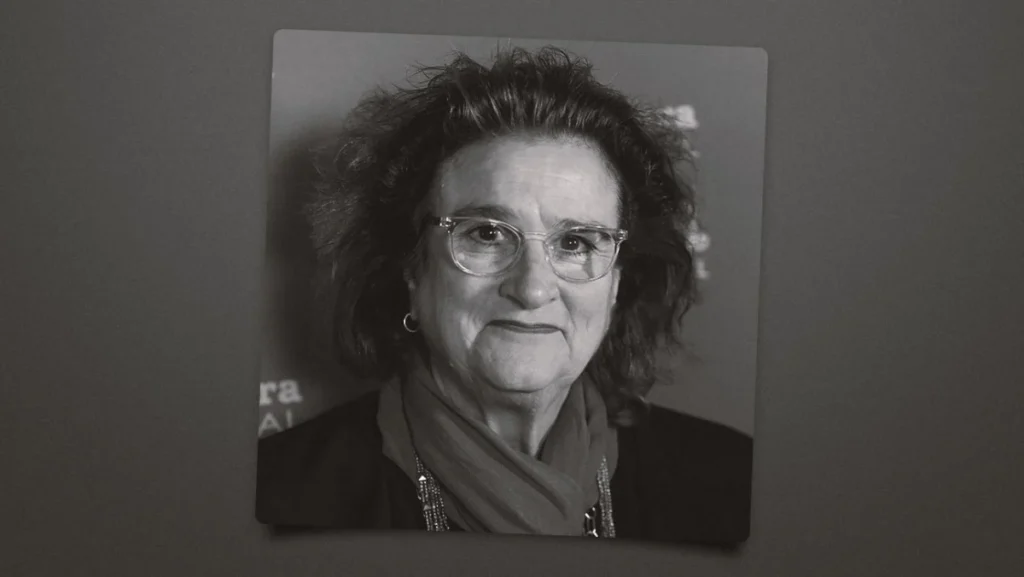

Barbara Ling, the celebrated production designer whose exceptional ability to transport audiences through time earned her an Academy Award for her meticulous re-creation of 1969 Los Angeles in Quentin Tarantino’s critically acclaimed Once Upon a Time in Hollywood, has passed away. She was 73. Ling died on Thursday in Santa Barbara after a valiant battle with cancer, a spokesperson for WME confirmed, marking the end of a prolific career that spanned over four decades and left an indelible mark on cinematic landscapes. Her legacy is defined by a deep commitment to practical authenticity, a philosophy that imbued her work with a tangible sense of realism, whether she was resurrecting a bygone era or constructing an elaborate fantasy world.
Ling’s unique talent lay in her meticulous attention to detail and her unwavering dedication to creating immersive environments that felt lived-in and real, a characteristic that became a hallmark of her diverse filmography. A native of Los Angeles, her intimate understanding of the city she called home allowed her to craft incredibly nuanced settings, from the sun-drenched streets of 1960s Hollywood to the gritty, contemporary urban sprawl depicted in films like Falling Down. Her collaborative spirit and innovative problem-solving skills made her a sought-after talent, working with a diverse array of directors on projects that challenged the boundaries of production design.
A Career Defined by Vision and Versatility
Born in August 1952, Barbara Claire Ling’s artistic journey began far from the silver screen, rooted deeply in the vibrant world of live performance. She honed her craft designing sets and lighting for an impressive array of over 200 theater, opera, and musical productions. This extensive experience in creating dynamic, ephemeral worlds for the stage provided a foundational understanding of atmosphere, spatial storytelling, and the critical interplay between environment and performance. Among her early notable works was the 1981 HBO special The Pee-Wee Herman Show, recorded live at the iconic Roxy in West Hollywood, showcasing her early flair for whimsical and engaging design.
Ling made a pivotal transition to filmmaking when she was enlisted by artist and musician David Byrne to design his directorial debut, the quirky and visually distinctive 1986 film True Stories. This foray into cinema opened the door to a new medium where her talents for world-building could be applied on a grander, more permanent scale. Her early filmography quickly demonstrated her remarkable versatility, establishing her as a designer equally adept at period authenticity, contemporary realism, and stylized fantasy. Credits from this period include the surreal Heaven (1987), the gritty adaptation of Less Than Zero (1987), the detective caper V.I. Warshawski (1991), the poignant drama With Honors (1994), and Sydney Pollack’s romantic drama Random Hearts (1999). Each project presented distinct design challenges, which Ling met with a consistent blend of creativity and practical ingenuity.
The early 1990s proved to be a particularly fruitful period for Ling, where she contributed to two films now considered classics of 1991: Oliver Stone’s biopic The Doors and Jon Avnet’s beloved Southern drama Fried Green Tomatoes. On the latter, she also took on the role of associate producer, a testament to her comprehensive understanding of filmmaking beyond just the visual aspects. For The Doors, she meticulously recreated the psychedelic, turbulent Los Angeles of the late 1960s, capturing the era’s counter-culture aesthetic and the band’s raw energy. In contrast, Fried Green Tomatoes required her to conjure the warm, rustic charm of a bygone Southern town, demonstrating her ability to immerse herself in vastly different cultural and historical contexts.
Her collaboration with director Joel Schumacher further cemented her reputation for imaginative world-building. After grounding a gritty, present-day Los Angeles in Michael Douglas’s 1993 film Falling Down, Ling reteamed with Schumacher to envision and construct the fantastical, gothic metropolis of Gotham City for two installments of the Batman franchise: Batman Forever (1995) and Batman & Robin (1997). These films presented a unique challenge, demanding a production designer who could blend comic book aesthetics with cinematic grandeur, creating an urban landscape that was both imposing and stylized. Ling’s Gotham was a vibrant, often neon-lit interpretation, departing from earlier, darker iterations and contributing significantly to the distinct visual identity of Schumacher’s films.
Throughout her career, Ling also forged a significant creative partnership with director Scott Hicks, contributing her design expertise to multiple projects. Their collaborations included the emotionally charged Hearts in Atlantis (2001), the culinary romantic comedy No Reservations (2007), the Nicholas Sparks adaptation The Lucky One (2012), and the fantasy drama Fallen (2016). This sustained working relationship underscored Ling’s adaptability and her ability to translate diverse narrative visions into compelling visual realities across various genres.
In her later career, Ling continued to lend her distinctive touch to a range of projects, culminating in significant works just before her passing. Most recently, she served as the production designer for Marc Forster’s poignant 2022 film A Man Called Otto, starring Tom Hanks, which required her to create a believable and relatable suburban world. Her final announced project was the highly anticipated blockbuster biopic Michael (2026), directed by Antoine Fuqua, a testament to her continued demand and artistic relevance in the industry, even as she approached the end of her life.
The Once Upon a Time in Hollywood Triumph: A Masterclass in Period Re-creation
It was for her extraordinary work on Quentin Tarantino’s 2019 epic Once Upon a Time in Hollywood that Barbara Ling achieved her most significant critical acclaim, sharing the Academy Award for Best Production Design with set decorator Nancy Haigh. This win was not just a recognition of a single film but a validation of Ling’s lifelong commitment to practical, tangible filmmaking. The project was monumental in its scope, requiring the complete transformation of significant portions of Los Angeles back to its vibrant, transitional year of 1969, a period steeped in cultural shifts and cinematic glamour.
Tarantino’s vision for the film was uncompromisingly clear and deeply resonated with Ling’s own design philosophy. In a 2019 interview, Ling recounted Tarantino’s directive: “His main thing from the moment we sat down was, ‘I want this to be real. I want to see. I want to smell and I feel that Hollywood. I don’t want to do green screen over here or have the digital interpretation. Let’s really change the billboards, and let’s put the real facades back on.’” This mandate set the stage for an ambitious undertaking, a grand exercise in practical effects and historical accuracy that stood in stark contrast to the increasing reliance on digital environments in modern filmmaking.
Ling embraced this challenge with characteristic enthusiasm. “That is, to me, very exciting. It’s something we don’t do much of anymore,” she stated. She understood that Tarantino wanted to fully immerse himself, his cast, and the audience in an environment that was palpably real, rather than a composite of digitally rendered elements. This commitment to authenticity became the guiding principle for the entire design process.
The practical execution of this vision was an immense logistical and engineering feat. Ling and her team embarked on an intensive process of scouting, research, and physical construction. They had to identify existing structures that could be retrofitted and transformed, working with the city of Los Angeles and numerous property owners. “I had to go out and figure out where I could attach real things to,” Ling explained. Rebuilding historical marquees, such as the iconic Pussycat Theater sign on Hollywood Boulevard, presented significant structural challenges. These were not merely cosmetic additions; they involved considerable added weight to often old and fragile buildings. Ling’s team had to collaborate closely with structural engineers to ensure that the rebuilt signs would not compromise the integrity of the existing facades, a testament to the rigorous planning involved.
The painstaking effort paid off dramatically. Ling described the profound impact of seeing the transformed streets come alive: “The night of the first shoot when all the neon lit up and the period cars came out and [Arianne Phillips’] costumes were out there, you absolutely believed you were in 1969 because everything was real. It was a movie filming a real street. We pretty much carried that theme through Westwood [to re-create the Bruin Theater] and everywhere we shot.” This immersive experience was not just for the camera; it enveloped the cast and crew, fostering a genuine connection to the film’s setting and contributing to the authenticity that critics and audiences alike lauded. The collaboration with Nancy Haigh, with whom Ling had previously worked on the 1988 film Checking Out, further solidified the cohesive vision that brought 1969 Los Angeles back to vivid life.
Ling’s Legacy: A Call for Preservation and the Enduring Power of Practical Design
Beyond the triumph of her Oscar win, Barbara Ling used her platform to voice a poignant concern about the very city she so lovingly recreated. Backstage after receiving her award, she lamented to reporters, “L.A. is not a preservation city, never has been. Now there’s been a nonstop movement of apartment building and glass towers. … What we did will be impossible to do next year. It’s unfortunate. We hope this will bring some nostalgia back and stop things from being torn down.” Her words served as both a celebration of her team’s achievement and a sobering commentary on urban development and the erosion of historical landmarks.
Ling’s statement highlights a critical tension in rapidly developing cities: the balance between progress and preservation. Her work on Once Upon a Time in Hollywood stands as a powerful, albeit temporary, restoration of a bygone era, serving as a visual argument for the value of architectural heritage. The film itself, with its deep dive into Hollywood’s past, became an elegy for a disappearing city, made all the more impactful by Ling’s tangible design.
Her career, particularly her work on Once Upon a Time in Hollywood, offers a compelling case study in the enduring power of practical production design in an era dominated by digital visual effects. While CGI offers unparalleled flexibility, Ling demonstrated that the tactile reality of physical sets and locations can create an emotional resonance that is difficult to replicate digitally. Her approach allowed actors to genuinely inhabit their environments, enhancing their performances and fostering a deeper connection for the audience.
The loss of Barbara Ling will be deeply felt across the film industry. Colleagues and collaborators will remember her not only for her extraordinary talent but also for her passion, her dedication to her craft, and her collaborative spirit. Her work consistently elevated the cinematic experience, reminding us of the profound impact that meticulously crafted visual worlds can have on storytelling. She was a titan in her field, whose influence on production design and the art of period re-creation will undoubtedly inspire future generations of filmmakers.
Barbara Ling is survived by her wife, Lindsay, and their sons, Clay and Will. Her remarkable contributions to cinema, from the fantastical realms of Gotham City to the authentic streets of 1960s Los Angeles, ensure that her vision will continue to resonate with audiences and stand as a testament to the transformative power of production design. Her legacy is one of unwavering commitment to authenticity, an artist who truly believed in building worlds, not just imagining them.